
- All
- Product Name
- Product Keyword
- Product Model
- Product Summary
- Product Description
- Multi Field Search
 English

Views: 0 Author: Site Editor Publish Time: 2026-06-13 Origin: Site


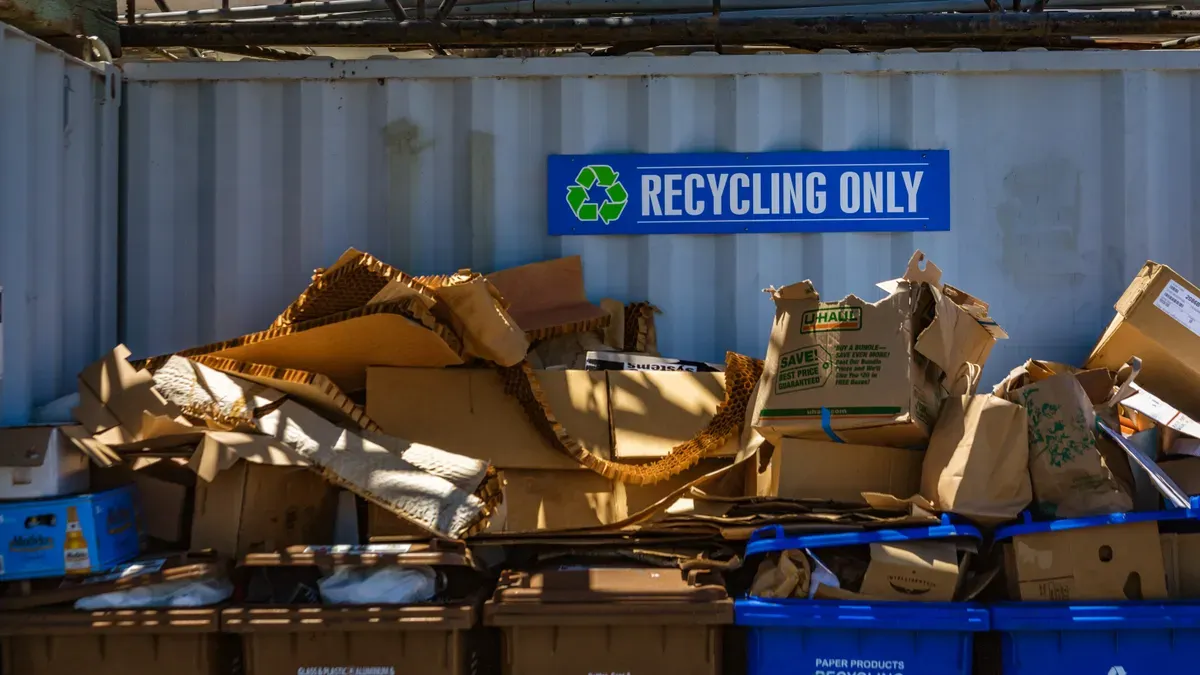
A plastic pelletizing machine transforms plastic waste into uniform pellets that you can reuse in new products. This machine takes shredded plastic and processes it into small, consistent pieces. You get a reliable way to recycle plastic and support a circular economy. The need for plastic pelletizing machine technology keeps rising. In 2026, the global market for plastic pelletizing machine equipment is expected to reach $3.2 billion, showing a 3.8% growth rate.
When you use a plastic pelletizing machine, you help reduce waste and increase the value of recycled plastic.
Year | Market Size (USD Billion) | Growth Rate (%) |
|---|---|---|
2023 | 2.9 | N/A |
2026 | 3.2 | 3.8 |
You can count on a plastic pelletizing machine to deliver efficiency and quality for your recycling process.
Plastic pelletizing machines convert waste plastics into uniform pellets, supporting recycling and a circular economy.
The global market for plastic pelletizing machines is projected to reach $3.2 billion by 2026, indicating growing demand.
Key features of these machines include energy efficiency, adjustable temperature controls, and easy maintenance, which enhance operational effectiveness.
Proper feeding, cutting, and cooling are crucial steps in the pelletizing process that ensure high-quality pellets.
Different pelletizing methods, such as strand and underwater systems, cater to various types of plastics and production needs.
Regular maintenance and monitoring of equipment help prevent issues and ensure consistent pellet quality.
Choosing the right pelletizing machine involves considering throughput requirements, polymer types, and integration with existing systems.
Dyun offers reliable and efficient pelletizing solutions, making it easier to achieve high-quality recycling outcomes.
A plastic pelletizing machine gives you a versatile solution for plastic processing. You use this machine to convert waste plastics into small, uniform pellets. The process starts when you feed shredded plastic into the system. The machine melts, cuts, and shapes the material into pellets. You get consistent results because the machine controls temperature and pressure during pelletizing. This ensures high-quality recycled materials for new products.
You rely on plastic pelletizing to handle a wide range of plastics. The machine processes films, bottle flakes, woven bags, and regrinds. You can use it for both commodity plastics like polyethylene and polypropylene, and engineering plastics such as PET and nylon. These materials often need precise control of moisture and temperature. Advanced plastic recycling machines use thermodynamics and mechanical engineering to optimize the recycling process.
You improve plastic recycling efficiency by using a plastic pelletizing machine. The machine produces pellets with uniform physical properties and high bulk density. This makes them easy to transport and reuse.
Key features that define a plastic pelletizing machine include:
Capacity that matches your recycling volume for smooth operation.
Energy efficiency that lowers your operational costs.
Advanced feeding systems that keep material flow consistent and reduce downtime.
Adjustable temperature controls that enhance pellet quality.
Easy maintenance for quick repairs and minimal downtime.
You use plastic pelletizing machines in both recycling and manufacturing. In plastic recycling, you turn waste plastics into pellets that you can reprocess or sell. This supports sustainable practices in plastic recycling and reduces waste. You also use pelletizing in manufacturing to create raw materials for new products.
Plastic pelletizing helps you meet throughput requirements. The machine matches the capacity of your extrusion system, preventing bottlenecks. You get uniform, dust-free pellets that work well in high-end applications. You can process a variety of plastics, including those sensitive to moisture and temperature.
You benefit from the machine’s operational environment and ease of use. Maintenance is simple, so you keep your machine running longer and reduce costs. You support the recycling process by producing pellets that closely match virgin resin. This improves the quality of your recycled materials.
When you choose a plastic pelletizing machine, you gain a reliable tool for plastic recycling and manufacturing. You reduce waste and create valuable pellets for reuse.
You see plastic pelletizing as a key step in the recycling process. It transforms waste plastics into usable materials. You support a circular economy and help reduce environmental impact.
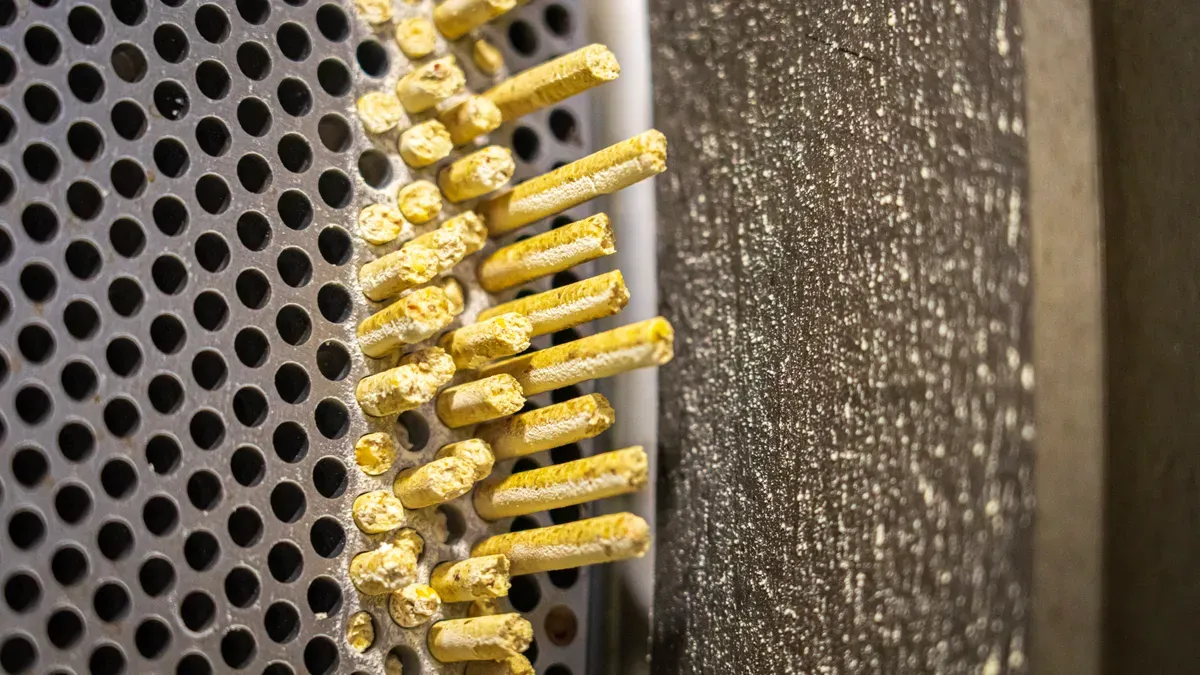
You start the plastic pelletizing process by feeding prepared plastic into the machine. First, you collect and sort the plastic by polymer type and color. This step prevents contamination and improves the quality of your recycled pellets. Next, you shred or granulate the plastic into small, uniform flakes. Consistent flake size helps the machine feed material smoothly and evenly.
Before you move to the next stage, you wash the plastic flakes. Clean flakes melt better and reduce the risk of defects in the final pellets. After washing, you dry the flakes to remove moisture. Dry material prevents steam and degradation during melting. You then feed the dry, clean flakes into the pelletizing machine. Some machines use a compacting system to press light or fluffy materials into denser forms. This step ensures steady feeding and helps you handle a wide range of plastic waste.
Tip: Uniform feeding and proper cutting at this stage set the foundation for high-quality pellet formation.
Once you feed the plastic into the machine, the next step is melting and plasticization. The working principle of plastic granulator involves heating the plastic until it becomes a molten, viscous fluid. You rely on the extruder to apply heat and pressure, which softens and mixes the plastic. This stage is critical because it determines the consistency and quality of the pellets.
You can choose from several melting and plasticization techniques, depending on your material and production goals:
Hot die face pelletizing system: The molten plastic passes through a die head, and a rotating blade cuts the plastic at the die surface.
Hot die water-ring pelletizing: Similar to the hot die face system, but uses a water ring for cooling and pellet formation.
Underwater pelletizing system: The plastic is cut and cooled underwater, which is ideal for high-output operations.
Strand pelletizing system: The plastic is extruded into strands, cooled, and then cut into pellets.
Automatic strand pelletizing system: This system automates the strand process for higher efficiency.
You select the right method based on the type of plastic, desired pellet finish, and throughput requirements. Each method supports the recycling process by ensuring the plastic melts evenly and forms consistent pellets.
After melting, you move to the forming and pelletizing stage. Here, the molten plastic is shaped and cut into uniform pellets. The process uses a die to form the plastic into strands or droplets, depending on the system you use. You then cut the plastic into small, even pieces. This step is essential for producing pellets with consistent size and shape.
The table below shows how you achieve uniform pellet size during this stage:
Mechanism | Description |
|---|---|
Stable Extrusion | You maintain a steady flow of molten plastic to prevent pellet size changes. |
Proper Die Management | You keep the die in good condition to avoid uneven strand thickness. |
Precise Cutting Techniques | You use sharp, well-maintained blades to cut pellets to the same length. |
You focus on stable extrusion and precise cutting to get high-quality recycled pellets. Proper die management also helps you avoid defects and maintain pellet uniformity. This stage is where cooling and pellet formation begin, setting up the next steps in the plastic pelletizing process.
Note: Consistent pellet size makes it easier to transport, store, and reuse pellets in manufacturing.
You see that each step in the plastic pelletizing process builds on the previous one. By following these steps, you support efficient recycling and produce pellets ready for reuse in new products.
You reach the cooling and solidifying stage after forming and cutting the plastic pellets. This step is essential because it locks in the shape and quality of each pellet. If you skip proper cooling, you risk getting pellets that stick together or lose their form.
You can use different cooling methods depending on your machine and the type of plastic you process:
Water Bath Cooling: You drop hot pellets into a water bath. The water quickly removes heat and solidifies the pellets. This method works well for most common plastics.
Air Cooling: You blow cool air over the pellets as they move along a conveyor. This method is best for materials that absorb water or need a dry finish.
Water Ring or Underwater Cooling: You combine cutting and cooling in one step. The pellets drop directly into water right after cutting. This method gives you smooth, round pellets and works well for high-output systems.
Tip: Always match your cooling method to your plastic type. For example, use air cooling for materials like PET that absorb water easily.
You must control the cooling rate. If you cool pellets too fast, you may cause cracks or stress inside the plastic. If you cool them too slowly, pellets can stick together or deform. You should check the temperature of the cooling water or air often. Keep the system clean to avoid contamination.
Here is a quick comparison of cooling methods:
Cooling Method | Best For | Key Benefit |
|---|---|---|
Water Bath | Most plastics | Fast, even cooling |
Air Cooling | Water-sensitive plastics | Dry, clean pellets |
Underwater Pelletizing | High-output operations | Smooth, round pellets |
You can improve pellet quality by using a closed-loop cooling system. This system recycles water or air, saving resources and keeping your process eco-friendly.
Note: Proper cooling and solidifying help you get pellets that are easy to handle, store, and transport.
You rely on the extruder as the heart of your plastic pelletizing machine. The extruder transforms raw plastic into a uniform melt, which is essential for producing high-quality granules. You feed plastic into the hopper, which regulates the flow and lets you monitor the material. The screw, made from high-strength alloy steel, moves the plastic through the barrel. The barrel heats and plasticizes the material, ensuring thorough processing. The die head and mold convert the melt into a linear flow and apply molding pressure. The transmission system drives the screw, providing the torque and speed needed for efficient extrusion.
You control temperature and pressure with the heating and cooling system. This prevents material degradation and keeps your pellets consistent. The extruder supplies molten polymer at the right pressure and temperature, so the pelletizer can cool the extrudate at a matched rate. You synchronize extrusion parameters and pelletizer dynamics to maintain steady-state production.
Tip: You improve efficiency and pellet quality by monitoring the extrusion system closely.
Here is a table showing the composition of plastic granulator and the function of each part:
Component | Function |
|---|---|
Extrusion System | Transforms plastic into a uniform melt, includes screw, barrel, hopper, die head, and mold. |
Screw | Impacts efficiency, made from high-strength alloy steel. |
Barrel | Heats and plasticizes the material, ensuring thorough processing. |
Hopper | Feeds plastic into the system, regulates flow, and allows for monitoring. |
Die Head and Mold | Converts melt into a linear flow and applies molding pressure. |
Transmission System | Drives the screw, providing necessary torque and speed. |
Heating and Cooling | Controls temperature for successful extrusion, preventing material degradation. |
Control System | Manages the entire process, including temperature, pressure, and flow control. |
You use the cutter system to shape and size your pellets. After the extruder forms the molten plastic, the cutter system slices it into uniform pellets. You can choose from several cutting methods, such as strand, water ring, or underwater cutting. The cutter system uses sharp blades to cut the plastic at precise intervals. You get pellets with consistent size and shape, which makes them easy to handle and transport.
You adjust the cutter speed and blade sharpness to match your material and production goals. The cutter system works closely with the extrusion system to ensure smooth pelletizing. You prevent defects and maintain pellet uniformity by keeping the blades clean and well-maintained.
Note: Consistent pellet size improves the quality and usability of your plastic granules.
You depend on the cooling system to solidify your pellets after cutting. The cooling system uses water baths, air cooling, or underwater cooling to remove heat from the pellets. You choose the cooling method based on your plastic type and production requirements. Water bath cooling works well for most plastics, while air cooling suits water-sensitive materials.
You control the cooling rate to prevent cracks or deformation. The cooling system keeps your pellets from sticking together and ensures they are easy to store and transport. You can use a closed-loop cooling system to recycle water or air, saving resources and supporting eco-friendly pelletizing.
Tip: Proper cooling helps you produce high-quality granules and maintain efficiency in your plastic pelletizing process.
You see that each component of the plastic granulator plays a vital role in the pelletizing process. You achieve uniform pellets, high efficiency, and reliable operation by understanding and managing these systems.
You need to dry your plastic pellets after cooling. This step removes any remaining moisture from the surface of the pellets. If you skip drying, you risk problems like clumping, mold, or poor pellet quality. Most pelletizing machines use a centrifugal dryer or a vibrating screen dryer. These systems spin or shake the pellets to remove water quickly and efficiently.
You can follow these steps for effective drying and collection:
Transfer Pellets: Move the wet pellets from the cooling system to the dryer.
Drying Process: Use a centrifugal dryer to spin off water. The dryer uses high-speed rotation to separate water from the pellets.
Air Flow: Some systems add warm air to speed up drying. This helps you get pellets that are ready for storage or packaging.
Screening: Pass the dried pellets through a vibrating screen. This step removes dust, fines, or oversized pieces.
Collection: Collect the clean, dry pellets in bins or bags. You can now store, transport, or use them in manufacturing.
Tip: Always check the moisture content of your pellets before packaging. Dry pellets last longer and perform better in production.
Here is a table showing common drying and collection equipment:
Equipment Type | Main Function | Benefit |
|---|---|---|
Centrifugal Dryer | Spins off surface water | Fast, efficient drying |
Vibrating Screen | Removes dust and fines | Clean, uniform pellets |
Air Conveyor | Moves pellets to collection | Gentle handling |
Storage Bin/Bag | Holds finished pellets | Easy storage and transport |
You should keep your drying and collection area clean. Regular cleaning prevents contamination and keeps your pellets high quality. You can also use closed-loop systems to recycle air or water, which saves resources and supports sustainability.
You control the entire pelletizing process from the control panel. This panel acts as the brain of your machine. It lets you set and monitor key parameters like temperature, screw speed, cutter speed, and cooling time. Modern control panels use digital displays and touchscreens for easy operation.
You benefit from several important features:
Temperature Control: Set the right temperature for melting and extrusion.
Speed Adjustment: Change the speed of the screw and cutter to match your material.
Alarm System: Get alerts if something goes wrong, such as overheating or blockages.
Data Logging: Track production data for quality control and troubleshooting.
Note: Always check the control panel before starting your machine. Make sure all settings match your material and production needs.
You can use the control panel to run diagnostics and perform maintenance checks. This helps you catch problems early and avoid downtime. A user-friendly control panel makes your pelletizing process safer and more efficient.
By understanding the drying, collection, and control systems, you ensure your plastic pelletizing machine runs smoothly and produces high-quality pellets every time.
You use strand pelletizing when you want to process rigid plastics like HDPE, PP, ABS, or PS. This method runs molten plastic through a water bath, then a rotating blade cuts the strands into pellets. You get cylindrical pellets that are easy to handle and transport. You can achieve throughput rates from 100 to 2,000 kg per hour, making strand pelletizing suitable for medium to high-volume operations.
You benefit from a simple setup and reliable performance. The water bath cools the strands quickly, so you avoid deformation. You dry the pellets after cutting to ensure quality. You can use strand pelletizing for clean scrap and materials that do not require complex cooling. You control pellet size by adjusting the blade and strand thickness.
Tip: Strand pelletizing works best when you feed clean, rigid plastic into your granulator. You get consistent pellets and minimal dust.
Water ring pelletizing gives you a balance between strand and underwater methods. You use this system for PE, PP, and masterbatch production. The blade cuts molten strands at the die face, and a water ring quenches the pellets instantly. You get lens or disc-shaped pellets with smooth surfaces. Throughput ranges from 150 to 1,500 kg per hour.
You choose water ring pelletizing when you want rounded pellets without the complexity of pressurized cooling. The water ring cools and solidifies pellets as they exit the die. You collect pellets in a water bath, then dry them for storage. You can adjust the blade speed and water flow to match your material and production goals.
Note: Water ring pelletizing produces pellets with uniform shape and size. You can use this method for a wide range of plastics and applications.
Air-cooled pelletizing suits soft PE film, foam, and materials that do not perform well in water. You cut pellets at the die face, then cool them with air as they fall. You get lens or teardrop-shaped pellets. Throughput ranges from 80 to 800 kg per hour, making air-cooled pelletizing ideal for small to medium operations.
You avoid water-related issues by using air cooling. This method works well for plastics that absorb moisture or require a dry finish. You control pellet size and shape by adjusting the blade and air flow. You collect pellets directly after cooling, so you reduce drying time.
Tip: Air-cooled pelletizing helps you process materials that need gentle handling. You get clean, dry pellets ready for packaging.
Here is a table comparing the main pelletizing methods:
Method | How it cuts | Best for | Typical throughput | Pellet shape | Energy (kWh/ton) |
|---|---|---|---|---|---|
Strand pelletizing | Strands run through a water bath, then dry-cut by a rotating blade | Rigid HDPE, PP, ABS, PS | 100–2,000 kg/h | Cylindrical | 280–380 |
Water-ring pelletizing | Blade cuts molten strands at the die face; water ring quenches | PE, PP, masterbatch | 150–1,500 kg/h | Lens / disc | 250–340 |
Hot-die-face / air-cooled | Blade cuts at die face; pellets fall, cooled by air | Soft PE film, foam, low-melt material | 80–800 kg/h | Lens / teardrop | 200–280 |
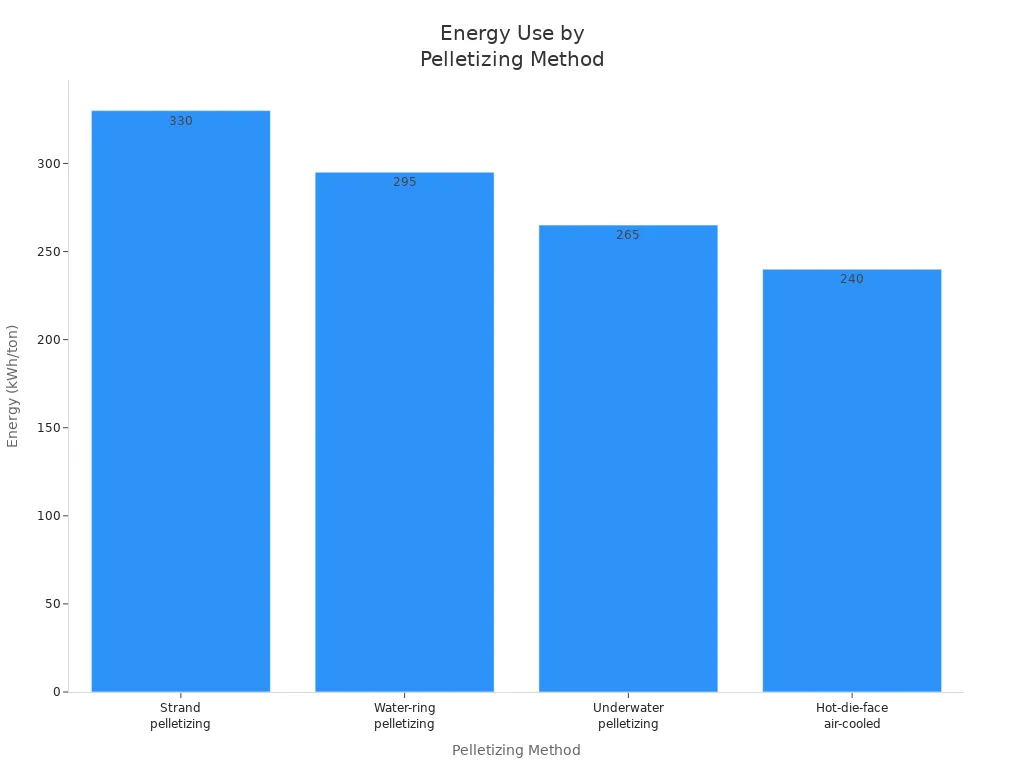
You see that each pelletizing method offers unique advantages. Strand pelletizing gives you reliable performance for rigid plastics. Water ring pelletizing provides rounded pellets and flexible operation. Air-cooled pelletizing lets you process moisture-sensitive materials with ease. You select the right pelletizing system based on your material, throughput, and pellet quality needs.
You use underwater pelletizing when you need to process high-output or specialty plastics. This method cuts molten plastic directly under water. The water cools and solidifies the pellets instantly. You get smooth, round pellets that are easy to handle and store. Underwater pelletizing works well for materials like PET, PA, and high-performance polymers.
You start by feeding molten plastic through a die plate. The cutter blades rotate and slice the plastic into pellets right at the die face. Water flows across the cutting area. The water cools the pellets and carries them away from the die. You collect the pellets in a water slurry, then separate and dry them.
Tip: Underwater pelletizing gives you precise control over pellet size and shape. You can adjust the blade speed and water flow to match your material.
Here is a table showing the advantages of underwater pelletizing:
Feature | Benefit |
|---|---|
Instant cooling | Prevents pellet sticking |
Smooth pellet surface | Improves flow and handling |
High throughput | Supports large-scale recycling |
Flexible operation | Handles many plastic types |
You choose underwater pelletizing for continuous production and demanding applications. You get pellets with uniform size and minimal dust. You also reduce downtime because the water keeps the cutting area clean.
You use compacting and pelletizing systems when you process light, bulky, or foamed plastics. These systems combine compacting and pelletizing in one machine. You feed loose materials like film, foam, or fiber into the compactor. The compactor presses and densifies the material. You then melt and pelletize the compacted plastic.
You benefit from a streamlined process. You handle materials that would clog or jam traditional pelletizers. Compacting systems use a screw or rotor to compress the plastic. The machine removes air and moisture, making the material easier to melt. You get consistent feeding and reliable pellet formation.
Note: Compacting and pelletizing systems help you recycle challenging waste streams. You increase efficiency and reduce manual handling.
Here are the main steps in a compacting and pelletizing system:
Feed loose plastic into the compactor.
Compress and densify the material.
Melt the compacted plastic in the extruder.
Cut and cool the pellets.
Dry and collect the finished pellets.
You select compacting and pelletizing systems for foam, film, and fiber recycling. You improve throughput and pellet quality. You also support closed-loop recycling by handling a wider range of materials.
Material Type | System Benefit |
|---|---|
Film and fiber | Prevents feeding issues |
Foam and bulky waste | Increases density and output |
Mixed plastics | Handles variable streams |
You see that underwater pelletizing and compacting systems expand your recycling options. You match the machine to your material and production needs. You get high-quality pellets and efficient operation.
You handle polyethylene with care to maximize pelletizing quality. You start by inspecting your equipment regularly. Check wear components and lubricate moving parts. Verify calibration of your control systems. This prevents failures and keeps your machine reliable. You manage temperature precisely across heating zones. Proper melting avoids degradation and supports pellet quality. You train your operators well. Skilled workers know how to operate equipment, troubleshoot issues, control quality, and follow safety protocols.
You optimize screw design for the polymer you process. Compression ratios and screw geometries affect efficiency and product quality. You select modern die plates with engineered hole patterns and optimized land lengths. These features promote consistent melt flow and pellet uniformity.
Regular maintenance ensures reliable pelletizing.
Temperature management prevents defects.
Operator training improves safety and output.
Screw and die plate design enhance efficiency.
Tip: Consistent maintenance and skilled operation help you achieve high-quality pellets every cycle.
You approach pelletizing polypropylene differently than other plastics. Polypropylene has a higher melting point, usually between 160°C and 170°C. You set your granulator and heating zones to match this range. Polypropylene is more sensitive to thermal degradation. You monitor temperature closely to prevent breakdown during recycling.
Material | Melting Point (°C) | Thermal Sensitivity |
|---|---|---|
PP | 160–170 | More sensitive to thermal degradation |
PE (HDPE) | 130–136 | More forgiving during reprocessing |
You notice that polypropylene breaks down faster if exposed to high heat. You keep your process steady and avoid overheating. Polyethylene often carries more surface contamination, especially from agricultural sources. You clean and sort your feedstock before pelletizing.
Set higher processing temperatures for polypropylene.
Monitor thermal sensitivity to avoid degradation.
Clean feedstock to reduce contamination.
Note: Careful temperature control and clean material help you produce strong, uniform polypropylene pellets.
You face unique challenges when pelletizing PVC and PET. For PET, you must dry the material at 160°C for 4–6 hours. This reduces moisture levels below 50ppm. You can also use high-vacuum twin-screw degassing. You control temperature between 260°C and 280°C. This prevents yellowing or brittleness. You choose low-shear configurations to protect intrinsic viscosity.
You consider costs and maintenance. Pelletizers for PVC and PET range from $50,000 to $500,000. You analyze return on investment before purchasing. You pre-process contaminated plastics to improve pellet quality. Complex systems require skilled technicians for maintenance.
Dry PET thoroughly before pelletizing.
Maintain precise temperature control.
Use low-shear settings for PET.
Analyze costs and plan for skilled maintenance.
Tip: Careful preparation and skilled operation help you overcome challenges and achieve high-quality pellets from PVC and PET.
You face unique challenges when pelletizing foam and bulky plastic waste. These materials include expanded polystyrene (EPS), polyethylene foam, and large, lightweight packaging. You often find that these plastics have low density and high air content. This makes feeding and melting more difficult than with rigid plastics.
You should start by preparing your material. Shred foam and bulky waste into small pieces. This step helps your pelletizing machine feed material smoothly. You can use a pre-shredder or granulator for this task. Smaller pieces reduce the risk of blockages and improve melting efficiency.
Tip: Always check for contaminants like tape, labels, or metal before feeding foam into your machine. Clean material gives you better pellets.
You need to use a compacting system for foam and bulky waste. The compactor presses and densifies the material before melting. This step increases the bulk density and helps your extruder work efficiently. You can adjust the compactor speed and pressure to match the type of foam or bulky waste you process.
Here is a table showing key settings for pelletizing foam and bulky waste:
Step | Key Setting | Why It Matters |
|---|---|---|
Pre-shredding | Small flake size (10-30mm) | Improves feeding and melting |
Compacting | High pressure, steady feed | Increases density, reduces air |
Extrusion | Lower screw speed | Prevents overheating, smooth melt |
Pelletizing | Sharp blades, slow speed | Clean cuts, uniform pellets |
You should monitor temperature closely during melting. Foam plastics can degrade or burn if overheated. Set your extruder at the lower end of the recommended temperature range for your material. You may need to adjust screw speed and back pressure to get a stable melt.
You can use air-cooled or water-ring pelletizing systems for foam. Air cooling works best for materials that absorb water or need a dry finish. Water-ring systems give you smooth pellets and help with cooling in high-output operations.
Note: Foam and bulky waste often produce more fines and dust. Use a vibrating screen after pelletizing to separate out unwanted particles.
You should clean your machine regularly. Foam residue can build up and cause blockages. Regular cleaning keeps your system running smoothly and improves pellet quality.
You can recycle foam and bulky waste into valuable pellets with the right preparation and machine settings. You support sustainability and reduce landfill waste by turning these challenging materials into reusable resources.
You often encounter several issues during pelletizing. These problems can disrupt your workflow and affect pellet quality. The table below shows the most common issues and their descriptions:
Common Issues | Description |
|---|---|
Feed System Irregularities | Problems with material flow leading to instability in the pelletizing process. |
Motor Overload Conditions | Excessive current draw indicating mechanical or process issues that can halt production. |
Temperature Control Deviations | Inaccurate temperature settings causing poor pellet quality and processing problems. |
Pellet Quality Defects | Issues with size and shape irregularities affecting downstream processing and product consistency. |
You can spot feed system irregularities when the material does not move smoothly through your pelletizing machine. Motor overload conditions often signal mechanical faults or blockages. Temperature control deviations lead to poor pellet quality and may cause defects. Pellet quality defects include irregular shapes or sizes, which can impact downstream manufacturing.
Tip: Regular monitoring helps you catch these issues early and keeps your pelletizing process efficient.
You extend the lifespan of your pelletizing machine by following preventive maintenance steps. Daily maintenance includes checking lubrication systems, cleaning the machine area, inspecting electrical systems, and monitoring temperature curves. Scheduled preventive maintenance involves monthly checks on the hydraulic system, quarterly inspections of the screw and barrel, and semi-annual gearbox maintenance.
Conduct daily checks on lubrication and cleanliness.
Inspect electrical systems and monitor temperature curves.
Perform monthly hydraulic system checks.
Inspect the screw and barrel every quarter.
Maintain the gearbox every six months.
You should also handle emergency troubleshooting for material blockages, excessive pellet contamination, and motor overheating. Regular lubrication ensures smooth operation. Inspect for wear and tear on components. Create a maintenance schedule to keep your pelletizing machine running consistently.
Note: Consistent preventive maintenance reduces downtime and improves pellet quality.
You must follow safety practices when operating pelletizing equipment. Physical guarding protects you from cutters and moving machinery. Lockout-tagout procedures are critical during maintenance work. Thermal insulation shields you from hot melt zones. Personal protective equipment keeps you safe when handling molten plastic and chemicals. Ventilation systems manage fumes from degradation or volatile components.
Safety Measure | Description | Importance Level |
|---|---|---|
Physical Guarding | Guarding around cutters and moving machinery | High |
Lockout-Tagout Procedures | Procedures for maintenance work | Critical |
Thermal Insulation | Shields to protect workers from hot melt zones | High |
Personal Protective Equipment | Gear for handling molten plastic and chemicals | High |
Ventilation Systems | Manage fumes from degradation or volatile components | High |
You should use emergency-stop circuits and interlocks on access panels. Clear signage warns you about operational hazards. Operator training covers safe startup, shutdown, and troubleshooting procedures. These practices help you prevent accidents and keep your pelletizing process safe.
Alert: Always follow safety protocols and train your team regularly to avoid injuries and equipment damage.
You maintain a safe and efficient pelletizing operation by addressing common issues, performing preventive maintenance, and following essential safety practices. You ensure your granulator and pelletizing systems deliver consistent results and support your recycling goals.
You manage your pelletizing machine daily, but some problems require expert help. You should recognize signs that indicate the need for professional support. Quick action prevents bigger issues and keeps your operation running smoothly.
Key situations when you should seek support:
Repeated Equipment Failures
You notice frequent breakdowns or recurring faults. Standard troubleshooting does not solve the problem. You need a technician to inspect and repair the machine.
Unusual Noises or Vibrations
You hear grinding, knocking, or excessive vibration. These signs often point to mechanical damage or misalignment. You should contact a specialist to diagnose the issue.
Electrical Malfunctions
You see warning lights, tripped breakers, or inconsistent power. Electrical faults can cause safety hazards. You must call a qualified electrician or service team.
Pellet Quality Drops Suddenly
You observe pellets with irregular shapes, discoloration, or contamination. If adjustments do not restore quality, you need expert advice.
Safety System Failures
You find that emergency stops, guards, or alarms do not work. You must seek immediate support to fix safety systems.
Tip: Document all symptoms and actions before you call for support. Clear records help technicians solve problems faster.
Table: Signs You Need Professional Support
Symptom | Possible Cause | Action Needed |
|---|---|---|
Frequent breakdowns | Mechanical wear | Technician inspection |
Unusual noises | Bearing or gear issues | Specialist diagnosis |
Electrical faults | Wiring or control error | Electrician support |
Poor pellet quality | Process or material issue | Expert consultation |
Safety system failure | Sensor or circuit fault | Immediate repair |
You should also seek support when you plan upgrades or major maintenance. Experts help you select the right parts and ensure proper installation. You improve machine performance and avoid costly mistakes.
How to prepare for support:
Gather machine logs and error codes.
List recent changes or repairs.
Take photos or videos of the issue.
Share your maintenance history.
You can contact Dyun for reliable technical support. Dyun offers remote troubleshooting, on-site service, and spare parts. You get fast solutions and professional advice.
Note: Timely support protects your equipment and keeps your pelletizing process efficient.
You build a strong partnership with your service provider. You learn from each visit and improve your troubleshooting skills. You keep your pelletizing machine in top condition and support your recycling goals.
You need to consider several important factors when you choose a pelletizing machine. The right choice helps you meet your production goals and ensures smooth operation. Here are the main criteria you should evaluate:
Throughput requirements: Decide how much material you want to process per hour. This helps you select a machine that matches your target output.
Polymer types: Identify the types of plastics you plan to recycle. Some machines handle a wide range, while others work best with specific polymers or additives.
Pellet size and quality: Determine the pellet size and tolerance you need for your end products. Consistent pellet quality supports better manufacturing results.
Integration: Check if the machine fits with your current extruder systems. Good integration reduces setup time and improves efficiency.
Cooling infrastructure: Make sure the machine works with your available cooling systems, such as water or air cooling.
Plant footprint and energy constraints: Measure your available space and power supply. Choose a machine that fits your facility and keeps energy use low.
You should also look for features like compact design, easy installation, and energy-saving technology. Durable components and fast after-service support help you reduce downtime and keep your pelletizing line running.
You must match your pelletizing machine to the materials you process. Each plastic type has unique properties that affect how you set up your equipment. Here are some key steps to follow:
Define your product requirements, including the size and tolerance of the pellets.
Identify the main plastic and any fillers or additives in your feedstock. For example, use a twin-screw extruder for PVC or a single-screw extruder for PE.
Choose special screw features if your material needs them. For example, vented screws help when you process plastics with high moisture content.
Consider the final product you want to make, such as pipe or sheet. This affects your choice of extruder and die.
Selecting the right machine for your material improves pelletizing efficiency and product quality. You also support recycling and sustainability by customizing your process for each plastic type.
You want a pelletizing solution that delivers reliability, efficiency, and value. Dyun offers machines with compact designs that save space and fit easily next to your production lines. You benefit from easy installation and competitive pricing, especially for recycling operations. Dyun machines use energy-saving technology to lower your operating costs. High-quality extruder screws and barrels ensure long-lasting performance.
You can count on fast after-service and quick access to spare parts. This minimizes downtime and keeps your pelletizing process on track. Dyun supports you with technical expertise and a wide range of pelletizing systems for different materials.
Tip: Explore Dyun’s full range of pelletizing machines at https://www.jwell-recycling.com/products.html to find the best fit for your recycling needs.
You make a smart choice for your business and the environment when you select Dyun for your pelletizing operations.
You gain reliable results when you understand how plastic pelletizing machines work. These machines convert waste into valuable pellets and boost recycling efficiency. Review the table below for key takeaways:
Feature | Advantages | Key Considerations |
|---|---|---|
High-output machines | Improve productivity | Energy and cost |
Automation | Increases efficiency | Setup and maintenance |
Air-cooled systems | Suit hygroscopic materials | Material specificity |
Pellet quality | Supports manufacturing standards | Monitoring and control |
You improve recycling outcomes by following each step, from sorting to quality checks. For the best results, consider Dyun’s solutions at https://www.jwell-recycling.com/products.html.
Send your material type.
Specify the input form.
Indicate contamination level.
State target output.
Describe pellet application.
You can process many types, including polyethylene (PE), polypropylene (PP), PET, PVC, and foam. Always check your machine’s compatibility with your material for the best results.
You should keep your feedstock clean and dry. Monitor temperature and cutter speed. Regularly inspect and clean your machine. Consistent maintenance helps you produce uniform, high-quality pellets.
Yes, if you follow safety guidelines. Use guards, wear protective gear, and check emergency stops. Train your team on safe operation and maintenance. Safety practices protect you and your equipment.
You should clean your machine after every production run or material change. Regular cleaning prevents contamination and keeps your pellets consistent.
Yes. You can shred, compact, and pelletize foam and bulky plastics. Use a compacting system for best results. Clean material and proper settings improve pellet quality.
First, check for blockages, power issues, or alarms. Review the control panel for error codes. If you cannot fix the problem, contact technical support for help.
List your material type, desired output, and pellet size. Match these needs to machine features. Consider energy use, space, and integration with your current setup. Dyun offers support for selection.


