
- All
- Product Name
- Product Keyword
- Product Model
- Product Summary
- Product Description
- Multi Field Search
 English




| Quantity: | |
|---|---|


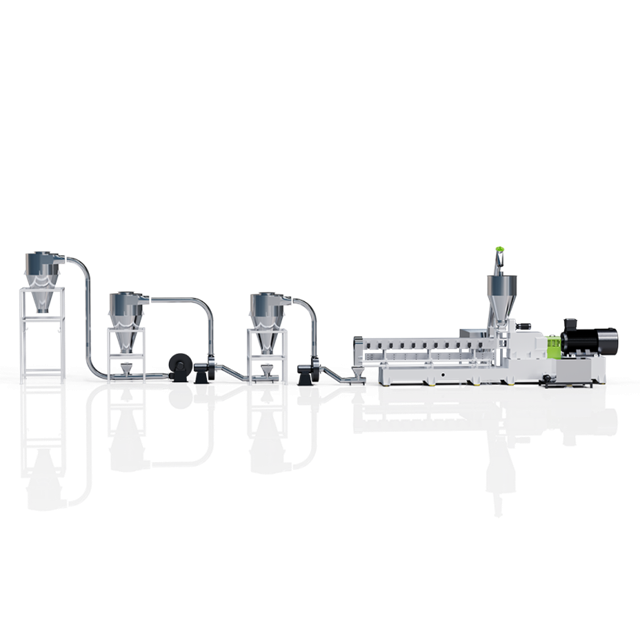
The JWM WPC Twin-Screw Extruder Pelletizing Line compounds wood-based fillers with plastics and additives. Four models include standard and Plus variants.
WPC pelletizing should begin with formulation rather than machine size. Wood or plant-based filler, the selected plastic and their proportions define the intended compound, so material preparation and feeding information belong in the initial enquiry. The twin-screw route is described around mixing and pellet production, with four standard and Plus configurations offering different motor and output bands. Buyers can compare those entries while keeping the actual composition and desired downstream use visible. WPC pellets may be intended for products such as decking or profiles, but that application direction does not establish one universal formulation. Cooling, pellet formation and collection also require a selected scope. A practical proposal connects the specified ingredients to the chosen extrusion configuration and the required pellet condition, without relying on unsupported energy-saving or staffing claims.
JWM WPC Twin Screw Extruder Pelletizing Line
The description identifies wood powder or straw powder with plastics such as PE, PP and PVC. Specify the intended formulation separately for each polymer base. Filler condition, additive content and final product requirements should guide the process arrangement.
The formulation should identify the plastic and filler rather than only use the term WPC. Include wood or plant material information and the proposed proportions. The listed plastic choices represent separate formulation discussions; they do not establish that all resins or arbitrary mixed waste can be used together.
Wood-based material, plastic and additives are proportioned before extrusion. Twin-screw processing mixes, plasticizes and extrudes the compound. Define the feeding and proportioning equipment needed for the formulation rather than assuming every dosing arrangement is supplied.
Proportioning and mixing need a clear material-supply description. State how each ingredient arrives and what preparation already occurs before extrusion. The proposal can then identify the selected feeding and twin-screw arrangement, keeping material-handling requirements visible instead of treating mixing as an isolated feature unrelated to the formulation.
JWM75 and JWM75Plus both list 71 mm screws, while JWM95 and JWM95Plus list 93 mm. The Plus variants have different motor ratings and capacity bands. The model designation therefore reflects more than screw diameter alone.
Standard and Plus entries should be compared through their published motors and output bands, not through the label alone. Some share screw dimensions while carrying different ratings. Confirm the chosen configuration as a complete set so the purchase specification describes the actual equipment rather than a general upgrade assumption.
Model | Screw Dia.(mm) | Main Motor Power KW | Capacity KG/H |
JWM75 | 71 | 132 | 400-600 |
JWM95 | 93 | 250 | 800-1200 |
JWM75Plus | 71 | 280 | 1100-1300 |
JWM95Plus | 93 | 355 | 1600-1800 |
JWM75 lists 132 kW with 400-600 kg/h, whereas JWM75Plus lists 280 kW with 1100-1300 kg/h. Compare the complete configurations around the compound requirements. A power increase alone does not establish equal performance across formulations.
Motor power and output should be reviewed with the formulation and selected equipment. The table provides different bands but does not establish equal performance for every filler proportion or resin. Define the material basis behind the capacity request before comparing the configurations or planning the installation's electrical supply.
After extrusion, the compound is cooled and cut into WPC pellets. Agree the cutting and cooling arrangement for the required pellet condition. The selected downstream handling equipment should support the proposed compounding rate.
The route after extrusion should specify the selected cooling, pellet formation and collection equipment. State the required pellet condition for later processing and identify the supply boundary. This lets buyers compare complete WPC pelletizing arrangements rather than a screw-and-motor specification with an undefined downstream package.
The pellets are intended for wood-plastic products such as flooring and furniture. Define the end product's formulation and processing requirements. Equipment selection should consider the compound's intended use rather than a generic claim of suitability for every WPC product.
The intended WPC product guides the compound requirements. Decking and profile production need pellets suited to the buyer's selected formulation and manufacturing process. Application examples should therefore provide direction for the enquiry, while suitability of the resulting compound remains a separate assessment against the intended product requirements.
The DYPS-X/M profile and WPC crusher provides a waste-composite reduction option. The CJWH compounding line covers broader formulations. Choose the preparation and extrusion equipment according to whether the input is virgin compound ingredients or recovered WPC.
A crusher prepares recovered product waste, while a compounding or pelletizing line addresses another stage. Define any recycled input and its required preparation before comparing routes. Keeping these duties separate avoids suggesting that reduced WPC automatically provides the correct formulation for every new pellet or finished product.
Send DYUN's WPC processing team the polymer base, filler proportion, additives and target output. Include the desired pellet size and final product. Review standard and Plus variants with these requirements rather than comparing model names alone.
Provide ingredient descriptions, proportions and target pellet properties, with samples where available. Include any existing preparation and feeding equipment. These details support selection of the complete extrusion and pellet-handling route and make the proposed configuration reviewable without adding unsupported claims about energy use or operator numbers.
The DYUN company background covers its waste plastic machinery activities within JWELL. JWM proposals need a clear wood-plastic formulation and intended product so the extrusion model and feed preparation can be assessed together.
The manufacturer discussion for WPC should follow the formulation from ingredient preparation through mixing and pellet collection. A proposal needs the selected configuration and clear feeding and downstream scope. The intended decking, profile or other product then provides context for the compound requirements rather than a universal processing recipe.

Identify the plastic, wood or plant-based filler, proportions and required compound properties. Include ingredient form and preparation. WPC describes a material family, while the selected equipment arrangement needs a defined formulation and intended output.
Compare their selected motors and output bands alongside screw dimensions. The four entries include shared diameters with different ratings, so the Plus label alone is not a complete specification. Confirm the actual configuration in the proposal.
The table spans 400–600 to 1600–1800 kg/h across four configurations. Review the applicable band with the formulation and selected equipment. These values do not establish one universal rate for every plastic and filler combination.
Recovered material needs to be described by composition, contamination and physical condition. Crushing is a separate preparation duty. Suitability for a new compound should be assessed against the intended formulation rather than assumed from the fact that the feed is already WPC.
Provide ingredients, required proportions, feed form and target pellet properties. State the intended downstream product and desired output. Identify existing preparation equipment and required cooling, cutting and collection scope so the proposal describes the complete selected route.
Use the same formulation and accepted-output requirement. Compare the selected standard or Plus configuration, motor, feeding and complete pellet-handling scope. Unsupported savings or staffing statements should not replace a comparison of the actual equipment and process boundaries.


