- All
- Product Name
- Product Keyword
- Product Model
- Product Summary
- Product Description
- Multi Field Search
 English

Views: 0 Author: Site Editor Publish Time: 2026-09-15 Origin: Site


Plastic waste becomes more valuable when it can be reused efficiently.
A plastic recycling pelletizing machine converts prepared waste into uniform pellets for further processing.
This article explains its working principle, main components, machine types, suitable materials, applications, and key selection factors.
A plastic pelletizer changes prepared waste into consistent granules.
It normally performs several connected operations. The material enters a feeder before reaching the extrusion section.
Inside the extruder, heat and mechanical shear soften the plastic. Filtration then removes unwanted solid contamination.
The clean melt moves toward the pelletizing unit. It is cut into smaller, more regular pellets.
The final pellets can offer several practical benefits:
Easier material storage and handling
More stable downstream feeding
Better dosing during later processing
More consistent material form
Easier transportation between production stages
A plastic pelletizing machine for recycling waste does not automatically restore virgin resin quality. Feedstock condition still affects the final material.
Pelletizing usually appears near the end of mechanical recycling.
A common process flow is:
Waste Plastic → Sorting → Shredding/Crushing → Washing → Drying → Pelletizing → Recycled Pellets
Sorting removes unsuitable materials before processing. Shredding reduces large waste into manageable pieces.
Washing removes dirt, labels, oils, and other contaminants. Drying reduces moisture before extrusion.
Pelletizing then changes prepared plastics into a standardized form.
Some integrated systems combine more processing steps. A referenced commercial line combines size reduction, preheating, compaction, extrusion, filtration, pelletizing, cooling, dewatering, conveying, and storage.
Tip:Evaluate the entire recycling process before choosing the pelletizing machine.

Plastic recycling describes the complete recovery process.
It may include collection, sorting, crushing, washing, separation, drying, extrusion, and pelletizing.
Pelletizing is only one downstream recycling stage.
Its main role is converting suitable prepared plastic into reusable granules. This distinction matters when planning a complete recycling project.
A pelletizer cannot replace proper sorting or washing. Poor preparation can create unstable extrusion and lower pellet quality.
Understanding how a plastic pelletizing machine works helps buyers compare systems correctly.
The basic plastic pelletizing machine working principle includes feeding, melting, filtration, cutting, cooling, and collection.
The process begins with controlled material feeding.
Different plastics require different feeding systems. Rigid flakes usually flow more easily than flexible films.
Common feeding systems include:
Belt conveyors
Force feeders
Screw feeders
Cutting compactors
Densifying units
Lightweight film has very low bulk density. It can bridge or feed irregularly inside a hopper.
A compactor can create denser and more stable material flow. One referenced machine offers belt feeding and optional roll feeding.
Another commercial line lists force-feeder and compactor feeding configurations.
Stable feeding helps the extruder maintain consistent output.
Flexible waste often requires additional preparation.
Examples include PE film, PP raffia, woven bags, and foam. These materials occupy large volumes but contain little mass.
A cutting compactor reduces their apparent volume. It can also mix and preheat the material.
This improves feeding into the extrusion screw.
One commercial system combines size reduction, preheating, and pelletizing within one integrated line.
Rigid flakes may not need this stage. Their bulk density is generally higher.
Tip:Compaction should match feedstock form rather than becoming a default machine feature.
The extruder is the central processing unit.
A rotating screw moves plastic through a heated barrel. Barrel heaters raise the material temperature gradually.
Mechanical shear also generates heat during processing.
Several variables influence extrusion stability:
Screw diameter
Screw geometry
L/D ratio
Screw speed
Barrel temperature
Drive power
Polymer viscosity
One referenced pelletizer family uses screw diameters between 80 and 180 millimeters. Its listed L/D ratios range from 31:1 to 36:1.
These figures are product-specific examples. They should not become universal selection rules.
Commercial recycling pelletizers may use single-screw or twin-screw designs.
Recycled plastic often contains residual contamination.
A screen changer filters solid particles from the polymer melt. Cleaner melt can improve pellet consistency.
Vacuum degassing removes trapped air and some volatile material. It can also reduce residual moisture effects.
One referenced recycling system includes double-zone vacuum degassing as standard equipment.
Filtration requirements depend on incoming material quality.
Post-consumer plastics often need stronger contamination control. Clean production scrap may need less intensive filtration.
The filtered polymer leaves the extruder through a die.
It must then be cut into pellets.
Common methods include:
Pelletizing Method | Typical Characteristic |
|---|---|
Strand Pelletizing | Extrudes strands before cooling and cutting |
Water-Ring Pelletizing | Cuts pellets near the die surface |
Hot Cutting | Cuts hot melt directly at the die |
Underwater Pelletizing | Cuts pellets inside a water chamber |
One reference system offers water-ring, water-strand, and underwater pelletizing options.
Another supplier lists water-ring, strand, hot-cutting, and two-stage configurations.
The correct method depends on polymer properties. Capacity and final pellet requirements also matter.
Fresh pellets require controlled cooling.
Strand systems commonly cool polymer strands in water before cutting. Other designs cut first and cool immediately afterward.
Water-based systems also require dewatering.
Dry pellets can then enter a vibrating screen. Conveyors or pneumatic systems move them into storage.
The complete plastic recycling pelletizing process can be summarized as:
Feed → Compact → Melt → Filter/Degas → Extrude → Cut → Cool → Dry → Collect
Tip:Ask suppliers to show actual pellet samples from materials similar to yours.
A complete plastic pelletizer includes several connected subsystems.
Each component affects production stability and pellet quality.
The feeder controls material flow into the extruder.
Films may require compactors or force feeders. Rigid flakes often use screw feeding systems.
The goal is steady mass flow.
Unstable feeding can create pressure fluctuations inside the extruder.
The extruder melts and transports the polymer.
Important specifications include:
Component | What Buyers Should Check |
|---|---|
Screw Diameter | Processing scale and material flow |
Screw Material | Wear and corrosion resistance |
L/D Ratio | Residence time and processing behavior |
Barrel Heating | Temperature control method |
Drive Power | Available mechanical energy |
One referenced product family lists screw diameters from 80 to 180 millimeters. Its stated output range is about 160–1,200 kg/h.
Another supplier lists different PE and PP capacities for identical machine sizes. This shows material type can affect actual output.
Screen changers remove unwanted solids from molten plastic.
Vacuum systems help release moisture and trapped gases.
These systems become important for post-consumer materials.
They can reduce melt instability during pellet production.
The final section forms and conditions pellets.
It can include:
Die head
Pellet cutter
Water tank
Water-ring chamber
Dewatering unit
Vibrating screen
Conveying blower
Storage silo
The exact combination depends on the pelletizing method.
There are several types of plastic pelletizing machines.
No single configuration fits every recycling application.
Single-screw extruders are common in plastic recycling.
They work well with many relatively uniform thermoplastic feedstocks.
One referenced single-screw line lists PP, PE, LDPE, HDPE, ABS, EPS, PC, and PET applications.
Single-screw systems usually offer simpler mechanical structures.
They can also simplify operation and maintenance.
Twin-screw systems provide stronger mixing and dispersion.
They are often useful during compounding operations.
Examples include formulations requiring:
Additives
Fillers
Colorants
Multiple polymer components
More intensive mixing
A referenced double-screw line lists applications involving PP, PE, PVC, and PPR materials.
The screw configuration should match the material formulation.
A single-stage system uses one main extrusion stage.
A two-stage system uses sequential extrusion sections.
The second stage may provide additional filtration or devolatilization.
A referenced supplier offers two-stage pelletizers alongside single-screw and double-screw systems.
Two-stage systems can increase equipment complexity. They should solve a real processing requirement.
Pelletizing method also defines machine type.
Strand cutting remains simple and widely understood.
Water-ring systems can support automated pellet cutting near the die.
Underwater systems offer controlled cutting and cooling.
Hot cutting can suit selected materials where water contact is undesirable.
Tip:Select the cutting system after confirming polymer behavior and final pellet specifications.
Machine compatibility depends on extrusion and feeding design.
PP and PE are widely processed recycling materials.
Common examples include:
LDPE film
HDPE film
PP film
Agricultural film
Stretch film
Woven bags
Raffia
Commercial recycling lines commonly target these materials. One reference system lists film, filament, raffia, and foam applications.
Flexible feedstocks often require controlled compaction.
Rigid plastics include bottle flakes and molded scrap.
Typical examples include:
HDPE flakes
PP rigid scrap
ABS
PS
PC
Rigid flakes usually have higher bulk density.
They often feed more consistently than loose films.
EPS and XPS occupy high volume.
Their low density makes stable feeding difficult.
Densification can improve material flow before extrusion.
The referenced ACS line lists XPS and EPS among target recycled materials.
PVC requires careful processing conditions.
Specialized pelletizers may also handle WPC materials.
A referenced equipment supplier markets pelletizing systems for PVC, WPC, PP, PE, ABS, and PET applications.
Machine configuration must match thermal sensitivity and formulation requirements.
The main plastic recycling pelletizer applications involve preparing recycled feedstock for reuse.
Pelletizing converts irregular material into standardized granules.
The result is easier to meter during downstream processing.
It also simplifies storage and transportation.
Pellets offer a more uniform physical form.
This can provide several practical benefits:
Easier silo storage
More stable material feeding
Better dosing control
Improved conveying
More consistent handling
However, pelletizing cannot remove every quality problem.
Contamination and polymer degradation still affect recycled resin performance.
Recycling pelletizers can process several waste sources.
These include post-consumer materials and industrial production scrap.
One reference product specifically targets post-consumer, post-industrial, and in-house waste.
Each stream still requires suitable cleaning and preparation.
Pelletizing equipment can connect with other recycling machinery.
Typical equipment includes:
Shredder → Crusher → Washing Line → Dryer → Pelletizer → Storage
Integrated system design improves material flow between stages.
One supplier describes complete lines combining crushing, washing, drying, and granulation processes.
Tip:The pelletizer should match upstream cleanliness and downstream production requirements.
The correct machine begins with material information.
Identify the feedstock before comparing models.
Important factors include:
Polymer type
Film or rigid form
Bulk density
Moisture content
Contamination level
Additive requirements
A film recycling line may need compaction.
Rigid flakes may require a different feeding arrangement.
Capacity should reflect actual operating conditions.
Do not select equipment using maximum catalog capacity alone.
One reference machine family lists about 150–1,200 kg/h.
Another supplier advertises approximately 100–1,500 kg/h across its product range.
Buyers should ask how capacity was tested.
Polymer type, moisture, and contamination can change actual throughput.
Compare extrusion configurations first.
Important choices include:
Single screw vs. twin screw
Single stage vs. two stage
Strand vs. water-ring
Hot cut vs. underwater
The correct selection follows material characteristics.
Final pellet requirements also influence the decision.
A B2B equipment purchase involves more than hardware.
Check these items before ordering:
PLC control
Heating system
Vacuum degassing
Screen-changing method
Cooling system
Spare-parts supply
Installation support
Commissioning service
Operator training
One reference supplier lists project design, installation recommendations, and commissioning support.
Tip:Request a material trial and written technical proposal before final approval.

The terms often create confusion during equipment sourcing.
A pelletizing machine melts prepared plastic.
It then filters and extrudes the molten polymer.
The machine finally cuts it into standardized pellets.
This is a thermal and mechanical process.
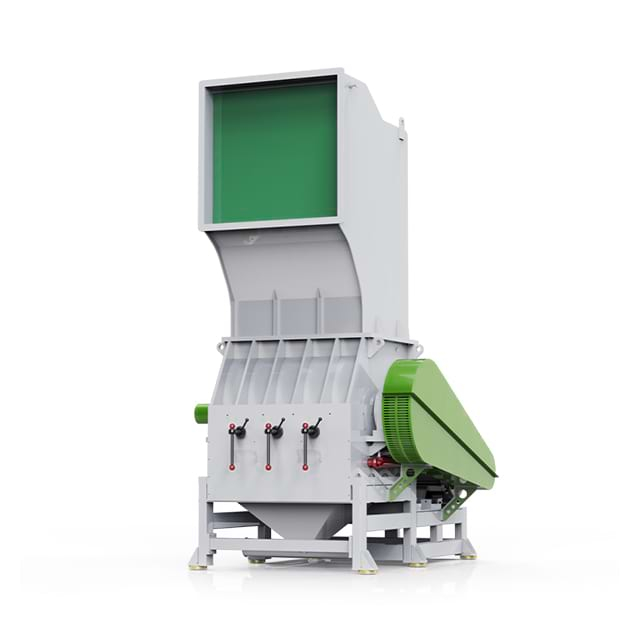
A plastic granulator mainly performs size reduction.
It cuts larger plastics into flakes or smaller pieces.
The polymer usually remains solid during this stage.
A crusher therefore serves a different processing purpose.
Many recycling plants use both systems.
A common process is:
Shredder/Crusher → Washing → Drying → Pelletizing Machine
The crusher creates manageable feed material.
The washing system removes contamination.
The pelletizer then converts prepared plastic into reusable granules.
Equipment | Main Function | Typical Output |
|---|---|---|
Shredder | Primary size reduction | Large shredded pieces |
Granulator/Crusher | Finer size reduction | Flakes |
Pelletizing Machine | Melting and pellet formation | Recycled pellets |
Understanding this distinction prevents incorrect equipment selection.
A plastic recycling pelletizing machine should be treated as one part of the complete recycling process.
A plastic recycling pelletizing machine converts prepared plastic waste into uniform pellets for efficient reuse and processing.
Choosing the right system depends on material type, capacity, extrusion design, filtration, and pelletizing method.
JWELL – Plastic Recycling Machine & Shredder & Extrusion Line
JWELL provides plastic recycling and pelletizing solutions designed for stable production, material flexibility, and efficient processing.
Its equipment and technical services help recyclers build reliable, productive, and scalable recycling lines.
A: A plastic recycling pelletizing machine converts prepared plastic waste into reusable pellets through melting, filtration, extrusion, and cutting.
A: A plastic recycling pelletizing machine feeds, melts, filters, extrudes, cuts, cools, and collects recycled plastic pellets.
A: A plastic recycling pelletizing machine creates more uniform pellets for easier storage, feeding, and downstream processing.
A: Price depends on capacity, screw design, filtration, automation, pelletizing method, and line configuration.
A: A pelletizer melts plastic into pellets, while a granulator mainly cuts solid plastic into flakes.
A: Common causes include uneven feeding, excess moisture, contamination, poor temperature control, or unsuitable filtration.