
- All
- Product Name
- Product Keyword
- Product Model
- Product Summary
- Product Description
- Multi Field Search
 English

Views: 0 Author: Site Editor Publish Time: 2026-08-23 Origin: Site


In industrial plastic recycling and processing, the initial equipment purchase represents a fraction of the total project risk. The majority of operational failures stem from delayed supply delivery and inadequate post-sale technical support. Facility managers and procurement teams often evaluate equipment based solely on spec sheets, focusing heavily on throughput capacities and motor sizes. They frequently neglect the logistical complexities of international freight, site commissioning, and the severe financial impact of prolonged downtime due to poor spare parts availability.
Mitigating these risks requires shifting the evaluation from the equipment itself to the operational infrastructure of the plastic crusher machine supplier. You must look beyond the catalog. This guide provides a framework for assessing supplier delivery capabilities, technical support structures, and long-term reliability to ensure your recycling line operates continuously without unexpected interruptions.
Establishing baseline metrics for project success is the first step in any recycling facility upgrade. These metrics should include on-time commissioning, sustained throughput matching spec-sheet claims, and a low mean time to repair during the first year of operation. A reliable supplier directly influences these outcomes by providing accurate delivery schedules and robust technical documentation. When you order heavy machinery, the timeline from factory floor to your facility floor dictates your production schedule. Delays in shipping or missing customs paperwork can push back your operational start date by weeks, directly impacting your revenue projections.
Equipment jams, blade degradation, and motor failures happen in heavy industrial environments. When a supplier lacks a responsive technical support infrastructure, the financial impact compounds rapidly. Facility downtime halts downstream extrusion or washing lines, leading to missed production targets and disrupted supply chains. You need a partner capable of dispatching replacement parts and technical guidance immediately. If a rotor bearing fails and the supplier has no regional inventory, you are left waiting for international air freight while your entire processing line sits idle.
Consider the trade-offs between partnering with a comprehensive project integrator versus purchasing standalone machinery from a low-cost vendor. Turnkey solution providers typically offer synchronized delivery, unified control panels, and single-point accountability. Standalone vendors may offer lower upfront equipment costs but often leave the integration and troubleshooting burden entirely on your internal engineering team. When integrating a plastic crusher machine into an existing line, the electrical handshakes between conveyors, metal detectors, and the crusher's control panel must be flawless. A supplier with integration expertise will provide the necessary wiring diagrams and PLC logic to make this happen seamlessly.
A modern processing setup must align with strict downstream requirements. Output flake size and quality must match the exact standards of polymer circularity and chemical recycling lines. Suppliers must demonstrate how their equipment maintains consistent particle sizes without generating excessive fines or dust, which can degrade the final recycled pellet quality. If your downstream extruder requires a uniform 10mm flake, the crusher must deliver that consistently, regardless of whether you are feeding it rigid pipes or flexible films. The supplier's engineering team should be able to recommend the exact screen size and rotor configuration to achieve this target.
Verifying core machine capabilities requires matching the equipment to specific polymer types and volume requirements. Processing heavy-wall HDPE pipes demands different cutting dynamics than shredding LDPE agricultural films or rigid PVC window profiles. The machine must handle your specific feedstock without overheating the material or stalling the rotor. You cannot force a machine designed for light packaging to process thick automotive purgings without risking catastrophic failure to the drive belts or the rotor shaft.
Rotor geometry directly dictates processing efficiency. You must evaluate the rotor design relative to the physical form of your feedstock. Blade material composition is equally critical for wear resistance and lifespan. Using the wrong blade material on abrasive plastics like glass-filled nylon will result in rapid dulling, requiring constant sharpening and causing massive drops in throughput.
| Rotor Type | Ideal Feedstock | Cutting Dynamics |
|---|---|---|
| Claw Rotor | Thick-walled parts, purgings, lumps | High shear force, aggressive biting action |
| Flat Rotor | Bottles, thin containers, light plastics | Scissor-like cutting, high throughput |
| Staggered Rotor | Mixed waste, automotive parts | Continuous cutting, reduced power spikes |
| V-Type Rotor | Films, woven bags, flexible materials | Directs material to the center, prevents side-wall jamming |
High-carbon, high-chrome steel alloys like D2 or SKD-11 provide excellent wear resistance. These materials maintain sharp edges longer, reducing the frequency of blade changes and ensuring consistent flake quality. When evaluating a plastic crusher machine manufacturer, ask for specific metallurgical reports on their cutting knives. The hardness rating (HRC) should align with the abrasiveness of your target material. For highly contaminated agricultural films containing sand and dirt, you might even require specialized tungsten carbide coatings on the wear parts.
High-capacity facilities benefit significantly from automated maintenance features. A plastic crusher with hydraulic system utilizes hydraulic cylinders to open the heavy hopper and lower the screen cradle. This automation reduces manual labor and drastically cuts maintenance downtime during routine blade sharpening or jam clearances. Operators can access the cutting chamber safely and quickly. Without hydraulics, opening a large industrial crusher requires overhead cranes, multiple technicians, and hours of lost production time.
Machine footprint and modularity also require careful assessment. Determine whether the design is optimized for your spatial constraints. Evaluate compatibility with automated conveyor belts, metal detectors, and air blower transport systems. The equipment must integrate smoothly into your existing material flow. If your facility has low ceiling clearance, a standard tall hopper might not fit, requiring the manufacturer to engineer a custom low-profile infeed chute or a horizontal feeding mechanism.
Verify that the equipment meets regional industrial safety standards, such as CE, OSHA, or UL. Essential safety features include electrical interlocks on the hopper, easily accessible emergency stop buttons, and heavy-duty noise reduction enclosures to protect operators from hazardous decibel levels. A machine that lacks proper safety relays can lead to severe workplace injuries and heavy fines from regulatory bodies. Always request the electrical schematics to confirm the presence of dual-channel safety circuits.
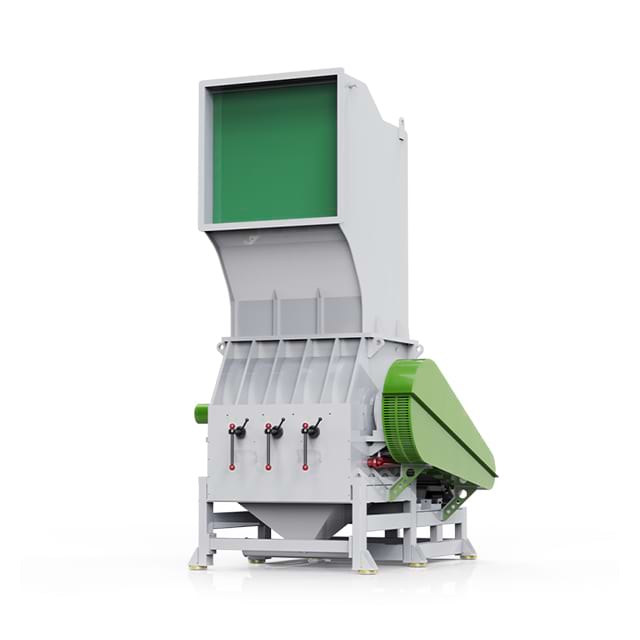
Prioritize a manufacturer that operates a fully equipped in-house testing facility. Spec sheets provide theoretical maximums, but real-world performance varies based on material contamination, moisture content, and bulk density. In-house labs eliminate the guesswork from the procurement process. You want to see the machine run your exact material before you sign the purchase order.
Conducting feedstock compatibility audits is a mandatory risk reduction step. Ship actual material samples from your waste stream to the manufacturer. Request recorded trial runs to prove actual throughput rates and flake consistency. This validation ensures the motor sizing and rotor configuration are perfectly matched to your operational reality. If you are processing PET bottles, the trial will reveal if the machine generates too many fines, which would cause issues in your downstream friction washers and optical sorters.
Evaluate the manufacturer's customization engineering capabilities. Standard catalog machines rarely fit perfectly into complex factory layouts. The manufacturer should be able to modify hopper inlet dimensions, adjust knife cutting angles, or alter the discharge height to accommodate your specific material anomalies and existing infrastructure. For example, if you are feeding long PVC pipes, the manufacturer must design a specialized pipe chute that prevents the material from bouncing back out of the cutting chamber.
Global shipping logistics introduce significant project variables. Audit the supplier's supply chain transparency and freight forwarding expertise. They should clearly define Incoterms (such as DDP, CIF, or FOB) and handle necessary customs clearance documentation efficiently. Realistic delivery schedules must account for port congestion and inland freight transit times. A supplier that promises a four-week delivery for a custom-built machine is likely not factoring in the realities of ocean freight and port delays.
Reliable suppliers provide comprehensive pre-installation documentation weeks before the equipment arrives. This site preparation package must include detailed foundation blueprints, precise electrical load requirements, and spatial footprint diagrams. Proper preparation ensures your facility is ready for immediate installation upon delivery. You need time to pour reinforced concrete pads, run heavy-gauge electrical conduit, and install the necessary compressed air lines before the shipping container hits your loading dock.
Define the parameters of a rigorous Site Acceptance Testing (SAT) protocol. The SAT must prove the machine operates at the contracted capacity using your facility's actual waste stream. Final project sign-off should only occur after the equipment sustains target throughput levels continuously without overheating or excessive vibration. The SAT should include a full shift run, testing the machine under real-world conditions, including operator shift changes and routine screen cleanings.
Evaluate the manufacturer's regional inventory of high-wear components. Rotary blades, stationary knives, screens, and drive belts require regular replacement. A resilient supply chain ensures these parts are dispatched domestically, preventing weeks of downtime waiting for international air freight. Ask the supplier for a list of parts they keep in stock at their local distribution center and verify their average shipping times.
Assess the depth of the supplier's operator training programs. Effective knowledge transfer covers daily operation procedures, preventative maintenance schedules, and safe jam-clearing protocols. Well-trained operators extend the lifespan of the equipment and prevent catastrophic mechanical failures caused by improper feeding. The training should include hands-on sessions showing operators how to properly set the gap between the rotary and stationary knives using feeler gauges.
Read past marketing claims to understand actual warranty structures. Clarify the distinction between parts coverage and labor coverage. Demand clear Service Level Agreements that guarantee specific response times for technical interventions. You need to know exactly how quickly an engineer will be available if the machine goes offline. A warranty that covers parts but requires you to pay for international flights and hotels for a technician is not a true support safety net.
Modern technical support relies heavily on remote diagnostics. Look for equipment featuring IoT integration and remote PLC access. These systems allow the manufacturer's engineers to diagnose electrical faults, monitor motor loads, and troubleshoot software issues off-site, drastically reducing the need for expensive field service visits. If a sensor faults out, a remote technician can often bypass it temporarily in the software to keep you running until a replacement part arrives.
Draft a comprehensive Request for Proposal detailing specific throughput requirements and material characteristics.
Demand explicit timelines for manufacturing, shipping, and final site commissioning.
Request a mandatory list of included spare parts for the first year of operation.
Establish a clear, documented Site Acceptance Testing protocol before signing purchase agreements.
A: Prioritize suppliers with transparent delivery logistics, verifiable Service Level Agreements, robust operator training programs, and a regional inventory of spare parts to minimize operational downtime.
A: Request references from facilities processing similar materials. Audit their compliance with international safety standards. Confirm they have an in-house laboratory for material testing trials and review their Site Acceptance Testing protocols.
A: Hydraulic systems automate the opening of the hopper and screen cradle. This significantly reduces the manual labor and downtime required for routine blade maintenance, sharpening, and clearing material jams.
A: Rotor types dictate how the material is grabbed and sheared. High-wear steel alloys ensure blades resist dulling when processing hard, abrasive, or contaminated plastics, maintaining throughput efficiency.
A: Lead times vary based on customization and shipping origins, typically ranging from 8 to 16 weeks. Installation and commissioning usually require 3 to 7 days, assuming proper site preparation.
A: Standard support should include installation supervision, initial operator training, remote troubleshooting, and a defined warranty period covering manufacturing defects and premature component failure.


