
- All
- Product Name
- Product Keyword
- Product Model
- Product Summary
- Product Description
- Multi Field Search
 English



| Quantity: | |
|---|---|


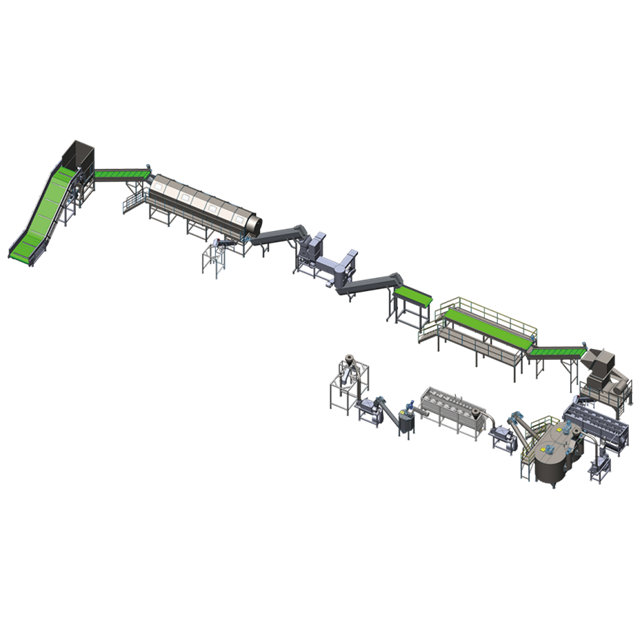
The PET Bottle Recycling Washing Line cleans recovered bottle material for further reuse. Its process combines size reduction, impurity separation, washing, dewatering and drying.
The line should be introduced through the cleaning route from recovered bottles or bottle flakes to prepared PET feedstock. Different collection streams contain different labels, residues and foreign materials, making incoming condition a major part of selection. Crushing, impurity separation, friction washing, hot washing and rinsing each occupy a defined place in the process. Dewatering, drying and collection then prepare the cleaned flakes for the chosen next operation. The published capacity range provides a project-planning reference, while the actual equipment arrangement must follow the feed and quality target. Buyers should distinguish clean-flake production from pelletizing and from food-contact approval. The most useful specification describes what enters the line, which contaminants must be addressed and what condition the next PET-processing equipment requires at discharge.
PET Bottle Recycling Washing Line
Water bottles, beverage bottles and PET packaging containers are identified feed applications. Describe whether the line receives complete bottles or prepared flakes. Labels, closures, dirt and other foreign matter affect the preparation and separation requirements.
Whole bottles and previously crushed flakes create different starting points for the installation. Describe the collection source, sorting already completed and the usual contamination. This helps establish which preparation stages are needed and prevents a line quotation from including or omitting equipment based only on the broad PET recycling label.
The described route covers feeding, crushing, impurity separation, friction washing, hot washing, rinsing, dehydration, drying and collection. Establish the entry point around the feed form. Whole-bottle and prepared-flake projects do not necessarily require the same equipment arrangement.
The route should be reviewed as connected operations rather than a collection of machine names. Define the input form and follow the material through crushing, separation, cleaning and final preparation. Transfer and collection requirements become clearer when the entry and exit condition of each main stage are identified.
Label separation and label removal equipment are identified in the product configuration. Their place in the process depends on the bottle feed. Specify label type and contaminant conditions to support a suitable separation discussion.
Labels and foreign components should be described explicitly in the feed specification. A cleaning route needs to address the actual contaminants present, while upstream sorting may remain a separate requirement. The line should not be described as removing every possible impurity without a material-specific review and an agreed output condition.
| Product or parameter | Listed configuration |
|---|---|
| PET Bottle Recycling Washing Line | PET bottle cleaning and flake preparation |
| Capacity selection | 1000-5000 kg/h |
| Voltage | 380V |
| Automation | Automatic |
| Cleaning route | Crushing; impurity separation; friction washing; hot washing; rinsing |
| After washing | Dewatering; drying; collection |
| Output material | Cleaned PET flakes |
Friction washing, hot washing and rinsing form the core cleaning sequence. Define the dirt and residue to be removed and the desired flake condition. Operating temperatures, chemical dosing and water requirements need a project-specific process specification.
The washing stages have different positions in the route, with rinsing following the selected cleaning treatment. State the contamination and clean-flake target so the proposed sequence can be reviewed together. A named hot-washing stage does not by itself establish the quality of every recovered PET batch.
The description offers capacity selection within 1000-5000 kg/h and lists automatic operation. Confirm the selected throughput basis with the complete line configuration. A capacity range does not establish the same layout or utility demand for every installation.
Capacity should be defined on a stated input or accepted-output basis. Include the intended feed and operating conditions in the project discussion, then obtain the selected equipment and utility requirements. Generic dimensional or component data should not be used as the installation specification for an entire configured washing line.
The equipment list includes dewatering and hot-air drying. Agree the discharge moisture requirement for the next process. A clean appearance alone does not confirm that flakes are ready for extrusion or another reuse application.
The output condition matters to storage and subsequent processing. Describe how flakes will be collected and what moisture condition the next machine requires. Dewatering and drying belong to that preparation scope, but the presence of those operations should not be interpreted as a universal moisture or final-quality guarantee.
Compare the JWT PET single-screw line and CJWH PET twin-screw line when pelletizing is required after washing. The washing line prepares flakes; extrusion and cutting must be defined separately within a complete recycling project.
A washing line supplies prepared flakes to a separately selected PET process. Pelletizing needs its own extrusion, cooling and cutting arrangement. Keeping those scopes distinct helps buyers compare a clean-flake project with a full washing-and-pelletizing route without assuming that the washing equipment already produces finished pellets.
Provide bottle source, contamination photographs, feed rate and flake quality targets to DYUN's PET washing team. Include the intended reuse application and available utilities. Food-contact requirements need their own process and compliance assessment before equipment selection.
A clear project specification identifies the bottle source, sorting condition and required flake quality. Include available space, collection arrangements and the intended next operation. These details make the proposed cleaning sequence reviewable and give the supplier a defined basis for explaining equipment scope and utility requirements.
DYUN's company background covers waste plastic recycling machinery. For bottle washing projects, the selection discussion should connect the received bottle condition, cleaning sequence and specified quality of the recovered flakes.
A PET cleaning project is best discussed around the incoming bottle stream and the required clean-flake output. The manufacturer's scope should distinguish preparation, cleaning, drying and collection from subsequent pelletizing. Application-specific quality expectations should accompany the capacity request so the proposed route addresses the actual recovery goal.
The described output is cleaned PET flakes after the selected cleaning and preparation stages. Pellet production requires a separate extrusion and cutting process. The intended next use should determine the required flake condition and associated quality checks.
Both starting forms are described, but they require different scope reviews. State whether bottles arrive whole or already crushed and identify sorting already performed. The equipment sequence should match that entry condition rather than be assumed from a general line description.
The route includes impurity separation, friction washing, hot washing and rinsing, with crushing and final dewatering, drying and collection as required. The selected sequence should address the actual bottle stream and desired clean-flake condition.
No. Cleaning and an intended packaging use do not establish food-contact compliance. Required material tests and application-specific approvals must be assessed separately. A washing-line description should not be presented as food-grade certification.
Describe bottle source, input form, contamination and sorting already completed. State the required clean-flake condition and output basis. Ask for the equipment sequence, utility requirements and collection scope to be identified so the price covers a defined project.
Agree representative incoming material and the required flake condition for the next process. Define how accepted output and remaining contamination will be evaluated. If moisture is important downstream, include that requirement in the assessment rather than relying only on visually clean flakes.


