
- All
- Product Name
- Product Keyword
- Product Model
- Product Summary
- Product Description
- Multi Field Search
 English



| Quantity: | |
|---|---|


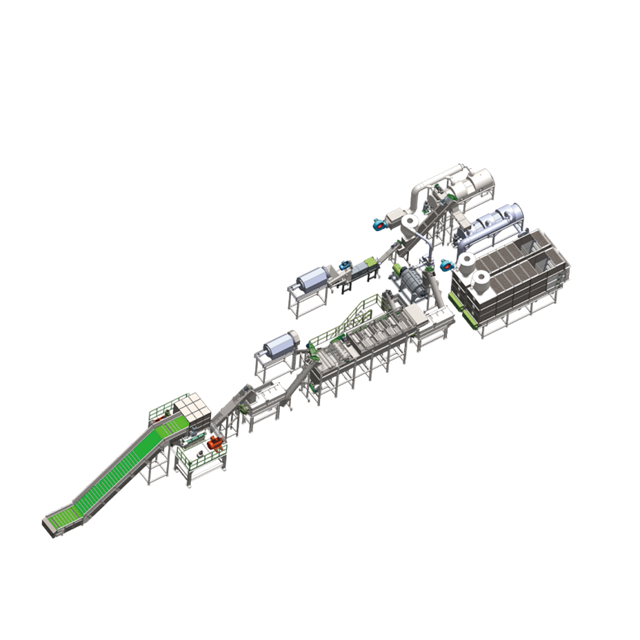
The Waste Film and Woven Bag Recycling Washing Line cleans flexible plastic waste for further recovery. It addresses PE films, PP woven bags and similar packaging waste.
Flexible-film washing should be planned around contamination and the physical form of the recovered feed. Agricultural films may carry soil, while woven bags and packaging films present different residues and handling conditions. The equipment sequence combines size preparation, cleaning, rinsing and water removal before collected material enters another recovery operation. This makes the washing route more important than a broad claim that every flexible waste stream is interchangeable. The published capacity range and voltage choices provide initial planning information, but the selected arrangement needs to match the actual PE or PP material. Buyers should state whether the output will proceed to squeezing, drying or pelletizing. A defined feed-to-output specification helps connect washing performance, material handling and the scope of the next process without implying that cleaned film is already finished recycled pellets.
Waste Film Woven Bag Recycling Washing Line
The product identifies cement, fertilizer and flour bags, agricultural films and industrial packaging films. Describe the waste source and polymer separately. Residual powders, soil and packaging contents create different cleaning requirements even within the same nominal material category.
The source of the waste helps explain the cleaning duty. Agricultural film, industrial packaging and woven bags can arrive with different residues and bulk forms. Describe these streams separately, including how they are sorted, so the proposed route addresses the material that will actually be supplied to the washing line.
Greenhouse and ground films may carry sediment. State the expected dirt load and any large foreign objects when planning the line. This feed assessment helps define preparation and washing requirements without assuming one cleaning arrangement fits every source.
Soil should be identified as part of the incoming condition rather than hidden within a total waste weight. Describe normal and difficult batches and the preparation already performed. These details give the washing discussion a realistic basis and help distinguish usable plastic flow from the entire collected load.
The configuration lists friction washing, rinsing, hot washing, dewatering and hot-air drying equipment. Agree which stages are required for the actual film or bag feed. The listed machines are a basis for process planning, not a fixed layout for all capacities.
The listed cleaning equipment should form a coordinated sequence with defined transfer points. Follow material from preparation through washing, rinsing and water removal, identifying the required output at discharge. A sequence-based review makes the quotation clearer than a collection of equipment names without an explanation of their process boundaries.
| Parameter | Value |
| Maximum Production Capacity | 300-3000 kg/h |
| Voltage | 380V, 220V, 440V |
| Automation Level | Fully Automatic |
| Equipment List | Friction Washer, Dewatering Machine, Rinsing Tank, Hot Air Dryer, Hot Wash Tank |
| Dimensions (L×W×H) | 200×100×300 cm |
| Power | 90kW |
| Core Advantages | High Efficiency, Low Energy Consumption |
| Core Components Brand | NSK (Bearings), ABB (Inverter), Others |
The product gives a 300-3000 kg/h range and describes automatic operation. Define whether the capacity target refers to incoming waste or recovered material. Contamination and feed presentation should be included when discussing a selected production rate.
The broad capacity range describes project choices rather than one universal installation. Compare proposals on the same feed condition and output basis, and obtain the selected equipment data. Voltage options likewise require selection for the site instead of being treated as simultaneously applicable to every supplied line.
Film and woven fabric differ from rigid flakes in their shape and handling behavior. Identify whether feed arrives loose, baled or pre-cut. The chosen feeding and transfer arrangements should keep material movement coordinated through the cleaning process.
Flexible material should be described by its usual delivered form. Loose film, tangled sections and bundled bags can present different loading situations even when they contain the same polymer. Include that information when reviewing preparation and transfer so the equipment discussion covers handling as well as cleaning.
The DYJG squeezer can be assessed for dewatering requirements. The JWP cutter-compactor line addresses later pelletizing after suitable preparation. Review moisture and discharge form at the interface between these process stages.
Water removal should be coordinated with the next operation's feed requirements. A separate squeezer or pelletizing route needs its own equipment scope and acceptance condition. Keeping those interfaces explicit helps buyers assess a washing-only project and an extended recovery line on clearly comparable boundaries.
Set limits for remaining dirt, foreign polymers and moisture according to the next use. Washing creates cleaned recycling feed rather than finished extrusion pellets. The required preparation should reflect the quality needed by the downstream pelletizing process.
The recovered-feed target should identify the polymer stream and the contamination condition suitable for reuse. Cleaning appearance alone cannot establish fitness for every pellet or finished product. State the intended destination and required checks so the washing route is reviewed against a practical material-quality objective.
Send DYUN's washing-line team photographs, waste source, polymer, contamination details and target throughput. Include utility availability and the desired cleaned-material condition. These details support a process arrangement suited to the actual flexible waste.
An enquiry should include photographs of normal feed and heavily contaminated batches. Add sorting information, required usable output and the preferred downstream route. These details support selection of the cleaning sequence and reveal which transfer, water-removal and collection equipment belongs within the priced installation.
The DYUN equipment background describes its role in waste plastic recycling. Film and woven bag projects benefit from an explicit contamination assessment and a defined discharge condition before choosing the washing and drying scope.
Flexible-waste projects require a manufacturer discussion centred on contamination and material handling. The cleaning sequence and downstream water-removal boundary should be explicit in the proposal. This allows a buyer to compare the selected route for agricultural film, woven bags or packaging waste without assuming identical preparation requirements.
The described applications include PE films, PP woven bags, agricultural films and packaging waste. Identify each intended stream and its contamination. A list of applications does not establish that mixed polymers or every bag residue can be processed together without assessment.
Describe soil content, film condition, sorting and preparation already performed. State the required cleaned-feed condition and downstream use. Those details help select the washing route and define its output basis instead of treating the total collected weight as usable plastic flow.
The washing route prepares cleaned material. Pellet production requires a separate extrusion and cutting process, with an appropriate feed condition. Any squeezing, further drying or pelletizing equipment should be identified explicitly in the project scope.
The published range is 300–3000 kg/h. It supports initial project discussion, while the selected arrangement must follow material condition and the agreed input or output basis. It is not a fixed guarantee for every flexible waste stream.
Use the same feed description, contamination condition and required output when requesting proposals. Compare preparation, washing, rinsing, water removal and collection scope. A price for washing alone should not be compared directly with one that also includes downstream squeezing or pelletizing.
Agree representative film or bags, including normal contamination, and the required cleaned-material condition. Clarify the rate measurement basis and downstream moisture needs. This keeps the assessment connected to the intended recovery process rather than visual cleanliness alone.


