
- All
- Product Name
- Product Keyword
- Product Model
- Product Summary
- Product Description
- Multi Field Search
 English

Views: 0 Author: Site Editor Publish Time: 2026-07-30 Origin: Site


Mismatched equipment capacities in a recycling plant create severe financial and operational consequences. Frequent idle times, material bottlenecks, and excessive energy consumption per ton can quickly destroy a facility's profitability. Purchasing standalone machines based on isolated specification sheets leads to catastrophic line inefficiencies. Theoretical capacity claims often fail in real-world scenarios. Material density changes, particle size variability, and moisture retention between stages invalidate these baseline numbers.
Systemic line balancing and proper material pretreatment are absolute engineering necessities. You cannot simply connect three machines and expect continuous flow. This guide provides a technical framework for synchronizing crushing, washing, and pelletizing stages. We will explore how to ensure continuous operation, maximize output, and evaluate vendor integration capabilities when investing in industrial plastic recycling equipment.
A balanced recycling line operates with high efficiency and minimal disruption. Success in this environment means achieving an Overall Equipment Effectiveness (OEE) greater than 85%. You should see stable amperage on extruder motors, indicating a consistent material feed. When capacities align perfectly, the entire system functions as a single organism. Material flows smoothly from the initial shredding phase through to the final pellet classification. Operators spend less time clearing jams and more time monitoring quality control metrics.
Bottlenecks quickly emerge when capacities are asymmetrical. An oversized crusher feeding an undersized washer creates immediate material overflow. Operators must constantly stop the crusher to let the washer catch up, causing unnecessary wear on the crusher's motor starter and drive belts. Conversely, an oversized pelletizer running on a starved feed wastes massive amounts of electricity. It also degrades polymer quality due to excessive residence time inside the heated barrel. The material burns or loses its structural integrity before it reaches the die, resulting in brittle pellets that fail impact tests.
Energy consumption penalties hit the operating budget hard. Running high-horsepower motors below their optimal load capacity wastes kilowatt-hours. Shredders and extruders require significant energy just to turn over. If they sit idle or run half-empty due to upstream delays, your energy cost per ton of finished product skyrockets. Efficient operations demand that these massive motors run at their designed load continuously. A 250kW extruder motor running at 40% capacity still draws a massive base load, destroying your margins on every shift.
To identify these asymmetries early, plant managers must track specific operational metrics across the line. Monitoring the frequency of surge bin high-level alarms provides immediate feedback on upstream overcapacity. Tracking the vacuum degassing pressure on the extruder reveals if the washing line's drying stage is failing to keep up with the throughput. These data points allow for targeted mechanical adjustments rather than guesswork.
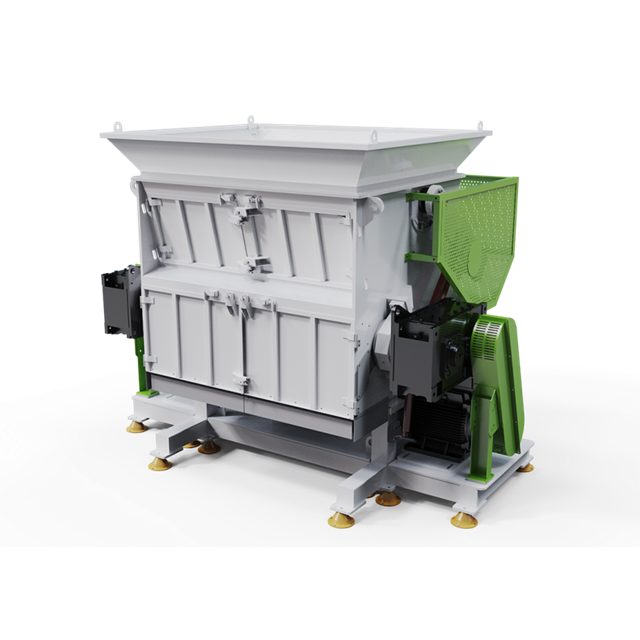
Bulk density and material form dictate the true throughput of a crusher. Rigid plastics behave very differently than flexible films inside a cutting chamber. Wall thickness also plays a major role in how quickly a machine can process scrap. You must move beyond the manufacturer's nameplate capacity. A crusher rated for 1,000 kg/hr on thick HDPE pipes might only achieve 400 kg/hr on loose LDPE film. The physical characteristics of the input volume change everything, requiring different rotor designs and blade angles to maintain feed rates.
Crusher screen hole size determines the particle size distribution (PSD). This directly impacts the intake requirements of the washing phase. Inconsistent particle sizes disrupt the feed rate of all downstream equipment. Smaller flakes wash faster and more thoroughly. However, reducing the screen size lowers crusher throughput and increases fines generation. Dust and fines represent direct material loss that ends up in the wastewater system. Finding the exact screen size that balances throughput with washing efficiency requires testing your specific material stream.
Crushing capacity must always exceed downstream capacity. You should size the shredding and crushing phase 15-20% higher than the target pelletizing output. This surge allowance accounts for inevitable operational realities. Blades dull over a shift, reducing cutting efficiency. Screens blind with melted material or wet labels. Routine maintenance, like clearing jams, requires brief stops. The extra capacity ensures the rest of the line never starves.
Rotor configuration also impacts capacity balancing. Staggered rotor blades provide a more continuous cutting action compared to straight blades, reducing amperage spikes and allowing for a more consistent discharge rate. When sizing the crusher, you must factor in the time required for blade sharpening and gap adjustment. A machine that is difficult to service will extend maintenance windows, negating any theoretical capacity advantages it might have on paper.
The percentage of dirt, labels, and oils dictates the necessary friction washing and sink-float separation time. Heavily soiled agricultural films require intense agitation. Higher contamination demands longer residence time in the tanks. This extended processing time effectively lowers the hourly throughput of the plastic washing line. You cannot force dirty material through quickly without sacrificing the final pellet quality. The friction washer's RPM and screen condition must be monitored daily to ensure it is actually removing contaminants rather than just pushing dirty water around.
Chemical pretreatment optimizes soil removal and conditions the polymer surface. Hot washing with caustic soda and surfactants breaks down stubborn glues and oils. This chemical conditioning directly impacts downstream extrusion efficiency. Clean, well-conditioned flakes melt more uniformly. They also reduce the frequency of screen changer purges during extrusion. Proper wetting agents ensure that contaminants separate fully from the valuable plastic in the sink-float tanks, preventing heavy plastics from carrying over with the light fraction.
Effective line balancing requires precise yield loss calculations. Contamination removal reduces the total weight of the material stream. If a batch of post-consumer scrap contains 15% dirt and moisture, the washer's output weight will be 15% less than the crusher's input weight. Downstream equipment must be sized for this reduced volume. Failing to account for yield loss results in oversized, inefficient extruders that struggle to maintain a consistent melt seal.
Drying capacity acts as the critical bridge between washing and pelletizing. Mechanical centrifuges and thermal dryers must work together to extract moisture. Residual moisture must drop below specific thresholds, often under 1-3%, before entering the extruder. Wet flakes cause foaming and degradation in the melt. The dryer frequently becomes the hidden bottleneck in the washing line, limiting the entire plant's output. Upgrading a thermal dryer's heating elements or increasing the centrifuge's RPM can often unlock hidden capacity across the entire line.
The bulk density of washed and dried flake dictates feeding efficiency. Light, fluffy materials struggle to enter the extruder screw naturally. You often need force feeders or compactor-extruders for low-density materials like LDPE film. The plastic pelletizing system must match screw speed (RPM) and Variable Frequency Drive (VFD) configurations to these specific feeding rates. Consistent feeding prevents surging and ensures stable melt pressure at the die head.
Material characteristics dictate screw design, Length/Diameter (L/D) ratio, and vacuum degassing requirements. The Melt Flow Index (MFI) of the plastic determines how it behaves under heat and shear. Highly printed or damp materials require aggressive double degassing to remove volatiles. Finer melt filtration screen changers are necessary for contaminated streams. Both degassing and fine filtration restrict melt flow, reducing overall throughput. You must size the extruder's drive motor to handle the increased torque required to push material through these restrictions.
The pelletizing die configuration heavily influences backpressure and throughput. Die hole diameter, open area ratio, and compression ratio must align with the polymer's viscosity. Cooling systems, whether water ring, strand, or underwater, must match the extrusion rate. Pellet drying and classification systems require careful calibration. Improper cooling leads to clumping, fines generation, and misshapen pellets that fail quality control checks. The water temperature in the cooling ring must be strictly controlled via chillers to maintain a consistent pellet shape.
Screen changer dynamics also play a massive role in continuous output. Continuous dual-piston screen changers allow operators to swap dirty filter meshes without stopping the melt flow. If you use a manual or single-plate screen changer on highly contaminated material, the frequent line stoppages will destroy your daily throughput averages, regardless of how large the extruder barrel is.
Calculating capacity requires a reverse engineering approach known as the "pull" method. You start with the desired finished product and work backward. If your goal is 1,000 kg/hr of finished pellets, you must calculate the required washing output. This involves factoring in moisture removal and fines loss. Then, you calculate the required crushing input, accounting for contamination loss and blade wear downtime.
| Processing Stage | Target Output (kg/hr) | Yield Loss / Factor | Required Input Capacity (kg/hr) |
|---|---|---|---|
| Pelletizing | 1,000 | 2% (Melt loss/fines) | 1,020 |
| Washing & Drying | 1,020 | 15% (Contamination/moisture) | 1,200 |
| Crushing | 1,200 | 20% (Surge/blade wear allowance) | 1,440 |
| Raw Material Sorting | 1,440 | 5% (Non-target plastics/metals) | 1,515 |
Decoupling the three stages with buffer silos is a critical engineering strategy. Buffer silos absorb micro-stoppages and keep the line flowing. You should place surge bins between washing and pelletizing. This allows the continuous operation of the extruder even if the crusher stops for a 15-minute blade change. Without buffers, a single jammed shredder halts the entire factory instantly.
The physical installation of the line dictates transfer mechanics. Pneumatic conveying systems, cyclones, and screw augers must handle the calculated volumes. You must size these transfer points correctly to prevent material backlogs. Poorly designed pneumatic lines damage pellets or allow dust accumulation between processing stages. The layout must minimize transport distances while allowing adequate space for maintenance access.
Balancing capital expenditure against operational uptime requires strategic decisions. Buying exactly matched capacities lowers initial costs but creates a high risk of line stoppage. Building in 20% upstream overcapacity with substantial buffers requires higher initial investment. However, this approach guarantees maximum operational uptime. The long-term profitability of continuous extrusion usually outweighs the initial cost of larger upstream equipment.
When designing the physical layout, follow these sequential steps to ensure proper material flow:
Assess a vendor's ability to engineer a cohesive line, not just sell individual units. System integration capabilities separate true partners from simple equipment brokers. Look for centralized Programmable Logic Controller (PLC) integration. This allows machines to communicate, balance material flow, and auto-adjust feed rates dynamically. A smart system slows down the shredder automatically if the washing tank approaches maximum capacity.
A reliable plastic pelletizing machine manufacturer must offer customization of key components. Standardized machines rarely handle varied scrap streams perfectly. You need customized screw configurations and custom-made die plates. Tailored pretreatment components based on your specific material mix are vital. Processing PET bottles requires completely different engineering than recycling flexible HDPE packaging.
Demand Factory Acceptance Testing (FAT) using your actual scrap material. A credible manufacturer will guarantee the throughput and quality metrics of the entire system. They will not just verify isolated machines running clean test plastic. Testing with your contaminated scrap reveals true throughput limitations. It also exposes any feeding issues or moisture retention problems before the equipment ships to your facility.
Evaluate the vendor's supply chain for critical wear parts. Crusher blades, screen changers, extruder screws, and die plates wear out regularly. You must ensure long-term capacity isn't degraded by extended maintenance downtime waiting for parts. A manufacturer with a robust local inventory keeps your plant running. Ask for specific lead times on high-wear items during the procurement phase.
Changing scrap streams present a massive risk to balanced lines. Switching from clean industrial scrap to post-consumer waste alters bulk density and contamination levels. You must build variable speed drives into the system to adjust dynamically. Modular conditioning tanks allow operators to increase residence time for dirtier batches. Flexibility in the initial design prevents the line from becoming obsolete when market supplies shift.
Preventative maintenance schedules often cause cascading plant shutdowns if not planned correctly. Crushers require frequent blade changes to maintain throughput. Washing lines require regular tank cleaning to remove sludge. Extruders require screen changes and die maintenance. The line must be designed with sufficient buffer capacity so these maintenance windows do not overlap destructively. Staggered maintenance keeps the extruder running while upstream components are serviced.
Water treatment capacity is another frequently overlooked risk. If your wastewater treatment plant cannot process the effluent generated by the washing line at full capacity, you will be forced to slow down the entire operation. Ensure your water filtration and chemical dosing systems are sized to handle the maximum theoretical output of the friction washers and sink-float tanks.
Successful plastic recycling relies heavily on fluid dynamics and continuous flow. It is not just a series of isolated mechanical processes bolted together. Achieving profitability requires precise alignment of crushing, washing, and pelletizing capacities.
Prioritize vendors who offer integrated PLC controls and custom screw engineering. Demand transparent yield-loss calculations and proven buffer management systems. A cohesive line design prevents bottlenecks and maximizes your energy efficiency.
To move forward effectively, take these actionable steps:
A: Crushers should generally have 15-25% more theoretical capacity than the pelletizer. This overcapacity accounts for inevitable blade wear, screen blinding, and material yield loss during the washing phase. It ensures the extruder never starves for material.
A: Excess moisture causes foaming in the melt and requires aggressive vacuum degassing. This slows down the extrusion process, increases energy consumption, and severely degrades final pellet quality by creating voids and weak structures.
A: Buffer silos decouple the processing stages. They allow the extruder to run continuously on stored flake while upstream equipment is temporarily paused for routine maintenance, blade changes, or managing unexpected material surges.
A: The die configuration, specifically hole size and compression ratio, determines the backpressure on the extruder. An improperly sized die restricts melt flow, causing material degradation, reducing hourly throughput, and increasing motor load.
A: Processing both requires significant modularity. While possible, the line must feature variable speed drives, interchangeable crusher screens, and specialized force feeders to handle the drastic differences in bulk density and feeding behavior.


