
- All
- Product Name
- Product Keyword
- Product Model
- Product Summary
- Product Description
- Multi Field Search
 English

Views: 0 Author: Site Editor Publish Time: 2026-07-29 Origin: Site


The profitability and operational stability of a recycling facility are largely determined before the material ever reaches the extruder. Processing post-consumer rigid plastics, such as high-density polyethylene (HDPE) and polypropylene (PP), introduces severe downstream bottlenecks if not handled correctly. Residual adhesives, organic contaminants, and high moisture levels lead to frequent screen clogging, severe outgassing, inconsistent melt pressures, and ultimately, brittle or downgraded pellets.
To achieve standardized, high-value recycled pellets, facility operators must evaluate washing not as an isolated preliminary step, but as the primary quality control mechanism. This guide examines how investing in a purpose-built rigid plastic washing line mitigates downstream extrusion failures, reduces operating costs, and maximizes the market value of the final product.
Residual dirt, paper labels, and rogue polymers wreak havoc on melt stability. When contaminated flakes enter the extruder, unwashed particulates rapidly accumulate on the melt filter. This forces the screen changer into continuous operation. Frequent screen interventions cause sudden drops in melt pressure. These fluctuations disrupt the continuous flow of the polymer melt. Operators face rapid filter wear and unplanned machine downtime. Every minute the extruder sits idle to replace a blown screen directly reduces daily output. Furthermore, excessive contaminants require finer mesh screens, which inherently slow down the extrusion rate and increase backpressure on the screw.
In a typical plant environment, running dirty flakes through a standard single-screw extruder can reduce screen life from several hours to less than twenty minutes. The labor costs associated with constantly monitoring and swapping screens add up quickly. More importantly, the physical degradation of the melt due to pressure spikes results in pellets with inconsistent bulk density. Buyers immediately notice these variations, leading to rejected shipments and lost revenue.
Moisture acts as a destructive agent inside the extruder barrel. When wet flakes encounter the high heat of the extrusion process, water instantly vaporizes. This rapid expansion of steam causes severe outgassing at the vent zones. If the venting system cannot handle the volume of steam, the trapped gas creates voids and foaming within the final pellet. Beyond physical defects, moisture triggers hydrolytic degradation. The polymer chains break down under the combination of high heat and water. This chemical reaction drastically reduces the tensile strength and impact resistance of the recycled plastic.
Operators often try to compensate for wet material by increasing the vacuum pressure on the extruder vents. This is a temporary fix that rarely solves the underlying issue. High moisture levels also cause the material to slip on the extruder screw, leading to surging and inconsistent output rates. The only permanent solution is to ensure the material entering the hopper is bone dry, which places the burden of performance squarely on the upstream drying equipment.
Washing Polyolefin (PO) rigid plastics presents unique difficulties compared to processing PET bottles. Post-consumer HDPE and PP containers often hold automotive oils, agricultural chemicals, or heavy industrial adhesives. These surface contaminants do not wash away with simple cold friction. Surface oils embed themselves into the microscopic scratches on the plastic flakes. Industrial adhesives smear across the material rather than detaching. Additionally, PO plastics float in water. This density characteristic requires specialized separation tanks designed specifically to push floating material forward while allowing heavier contaminants to drop out of the flow.
The physical geometry of rigid plastics also complicates the washing process. Unlike thin PET films, rigid containers shatter into thick, irregular flakes during granulation. These thick flakes have a lower surface-area-to-volume ratio, making it harder for mechanical friction to reach every contaminated surface. Specialized rotor designs are necessary to agitate these heavy flakes effectively without causing them to jam inside the washing chambers.
Poor washing quality ripples far past the pelletizing stage. When substandard pellets reach the final manufacturer, defects multiply. Residual moisture and volatile organics cause splay marks—silvery streaks on the surface of injection-molded parts. Structural brittleness leads to cracked products during assembly or transport. Lingering odors from unwashed organic residue make the plastic unusable for consumer-facing packaging. These downstream failures immediately lower the market value of the recycled plastics. Manufacturers will quickly reject batches that cause high scrap rates in their injection molding or extrusion blow molding machines.
The initial shredding and crushing phase prepares rigid plastics for effective cleaning. Integrating water directly into the granulator creates a wet-shredding environment. This immediate introduction of water acts as a pre-wash. It flushes out loose dirt, sand, and abrasive debris before the material reaches downstream equipment. Removing these abrasives early significantly reduces wear on the blades of friction washers. Wet-shredding also keeps the cutting chamber cool. This prevents heat-sensitive plastics from melting and smearing across the granulator knives, ensuring a consistent flake size and stable throughput.
Proper size reduction is the foundation of the entire line. If the flakes are too large, they will not pass through the friction washer screens efficiently. If they are too small, they become fines that are lost in the wastewater sludge. Maintaining sharp granulator knives and setting the correct screen size (typically 12mm to 16mm for rigid plastics) is a daily operational requirement that directly impacts the yield of the entire plant.
High-speed friction washers provide the mechanical action necessary to scrub the flakes. These machines utilize a fast-spinning rotor housed inside a stationary screen. The rotor paddles strike the plastic flakes, forcing them to rub aggressively against each other and the screen. This intense friction strips away paper labels, dirt, and loose surface contaminants. However, the mechanical action must remain balanced. The rotor RPMs and screen configurations must separate heavy contaminants without excessively degrading the plastic flakes. Over-processing turns valuable material into useless fines that wash away with the wastewater.
Thermal washing is mandatory for heavily soiled rigid plastics. The system maintains a temperature-controlled water bath, typically between 80°C and 90°C. At these temperatures, the viscosity of surface oils drops, allowing them to release from the plastic. Operators introduce caustic soda (NaOH) or specialized industrial detergents into the hot wash. The chemical dosing dissolves stubborn glues and breaks down organic residues. The combination of heat, chemical surfactants, and mechanical agitation ensures the flakes emerge entirely free of the contaminants that cause extrusion failures.
Maintaining the correct chemical concentration is a precise science. Too little detergent leaves oils on the flakes, while too much wastes money and complicates wastewater treatment. Automated dosing systems linked to pH sensors provide the most reliable method for maintaining the optimal chemical balance throughout a continuous production shift.
Separating the target rigid plastics from unwanted materials relies on specific gravity. Polyolefins like PP and PE have a density lower than water, causing them to float. Contaminants such as PVC, PET, glass, and metals have a higher density and sink. Sink-float tanks utilize a series of rotating drums or paddles at the water surface. These mechanisms gently push the floating PO flakes forward toward the discharge auger. Meanwhile, the heavy contaminants fall to the bottom of the tank, where a separate extraction system removes them. This physical separation guarantees the feedstock purity required for stable extrusion.
Removing water from the washed flakes requires a two-step process. First, centrifugal dewatering machines spin the material at high speeds. The centrifugal force drives the bulk surface water through a mesh screen. While effective, mechanical dewatering usually leaves the flakes with 2% to 3% moisture. To reach the strict threshold of less than 1% moisture, the material moves into thermal drying pipelines. Hot air blows through the transport pipes, evaporating the remaining microscopic moisture. This rigorous drying sequence guarantees the material is ready for the extruder hopper.
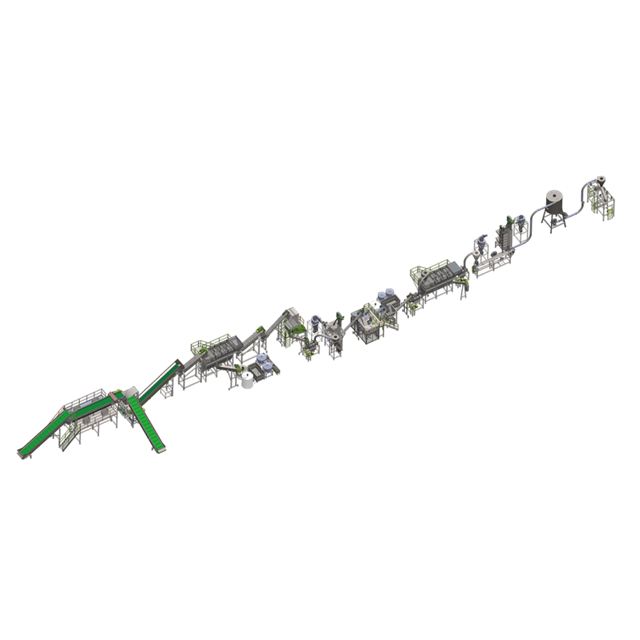
Operators frequently face the tension between washing residence time and material purity. Rushing the washing phase to boost output volume directly degrades downstream pellet uniformity. When flakes move too quickly through the friction washers or hot tanks, adhesives and oils remain attached. The resulting contamination forces the extruder to work harder, leading to blown screens and rejected pellets. Maximizing throughput at the expense of residence time is a false economy. True efficiency requires balancing the feed rate to ensure the mechanical and chemical actions have sufficient time to clean the material thoroughly.
High-performance washing demands significant energy, primarily for heating water and powering heavy motors. Evaluating utility efficiency involves looking at how the system manages heat. Modern systems utilize heat exchangers to capture thermal energy from the wastewater and transfer it to the incoming fresh water. Efficient insulation on the hot wash tanks prevents ambient heat loss. Furthermore, utilizing friction heat generated by the mechanical washers can supplement external thermal heating elements. Upgrading to premium efficiency motors on the granulators and centrifuges optimizes the overall energy footprint of the plastic washing line.
| System Component | Traditional Approach | Optimized Efficiency Approach | Direct Operational Benefit |
|---|---|---|---|
| Hot Wash Heating | Direct steam injection only | Insulated tanks with heat exchangers | Reduces thermal energy loss by up to 30% |
| Water Management | Continuous fresh water feed | Closed-loop recirculation system | Drastically lowers water consumption and compliance costs |
| Drying Phase | High-heat electric blowers | Centrifugal pre-drying + thermal pipeline | Achieves <1% moisture with lower electrical load |
| Chemical Dosing | Manual batch addition | Automated PLC-controlled dosing | Prevents chemical waste and ensures consistent flake purity |
Operating a washing facility without integrated wastewater treatment is financially unsustainable. A closed-loop water recirculation system captures the dirty water discharging from the friction washers and sink-float tanks. The system filters out the sludge, neutralizes the pH, and pumps the cleaned water back into the washing circuit. This reduces fresh water consumption drastically. It also retains the thermal energy already present in the water, lowering the heating demands for the hot wash phase. Effective water management lowers environmental compliance costs and prevents facility shutdowns due to local wastewater discharge limits.
Manual oversight of a complex washing process leads to inconsistent flake quality. Modern facilities rely on Programmable Logic Controller (PLC) integration. The PLC continuously monitors critical parameters such as water temperatures in the hot wash, chemical dosing rates, and the electrical loads on the friction washer motors. If a motor load spikes, indicating a material jam, the PLC automatically adjusts the upstream feed rate. This automation ensures the system operates at peak efficiency without human intervention. Scalability depends on this level of control to maintain consistent output quality as facility capacity expands.
Designing a washing process involves a conceptual trade-off between mechanical aggression and material yield. Utilizing highly aggressive friction washers guarantees the removal of stubborn paper labels and glues. However, this intense mechanical action shatters brittle plastics. The resulting plastic fines wash through the dewatering screens and end up in the sludge press. Operators lose valuable polymer weight. The system design must calibrate the rotor paddle angles and screen clearances to maximize friction on the contaminants while minimizing the physical destruction of the target plastic flakes.
A common misconception in the recycling industry is that higher machine RPMs automatically equate to better processing. While spinning a centrifuge faster removes more water, running a friction washer at maximum RPMs can cause localized melting of the plastic flakes. This creates clumps that trap dirt inside the polymer. Consistent, controlled mechanical action yields better feedstock. The goal is uniform flake size and consistent surface cleanliness. Stable flakes feed smoothly into the extruder hopper, maintaining a steady melt pressure and resulting in highly uniform pellets.
Selecting the right equipment supplier requires strict vetting. Facility managers must demand verifiable performance data gathered under continuous, realistic load conditions. Short, controlled demonstrations with pre-sorted clean bales do not reflect daily operations. A competent manufacturer will design custom configurations tailored to your specific facility feedstocks. They must demonstrate transparency regarding maintenance intervals and the replacement costs of high-wear parts like granulator knives and centrifuge screens. Ask for references from operational plants to verify the long-term reliability of their equipment.
Underestimating the physical space required for a complete washing, drying, and water treatment circuit is a critical implementation risk. These systems require extensive plumbing, electrical routing, and access walkways for maintenance. Furthermore, the electrical load for heating elements and heavy motors often exceeds the existing capacity of older industrial buildings. Facility managers must conduct a thorough utility audit before purchasing equipment. Ensure the local grid can support the peak amperage draw during startup and that the municipal water supply meets the continuous flow requirements of the system.
The reality of processing post-consumer plastic is severe wear-and-tear on the machinery. Friction washer blades erode, centrifuge screens tear, and shredder knives dull quickly when processing abrasive dirt. Without strict preventative maintenance schedules, flake quality will experience sudden drops. Operators must receive comprehensive training on how to monitor motor loads and identify the sounds of failing bearings. Implement a protocol for daily screen inspections and weekly blade sharpening. Maintaining a robust inventory of spare wear parts on-site prevents minor mechanical issues from causing days of lost production.
Inconsistent input material threatens the stability of the entire washing process. A bale of rigid plastics may contain hidden metals, heavy rocks, or massive chunks of unyielding purge blocks. If these items enter the granulator, they cause catastrophic blade failure. Mitigate this risk by implementing robust pre-sorting protocols. Install powerful overband magnetic separators and eddy current rotors to catch ferrous and non-ferrous metals. Utilize sensor-based sorting (NIR) to eject unwanted polymer types before the material enters the primary washing line. Protecting the machinery upstream ensures continuous downstream operation.
A: To prevent outgassing, foaming, and structural degradation of the pellets, moisture content must be reduced to less than 1% before extrusion.
A: Hot water, often combined with precise chemical dosing, is required to break down industrial adhesives, oils, and organic residues that cold friction washing cannot remove.
A: It significantly reduces fresh water consumption and retains heat from the thermal washing phase, drastically lowering both utility bills and wastewater treatment compliance costs.
A: Outgassing is primarily caused by residual moisture turning to steam under high extrusion temperatures, or by the burning of leftover organic contaminants, adhesives, and chemicals.
A: While some mechanical components overlap, PET and PO require different density separation methods (PET sinks, PO floats) and different thermal profiles, usually necessitating dedicated or highly customized lines.
A: Poorly washed material leaves micro-contaminants and volatiles in the pellets. During downstream injection or blow molding, this results in aesthetic defects, structural brittleness, and processing failures, lowering the market value of the pellets.
A: Look for transparent performance data under continuous loads, energy efficiency guarantees, the ability to run pilot tests with your specific feedstock, and robust post-installation support for wear parts and maintenance.


