- All
- Product Name
- Product Keyword
- Product Model
- Product Summary
- Product Description
- Multi Field Search
 English

Views: 0 Author: Site Editor Publish Time: 2026-05-25 Origin: Site


Industrial facilities today face mounting pressures from escalating waste disposal fees. Severe space constraints further complicate daily workflows. Accumulating bulky, uncrushed materials creates major operational bottlenecks across the manufacturing floor. Paying logistics providers essentially to ship air inside hollow bottles and crates represents a massive financial drain. Furthermore, holding these bulky scraps rapidly consumes valuable warehouse real estate. Facility managers need tangible solutions to regain control over their floor space. This comprehensive guide shifts the focus from generic environmentalism to concrete operational efficiency. We evaluate the core business case, assess potential risks, and outline strict shortlisting criteria. You will learn exactly how adopting compact and mid-sized industrial recycling units can optimize your daily operations.

Volume Reduction: Compressing waste footprint significantly lowers transportation and storage costs.
Revenue Potential: Pre-crushed, uniform plastic commands a higher market premium from downstream recyclers.
Risk Mitigation: In-house crushing ensures the secure destruction of proprietary prototypes, branded packaging, and sensitive materials.
Total Cost of Ownership (TCO): Long-term ROI depends heavily on blade durability, maintenance accessibility, and matching the machine's capacity to facility throughput.
Transporting hollow plastics drains logistics budgets quickly. Empty bottles, pipes, and crates take up significant volume. You end up paying freight companies to transport empty space. Reducing this volume directly impacts your bottom line. Crushed material packs densely into shipping containers. This simple step reduces shipping frequency and drastically lowers transport costs.
Sustainability frameworks also demand immediate action. Recent OECD reports indicate only 9% of global plastic undergoes successful recycling. Regulators increasingly pressure corporations to improve their environmental metrics. Handling your waste in-house helps you meet these compliance standards proactively. It proves your commitment to circular economy principles.
Furthermore, you must protect your intellectual property. Defective products or R&D prototypes pose severe security risks. Expired credit cards and branded goods demand secure destruction. If they reach the secondary market, they damage your brand reputation. In-house crushing guarantees total destruction. It turns sensitive materials into unrecognizable fragments before they ever leave your facility.
Manual waste reduction wastes costly labor hours. Automating this process frees up your workforce for highly productive tasks. Large bins of uncrushed scrap consume expensive warehouse square footage. By crushing materials, you immediately reclaim this valuable floor space. You can utilize this newly recovered area for core manufacturing activities instead of mere storage.
Crushers prepare raw scrap for the next recycling stages. They feed material directly into washing lines, dryers, and granulators. The primary goal involves creating highly uniform flakes. The internal screen mesh strictly controls this output size. High-quality uniform flakes command a premium market price. Downstream recyclers gladly pay more for well-processed materials. Alternatively, you can reuse these flakes internally. They integrate smoothly into your own injection molding processes. A reliable plastic crusher machine acts as the critical first step in this closed-loop system.
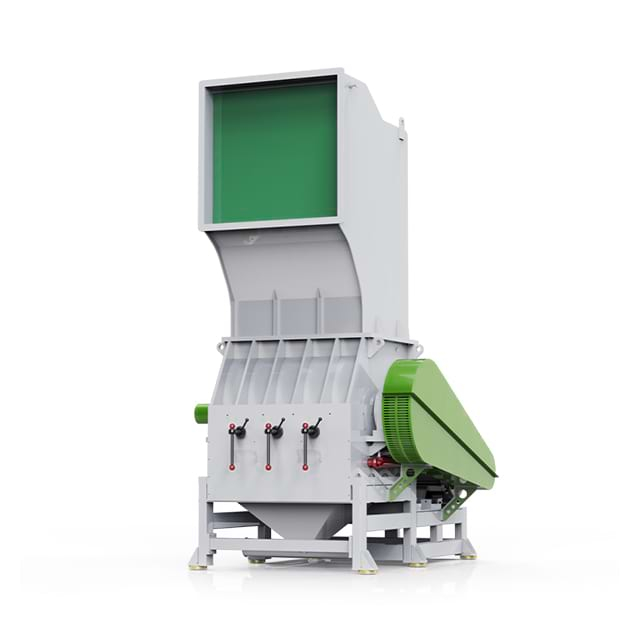
Compact units offer specific advantages for modern manufacturing facilities. They consume significantly less electrical energy than massive industrial shredders. Their modest footprint makes them perfect for localized workstations. You can place a plastic crusher machine small right next to an active injection press. Operators can feed sprues and runners directly into it immediately after molding. This entirely eliminates transporting scrap across the factory floor. These smaller units also require much lower initial capital expenditure. They perfectly match the needs of lower-throughput operational zones.
You must match the machine configuration directly to your plastic type. Melting points dictate blade selection heavily. High-speed blades generate intense internal friction. Soft plastics will melt and jam the rotor quickly. Hard plastics require robust, wear-resistant steel blades to prevent chipping.
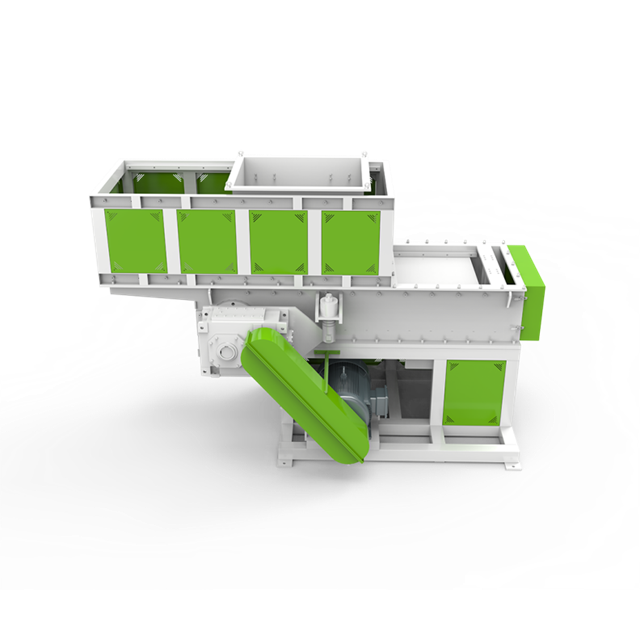
Feature | Single-Shaft Design | Double-Shaft Design |
|---|---|---|
Primary Use | High-volume, uniform size reduction. | Heavy-duty breakdown of thick, hard items. |
Operational Speed | Higher RPM for precise shearing. | Lower RPM, extremely high torque. |
Material Output | Consistent flakes filtered by a screen. | Irregular strips or large chunks. |
The cutting chamber ultimately defines output consistency. Fixed blades shear the incoming material against rotating blades. The physical clearance between them determines overall cutting efficiency. The screen mesh sits safely below the rotor. It acts as a strict physical gatekeeper. Only flakes small enough can pass through it. This mechanism guarantees highly consistent output dimensions.
You cannot compromise on operator safety. Modern equipment must include specific mandatory compliance features. Overload protection prevents dangerous motor burnout during material jams. Emergency stop mechanisms must be highly visible and easily accessible. Automated feed hoppers prevent dangerous material flyback. They keep operator hands far away from the active cutting chamber.
Crushing hard polymers generates intense noise and airborne particulates. You must maintain strict workplace compliance continuously. Ignoring these factors creates hazardous conditions for your staff. We strongly recommend evaluating machines featuring built-in soundproofing enclosures. Integrated dust-extraction systems capture harmful particulates immediately before they spread across your floor.
Many buyers mistakenly believe the "set it and forget it" myth. This false assumption leads to catastrophic breakdowns. Routine maintenance keeps your production running smoothly. Implement a highly realistic preventative maintenance schedule immediately upon installation.
Daily Protocols: Perform comprehensive visual checks of the feed hopper and the cutting chamber. Ensure no foreign metal objects remain inside.
Weekly Protocols: Apply high-grade lubrication to bearings and all accessible moving parts. Check belt tension thoroughly.
Monthly Protocols: Inspect, sharpen, or completely replace dull blades to maintain peak cutting efficiency. Clear out the screen mesh completely.
Sizing equipment incorrectly causes severe operational headaches. Under-sizing your equipment leads to constant motor strain. Pushing a low-capacity machine too hard guarantees premature burnout. Conversely, over-sizing the unit wastes initial capital. It also draws unnecessary electrical power daily. You must accurately audit your hourly waste generation before purchasing any equipment.
Providing a transparent, tiered pricing framework anchors realistic buyer expectations. The market offers distinct categories tailored to specific industrial volumes.
Equipment Tier | Estimated Price Range (USD) | Operational Sweet Spot |
|---|---|---|
Desktop / Light Commercial | $100 – $500 | Low-frequency tasks like secure credit card or badge destruction. |
Small to Mid-Sized Industrial | $1,000 – $15,000 | Manufacturing floors processing standard bottles, thin films, and localized offcuts. |
Heavy-Duty / High-Throughput | $15,000 – $100,000+ | Commercial recycling facilities requiring continuous, multi-ton hourly processing. |
Calculating your payback period requires straightforward math. Add your total savings on disposal fees to the projected revenue from sold scrap. Subtract your initial machine CapEx, operational electricity costs, and routine maintenance parts. Well-sized machinery often pays for itself completely within 12 to 18 months of continuous operation.
Never buy industrial equipment blindly. We highly recommend sending sample waste materials directly to vendors. Request unedited video evidence of their trial runs. This physical test verifies the final output size. It also proves actual blade performance on your specific polymer blends.
Verify downstream equipment compatibility early in the process. Your new machinery must integrate smoothly into current workflows. Check discharge heights and conveyor alignments meticulously. The system should feed seamlessly into existing friction washers, dryers, or pneumatic compactors.
Industrial crushers endure heavy mechanical stress constantly. Wear-and-tear items like blades and screens will inevitably require replacement. Emphasize local parts availability heavily during your vendor negotiations. Waiting several weeks for an overseas shipment paralyzes your daily operations. Demand clear commitments regarding spare parts inventory.
A high-quality crushing unit serves as a powerful strategic asset. It moves far beyond simple waste disposal. Integrating this machinery optimizes your logistics, guarantees intellectual property security, and unlocks profitable material recovery.
To maximize your investment, follow these immediate action steps:
Audit your weekly waste volume meticulously before engaging suppliers.
Categorize your scrap material types by hardness and melting point to ensure correct blade selection.
Secure physical trial runs from at least three different vendors before requesting formal quotes.
Establish your dedicated preventative maintenance team immediately upon equipment installation.
A: Generally, no. Different materials demand distinct blade designs. Hard plastics need standard shear blades to fracture the material cleanly. Soft films easily wrap around standard rotors and cause severe jams. Processing flexible films usually requires an integrated compactor or a specific scissor-cut blade design. Always match the blade geometry to the specific polymer type.
A: Shredders handle the initial volume reduction for large, tough, or highly bulky items. They run at very low speeds but produce massive torque. Crushers and granulators operate at much higher speeds. They take these smaller pieces and cut them into highly uniform flakes. You typically utilize a shredder first, followed by a crusher for final sizing.
A: Blade lifespan depends entirely on your material hardness and total operational hours. Processing highly abrasive materials dulls cutting edges rapidly. We strongly recommend inspecting blades monthly. Routine sharpening extends their usable life significantly. You must replace the blades entirely once routine sharpening can no longer maintain the required cutting clearance.