- All
- Product Name
- Product Keyword
- Product Model
- Product Summary
- Product Description
- Multi Field Search
 English




| Quantity: | |
|---|---|


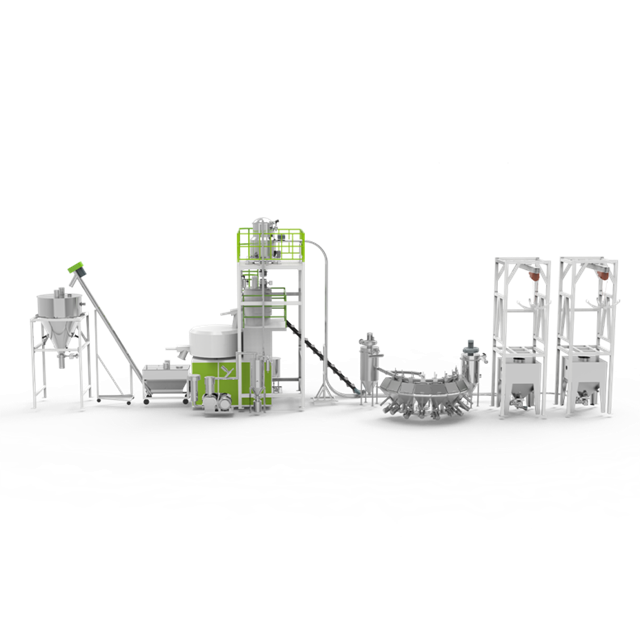
The PVC Centralized Feeding System transports material to plastic processing equipment through a coordinated feeding arrangement. It supports automated raw-material handling for extrusion and other production needs.
This system is best evaluated as a material-distribution project for a factory rather than as one isolated feeder. PVC powder, granules and related formulation components need a defined route from storage to their processing destinations. Multiple machines create questions about the number of delivery points, material identity and the rate required at each location. Automated delivery and the described control functions support that distribution discussion, while storage capacity and hourly conveying output remain distinct parameters. Buyers should state the material form and plant layout before using a published output range to shortlist equipment. Dust handling and the selected pipeline arrangement also belong in the project scope. A practical proposal identifies where materials enter storage, how they are allocated and which production machines must be supplied under normal operating conditions.
PVC Centralized Feeding System
PVC powder is an identified application. The broader description also refers to granules and masterbatch. State the actual form, formulation and handling characteristics when reviewing the system, rather than treating every listed material as an identical conveying duty.
Powder, granules and masterbatch should be identified separately in the material list. Their destinations and handling requirements need to be described for the actual project. The system specification should not assume that every material can share one route simply because all are used within a PVC-processing factory.
The system description covers centralized delivery to equipment such as extruders and injection molding machines. Map every intended destination and its feed demand. The total production requirement should reflect the machines that may draw material at the same time.
Map each processing destination and its required supply. A factory with several extruders or moulding machines needs a distribution description covering the intended delivery points. That layout provides a clearer basis for system selection than the total number of machines without their locations and material requirements.
Automated feeding transfers material from the supply arrangement to the processing equipment. This can reduce repeated manual handling. Define the feeding sequence, destination allocation and operating conditions in the project layout so the control scope is clear.
Automated delivery should be considered through the planned material path from storage to production. Identify how material enters the system and where it must be delivered. The proposal should show the selected arrangement and control scope, keeping distribution requirements visible rather than describing automation as an unrestricted plant capability.
| Parameter | Value |
| Capacity | 1200 kg |
| Voltage | 380V |
| Output | 50-1000 kg/hour |
| Warranty Period | 1 year |
| Weight | 8000 kg |
| Material | Stainless Steel |
| Core Components | Motor |
| Automation Level | Automated |
| Dimensions (LxWxH) | 400 cm x 310 cm x 500 cm |
| Power | 22 kW |
The product lists 50-1000 kg/hour output and a separate 1200 kg capacity entry. These values describe different quantities. Clarify the storage basis and the intended conveying duty before using either value to size the factory system.
Storage mass and hourly delivery are different measures. The former describes held material, while the latter concerns flow to processing equipment. Keep their bases distinct in the proposal and ask how the published entries relate to the selected project instead of treating a storage figure as production output.
PLC control and frequency-inverter operation are described. Specify the required monitoring and material routing for the plant. The final control arrangement should follow the number of destinations and process needs rather than a generic automation description.
Distribution control should be reviewed with the number of destinations and material routes. Confirm the selected PLC and inverter arrangement and the required operator information. A described control function should not be expanded into an unverified integration claim for every existing machine or factory-management platform.
The product identifies vacuum conveying for material transfer. Discuss the dust-control arrangement around PVC powder and the loading points. Claims of fully dust-free operation need an agreed equipment scope and operating conditions.
Powder handling requires a clear discussion of enclosed transfer and dust-related equipment. State where material is loaded and where handling conditions are sensitive. The described vacuum or dust-management functions should be specified as project features rather than converted into a claim of completely dust-free operation.
The broader centralized feeding system provides another material-handling reference. The SJZ PVC pelletizing line serves PVC extrusion and pellet formation. Feeding and pelletizing remain separate functions that need coordinated interfaces.
A central distribution system and a PVC pelletizing line perform different duties. The former supplies material, while the latter processes it. Define the interface and material requirements of the receiving equipment so the feeding proposal can be assessed around actual production needs and a clearly separated machinery scope.
Send DYUN's material-handling team a machine layout, destination list, material forms and peak feed requirements. Include pipe-route constraints and electrical supply. This supports a feeding proposal based on the actual factory arrangement.
Provide a layout showing storage, delivery points and relevant distances. Add each material's form and required supply rate. These details support a project-specific pipeline and control discussion, with utilities and installed equipment selected for the actual arrangement rather than inferred from generic component values.
DYUN's company information sets out its plastic machinery background. PVC feeding projects require a defined factory distribution layout and material-handling duty so the automated system can be specified alongside the production equipment.
The manufacturer's proposal should describe the PVC material routes and receiving machines as a coordinated system. Plant layout, powder or granule form and required delivery rates provide the project basis. Storage, conveying, controls and dust-handling scope should remain distinct so each function can be reviewed before purchase.
The description covers powder, granules and formulation-related materials such as masterbatch. Identify each intended material and destination. The final routing and handling arrangement should follow the actual factory requirement rather than assume one shared route suits every component.
The page lists a 1200 kg capacity entry separately from a 50–1000 kg/h output range. Storage and hourly conveying are different measures. Their application to the selected arrangement should be confirmed before they are used for plant planning.
Multiple processing destinations are described. The project needs to identify their locations, material requirements and supply rates. That information determines the distribution discussion; it should not be replaced by an unsupported fixed maximum number of machines.
No zero-dust guarantee is established. The description includes dust-related handling features, which should be specified for the actual loading and conveying arrangement. Define the plant requirement and confirm the selected equipment rather than assuming complete elimination of dust.
Provide the factory layout with storage locations and processing destinations, plus material forms and required rates. Identify existing equipment and utilities. This allows pipeline, distribution and control scope to be priced around the actual plant.
Confirm material routes, delivery-point requirements, selected controls, utility data and installation scope. Ask how storage and conveying figures apply to the quoted arrangement. Commercial or service terms should be obtained in the proposal rather than inferred from mixed generic website entries.