
- All
- Product Name
- Product Keyword
- Product Model
- Product Summary
- Product Description
- Multi Field Search
 English

Views: 0 Author: Site Editor Publish Time: 2026-07-23 Origin: Site


Unplanned downtime in high-volume plastic recycling facilities carries severe financial penalties. When lines stop unexpectedly, facilities face lost throughput, severe material degradation, and missed production quotas. Polymer thermal degradation during sudden halts ruins batches and requires extensive cleanouts. Reactive run-to-fail strategies fail completely in abrasive environments processing post-consumer resins. Facility managers constantly battle the operational friction between aggressive production schedules and the necessity of routine inspections. Ignoring equipment health directly compromises output quality and worker safety. You need a structured, evidence-based approach to downtime control. Shifting from ad-hoc repairs to standardized, preventative inspection frameworks ensures continuous operation. Strategic vendor partnerships further stabilize production lines. This guide provides actionable inspection protocols to keep your machinery running at peak efficiency.
A successful maintenance program relies on strict performance metrics. Facilities track Overall Equipment Effectiveness (OEE), Mean Time Between Failures (MTBF), and Mean Time to Repair (MTTR). These metrics reveal the true health of your operation. High OEE indicates that equipment runs efficiently without frequent interruptions. Low MTBF signals underlying mechanical issues requiring immediate attention. Optimizing these numbers requires a shift away from reactive repairs. Consistent monitoring prevents minor wear from escalating into catastrophic failure. You must measure these data points weekly to spot negative trends before they result in a complete line shutdown.
Sudden halts in a plastic pelletizing system lead to massive throughput losses. Material left inside the barrel during an unexpected shutdown degrades rapidly. This creates purged material waste and blocked die heads. Clearing a blocked system wastes valuable energy during system reheating. Operators spend hours removing hardened polymer instead of producing usable pellets. The financial impact includes both lost production time and wasted raw materials. When processing heat-sensitive polymers like PET or PVC, a sudden stop can carbonize the material on the screw flights, forcing a complete barrel pull and manual wire-brush cleaning.
Neglected maintenance introduces severe safety hazards and compliance risks. Hydraulic leaks create slip hazards and fire risks near heated extrusion zones. Electrical faults in control panels can cause arc flashes. Combustible dust accumulation around shredders violates industry safety standards. OSHA compliance requires strict adherence to maintenance schedules. Sudden interventions on broken machinery often bypass standard Lockout/Tagout (LOTO) protocols. This puts maintenance technicians at extreme risk of injury. A well-maintained machine is inherently safer to operate and troubleshoot.
Beyond direct safety risks, inconsistent maintenance degrades the final product quality. Worn extruder screws fail to mix additives properly, leading to color variations and weak mechanical properties in the final pellets. Dull shredder blades generate excessive fines and dust rather than uniform flakes, which chokes downstream pneumatic conveying systems. By maintaining tight tolerances on all cutting and mixing components, you guarantee a consistent, high-value end product that meets strict buyer specifications.
An effective maintenance strategy utilizes a tiered structure. It divides tasks into daily, weekly, and monthly intervals. This prevents overwhelming maintenance teams while ensuring comprehensive coverage. Daily checks catch immediate hazards. Weekly deep-dives monitor progressive wear. Predictive technologies anticipate failures before they occur. Structuring your approach this way builds a culture of ownership among operators and technicians.
Operators must perform pre-start walkarounds before every shift. They inspect safety guards, check emergency stops, and verify machine clearance. Visual inspections target fluid leaks around hydraulic lines and gearbox seals. Technicians look for early signs of hose degradation. Auditory checks identify abnormal grinding or bearing noise. Unusual structural vibration indicates misalignment or loose mounting bolts. Safety interlock verifications ensure that access doors shut down the machine immediately when opened.
Weekly evaluations focus on internal system health. Technicians inspect high-pressure hoses, fittings, and seals. They test hydraulic oil condition and viscosity for particulate contamination. Temperature controllers and pressure transducers require regular calibration checks. Drive belts, gears, and chains need tension, alignment, and lubrication verification. Filter replacements maintain fluid cleanliness and prevent premature pump failure. Monthly checks involve pulling oil samples for laboratory analysis to detect microscopic metal shavings.
| Maintenance Tier | Focus Area | Action Items |
|---|---|---|
| Daily (Shift-Level) | Safety & Visuals | Check emergency stops, inspect for leaks, listen for abnormal bearing noise. |
| Weekly | Hydraulics & Drives | Test oil viscosity, check belt tension, calibrate pressure transducers. |
| Monthly | Predictive Tech | Vibration analysis on rotating equipment, thermal imaging on electrical panels. |
| Quarterly | Major Components | Measure screw/barrel wear, inspect gearbox internals, test heater band resistance. |
Modern facilities implement vibration analysis on heavy rotating equipment. Sensors detect microscopic imbalances in shredder rotors before bearings fail. Thermal imaging detects electrical hotspots in control cabinets. It also highlights gearbox friction and bearing wear. Catching these thermal anomalies prevents catastrophic failure and expensive secondary damage to surrounding components. Ultrasonic testing can also identify thinning in pneumatic conveying pipes before they blow out and spill material across the facility floor.
Critical machinery requires specific inspection criteria based on operational stress. We break down evaluation dimensions to connect machine features to production outcomes. Proper inspection protocols extend component lifespan and maintain product quality. You must tailor these protocols to the specific types of plastic you process, as rigid materials cause different wear patterns than flexible films.
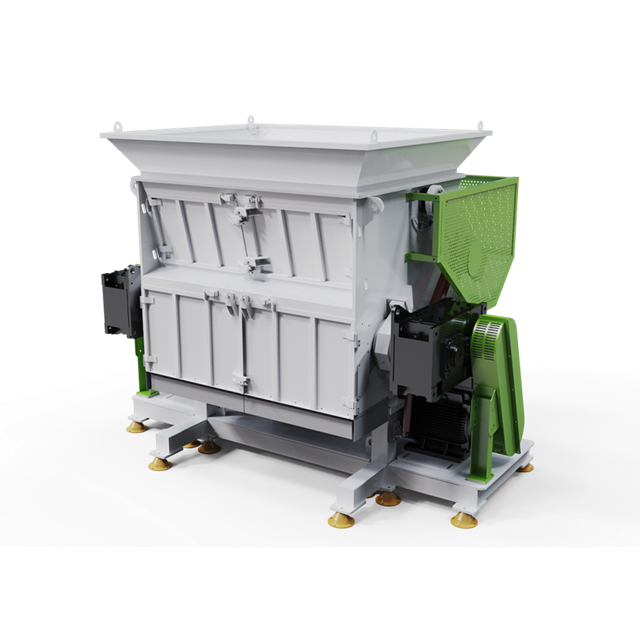
A plastic shredder machine endures extreme mechanical stress. Technicians must measure rotor and stator knife wear frequently. Maintaining proper cutting gaps ensures efficient size reduction and prevents material wrapping. Mounting bolts require strict torque verification to prevent blade detachment. Screen integrity checks are vital. Operators inspect classifier screens for tears, deformation, or excessive wear. Damaged screens allow oversized materials to jam downstream equipment. Hydraulic ram and pusher systems need regular evaluations. Technicians inspect cylinder rods for scoring, check for pressure drops, and monitor valve responsiveness under heavy loads.
When processing highly abrasive materials like glass-filled nylon or agricultural films contaminated with sand, shredder blades dull rapidly. You must establish a strict rotation schedule for sharpening or replacing these blades. Operating with dull knives forces the main motor to draw excessive amperage, leading to overheating and premature stator failure. Always keep a spare set of sharpened knives on hand to minimize downtime during changeovers.
Extrusion lines demand precise dimensional tolerances. Technicians utilize ultrasonic testing or manual bore gauges to measure screw and barrel wear. Maintaining proper compression ratios ensures consistent melt quality. Die face and cutter blade alignment directly impacts pellet shape. Operators monitor blades for micro-chipping. Dull blades cause pellet agglomeration and irregular geometry. Water ring and centrifugal dryer inspections prevent moisture issues. Maintenance teams clear polymer blockages, inspect rotor blades, and check moisture extraction efficiency.
Proper plastic recycling equipment maintenance dictates that you regularly inspect the screen changer mechanism. Hydraulic leaks around the screen changer indicate failing seals that will eventually allow molten polymer to escape. You must also verify the functionality of the melt pressure transducers. If these sensors fail, the extruder could over-pressurize, leading to a catastrophic blowout at the die head. Calibrate these sensors quarterly against a known standard.
Material handling systems feed the entire line. Belt tracking requires daily adjustment to prevent edge fraying. Cleat inspections ensure consistent material elevation. Magnetic separators demand frequent cleaning. Removing accumulated tramp metal prevents catastrophic damage to shredder blades and extruder screws. Inspect the bearings on all conveyor rollers for signs of seizing, which can cause the belt to drag and eventually tear.
Facility managers must evaluate conceptual trade-offs when upgrading equipment or standardizing their fleet. Equipment durability directly correlates with vendor support capabilities. Choosing the right partner simplifies maintenance and reduces downtime. You need machinery built for the harsh realities of a 24/7 recycling environment, not light-duty applications.
Selecting a reliable plastic pelletizing machine manufacturer requires evaluating Service Level Agreements (SLAs). You need rapid technical support responsiveness and remote diagnostics availability. Assess the manufacturer's domestic spare parts inventory. Relying on overseas shipping for critical components causes unacceptable delays. Demand factory-level training for your in-house maintenance teams. Proper training ensures your staff understands advanced diagnostic procedures and can perform complex rebuilds safely.
Cheaper, maintenance-heavy equipment drains operational budgets over time. Premium systems feature engineered quick-change tooling and superior accessibility. Modular design reduces MTTR during routine wear-part replacements. Investing in accessible machine architecture allows technicians to swap components in minutes rather than hours. This keeps production lines running and maximizes facility output. Look for machines with swing-away die heads, easily accessible hydraulic manifolds, and standardized off-the-shelf electrical components.
Executing a stringent maintenance framework involves practical hurdles. Facilities must address implementation risks proactively. Clear mitigation strategies ensure long-term program success. You cannot simply hand a checklist to an operator and expect immediate compliance; you must build a system that supports their workflow.
Operators often resist new administrative tasks. Integrating daily checklists into standard operating procedures (SOPs) requires careful planning. Checklists must be concise to avoid causing shift-change bottlenecks. Training programs should emphasize how routine checks prevent difficult, messy cleanouts later. When operators understand the direct benefit to their workflow, compliance increases. Provide them with digital tablets rather than paper clipboards to streamline the data entry process.
Finding defects means nothing if they remain unaddressed. Facilities must transition from simply logging issues to creating structured work orders. Using a CMMS prevents identified minor issues from being ignored. The system tracks the work order from creation to completion. This closed-loop process ensures accountability across the maintenance team. If an operator reports a frayed belt on Monday, the CMMS should automatically flag the maintenance supervisor to schedule a replacement during the next planned shutdown.
Balancing inventory costs against downtime risks is challenging. Holding critical spares like custom extruder screws, shredder blades, and hydraulic valves ties up capital. However, extended lead times for these parts cause massive production losses. Track component lifespan to order parts just before they are needed. Establish a vendor-managed inventory system for high-turnover items like filters, lubricants, and standard bearings.
Implementing a CMMS requires accurate data entry from technicians. Incomplete data renders the system useless. Management must enforce strict logging protocols. Facilities use historical data to adjust OEM-recommended maintenance intervals. Real-world plant conditions often dictate more frequent inspections than factory manuals suggest. If you process heavily contaminated agricultural film, your screen changers and shredder blades will require attention far more often than the baseline recommendations.
Rigorous equipment inspection acts as a primary driver of operational profitability, safer workspaces, and product consistency. Reactive maintenance destroys production schedules and wastes valuable raw materials. Structured frameworks keep your lines running efficiently. You must commit to a proactive culture to see real improvements in uptime and throughput.
A: The most critical tasks include checking blade gap tolerances, performing visual inspections for tramp metal, and verifying hydraulic fluid levels. Maintaining precise blade gaps ensures efficient cutting and prevents catastrophic rotor damage from material jamming.
A: Frequency depends entirely on polymer abrasiveness and throughput volumes. Standard inspection intervals should occur weekly. Signs of dulling include irregular pellet shapes, increased fines, and excessive motor amperage draw during operation.
A: Common symptoms include increased operating temperatures, slow cylinder cycle times, and unusual knocking noises. Visible fluid leaks around fittings, degraded hose crimps, and pressure drops also indicate impending hydraulic system failure.
A: Unexpected downtime usually stems from heater band failures, blocked screen changers, and feed throat bridging. Degraded polymer buildup inside the barrel also causes severe blockages that require extensive manual cleanouts.
A: A reliable manufacturer reduces costs by providing standardized OEM parts and accessible machine designs for faster cleanouts. They also supply robust technical documentation, remote diagnostics, and comprehensive factory training for your maintenance staff.
A: Preventive maintenance is schedule-based, such as changing gearbox oil every 1,000 hours. Predictive maintenance is condition-based, utilizing tools like vibration sensors and thermal cameras to replace a bearing exactly when it begins to fail.
A: Preventing pellet clumping requires strict monitoring of water temperature and maintaining consistent water flow rates. Technicians must also regularly inspect cutter hub alignment and ensure blades maintain flush contact with the die face.


