
- All
- Product Name
- Product Keyword
- Product Model
- Product Summary
- Product Description
- Multi Field Search
 English

Views: 0 Author: Site Editor Publish Time: 2026-07-22 Origin: Site


Unplanned downtime in continuous plastic recycling operations directly erodes profit margins. Emergency repairs cost significantly more than scheduled interventions. Operating high-stress machinery like shredders, granulators, and extruders to the point of failure results in degraded output quality. It accelerates wear on critical components and creates unpredictable production bottlenecks. Establishing a rigorous, evidence-based preventive maintenance framework shifts operations from reactive firefighting to predictable, optimized asset management. This guide details how to structure, evaluate, and execute a comprehensive plastic recycling equipment maintenance strategy for industrial processing lines. We will cover component-specific protocols, inspection schedules, and spare parts management to keep your facility running at peak efficiency.
Defining what successful maintenance looks like requires clear, measurable metrics. Operations should target greater than 95% uptime across the entire processing line. Consistent pellet melt flow index (MFI) and zero safety incidents are equally critical benchmarks. Achieving these targets requires a fundamental shift from reactive repairs to proactive asset management. When you wait for a machine to break, you lose control over your production schedule and your product quality.
Calculating the true impact of reactive maintenance reveals significant operational liabilities. Halted production incurs a massive penalty in lost throughput per hour. Expedited shipping for emergency replacement parts and lost material yields further compound the damage. Excessive energy consumption during unplanned system restarts and heater re-heating cycles drives up operational expenses unnecessarily. Every time an extruder shuts down unexpectedly, the polymer inside can degrade, requiring extensive purging before production can resume.
The impact on end-product quality is severe and immediate. Worn blades, clogged screens, or degraded extruder screws introduce contamination. They cause volatile organic compounds (VOCs) to build up and create thermal inconsistencies in the melt. These issues directly lead to rejected pellet batches. Buyers of recycled pellets demand strict adherence to specifications. If your machinery cannot maintain consistent temperatures and pressures due to poor maintenance, your final product will fail quality control checks.
To illustrate the cascading effects of poor maintenance, consider the relationship between component wear and system efficiency:
| Component Issue | Immediate Operational Impact | Downstream Consequence |
|---|---|---|
| Dull Shredder Blades | Increased motor load and amperage draw | Overheating gearboxes, reduced throughput |
| Worn Extruder Screw | Loss of conveying efficiency and pressure | Inconsistent pellet size, poor degassing |
| Clogged Melt Filter | Spikes in backpressure | Ruptured burst discs, forced line shutdowns |
| Degraded Heater Bands | Cold spots in the extruder barrel | Unmelted particles in final pellets, screw damage |
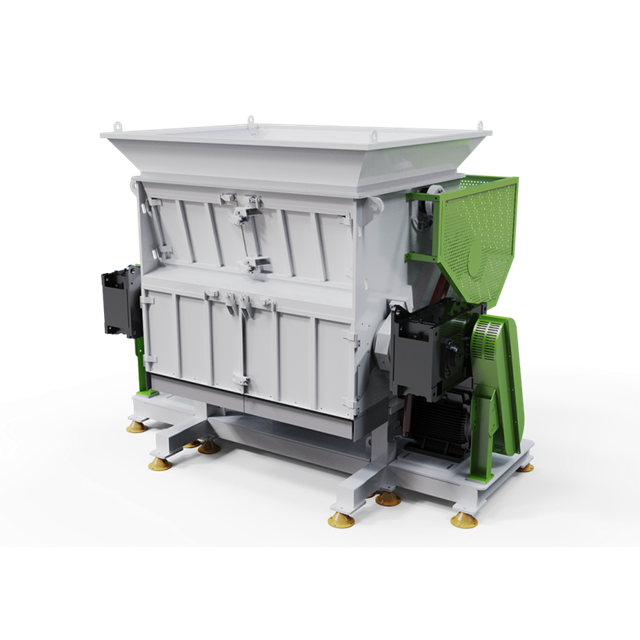
A reliable plastic shredder machine requires strict inspection, sharpening, and rotation schedules. Heavy-duty rotor and stator blades processing rigid plastics take a massive beating. You must check hydraulic systems for feed pushers, hoppers, and screen-cradle assemblies daily. Monitoring gearbox temperature and bearing lubrication under high-torque, variable-load conditions prevents catastrophic failure. If a main rotor bearing seizes, you are looking at days of downtime for a complete teardown.
Granulator-specific protocols focus on maintaining precise rotor-to-bed knife clearances. This gap is typically set between 0.1mm and 0.3mm. Maintaining this tolerance prevents material smearing and stops the generation of excessive plastic fines. Acoustic monitoring of high-speed shafts detects minor bearing misalignments early. Screen tensioning, wear inspections, and rapid clearing of blockages prevent heat buildup. If plastic melts within the cutting chamber, it will lock up the rotor entirely.
Follow these steps for proper granulator knife maintenance:
Thermal and sensor maintenance is critical for a high-performing plastic pelletizing system. Monitoring, testing, and calibrating heating bands, ceramic heaters, and thermocouple sensors prevents localized polymer degradation. Regular calibration of melt temperature and melt pressure sensors protects downstream components from over-pressurization. If a pressure transducer fails and reads low, the extruder will continue to push material until a burst disc blows or the die head is damaged.
Extruder screw and barrel care involves precise wear measurement. You must track axial and radial clearance tolerances using specialized mechanical or ultrasonic gauges. Managing venting systems is equally important. Cleaning vacuum ports and condenser pots ensures volatiles and moisture are efficiently extracted from the melt. A clogged vacuum port leads directly to porous, low-quality pellets.
Downstream pelletizing components require meticulous attention. Die face cutter alignment, blade tensioning, and wear-plate grinding prevent "tails" or multi-pellet chains. Water ring, underwater, and strand cooling system maintenance involves descaling heat exchangers. You must clean water filtration units and monitor water flow and temperature controls. Poor water cooling leads to pellets sticking together in the storage silo.
Washing line and centrifuge care involves clearing highly abrasive plastic fines and sludge. Friction washers, sink-float tanks, and pre-wash units accumulate dirt rapidly. Inspecting centrifugal dryer screens for wear, imbalance, and rotor erosion is essential. Hard contaminants like glass, metals, or sand will destroy a centrifuge rotor if left unchecked. You must pull the screens and inspect the rotor flights for hard-facing wear every month.
PET flake and pellet decontamination units require maintaining strict vacuum levels. Inert gas (nitrogen) purification loops in solid-state polycondensation (SSP) reactors must be leak-tested regularly. Preventing polymer bridging and cleaning internal discharge valves in pre-crystallizers and decontamination silos ensures continuous operation. If PET dust accumulates in the crystallizer, it can ignite or cause severe clumping.
Conveyor belts and mechanical feeders need regular belt tracking, tensioning, and motor load monitoring. This prevents slippage and uneven feed rates to the shredders. Inspecting screw conveyors for trough wear and flight damage is necessary when transporting abrasive regrind. A worn screw conveyor will lose capacity and eventually jam.
Sorting sensor and separation unit maintenance includes weekly lens cleaning. Air-injector nozzle testing and calibration of optical (NIR) and color sorting cameras keep separation efficiency high. Testing magnetic separators and eddy current systems for foreign metal removal protects downstream shredders and extruders. A single stray bolt passing a faulty magnet can destroy a set of granulator knives instantly.
| Maintenance Cadence | Primary Focus Areas | Specific Tasks |
|---|---|---|
| Daily / Shift-Change | Visual & Auditory Checks, Safety Systems | Check fluid levels, clear screen changers, test E-stops. |
| 30-Day (Minor) | Blade Clearance, Sensor Calibration, Filters | Sharpen shredder blades, calibrate thermocouples, replace air filters. |
| 60-Day (Medium) | Hydraulic Diagnostics, Screw Tolerances | Test hydraulic oil, measure screw-to-barrel clearance, check belt tension. |
| 90-Day / Annual (Major) | Gearbox Rebuilds, Structural NDT, OEM Audit | Flush gearboxes, perform NDT on rotors, replace worn extruder barrels. |
Visual and auditory checks identify abnormal vibrations, grinding noises, or local hotspots across the entire system. Operators must walk the line at the start of every shift. Basic mechanical care includes cleaning screen changers, checking hydraulic pressures, and verifying water cooling levels. A daily safety audit verifies the proper functionality of emergency stops, guard interlocks, and metal detector reject valves. Never bypass a safety interlock to keep a machine running.
Cutting component service involves sharpening or rotating blades on the shredder and checking granulator knife clearances. Sensor and instrument verification requires testing and calibrating heat zone thermocouples, melt pressure transducers, and optical sorter air nozzles. Air and fluid filter replacements involve cleaning electrical cabinet intake filters and replacing hydraulic return-line filters. Dirty electrical cabinet filters lead to overheated VFDs and unexpected drive faults.
Wear analysis measures extruder screw-to-barrel clearance and inspects die plates for hole deformation or channel blockage. Hydraulic and pneumatic systems testing includes checking hydraulic oil condition, accumulator pre-charges, and inspecting pneumatic lines for leaks. Drive alignment checks involve verifying belt tensions, motor-to-gearbox alignments, and inspecting coupling inserts. A misaligned motor will destroy coupling inserts and eventually damage the gearbox input shaft.
Structural and core testing involves non-destructive testing (NDT) of critical shafts, main rotors, and high-stress structural welds. Complete fluid replacements require draining, flushing, and refilling extruder and shredder gearboxes with high-performance synthetic lubricants. Major rebuilds include replacing worn-out extruder barrels or screws, refurbishing the die face, and conducting structural inspections of heavy washing centrifuges. Plan these overhauls during scheduled plant shutdowns to minimize production impact.
A skills gap analysis evaluates if the on-site team possesses the complex hydraulic, electrical, and programming competencies required for modern recycling lines. Your mechanics might be great at swapping bearings, but troubleshooting a PLC fault requires different skills. Tooling requirements involve weighing the cost of purchasing advanced diagnostic tools against outsourcing specialized services. Vibration analyzers, thermal cameras, and barrel alignment lasers are expensive but necessary for predictive maintenance.
Evaluating OEM support from a plastic pelletizing machine manufacturer involves reviewing service level agreements (SLAs). You need rapid remote diagnostics, software upgrades, and access to emergency field technicians. Warranty compliance ensures that highly critical maintenance milestones are performed by certified manufacturer technicians. If your team attempts a complex gearbox overhaul and fails, you risk voiding the active warranty coverage on that equipment.
Criticality analysis classifies spare parts into categories to optimize inventory. Class A components are critical to operation and must be kept in stock to prevent prolonged downtime. These include custom extruder screws, specialized bearings, and proprietary PLC modules. Class B items are important but have shorter lead times. Class C items are standard hardware and belts. Proper asset management ensures that the right parts are available when needed, minimizing production interruptions.
A: Shredder blades typically require inspection every 30 days. Sharpening frequency depends entirely on the material processed. Highly abrasive materials, like glass-filled polymers or dirty agricultural film, necessitate much more frequent sharpening to maintain cutting efficiency and prevent motor strain.
A: The ideal rotor-to-bed knife clearance in a granulator is generally set between 0.1mm and 0.3mm. Maintaining this precise gap prevents material smearing, reduces the generation of excessive plastic fines, and keeps the cutting chamber temperature under control.
A: Measuring extruder screw and barrel clearance ensures optimal melt pressure and prevents material degradation. Excessive wear allows plastic to flow backward over the screw flights. This leads to inconsistent pellet quality, poor mixing, and significantly reduced production throughput.
A: Regularly calibrate heating bands, ceramic heaters, and thermocouple sensors. Accurate temperature control prevents localized hotspots that cause polymer degradation. You must also ensure the extruder screw design matches the specific polymer being processed to avoid excessive shear heating.
A: Daily checks must include visual and auditory inspections for abnormal vibrations or grinding noises. Verify all safety systems like emergency stops and guard interlocks. Check hydraulic pressures, inspect for oil leaks, and ensure water cooling levels and flow rates are adequate.


