
- All
- Product Name
- Product Keyword
- Product Model
- Product Summary
- Product Description
- Multi Field Search
 English

Views: 0 Author: Site Editor Publish Time: 2026-02-23 Origin: Site


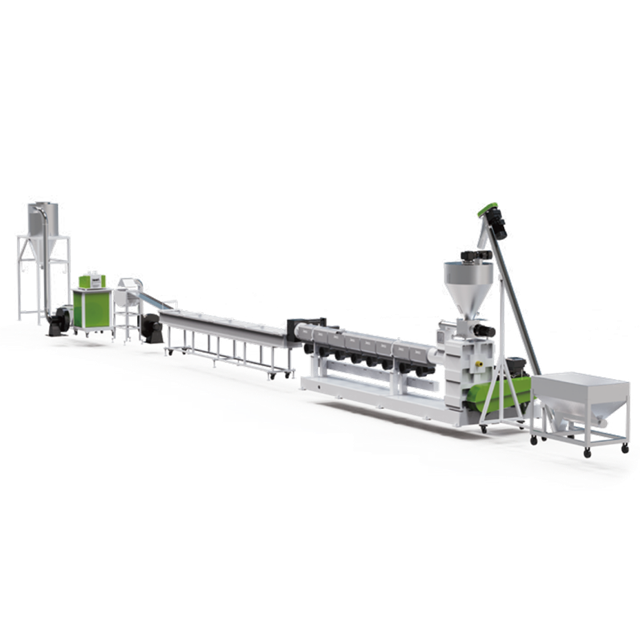
Manufacturers today face a dual mandate that often feels like a contradiction. You are under immense pressure to reduce raw material costs and meet sustainability targets, such as specific Post-Consumer Recycled (PCR) content percentages. Yet, you cannot compromise on the structural integrity or surface finish of your final product. This creates a significant operational gap. While virgin resin offers predictability, recycled feedstock introduces chaos. Variable flow rates, hidden contamination, and trapped moisture can quickly destabilize a process designed for pristine polymers.
The skepticism surrounding recycled materials is valid, but it is also manageable with the right engineering approach. Integrating recyclates is not simply a matter of swapping pellets; it requires a systematic evaluation of your machinery's capabilities. This guide details the technical retrofits, process adjustments, and quality control protocols required to run recycled materials on your existing extruder line without sacrificing efficiency.
Audit First: Most standard single-screw extruders require specific L/D ratios (Length/Diameter) and upgraded filtration to handle recyclates effectively.
Feedstock Control: Consistency in Melt Flow Index (MFI) is more critical than purity; blending strategies are essential to stabilize the process.
Degradation Risk: Recycled polymer chains are shorter and more sensitive to shear heat; screw design must prioritize gentle mixing over high compression.
Filtration Necessity: Continuous screen changers are often non-negotiable to prevent downtime from inevitable contamination spikes.
Before you purchase a truckload of recycled flake, you must audit your current hardware. Equipment designed for virgin material often lacks the flexibility to handle the inconsistencies of recycled plastic. The three critical areas to evaluate are screw geometry, torque capacity, and venting.
The Length-to-Diameter (L/D) ratio of your barrel is the primary constraint. Recycled materials generally require more residence time to melt gently and allow volatiles to escape. Standard extruders typically feature a 24:1 L/D ratio, which is sufficient for virgin pellets but often falls short for recycling applications.
For high-quality recycling integration, an L/D ratio of 30:1 or higher is preferred. The added length provides the necessary space for efficient venting and mixing without overheating the polymer. If your current line is short, you may face limitations on the percentage of recyclate you can blend before quality degrades.
Recycled feedstock behaves differently than virgin pellets in the feed throat. Fluff, irregular regrind, and pellets with varying bulk densities can cause friction coefficients to fluctuate wildly. You need to assess if your current drive train has the headroom to handle these torque spikes.
If your motor is already running at 85-90% load with virgin material, introducing recyclates could lead to frequent stalling or overheating. A robust drive system must handle the "stick-slip" behavior common with non-uniform feedstocks.
Virgin polymers are dry and clean; recycled plastics are not. They release a host of volatiles during processing, including residual moisture, ink solvents, and degradation byproducts. If these gases are not removed, they result in splay, bubbles, or structural voids in the final part. Check your barrel for vacuum venting ports. If your current setup lacks a degassing zone, you will likely struggle to produce a defect-free product with high PCR content.
The golden rule of extrusion is stability. Recycled materials are inherently unstable. Your success depends on how well you can flatten these variations before they reach the screw.
Many processors obsess over contamination, but inconsistent Melt Flow Index (MFI) is often the silent killer of productivity. A speck of dirt might cause a surface blemish, but a sudden shift in MFI changes the pressure profile of the entire line, leading to surging and dimensional failure.
You must establish strict acceptance criteria for your suppliers. Consistency in pellet size and bulk density is non-negotiable. If the bulk density varies, the screw fill rate changes, and your output becomes unpredictable.
Water is the enemy of polymer integrity. The type of moisture management you need depends heavily on the polymer:
Polyolefins (PE, PP): Usually only carry surface moisture. Standard hot air dryers are often sufficient.
Hygroscopic Polymers (PET, Nylon): These absorb moisture into their molecular structure. If not dried properly, they undergo hydrolysis in the barrel, permanently destroying mechanical properties.
Evaluate your auxiliary equipment. For materials like PET, a standard hopper dryer may not be enough. You might require crystallizers or dehumidifying dryers to ensure the material is bone-dry before it enters the extruder line.
Relying on pre-mixed batches can be risky due to stratification during transport. The most effective method is mixing at the throat using gravimetric dosing units. By controlling the mix ratio precisely—for example, a 70% virgin to 30% recycled split—you create a buffer against batch-to-batch variations in the recycled stock. Gravimetric systems adjust in real-time to weight changes, ensuring the formulation remains constant even if the bulk density of the recyclate shifts.
Once you understand your material, you often need to upgrade specific hardware components to process it efficiently. These retrofits protect your machinery and ensure product quality.
Contamination is inevitable in recycling. The question is how you handle it. Traditional manual slide plates require you to stop the line to change screens. With recycled materials, screens clog much faster, leading to unacceptable downtime.
The ROI on continuous screen changers is significant here. These systems allow dirty screens to be swapped out without interrupting the melt flow. For heavily contaminated post-consumer waste, backflush or self-cleaning filtration systems are often necessary. They prevent the dangerous pressure spikes that can damage the die or gearbox.
Using a general-purpose screw for recycled plastics is a recipe for degradation. Recycled polymers have shorter molecular chains and are more sensitive to shear heat.
Barrier Screws: These are highly recommended. They use a secondary flight to separate the melt pool from the solid bed, ensuring that unmelted solids do not pass through while keeping the melt temperature low.
Low-Shear Mixing: You want to mix the material, not shred it. Modify the screw tip with low-shear mixing elements that distribute additives and homogenize the melt without adding excessive heat history.
While a twin-screw extruder offers superior mixing capabilities and is the industry standard for compounding, a well-designed single screw with the right barrier flights can successfully process blended materials.
If your barrel has venting ports, ensure they are equipped with powerful vacuum pumps. Retrofitting a high-vacuum system helps pull out the volatiles that cause surface defects. This is critical for maintaining the aesthetic quality of consumer-facing products.
Processing recycled plastic is about damage control. The material has already been melted at least once, meaning its thermal stability is lower than virgin resin. Your process controls must reflect this fragility.
Avoid the standard "ramp up" temperature profile. Instead, adopt a "reverse" or "hump" profile. The goal is to put energy into the material early to melt it quickly, then lower the barrel temperatures in the metering zone. This prevents the melt from overheating as it travels down the screw. By reducing the heat near the end of the barrel, you preserve the remaining antioxidant stabilizers in the polymer.
Even with good blending, recycled material will cause pressure fluctuations. A melt pump (gear pump) placed between the extruder and the die is an excellent investment. It acts as a firewall, isolating the die from the surging pressures in the barrel. The extruder feeds the pump, and the pump feeds the die with metered precision. This ensures that the dimensional stability of your profile or sheet remains constant, regardless of what is happening upstream.
You cannot manage what you do not measure. Install sensors to track melt pressure and specific energy consumption (kW/kg). A spike in specific energy often indicates a change in material viscosity or a clogged screen. detecting these anomalies early allows operators to intervene before they produce a silo full of scrap.
Integrating recycled plastics is an economic calculation that goes beyond the price per pound. You must analyze the Total Cost of Ownership (TCO) to ensure the switch is profitable.
| Cost Factor | Virgin Material | Recycled Material | Impact on TCO |
|---|---|---|---|
| Raw Material Cost | High | Low to Moderate | Positive (Savings) |
| Filtration Consumables | Minimal | High (Screens) | Negative (Cost) |
| Energy Consumption | Standard | Higher (Drying & Processing) | Negative (Cost) |
| Maintenance (Wear) | Low | High (Abrasive contaminants) | Negative (Cost) |
| Scrap Rate | Low (<1%) | Moderate (2-5%) | Negative (Risk) |
While recycled flake is cheaper, the processing costs are higher. You will spend more on screen packs, energy for drying, and potentially labor for handling issues. The savings on the input material must outweigh these operational increases.
Be prepared for a potential drop in output. To limit shear heat and degradation, you may need to run the line at lower RPMs. If your factory relies on maximum throughput to absorb overheads, this reduction in speed needs to be factored into your margin analysis.
Recycled materials are abrasive. Contaminants like paper fibers, metal fines, and glass residue act like sandpaper on your equipment. Standard nitrided barrels will wear out quickly. You should budget for bimetallic barrels or carbide coatings as a necessary capital expense to prolong equipment life.
Successfully integrating recycled plastics into your production is not just a procurement strategy; it is an engineering challenge. It requires a holistic approach that combines upgraded filtration, gentle screw designs, and tighter process controls. The goal is to balance the cost savings of recycled feedstock with the operational demands of maintaining product quality.
We recommend starting small. Do not convert your entire plant overnight. Begin with a pilot run using a 20-30% blend on your existing extruder line. This allows you to gather baseline data on pressure stability, melt quality, and wear rates. Only once you have stabilized the process at this level should you commit to full-scale hardware retrofits and higher percentage blends.
A: It is difficult without modification. Standard screws often generate too much shear heat, degrading the material. You typically need a specialized screw design with barrier flights and enhanced venting or degassing systems to run 100% recyclate effectively. Without these changes, you will likely face issues with surging and poor melt quality.
A: It accelerates wear significantly. Contaminants in the recyclate act as abrasives, wearing down screw flights and barrels much faster than virgin resin. To mitigate this, hardened wear coatings or bimetallic barrels are highly recommended to extend the lifespan of your equipment.
A: The primary culprits are inconsistent melt flow and trapped moisture or volatiles. Inconsistent flow leads to pressure surging, while trapped moisture causes bubbles and splay in the final product. Addressing these requires strict feedstock controls and proper drying equipment.
A: Usually, you do not need to change the die itself. However, because recycled materials can cause pressure fluctuations, you may need to install a melt pump (gear pump) before the die. This ensures that the pressure reaching the die remains constant, preserving the dimensional accuracy of your product.


