
- All
- Product Name
- Product Keyword
- Product Model
- Product Summary
- Product Description
- Multi Field Search
 English

Views: 0 Author: Site Editor Publish Time: 2026-08-16 Origin: Site


Fragmented, batch-based plastic recycling creates severe operational bottlenecks on the plant floor. Facilities relying on disconnected machinery face high labor costs, inconsistent material transfer, and constant cross-contamination risks. Moving material manually between shredders, washers, and extruders introduces variables that degrade final pellet quality. Throughput remains limited by the slowest manual step in the chain. Transitioning to a fully integrated, continuous process eliminates these inefficiencies. By evaluating modular recycling machinery and engineering a synchronized, end-to-end automated line, plant operators maximize yield and standardize output. Continuous systems ensure a steady feed rate. This reduces thermal degradation in the extruder and maintains a consistent Melt Flow Index (MFI). We will outline the framework for designing, evaluating, and implementing an automated continuous recycling line.
Establishing baseline metrics is the first step in designing a continuous operation. Plant managers must define the target throughput in kilograms per hour (kg/hr), acceptable downtime percentages for maintenance, and final pellet quality standards. Consistent MFI and minimal volatile organic compounds (VOCs) are primary quality indicators. Hitting these metrics requires uninterrupted material flow from the initial sorting stage to the final bagging station. You cannot manage what you do not measure. Operators need real-time data on material density, moisture content, and melt pressure to keep the line running at optimal capacity.
Facility footprint dictates the physical architecture of the line. Linear layouts work best for long, narrow buildings, allowing straight pneumatic conveyance. U-shaped continuous line layouts optimize space in square facilities and centralize utility connections, reducing the length of electrical and water lines. Material yield optimization requires segmenting input streams into distinct value categories. Target high-value polymers go straight to the primary line. Medium-value missorted plastics require secondary sorting. Negative-value waste residues must be ejected early to prevent equipment damage.
| Layout Type | Space Requirement | Conveyance Complexity | Utility Centralization | Best Application |
|---|---|---|---|---|
| Linear Layout | Long, narrow footprint | Low (straight runs) | Poor (spread out) | Facilities with extended floor plans |
| U-Shaped Layout | Square footprint | Medium (requires bends) | Excellent | Compact plants needing centralized power/water |
| L-Shaped Layout | Corner-heavy footprint | Medium | Moderate | Facilities working around existing structural columns |
Comparing the capital expenditure (CAPEX) of integrated continuous lines against operational expenditure (OPEX) savings reveals the long-term financial viability of automation. Continuous systems require higher upfront investment in conveyance, sensors, and centralized controls. They drastically reduce labor requirements, improve energy efficiency by eliminating start-stop power surges, and minimize material handling waste. Batch systems force operators to manually load hoppers, move gaylord boxes with forklifts, and constantly adjust machine parameters. This manual intervention introduces human error and slows down production.
Continuous processing becomes financially viable when processing volumes exceed 500 kg/hr. Below this threshold, the complexity of automated interconnects may outweigh the labor savings. At higher capacities, the reduction in operator intervention and the increase in premium pellet output justify the initial engineering costs. A fully automated line running at 2,000 kg/hr can operate with just two technicians monitoring the PLC screens, compared to a batch system requiring six to eight manual laborers.
Automated material separation technologies must be integrated before the size-reduction stage. Optical polymer sorters utilize near-infrared (NIR) sensors to eject non-target plastics. Overbelt magnetic metal separators and eddy current systems remove ferrous and non-ferrous metals. Proper initial sorting protects downstream industrial plastic recycling equipment from severe mechanical damage and cross-contamination. A single stray bolt can shatter granulator blades and score extruder barrels, causing days of downtime.
Implementing a robust sorting protocol involves several stages:
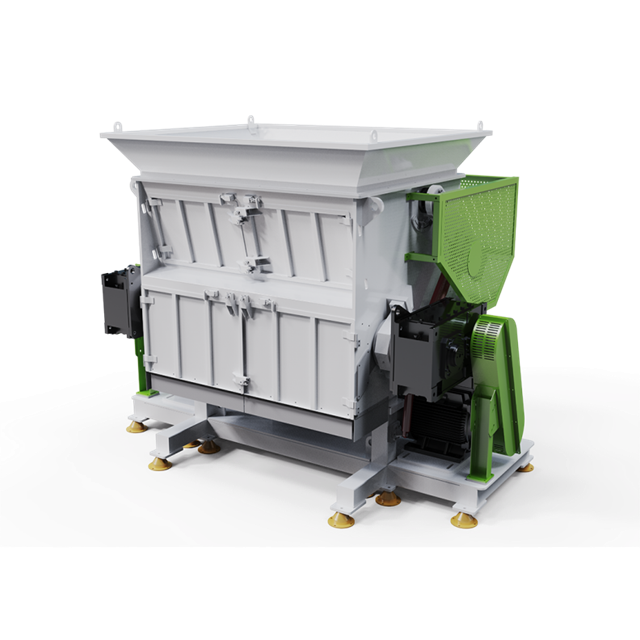
Establishing a consistent feed rate starts at the size-reduction stage. Single-shaft shredders provide controlled, metered output suitable for rigid plastics. Double-shaft shredders excel at processing bulky, flexible materials like agricultural films. The selection of industrial blades and granulator knives requires wear-resistant alloy steels to ensure high-durability cutting. Dull blades cause friction, leading to thermal degradation of the polymer before it even reaches the extruder. Operators must monitor amp loads on the shredder motors; a sudden spike usually indicates dull blades or a jammed rotor.
Uniform screen sizing in the granulator is mandatory. Irregular flake sizes cause surges in downstream pneumatic conveyors and create uneven melting profiles in the extrusion phase. Maintaining sharp knives and properly calibrated screens ensures a uniform bulk density for the washing and pelletizing stages. If the screen holes are too large, oversized flakes will bridge in the hoppers. If they are too small, the granulator will overwork, generating excessive dust and fines that clog the washing line filters.
A continuous plastic washing line removes organic contaminants, paper labels, and residual adhesives without halting material flow. The sequence typically involves high-speed friction washers, sink-float density separation tanks, and hot wash systems. Friction washers use mechanical agitation to strip surface dirt. Sink-float tanks separate polymers based on specific gravity. For example, PET sinks while polyolefin caps and rings float, allowing for easy skimming and separation.
Automated chemical dosing and continuous water filtration prevent line stoppages. Inline pH sensors adjust detergent levels dynamically. Rotary drum filters remove suspended solids from the wash water. Maintaining clean water circulation is critical to achieving high-purity flakes and maintaining continuous throughput. If the wash water becomes saturated with sludge, the friction washers lose their effectiveness, and contaminants will carry over into the drying phase.
Transitioning from wet friction washing to centrifugal dewatering requires robust mechanical design. Centrifugal dryers spin the wet flakes at high speeds, forcing water through a perforated screen. For highly absorbent materials or flexible films, thermal drying systems follow the mechanical dewatering phase. The thermal dryer uses heated air to flash off remaining surface moisture before the material enters the storage silos.
The maximum acceptable moisture content before material enters the extruder is typically less than 1%. Excess moisture causes foaming, outgassing, and severe polymer degradation during the melt phase. Continuous inline moisture sensors provide real-time feedback, automatically adjusting thermal dryer temperatures to maintain optimal flake conditions. If the moisture level creeps above 1.5%, the PLC should automatically divert the material back through the drying loop or trigger an alarm for operator intervention.
The final stage relies on a robust plastic pelletizing system. Single-screw extruders are generally preferred for rigid, pre-dried flakes, offering stable pressure generation. Twin-screw extruders provide superior compounding capabilities, making them ideal for flexible films, heavily printed materials, or when adding fillers and masterbatch. The screw geometry must match the specific polymer being processed to ensure proper shear rates and melt homogenization.
Continuous melt filtration technologies, such as dual-piston screen changers or rotary laser filters, allow for impurity removal without halting the extrusion process. These systems automatically purge contaminants while maintaining steady melt pressure at the die head, ensuring uniform pellet dimensions. A sudden drop in melt pressure indicates a clogged screen or a failure in the upstream feeding system. Operators must monitor the pressure transducers closely to prevent die face blockages and pellet deformities.
Bridging the gaps between shredding, washing, and pelletizing requires engineered material handling. Pneumatic conveying systems excel at moving dry flakes over long distances but require careful cyclone design to separate dust. Screw conveyors provide positive displacement for wet or sticky materials exiting the washing line. Belt conveyors are best suited for bulk feeding into primary shredders. Choosing the wrong conveyor type leads to constant material jams and line shutdowns.
Engineers must address the risks of material bridging in hoppers and static buildup in continuous transfer lines. Installing mechanical agitators in silos and grounding all pneumatic piping prevents blockages that could stall the entire continuous process. Static electricity causes lightweight film flakes to cling to the walls of the piping, eventually choking off the airflow. Proper grounding straps and anti-static additives in the conveying air mitigate this risk.
A continuous line cannot function as a series of isolated machines. A master control panel must synchronize motor speeds across the entire line using Variable Frequency Drives (VFDs). If the extruder experiences a pressure spike, the PLC must automatically reduce the speed of the upstream volumetric feeder to prevent overloading. This level of automation requires precise programming and reliable sensor inputs from every machine on the floor.
Automated feedback loops are the nervous system of the recycling line. By linking the extruder amp load directly to the upstream conveyance and drying systems, operators prevent system overloads, reduce mechanical wear, and maintain a steady-state operation. When the shredder detects a hard lump of plastic, it should automatically reverse its rotor to clear the jam, while signaling the downstream conveyors to slow down and wait for the material flow to resume.
Choosing a vendor based solely on standalone machine specifications often leads to integration failures. Operators must evaluate a plastic pelletizing machine manufacturer based on their engineering capabilities. Audit their ability to design custom hoppers, silos, and conveyors tailored to specific facility constraints. The manufacturer must demonstrate a proven track record with the specific polymer types intended for processing, as each resin requires distinct screw geometries and cooling profiles.
When auditing a manufacturer, look for the following capabilities:
A rigorous Factory Acceptance Testing (FAT) protocol is non-negotiable. The FAT must involve running the buyer's actual feedstock, not clean virgin material. This test verifies throughput claims, evaluates melt filtration efficiency, and tests emergency stop synchronizations across all integrated components. If the vendor refuses to run your dirty, contaminated bales during the FAT, walk away. You need to know how the machine handles real-world conditions before it ships to your facility.
Standard Service Level Agreements (SLAs) should clearly define spare parts availability, lead times for fast-wear components like blades and screens, and remote diagnostic support capabilities. Remote PLC access allows manufacturer engineers to troubleshoot software faults without requiring a site visit. This remote capability drastically reduces downtime when dealing with complex automation logic errors.
Unexpected non-target plastics or rogue metals cause catastrophic continuous line shutdowns. A single steel bolt can destroy granulator knives and extruder screws. Mitigate this risk by implementing inline metal detectors, magnetic grates, and spectroscopic sensors immediately prior to the primary size-reduction equipment. Redundant sorting mechanisms act as an insurance policy for the downstream machinery. You cannot rely on visual inspection alone when processing thousands of kilograms per hour.
Abrasive wear on shredder blades, friction washer paddles, and extruder screws is inevitable. Continuous systems amplify this wear due to higher operational hours. Design the line with bypass loops to allow temporary maintenance on specific modules without shutting down the entire plant. Utilize quick-change blade assemblies in granulators and establish strict predictive maintenance schedules based on actual operating hours rather than calendar dates. Track the tonnage processed through each machine to accurately predict when a screen or blade will fail.
The simultaneous startup of heavy industrial machinery creates massive power surges that can trip facility breakers. Implement phased startup sequencing via the central PLC to stagger motor activation. Install power factor correction equipment to stabilize electrical loads. Prior to installation, conduct a comprehensive audit of facility utility capacities, ensuring adequate electrical supply, chilled water flow rates, and compressed air volume for pneumatic valves. Upgrading a facility's transformer after the equipment arrives is a costly and time-consuming mistake.
A: Batch recycling processes material in discrete stages, requiring manual transfer between machines, which limits throughput and increases labor. Continuous recycling integrates all stages via automated conveyance and centralized controls, allowing uninterrupted material flow and consistent output quality.
A: The washing line connects to the extruder through automated dewatering and thermal drying systems. Once flakes are washed, they are mechanically and thermally dried to below 1% moisture, then pneumatically conveyed directly into the extruder's feeder.
A: Throughput varies based on material bulk density and machine size, but standard continuous industrial lines typically process between 500 kg/hr and 3,000 kg/hr. Highly specialized lines can exceed 5,000 kg/hr when supported by adequate facility infrastructure.
A: Prevent jams by ensuring uniform flake size during granulation, maintaining strict moisture control, and utilizing PLC feedback loops. If the extruder motor load increases, the PLC automatically slows the upstream feeder. Mechanical agitators in hoppers also prevent material bridging.
A: Look for strong in-house engineering capabilities, experience with your specific polymer type, and the ability to provide centralized PLC integration. Prioritize manufacturers who offer rigorous Factory Acceptance Testing using your actual feedstock and provide comprehensive remote diagnostic support.
A: Most standard single-screw and twin-screw extruders require flake moisture content to be strictly below 1%. Specialized vented extruders with robust vacuum degassing systems can handle slightly higher moisture, but excess water generally causes foaming and polymer degradation.


