
- All
- Product Name
- Product Keyword
- Product Model
- Product Summary
- Product Description
- Multi Field Search
 English

Views: 0 Author: Site Editor Publish Time: 2026-08-09 Origin: Site


Processing mixed rigid plastic containers—such as HDPE bottles, PP tubs, and bulky crates—presents a high-friction operational challenge due to severe contamination, varied polymer densities, and inconsistent melt flows. Standard or entry-level recycling lines frequently fail when processing mixed rigids, resulting in frequent downtime, excessive blade wear, and low-grade, heavily contaminated output that cannot be sold at premium market rates. To achieve continuous, profitable operation, facility managers must evaluate purpose-built systems. This guide breaks down the technical requirements, component evaluation criteria, and vendor selection frameworks necessary to procure a high-yield plastic recycling machine for rigid plastic.
Post-consumer and post-industrial mixed rigids arrive at the plant floor carrying a massive load of contaminants. You will routinely deal with residual agricultural chemicals, rotting food waste, multi-layer pressure-sensitive labels, and stray metal caps. These impurities do not just lower the quality of the final pellet; they actively destroy processing equipment. When varying polymer types like HDPE, PP, and PET enter the same stream, the physical properties of the melt clash. This necessitates precise density separation long before the material reaches the extruder. Furthermore, the physical bulkiness of rigid containers—think 55-gallon drums or thick-walled agricultural crates—places immense mechanical strain on initial size-reduction equipment, often stalling underpowered rotors or shattering inferior blades.
Trace PET flakes present a severe, often catastrophic contamination risk in polyolefin recycling. PET melts at approximately 260°C. When it enters a polyolefin extrusion line processing HDPE or PP at 200°C, it acts as a solid, unmelted rock. These solid particles cause severe structural defects in the final product, acting as stress concentrators that lead to part failure in molded products. On the machinery side, unmelted PET rapidly blinds melt filters, spikes extruder head pressure, and can cause severe scoring on the extruder screw and barrel.
A successful rigid plastic recycling operation relies on strict, measurable baseline metrics. Throughput consistency, measured in kilograms per hour, must remain stable regardless of the input bale's contamination level. Final pellet purity must maintain exceptionally low parts-per-million (ppm) of organic and inorganic contaminants. Melt flow index (MFI) stability is non-negotiable; if the MFI fluctuates, the end-user cannot use the pellets for precision manufacturing. Achieving these metrics requires minimal manual intervention and maximum automated sorting to maintain continuous throughput and operational safety.
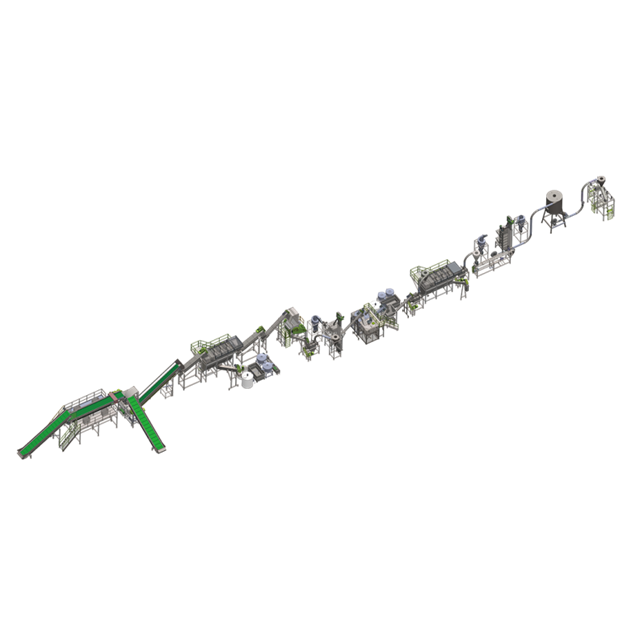
Primary feedstock sorting isolates incoming material into distinct streams right at the tipping floor. This step dictates the mechanical wear and output quality of the entire operation. You must separate the feed into three distinct categories:
Mechanical size classification utilizes heavy-duty trommels and ballistic separators. These machines physically agitate the material, dropping out glass shards, loose dirt, and small debris through specific screen sizes before optical scanning. Air separation systems, such as aspirators or wind sifters, deploy targeted air streams to remove lightweight fractions early in the process. This eliminates paper labels, plastic films, and dust from the rigid flow, preventing these materials from turning into sludge in the washing tanks. High-speed Near-Infrared (NIR) optical scanners then identify polymers by their specific light-absorption signatures. Once identified, arrays of high-speed pneumatic valves rapidly blast these materials into the correct sorting bunkers.
Bulky rigids require massive mechanical force to break down. Heavy-duty single-shaft or double-shaft shredders handle the initial reduction. High torque requirements, specialized staggered rotor designs, and specific screen sizes are mandatory to prevent material bridging and ensure a consistent output size. Granulator blade metallurgy plays a crucial role in the secondary reduction phase. D2 tool steel or high-chromium steel blades are required to maintain a sharp cutting edge. Dull blades tear the plastic rather than cutting it, which generates excessive fines and dust. Robust cutting chamber designs, often featuring water-injection cooling, maximize blade lifespan under high-impact loads and prevent the plastic from melting and smearing across the rotor.
Post-shredded material undergoes separation using specialized density media. Float-sink tanks rely on fluid dynamics to isolate polymers. Polyolefins like HDPE and PP have a specific gravity below 1.0, causing them to float in standard water. Heavier fractions like PET, PVC, and PS sink to the bottom where discharge augers remove them. Secondary flake identification technologies refine the stream further. Electrostatic separation and high-resolution color sorting cameras remove remaining impurities, such as black plastics that NIR cannot detect, before the material enters the intensive washing phase.
| Polymer Type | Specific Gravity | Float/Sink Behavior in Water | Typical Processing Temperature |
|---|---|---|---|
| HDPE | 0.93 - 0.97 | Floats | 190°C - 210°C |
| PP | 0.89 - 0.92 | Floats | 200°C - 230°C |
| PET | 1.38 - 1.40 | Sinks | 260°C - 280°C |
| PVC | 1.30 - 1.45 | Sinks | 160°C - 190°C |
A commercial plastic washing line involves multiple aggressive cleaning stages designed to strip away severe contamination. Pre-washing in trommels removes loose dirt and abrasive grit that would otherwise destroy downstream equipment. Friction washers operate at high RPMs, using angled paddles to force the plastic flakes against a screen, mechanically scrubbing the material. Hot chemical washing tanks utilize a precise mixture of caustic soda (NaOH), industrial surfactants, and 80–90°C water. This thermal and chemical combination dissolves stubborn pressure-sensitive adhesives, breaks down oil residues, and neutralizes embedded odors in post-consumer containers. Following the wash, centrifugal dryers spin the material at high speeds to mechanically extract water. Thermal drying systems then apply heated air to reduce the final moisture content. Achieving less than 1% moisture is an absolute requirement for stable extrusion; any excess moisture will vaporize in the extruder, causing foaming and degrading the polymer chain.
Clean, dry flakes enter the extrusion phase through a specialized waste plastic recycling pelletizing machine. Single-screw extruders are typically favored for rigid polyolefins due to their robust design and high throughput capabilities, though twin-screw systems offer superior mixing for heavily compounded materials. Degassing technologies featuring multiple vacuum zones are critical along the extruder barrel. These high-vacuum vents pull out trapped moisture and volatile organic compounds (VOCs) before the plastic reaches the die head. Screen changer technologies manage residual microscopic impurities like aluminum foil fragments or unmelted paper fibers. Continuous slide plate and backflush systems allow the machine to purge these contaminants automatically, preventing production halts while filtering the melt through fine micron meshes.
Calculating realistic throughput yields requires factoring in moisture and contamination loss. If you feed 2,000 kg/hr of dirty bales into the system, you will not get 2,000 kg/hr of clean pellets out. You must account for a 15% to 30% yield loss depending on the dirt, moisture, and non-target plastic content. Facility managers must assess the spatial requirements of the machinery. Modular line configurations offer flexibility for facilities with irregular floor plans, allowing tanks and conveyors to turn corners. Linear configurations require significant continuous floor space but offer simpler material flow and easier maintenance access. Both layouts heavily impact existing facility logistics, forklift traffic, and raw material storage.
Integrating SCADA (Supervisory Control and Data Acquisition) systems allows for real-time monitoring of the entire plant. Operators track motor loads, barrel temperatures, and water tank levels instantly from a central control room. This prevents catastrophic equipment failures by triggering alarms before a motor overloads. Automated material handling provides a massive operational advantage. Heavy-duty conveyors, surge silos, and automated bagging stations reduce manual labor requirements. They also significantly lower safety liabilities on the plant floor by keeping personnel away from high-speed rotating equipment and high-temperature extrusion zones.
Machine features directly dictate the market value of the final product. Consistent pellet geometry, absence of discoloration, and structural integrity are mandatory for selling to premium buyers. Certified pellets must meet specific testing protocols. ASTM and ISO standards for tensile strength, density, and MFI certify pellets for high-end applications like injection molding or blow molding. If your extrusion system lacks proper degassing or filtration, the resulting pellets will have voids, specks, and inconsistent melt flows, relegating them to low-value applications like plastic lumber.
Assess a manufacturer's ability to design a bespoke line based on your actual material. Rely on a specific waste audit rather than purchasing off-the-shelf units that look good on paper but fail on the plant floor. A reliable plastic pelletizing machine manufacturer will integrate third-party components seamlessly. Specialized optical sorters, heavy-duty shredders, and advanced water treatment plants must communicate effectively with the proprietary line controls to ensure the entire system ramps up and down in unison.
Local service technicians and remote diagnostic capabilities are critical for maintaining uptime. Guaranteed response times prevent extended downtime when a PLC fails or a drive faults. Evaluate the supply chain transparency for high-wear consumables. Shredder blades, extruder screws, friction washer screens, and melt filtration meshes must be readily available from the manufacturer. Waiting six weeks for a replacement screw profile will destroy your production schedule and client relationships.
Utility bottlenecks pose a significant operational risk. Mitigate this by auditing facility power capacity early in the planning phase. Heavy shredders and large extruders require massive amperage at startup. Integrate closed-loop water filtration and recirculation systems to reduce fresh water consumption. Evaluate the trade-offs between thermal drying and mechanical dewatering. Thermal drying uses high electrical or gas energy, while mechanical dewatering presses cause higher component wear but drastically reduce utility draw.
Equipment failure frequently stems from operator error, such as feeding material too fast or ignoring high-pressure alarms on the screen changer. Mandate comprehensive, on-site vendor training programs during commissioning. Establish predictive maintenance schedules over reactive repairs. Regularly inspect wear parts, check gearbox oil levels, and measure screw wear to maintain throughput and safety.
Wastewater discharge and VOC emissions carry strict regulatory risks. Ensure the selected equipment includes compliant exhaust filtration for the extruder vacuum zones. The recycling line must integrate seamlessly with industrial water treatment plants to remove suspended solids, adjust pH levels, and maintain compliance with local municipal discharge limits.
A: Rigid plastics require heavy-duty shredding due to their thickness and impact resistance. Films need specialized shredders to prevent wrapping around rotors. Density separation methods also differ. Rigids rely heavily on float-sink tanks, while films require different washing mechanics and mechanical dewatering presses to handle high moisture retention.
A: A standard commercial line can consume thousands of liters per hour. Implementing a closed-loop water treatment system is critical. This technology filters and recirculates the water, minimizing operational costs, reducing fresh water intake, and ensuring compliance with local environmental discharge regulations.
A: While possible, processing them simultaneously yields a mixed polyolefin pellet with lower market value. HDPE and PP have different melting points and cooling requirements. For premium applications, sort and process them in separate batches to maintain optimal melt flow and structural integrity.
A: PET has a much higher melting point (around 260°C) than HDPE or PP (around 200°C). During polyolefin extrusion, PET remains solid. These unmelted particles clog melt filters, damage extruder screws, and create weak points in the final recycled pellets.
A: Float-sink tanks use water to separate plastics based on specific gravity. Polyolefins like HDPE and PP have a specific gravity less than 1.0, so they float. Heavier plastics like PET and PVC have a specific gravity greater than 1.0, causing them to sink to the bottom for removal.


