
- All
- Product Name
- Product Keyword
- Product Model
- Product Summary
- Product Description
- Multi Field Search
 English

Views: 0 Author: Site Editor Publish Time: 2026-08-13 Origin: Site


Procuring industrial recycling equipment carries high operational stakes. Mismatched machinery quickly leads to catastrophic bottlenecks, excessive downtime, and ruined production margins. Spec sheets and theoretical throughput numbers often fail to translate to real-world performance. This disconnect happens because plastic waste streams vary wildly. You might process purgings, thin films, rigid pipes, or high-performance 3D printing polymers. Each material behaves differently under mechanical stress. The true differentiator between a successful installation and a costly liability is the rigorous selection testing and comprehensive delivery support provided by a qualified plastic shredder machine supplier. By demanding material trials and structured handover protocols, facilities can validate performance before the equipment ever arrives on site. You will learn how to evaluate fabrication quality, structure acceptance testing, and secure the lifecycle support necessary for continuous operation.
Buying off-the-shelf equipment without application-specific engineering introduces massive operational risk. Standardized models rarely account for the unique characteristics of your specific waste stream. Variations in polymer density, tensile strength, and contamination levels require customized rotor designs. The cutting chamber must match the material profile to prevent jamming or excessive wear. Heavy industrial plants processing tons of agricultural film face entirely different challenges than specialized closed-loop workspaces handling rigid desktop recycling setups. A competent plastic shredder machine manufacturer evaluates these variables to engineer a system that actively prevents material wrapping and rotor stalling. When you process high-density polyethylene (HDPE) pipes, the machine needs high torque and aggressive bite. Conversely, linear low-density polyethylene (LLDPE) stretch film requires precision shearing to avoid wrapping around the rotor shaft and causing friction fires.
You must establish strict evaluation metrics before initiating the procurement process. Target throughput in kilograms per hour serves as the primary baseline. Final particle size requirements also dictate machine selection. You might need uniform shreds for direct injection molding or larger pieces for secondary granulation. Evaluate the bulk density of the output material to ensure downstream conveyors can handle the volume. Acceptable noise and dust levels require careful consideration to maintain a safe working environment. Operators must calculate long-term energy consumption and consumable wear rates to understand the true operational burden of the equipment. If the machine requires a blade change every 40 hours of operation, the downtime will severely impact your production schedule.
Evaluating the structural integrity of a plastic shredder machine requires close inspection of the frame and housing. Analyze the frame welding for continuous, deep penetration beads rather than spot welds. Vibration dampening mounts are essential to protect the facility floor and surrounding equipment. The thickness of the shredding box steel plates directly correlates to the machine's ability to absorb shock loads. High-stress components demand superior engineering. Review the rotor shaft metallurgy for high-tensile alloy construction. Bearings must feature robust sealing mechanisms to protect against fine plastic dust infiltration. Hopper geometry needs careful design to prevent the bridging of light materials like films or skeletal scrap. If the hopper walls are too shallow, lightweight plastics will simply float above the rotor, requiring manual intervention to push the material down.
The cutting chamber configuration determines processing efficiency and maintenance downtime. Evaluate the arrangement of fixed blades against the rotating blades. Operators must easily adjust the clearance between these knives to accommodate different polymer profiles. Tight clearances work best for thin films, while wider gaps handle thick purgings. Analyze the screen and sieve design thoroughly. Maintenance teams need quick access to swap out screens when changing target output sizes. The screen cradle must feature heavy-duty reinforcement. It has to withstand constant, heavy impacts from bouncing plastic chunks without suffering deformation.
| Blade Geometry | Ideal Material Application | Performance Characteristics |
|---|---|---|
| Concave Blades | Bulky rigid plastics, thick-walled pipes | Aggressive material grabbing, high impact resistance |
| Flat Blades | Hard engineering plastics, heavy purgings | Maximum durability, lower risk of chipping under heavy loads |
| Angled/V-Cut Blades | Flexible films, woven sacks, thin sheets | Clean scissor-cut action, prevents material wrapping |
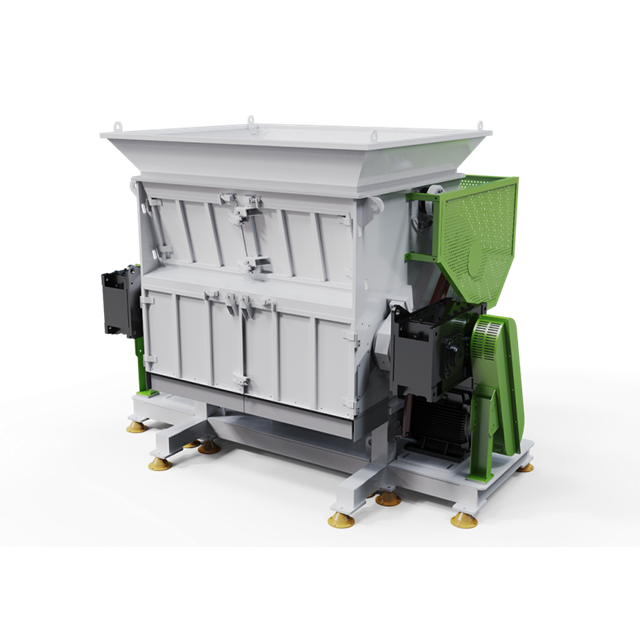
Buyers must demand that the supplier tests the exact material intended for processing. Generic demonstration videos offer zero proof of capability. HDPE pipes, PET bottles, LDPE film, and abrasive engineering plastics all react differently under shear forces. During these material trials, you need to collect specific performance data. Monitor the amp draw on the motor to identify harmful power spikes during heavy loads. Measure heat generation within the cutting chamber. Excessive heat causes polymer degradation or melting, which instantly clogs the rotor. Calculate the percentage of fines and dust in the output to verify cutting efficiency. If the machine produces too much dust, it indicates a crushing action rather than a clean cut, which wastes energy and degrades the material quality.
Factory Acceptance Testing serves as the final verification step before the machine leaves the production facility. It legally binds the equipment's performance to the procurement contract. A standard FAT checklist covers multiple critical areas. Technicians conduct a thorough mechanical inspection of all welds, bolts, and alignments. They verify every safety interlock and emergency stop function. The machine undergoes no-load continuous running tests to check for abnormal vibrations or bearing temperatures. Finally, the supplier executes load testing using sample materials provided by the buyer to prove throughput claims.
Testing reveals the true efficacy of specific machine configurations. When evaluating a single shaft shredder, pay close attention to the hydraulic ram pressure. The pusher must maintain consistent pressure without overwhelming the rotor. Monitor the rotor speed to ensure it matches the thermal limits of your plastic. Screen hole size directly impacts both throughput and final particle dimensions. Compare the performance of different blade geometries during the trial phase. Concave blades aggressively grab bulky items, flat blades offer durability for hard plastics, and angled blades provide a clean scissor-cut for flexible films.
Transporting heavy industrial shredders involves complex logistical realities. These machines often require specialized flatbed trailers and careful route planning. International manufacturers must navigate customs clearance, which demands accurate documentation to prevent port delays. Facility placement requires specialized rigging equipment, heavy-duty forklifts, or overhead cranes. Transparent lead times are critical for facility planning. Procurement contracts should include strict penalty clauses for delayed delivery to hold the supplier accountable for their production schedule. You must coordinate with local riggers well in advance, ensuring your facility floors can handle the point load of a machine that may weigh upwards of ten tons.
Site Acceptance Testing differs significantly from FAT. SAT proves the machine operates correctly within the buyer's specific facility ecosystem. It accounts for local power quality, ambient temperatures, and operator interaction. The commissioning process follows a strict sequence. Technicians handle precision leveling to prevent premature bearing failure. They complete electrical hookups and verify motor rotation direction. Hydraulic systems require proper fluid filling and pressure calibration. Initial startup procedures must occur under the direct supervision of supplier technicians to ensure safe operation. They will monitor the initial load tests to ensure the local power grid can handle the startup amperage spike without tripping facility breakers.
A shredder rarely operates in isolation. It requires seamless integration with downstream processing equipment. Evaluate the engineering support provided for connecting the shredder's discharge to secondary systems. Conveyors, pneumatic blowers, or augers must efficiently move material to secondary granulators, friction washers, or extruders. Control panel integration is vital for continuous operation. PLC handshakes ensure automated line pacing. If the granulator backs up, the shredder must automatically pause. Preventative jam controls and emergency shutoff synchronization must span across the entire workspace or production line. Without this integration, operators will constantly battle material overflows between machines.
The supplier's inventory model for critical wear parts dictates your future uptime. Cutting knives, counter knives, sizing screens, and drive belts require regular replacement. Evaluate how the supplier manages this inventory. Waiting weeks for proprietary parts from overseas halts production and destroys profitability. Partnering with a supplier that maintains regional parts hubs ensures rapid delivery. Standardized components allow maintenance teams to keep essential spares on hand without tying up excessive capital. Ask the supplier for a recommended spare parts list and verify their current stock levels before signing the purchase agreement.
A reputable supplier provides comprehensive training programs during the equipment handover. Operators must learn safe jam-clearing procedures to prevent severe injuries. Maintenance teams need hands-on instruction for blade rotation and replacement protocols. Stator clearance adjustments require precision to maintain cutting efficiency. Daily lubrication schedules keep bearings and gearboxes functioning properly. Proper training directly reduces the frequency of catastrophic rotor or gearbox failures. Educated operators catch minor issues before they escalate into major mechanical breakdowns. They will notice a change in the machine's sound when a blade chips or a screen begins to blind over.
Industrial shredder warranties require careful examination. A standard warranty should fully cover the structural frame, main drive motor, and gearbox against manufacturing defects. Consumables like blades and screens naturally fall outside this coverage. You must negotiate Service Level Agreements for post-installation support. SLAs guarantee specific technician response times in the event of an unplanned outage. Remote diagnostic capabilities allow engineers to troubleshoot PLC faults without traveling to the site, drastically reducing downtime. Ensure the warranty clearly defines what constitutes normal wear and tear versus a catastrophic component failure.
Suppliers who refuse to conduct material trials present a massive risk. You should immediately disqualify vendors who only provide generic video footage instead of live, documented tests of your specific material. Without transparent testing data, you have no guarantee the machine will process your waste stream effectively. Real testing exposes design flaws and capacity limitations before you commit capital. If a vendor claims their machine can handle anything you throw at it without asking for material samples, they are selling a generic box, not an engineered solution.
No single rotor or blade configuration is perfectly optimized for every type of plastic. Highly elastic films require completely different cutting dynamics than thick-walled rigid plastics. Advise extreme skepticism toward suppliers claiming a one-size-fits-all solution. Legitimate manufacturers acknowledge these engineering realities. They offer modular or interchangeable components to handle diverse materials, rather than pretending one setup defies physics. If you plan to process multiple distinct waste streams, the supplier should propose a machine with quick-change screen capabilities and adjustable stator knives.
Avoid box-movers or unstandardized local fabricators. These vendors typically lack the infrastructure to provide standardized, interchangeable spare parts. If they cannot produce accurate mechanical drawings or structured post-sales engineering support, your maintenance team will struggle. Custom-built, unstandardized machines turn every broken part into a complex reverse-engineering project, leading to unacceptable production delays. You need a supplier who uses standard, off-the-shelf bearings, motors, and hydraulic components that you can source locally in an emergency.
The true value of an industrial shredder is proven before it leaves the factory and sustained long after it is installed. Rigorous testing and robust engineering separate reliable equipment from operational liabilities. Procurement teams must narrow their shortlist based on a supplier's willingness to perform rigorous FAT, their transparency during material trials, and the proximity of their post-sales service network.
A: Focus on their engineering capabilities and dedicated material testing facilities. A reliable supplier offers transparent FAT and SAT protocols to verify performance. You must also ensure they maintain robust aftermarket parts availability to minimize future downtime.
A: Theoretical specifications do not account for material-specific behaviors. Plastics can melt, wrap around the rotor, or shatter unpredictably under stress. A trial proves the machine can handle your exact material while maintaining target throughput and preventing excessive wear.
A: Factory Acceptance Testing (FAT) is a factory-level verification to ensure the machine meets contract specifications before shipping. Site Acceptance Testing (SAT) is the on-site verification proving the equipment functions correctly within the buyer's actual production line and facility environment.
A: Use a single shaft shredder when you need uniform sizing and integrated screening for downstream processing. Choose a dual shaft shredder for high-torque, primary volume reduction of bulky, highly contaminated, or mixed waste items where uniform particle size is not the immediate goal.
A: The most frequent consumables include rotor knives, stator knives (bed blocks), sizing screens, and drive belts. You must partner with a reliable supplier to ensure continuous, fast access to these critical wear parts.
A: Yes. Reputable manufacturers scale their engineering expertise to offer smaller, professionally engineered modular systems. These units provide heavy industrial reliability adapted for specialized, closed-loop workspace processing and 3D printing waste.
A: Realistic industrial timelines typically range from 12 to 24 weeks. This timeframe depends heavily on the level of customization required, main drive motor availability, and international shipping logistics.


