
- All
- Product Name
- Product Keyword
- Product Model
- Product Summary
- Product Description
- Multi Field Search
 English

Views: 0 Author: Site Editor Publish Time: 2026-07-13 Origin: Site


The highest risk in establishing a high-capacity plastic recycling plant is not securing feedstock. It is the operational failure caused by mismatched, poorly integrated machinery. Procuring individual components from fragmented suppliers leads to integration bottlenecks. It causes prolonged commissioning phases and unpredictable long-term operational costs. Buyers face the challenge of verifying vendor claims regarding build quality, material yields, and system compatibility before capital deployment. Mitigating this risk requires partnering with a comprehensive plastic recycling equipment factory capable of end-to-end manufacturing, rigorous in-house preassembly, and verifiable Factory Acceptance Testing (FAT).
Defining what separates an equipment assembler from a true manufacturer requires looking at the production floor. Success hinges on controlling the fabrication process. This control ensures tight tolerances, consistent quality, and adherence to global circular economy standards. A dedicated manufacturer builds reliability directly into the machinery by machining their own shafts, cutting their own steel, and programming their own logic controllers.
Relying on suppliers who outsource fabrication introduces severe operational risks. It often leads to inconsistent steel quality and part replacement delays. True manufacturers maintain robust internal capabilities. They utilize CNC machining centers, precision laser cutting, and robotic welding stations. You must assess the traceability of raw materials. Ensure proper steel grades are used for structural frames compared to corrosive contact parts. When a shaft snaps on a granulator, an assembler waits weeks for a third-party machine shop. A true manufacturer pulls the CAD file and mills a replacement in hours.
Integrating a shredder from one vendor with an extruder from another creates communication gaps. It complicates warranty claims and blurs liability. A unified approach eliminates these risks. It provides the operational advantage of unified control panels. HMI and PLC systems designed by a single engineering team ensure seamless communication between modules. If the extruder experiences a pressure spike, the upstream conveyor needs to automatically slow down. Multi-vendor systems rarely achieve this level of automated synchronization without expensive third-party integrators.
Verify factory compliance with international standards like CE, UL, and ISO 9001/14001. A reputable facility ensures its designs assist buyers in meeting local municipal requirements. This includes environmental, zoning, and safety permits necessary for lawful operation. Electrical panels must meet local codes to pass fire marshal inspections. Safety interlocks on shredder hoppers must comply with regional occupational safety mandates.
Specific manufacturing standards directly impact machinery lifespan. They dictate maintenance frequency, waste-to-product yield rates, and output purity. Understanding these standards helps you evaluate the true capability of the equipment provider. You need to look at the metal, the welds, and the balancing reports.
Material selection dictates the durability of high-wear parts. Shredder blades and granulator knives require specific alloys based on processed polymer types. Wet processing units demand high corrosion resistance to withstand chemical detergents and friction. Using mild steel in a caustic wash tank guarantees a structural failure within two years.
| Component | Recommended Material | Application & Purpose |
|---|---|---|
| Shredder Blades / Granulator Knives | D2, SKD-11, or Custom High-Chromium Alloys | Maintains sharp edges for cutting rigid or flexible polymers. Resists heavy impact. |
| Wet Processing Units (Tanks, Washers) | SUS304 or SUS316 Stainless Steel | Prevents rust and corrosion from continuous exposure to water, friction, and chemical detergents. |
| Structural Frames | Heavy-Duty Carbon Steel | Provides rigid support to absorb vibration from high-speed rotating equipment. |
| Extruder Screws | Bimetallic coated alloys (e.g., SACM645) | Resists abrasive wear from contaminants like sand or glass in the melt stream. |
Dynamic balancing is mandatory for high-speed rotating equipment like centrifuges and friction washers. It prevents premature bearing failure and excessive noise. Quality control checkpoints during welding and machining prevent structural stress fractures over multi-shift operations. A centrifuge spinning at 1200 RPM with a slight imbalance will destroy its main bearings in weeks. Ask to see the dynamic balancing readouts for all high-speed rotors before accepting the equipment.
Precision-engineered transitions protect the factory owner's bottom line. Transport ducting and cyclonic separators must be perfectly aligned. This prevents plastic flake and pellet loss during the transfer between processing stages. Poorly designed blower transitions create dead zones where material accumulates, degrades, and eventually contaminates the main product stream. Smooth, polished interior welds on all pneumatic transport pipes are non-negotiable.
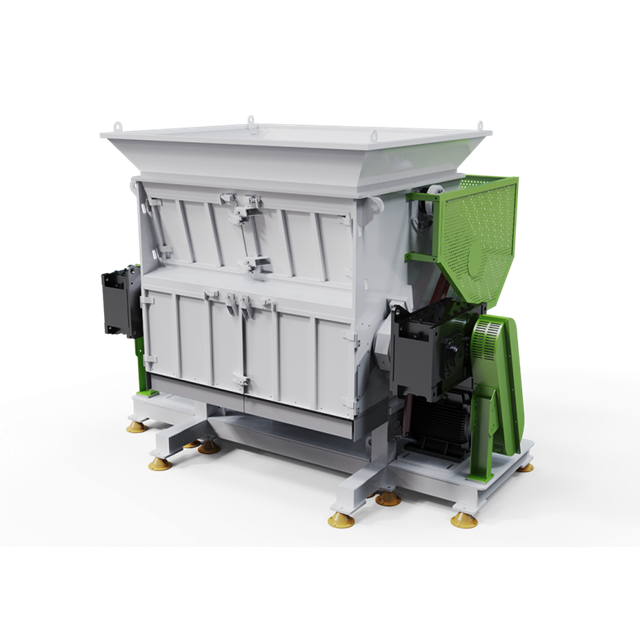
Skipping factory preassembly often results in missing structural transitions. It leads to incompatible piping or electrical faults during site installation. This causes weeks of expensive field troubleshooting. Preassembly mitigates these implementation risks before the equipment ever leaves the facility. You want the mistakes found on their floor, not yours.
A rigorous FAT checklist is non-negotiable. It must cover structural integrity, motor load testing, current draw analysis, and safety interlock verification. Buyer presence, whether physical or live-streamed, is required during final testing under simulation conditions. Do not accept a video of a machine running empty. Demand to see the amp draw on the main extruder motor while processing your specific material.
Testing a complete plastic washing line requires both dry and wet phases. Dry runs verify motor rotation, conveyor alignment, blower airflow, and vibration baselines. Wet runs test water flow, pump pressure, and leak integrity in sink-float tanks and friction washers before shipment. A wet run reveals poorly sealed bearings and inadequate drainage slopes that a dry run will completely miss.
Running sample feedstock through the extrusion line is vital. It verifies melt pressure stability, degassing efficiency, and pellet uniformity within the plastic pelletizing system. This step confirms the throughput capacity matches contractual guarantees using designated waste streams. If the contract states 1000 kg/hr, the FAT must demonstrate 1000 kg/hr of sustained output without the melt filter blinding prematurely or the degassing vents pushing plastic.
Breaking down the complete line into core functional modules allows for thorough evaluation. It reveals the technical depth and end-to-end integration capabilities of the manufacturer. You must evaluate each stage as a standalone unit and as part of the continuous process.
Front-end preparation equipment sets the stage for efficiency. Evaluate bale breakers, trommels, and magnetic separators. Advanced optical and Near-Infrared (NIR) sorting systems isolate specific polymers like PET, HDPE, PP, and LDPE before size reduction begins. If you feed mixed bales into a shredder without proper pre-sorting, you will spend massive amounts of energy processing material that will ultimately be rejected downstream.
Evaluate rotor design, screen accessibility, and hydraulic pusher mechanisms for maximum efficiency. Assess torque capabilities and shock-absorbing gearboxes. Jam-recovery automation, such as automatic rotor reversal, keeps the line moving without manual intervention. The screen on a granulator must be accessible within minutes for cleaning and replacement. If it takes two mechanics an hour to change a screen, your downtime costs will skyrocket.
Analyze the sequence of separation. This includes density separation, high-speed friction, and thermal washing for glue and label removal. Closed-loop water filtration and recirculation systems minimize utility consumption. They also ensure compliance with strict local wastewater discharge regulations. A poorly designed friction washer will leave paper pulp attached to the plastic flake, which will immediately carbonize and turn black once it hits the extruder.
The extrusion phase requires specialized engineering. Partnering with a dedicated plastic pelletizing machine factory ensures proper L/D ratios and screw geometry. These must match specific polymers, differentiating between high-contamination PE/PP films and rigid PET flakes. Evaluate advanced degassing systems for highly printed materials. Compare melt filtration technologies like hydraulic slide-plate screen changers or automatic laser filters. Select pelletizing methods based on target resin grades. Water-ring pelletizing works well for PE/PP, but PET requires underwater or strand pelletizing to prevent moisture absorption.
Factory-side preparation heavily impacts the buyer's facility preparation. It dictates the overall project timeline and operational profitability. Proper planning minimizes downtime and accelerates the path to production. You need exact dimensions, power requirements, and water flow rates months before the equipment arrives.
The factory must provide 3D layout drawings. These map utility drops for power, water, and compressed air. They also define maintenance clearances and material flow. Conveyor lengths, discharge heights, and storage silos must be customized to fit existing building constraints and ceiling heights. A silo that is two meters too tall for your roofline will cause massive installation delays and require expensive structural modifications to your building.
Evaluate the use of internationally recognized electrical components. Brands like Siemens, Schneider, ABB, or Omron ensure local compliance and replacement availability. Integration of SCADA systems allows for remote troubleshooting, predictive maintenance alerts, and operational data logging. If a contactor fails, you need to be able to buy a replacement at a local electrical supply house, not wait for a proprietary part to ship from overseas.
Integrate Volatile Organic Compound (VOC) extraction and filtration systems on extrusion degassing ports. This ensures clean indoor air quality and local emissions compliance. Acoustic insulation options are necessary for high-noise areas like granulators and high-speed centrifuges. Sound enclosures around the main crushers can drop ambient noise levels from 110 decibels down to a manageable 85 decibels, protecting your workforce and complying with occupational health regulations.
Assess energy-saving technologies to optimize operational expenses. Electromagnetic induction heating on extruders offers better efficiency than traditional ceramic bands. Labor costs can be reduced through automation, including robotic box dumping, automatic packing, and inline moisture monitoring. Upgrading to a continuous laser melt filter might cost more upfront, but it eliminates the labor required for manual screen changes and keeps the extruder running 24/7.
Logistics planning requires a solid containerization strategy. Protective packaging against maritime corrosion and modular shipping reduce freight costs. Factory-dispatched engineers play a vital role in site supervision, final commissioning, and local operator training. Ensure the contract clearly defines how many engineers will arrive, how long they will stay, and what specific training milestones they must achieve before final sign-off.
A: A standard timeline ranges from 3 to 6 months. This period covers engineering design, customized manufacturing, factory preassembly, and comprehensive Factory Acceptance Testing (FAT) before containerization and shipment.
A: Preassembly identifies alignment issues, electrical faults, piping clashes, and missing transitions while the equipment is still at the factory. Resolving these issues early saves weeks of expensive and frustrating on-site troubleshooting.
A: Focus on their engineering depth. Highlight the importance of custom screw design tailored to your polymer, degassing efficiency, advanced melt filtration technology, energy-efficient heating methods, and verifiable throughput testing during FAT.
A: Core modules typically include bale breakers, trommels, wet granulators, high-speed friction washers, sink-float separation tanks, centrifugal dryers, and thermal drying systems, all connected by automated material handling conveyors.
A: Yes. Comprehensive manufacturers design and build both systems. This single-source approach ensures seamless integration, unified PLC controls, and synchronized throughput capacities from dirty flake to final clean pellet.


