
- All
- Product Name
- Product Keyword
- Product Model
- Product Summary
- Product Description
- Multi Field Search
 English

Views: 0 Author: Site Editor Publish Time: 2026-07-31 Origin: Site


A significant discrepancy exists between a machine’s theoretical nameplate capacity and its actual operational throughput on the factory floor. Relying on maximum output specifications leads to poor facility planning and severe operational bottlenecks. When equipment fails to meet expected production rates, facilities face disrupted schedules, unmet off-take agreements, and compromised return on investment. Conversely, purchasing oversized equipment traps capital in unnecessary machinery.
Under-sizing or over-sizing equipment carries heavy financial risks. A 20% shortfall in expected capacity directly impacts daily output targets. Facility managers must implement a systematic, engineering-led framework to audit, test, and verify the throughput claims of any equipment vendor before finalizing capital expenditure. Partnering with a competent plastic recycling machine manufacturer requires moving beyond marketing brochures to demand empirical testing and hard data.
True capacity is measured in consistent, sellable output rather than sheer input volume. Facilities track success through kilograms per hour or tons per day of high-quality pellets. Inputting large volumes of raw waste means little if the final product fails quality standards or if the machine requires constant downtime. Operational reality demands a focus on net yield. You cannot build a production schedule on theoretical maximums. You build it on the actual volume of material that makes it into a supersack at the end of the shift.
Manufacturers calculate maximum capacity under ideal conditions. These tests utilize clean, uniform material with zero planned downtime. Real-world conditions introduce friction. Operators must account for screen changes, blade sharpening, and unplanned maintenance. Practical throughput calculations factor in these inevitable pauses. A machine rated for 1,000 kg/hr might only average 750 kg/hr when processing highly contaminated post-consumer waste. The gap between the brochure and the factory floor often stems from the difference between running prime virgin resin and running dirty, mixed post-consumer scrap.
To understand this gap, look at the mechanics of the extrusion process. When a vendor tests a machine, they often use clean regrind with a high bulk density. The screw fills completely, the melt pressure remains stable, and the screen changer never clogs. In your facility, you might feed light film flakes with 5% moisture and residual paper labels. The moisture causes foaming, requiring slower feed rates to allow the vacuum degassing system to keep up. The paper labels clog the melt filter, forcing a screen change every forty-five minutes. Each screen change drops melt pressure and halts pellet production for several minutes. These real-world variables destroy theoretical capacity claims.
Industry standards segment machinery into distinct operational tiers. Entry-level or pilot lines typically process around 200 kg/hr. Mid-tier processing handles 500 to 1,500 kg/hr. High-capacity industrial systems manage 3,000+ kg/hr. Equipment durability must align with these output tiers. Entry-level machines often lack the heavy-duty wear resistance necessary to maintain rated throughput over long, continuous operational cycles. Components degrade faster, leading to a steady drop in hourly output.
When evaluating these tiers, look at the physical construction of the equipment. A 3,000 kg/hr system does not just have a larger screw; it has a fundamentally different gearbox, thrust bearing assembly, and motor drive system. The metallurgy of the barrel and screw must withstand the immense shear forces generated at high volumes. If you push a mid-tier machine to hit high-capacity numbers, you will experience premature mechanical failure. The gearbox will overheat, the screw flights will wear down, and your capacity will drop by 15% within the first six months of operation.
Capacity expectations scale differently based on shift structures. Running continuous 24/7 cycles yields different averages than running two 8-hour shifts. A machine rated at 500 kg/hr will not produce 8,000 kg in a standard 16-hour run. Startup sequences, shutdown procedures, and mid-shift cleaning cycles consume valuable production time. Operators must calculate net operating hours rather than gross shift hours to project accurate daily capacity.
Consider a standard two-shift operation. The morning shift spends 45 minutes bringing the extruder up to operating temperature and stabilizing the melt flow. At the end of the second shift, operators spend 30 minutes purging the barrel and shutting down the line. You have already lost 75 minutes of production time. Add in two 15-minute breaks per shift where the machine idles, and you lose another hour. Out of 16 gross hours, you are only extruding plastic for 13.75 hours. If your machine runs at a true 500 kg/hr, your daily output is 6,875 kg, not 8,000 kg. Failing to account for this shift math leads to massive inventory shortfalls.
Material characteristics drastically alter volumetric feeding limits. Light materials like LDPE film occupy significant space but carry little weight. Heavy materials like HDPE regrind feed densely and efficiently. A machine processing film will hit its volumetric limit long before reaching its weight capacity limit. This dynamic heavily skews baseline capacity numbers. Buyers must verify throughput using their exact material density.
The feeding mechanism of an extruder is a volumetric pump. It can only pull in a specific volume of material per revolution of the screw. If you feed a material with a bulk density of 0.4 g/cm³ (like rigid regrind), the screw fills with a heavy mass of plastic. If you feed a material with a bulk density of 0.05 g/cm³ (like shredded agricultural film), the screw fills mostly with air. To hit the same kilogram-per-hour output with film, the screw would have to spin eight times faster, which is mechanically impossible. This is why film lines require specialized force feeders or compactor-extruder combinations to artificially increase the bulk density before the material enters the main screw.
| Material Type | Typical Bulk Density (g/cm³) | Impact on Volumetric Feeding | Expected Capacity Yield vs. Nameplate |
|---|---|---|---|
| HDPE Rigid Regrind | 0.40 - 0.50 | Excellent gravity feeding, full screw flights | 90% - 100% |
| PET Bottle Flake | 0.25 - 0.35 | Good feeding, requires consistent hopper levels | 80% - 90% |
| PP Woven Sacks (Shredded) | 0.10 - 0.15 | Poor gravity feeding, requires force feeder | 50% - 65% |
| LDPE Agricultural Film | 0.03 - 0.08 | Severe bridging, requires compactor/cutter-compactor | 30% - 50% (without compactor) |
System capacity depends entirely on the primary bottleneck. A high-speed extruder cannot compensate for a slow feeding mechanism. Facilities must audit every stage of their plastic pelletizing system to identify constraints. You must view the entire line as a single organism where a restriction in one area starves the rest of the process.
Feedstock inspection, manual sorting, and pre-shredding dictate total system throughput. Inconsistent pre-sorting limits downstream speed. If manual contamination removal lags, the entire line must slow down to prevent damage to the extruder. Automated feeding systems help maintain a steady flow, but they still rely on properly prepared input material.
Shredder and granulator sizing is a common failure point. If your extruder can process 1,000 kg/hr, but your granulator screen size restricts output to 800 kg/hr, your system capacity is 800 kg/hr. Operators often try to push granulators past their limit by overfeeding, which leads to jammed rotors, blown fuses, and dull blades. Dull blades create excessive fines and dust, which then cause feeding issues and bridging in the extruder hopper. Properly sizing the size-reduction equipment to exceed the extruder's maximum capacity by at least 20% ensures a continuous, uninterrupted feed.
Mismatched components create artificial ceilings on production. A high-speed shredder processing 2,000 kg/hr provides no advantage if the downstream extruder only handles 1,000 kg/hr. Evaluating component-level capacity in isolation leads to inaccurate system-level projections. Every transition point must handle the maximum output of the preceding machine.
Conveying systems frequently bottleneck high-capacity lines. Blower motors and pneumatic transport pipes must move material fast enough to keep the extruder hopper full. If a pneumatic blower is undersized, material backs up in the granulator discharge, forcing the system to shut down. Similarly, screw conveyors moving wet flake from a washer to a dryer must have the torque to handle heavy, water-logged material. If the screw conveyor stalls, the entire washing line stops, starving the pelletizing system downstream.
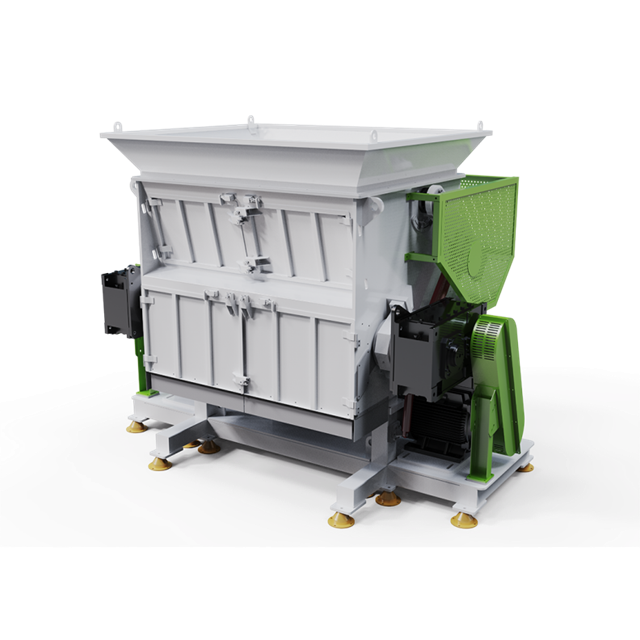
Residence time for friction washers and sink-float tanks limits continuous feed rates. A plastic washing line must thoroughly clean material without starving the downstream extruder. Drying efficiency plays a major role here. Excess moisture entering the extruder reduces plasticizing capacity. The machine spends energy boiling off water instead of melting plastic. This increases degassing time and severely lowers both output quality and volume.
Mechanical dryers (centrifuges) and thermal dryers must reduce moisture content to specific thresholds before extrusion. For PE and PP, moisture should be below 3%. For hygroscopic materials like PET, moisture must be below 1% before entering the extruder, often requiring specialized desiccant drying systems. If your washing line pushes 1,000 kg/hr of flake but the mechanical dryer can only extract enough water at 700 kg/hr, you have a bottleneck. Feeding wet flake into the extruder causes severe foaming at the die head, unstable melt pressure, and brittle pellets. The vacuum degassing ports will clog with polymer paste as the rapidly expanding steam carries molten plastic up into the vacuum system. You will spend hours cleaning the vacuum lines while production sits at zero.
High contamination levels require finer mesh screens. Finer screens clog faster, leading to frequent screen changer cycles. Each cycle halts or slows production. Additionally, the melt capacity of the screw design must align with the specific polymer's Melt Flow Index (MFI). Processing a low-MFI polymer requires more torque and residence time, naturally reducing the hourly throughput compared to high-MFI materials.
Melt filtration is the most common bottleneck in post-consumer recycling. Standard hydraulic slide-plate screen changers require the operator to swap screens manually. If you are running highly contaminated material through a fine 120-mesh screen, you might need a screen change every 20 minutes. During the change, the melt flow is interrupted. To maintain high capacity with dirty material, facilities must invest in continuous melt filtration systems (like laser filters or rotary drum filters). These systems scrape contamination from the screen automatically without stopping the melt flow. While they require a higher initial capital investment, they are the only way to maintain nameplate capacity when processing heavily contaminated feedstocks.
Selecting the right vendor requires evaluating how their equipment handles specific operational realities. Flexibility, durability, and automation define long-term success. You need machinery built for the realities of a dirty, demanding factory environment, not a pristine laboratory.
Facilities face a trade-off between highly specialized machines and flexible systems. Specialized machines optimize maximum throughput for a single polymer like PET. Flexible systems process multiple material types like PE and PP but sacrifice peak capacity. Switching a flexible system from rigid regrind to low-bulk-density film feedstocks often results in a 30% to 50% capacity loss. Buyers must weigh the need for versatility against the demand for raw output.
Screw design dictates this flexibility. A screw designed specifically for fractional melt HDPE will have a specific compression ratio and barrier flight design to handle high viscosity. If you try to run high-MFI polypropylene through that same screw, the material will melt too quickly, lose shear heating, and surge out of the die head inconsistently. Vendors often claim their machines can run "all polyolefins," but they fail to mention the massive capacity drop when switching between materials with vastly different rheological properties. Ask the vendor for specific output guarantees for each distinct material you plan to run.
Continuous high-output operations stress machinery differently than intermittent shifts. Running 24/7 introduces thermal degradation risks. Machine fatigue accelerates. Screw and barrel wear become prominent issues during uninterrupted cycles. Vendors must prove their equipment sustains performance under continuous load without requiring excessive mid-week maintenance stops.
Heat management becomes a major issue during 24/7 operation. The friction generated by the screw creates immense shear heat. The barrel cooling system (usually water-cooled jackets or high-velocity air blowers) must remove this excess heat to prevent the polymer from degrading. If the cooling system is undersized, operators must slow down the screw RPM to prevent burning the plastic. Slowing the screw RPM directly reduces your hourly capacity. Evaluate the sizing of the heat exchangers and the flow rate of the barrel cooling pumps to ensure they can handle continuous, high-RPM operation.
Human-induced delays destroy average capacity metrics. Automated feeding, continuous melt filtration, and automated pellet bagging sustain capacity. Reducing labor dependency minimizes surges and jams. Automated systems react to material flow changes faster than human operators, maintaining a consistent feed rate into the extruder.
Consider the pelletizing head. A manual strand pelletizer requires an operator to string molten strands of plastic across a water bath and into the cutting rotor. If a strand breaks, the operator must manually re-string it, losing material and time. An automated underwater pelletizing system or a water-ring pelletizer cuts the melt directly at the die face. There are no strands to break and no manual intervention required. The system runs continuously, maintaining a steady output rate and producing uniform pellets. Automation at the die head is non-negotiable for high-capacity lines.
Protecting capital investment requires asking vendors hard, data-driven questions. Vague assurances of high capacity hold no value on the factory floor. Engage your plastic pelletizing machine manufacturer with specific demands.
Demand empirical testing. Run a 1-to-2-ton sample of your actual waste stream through the manufacturer's test facility. This establishes an empirical capacity baseline. Theoretical calculations cannot account for the unique moisture and contamination profile of your specific feedstock.
Do not let the vendor use their own clean, dry material for the test. Ship them the exact dirty, mixed bales you receive from your suppliers. Watch how their machine handles the dirt, the moisture, and the varying bulk density. Record the exact time it takes to process the batch, note how many times the screen changer cycles, and measure the final weight of the good pellets produced. This net yield number is the only capacity metric that matters.
Define what constitutes a binding capacity guarantee. The contract must specify input material parameters tied directly to the output guarantee. Ensure the warranty explicitly lists acceptable bulk density, moisture percentages, and contamination limits. If the machine fails to hit the guaranteed capacity under these agreed parameters, the vendor must carry the liability.
A strong performance warranty includes financial penalties for underperformance. If the vendor guarantees 1,000 kg/hr based on your specific material parameters, and the machine only achieves 800 kg/hr during the site acceptance test, the vendor must be obligated to modify the equipment at their own expense until it hits the target. Never sign a contract with a "best effort" capacity clause. Demand hard numbers tied to specific material specs.
Ask for data on how screw and barrel wear over 5,000 to 10,000 hours will impact throughput. Capacity drops as tolerances widen. Demand transparent cost and frequency projections for replacing these critical components. Understanding the maintenance schedule allows for accurate long-term capacity planning.
As the clearance between the screw flights and the barrel wall increases due to wear, material slips backward over the flights instead of being pushed forward. This "leakage flow" reduces the volumetric efficiency of the extruder. A machine that produces 1,000 kg/hr on day one might only produce 850 kg/hr after 8,000 hours of running abrasive materials like glass-filled polymers or heavily contaminated agricultural film. Ask the vendor about bimetallic barrel liners and tungsten carbide coated screws to extend the life of these components and maintain capacity over time.
Production demands often outgrow initial specifications. Ask if the system accommodates retrofits. Upgrading feeding systems or installing larger screen changers can unlock additional capacity later. Modular designs prevent the need for complete system replacements when facility throughput requirements increase.
Check the sizing of the main drive motor and gearbox. If you buy an extruder with a 250 kW motor, ask if the gearbox is rated to handle a 315 kW motor in the future. If the mechanical infrastructure is overbuilt, you can often increase capacity later by upgrading the motor, installing a more aggressive screw design, and adding a larger melt filter. If the gearbox is maxed out on day one, you have zero room for future capacity expansion.
Even the best machinery underperforms if the surrounding facility lacks proper infrastructure. Operational constraints artificially cap machine capacity. You must prepare your building to support the equipment.
Common oversights severely limit throughput. Insufficient electrical amperage prevents motors from running at full load. Inadequate chilled water supply fails to cool pellets fast enough, forcing operators to slow the extrusion rate. A lack of floor space for staging raw materials causes feeding delays. Facilities must audit their infrastructure before installing high-capacity equipment.
Chilled water capacity is a frequent bottleneck. Extruding 1,000 kg/hr of plastic requires removing a massive amount of heat to solidify the pellets. If your cooling tower or chiller system is undersized, the water in the pelletizing bath will heat up. Hot water cannot cool the plastic strands fast enough, leading to sticky, deformed pellets that clump together in the centrifuge. To fix this, operators have to slow down the extruder to match the cooling capacity of the water system. Always oversize your chilled water system by at least 30% above the vendor's minimum requirements.
Untrained operators cause surges, jams, and reduced average throughput. Poor manual sorting lets heavy contamination slip through, clogging screens. Inconsistent feeding starves the extruder one minute and floods it the next. Equipment requires skilled personnel to maintain optimal flow rates.
An operator who does not understand melt pressure dynamics will constantly adjust the screw RPM, causing the machine to surge. They might set the barrel temperatures too high, degrading the polymer and causing die drool, or too low, causing un-melted particles to block the screen changer. Consistent capacity requires operators who understand the relationship between temperature, pressure, and motor load.
Secure verified capacity through strict contractual obligations and rigorous testing protocols. Follow a structured implementation plan to ensure the equipment performs as promised.
Verifying capacity requires looking past marketing brochures. Facility managers must analyze the engineering realities of material density, moisture, and system bottlenecks. Nameplate capacity serves only as a baseline; actual throughput depends entirely on material characteristics and operational efficiency.
Shortlist vendors who offer transparent OEE calculations. Prioritize manufacturers willing to perform custom material trials. Demand contractually binding performance guarantees tied to your specific feedstock parameters.
A: Capacity is measured in kilograms per hour (kg/h) or tons per day (t/d). Differentiate between input capacity (raw waste fed into the machine) and output yield (sellable, high-quality pellets produced). True operational capacity always focuses on the final output yield after accounting for moisture loss and contamination removal.
A: Industrial ranges start at 200 kg/hr for pilot or entry-level systems. Mid-tier operations process between 500 and 1,500 kg/hr. Heavy industrial setups exceed 3,000 kg/hr. System complexity, footprint, and capital requirements scale significantly as capacity increases.
A: Output drops due to low bulk density of input material, high moisture content, or excessive contamination. Frequent screen changes halt production. Operator inefficiency, poor feeding practices, and undersized facility cooling systems also prevent the machine from maintaining a consistent maximum throughput.
A: Washing lines and extruders often have different theoretical capacities. The overall system output is limited by the slowest component. Often, the drying phase of the washing line bottlenecks the process, limiting how fast dry material can enter the extruder.
A: Non-target plastics, dirt, or metals require aggressive filtration. This slows down the melt flow. High contamination leads to rapid screen clogging, forcing frequent downtime for screen changes, which drastically reduces the average hourly output.
A: Future-proofing offers room for growth but carries risks. Running equipment significantly under optimal load can negatively affect pellet quality and decrease energy efficiency. It is often better to buy modular equipment that allows for future upgrades.
A: A Factory Acceptance Test (FAT) involves running the equipment at the manufacturer's facility before shipment. Buyers use their actual waste material during the FAT to verify that the machine meets the contractually guaranteed capacity and quality standards.


