
- All
- Product Name
- Product Keyword
- Product Model
- Product Summary
- Product Description
- Multi Field Search
 English

Views: 0 Author: Site Editor Publish Time: 2026-07-21 Origin: Site


Plastics recycling margins face constant pressure from volatile industrial energy costs and stricter environmental compliance mandates. Processing recycled resins inherently uses up to 75% less energy than producing virgin polymers. However, internal plant inefficiencies quickly erode these operational advantages. Legacy recycling lines suffer from high Specific Energy Consumption (SEC), where inefficient heating, outdated motors, unoptimized auxiliary equipment, and poor load balancing drive up the utility demand per kilogram of output.
The industry is shifting toward modern, data-driven equipment to solve these bottlenecks. Upgrading legacy systems requires a clear understanding of mechanical and thermal energy distribution. This technical evaluation guide helps operations directors and plant managers understand exactly how an energy efficient plastic recycling machine mechanically and systematically reduces SEC across the entire production line.
Specific Energy Consumption (SEC) serves as the standard metric for energy efficiency in plastics processing. Measured in kilowatt-hours per kilogram (kWh/kg), SEC provides a normalized view of utility usage. Measuring total power draw on a machine is misleading without factoring in stable throughput. A machine drawing less total power but producing significantly less output often yields a higher, less efficient SEC. Plant managers must track this metric daily to identify degrading machine performance before it impacts the monthly utility bill. When you measure SEC accurately, you isolate the exact energy cost required to produce one sellable kilogram of recycled resin.
To calculate SEC, you divide the total energy consumed during a specific production run by the total weight of acceptable pellets produced. This calculation must exclude scrap material and startup/shutdown phases to provide an accurate steady-state measurement. Relying on nameplate motor ratings instead of actual metered consumption leads to wildly inaccurate efficiency assumptions.
Mechanical recycling establishes a clear efficiency benchmark when compared to alternative methods. Chemical or enzymatic processes require substantial thermal and chemical inputs, often resulting in a higher baseline energy demand. Producing virgin polymers remains the most energy-intensive process. Mechanical recycling maintains a strong advantage, provided the equipment operates within optimal SEC parameters. The energy required to mechanically shear, melt, and filter post-consumer waste is a fraction of the energy needed for petrochemical cracking and polymerization.
However, the baseline shifts depending on the feedstock. Clean, post-industrial regrind requires minimal washing and lower melt temperatures, resulting in a very low SEC. Heavily contaminated post-consumer agricultural films require aggressive friction washing, thermal drying, and double-vented extrusion, pushing the baseline SEC significantly higher. Understanding your specific material baseline is the first step in evaluating equipment upgrades.
Traditional recycling plants distribute energy across several distinct operational zones. Identifying these sinks is the first step toward optimization. Energy does not disappear; it converts into heat, noise, or mechanical wear when not utilized for material processing.
High SEC carries severe financial and operational penalties. Inefficient lines increase the facility carbon footprint and reduce the margin per ton of processed material. Overworked electrical components experience higher wear-and-tear, leading to premature motor failure and increased downtime. Sustained high energy draw limits the ability to scale operations within existing facility power grids. When a plant maxes out its electrical service panel due to inefficient legacy equipment, adding a new line requires a massive capital expenditure for a utility service upgrade.
Furthermore, excessive mechanical friction in poorly designed extruders degrades the polymer chains. This means you are paying more in electricity to produce a lower-quality pellet with reduced tensile strength. The financial impact compounds daily, making the justification for modern equipment straightforward when analyzing utility data.
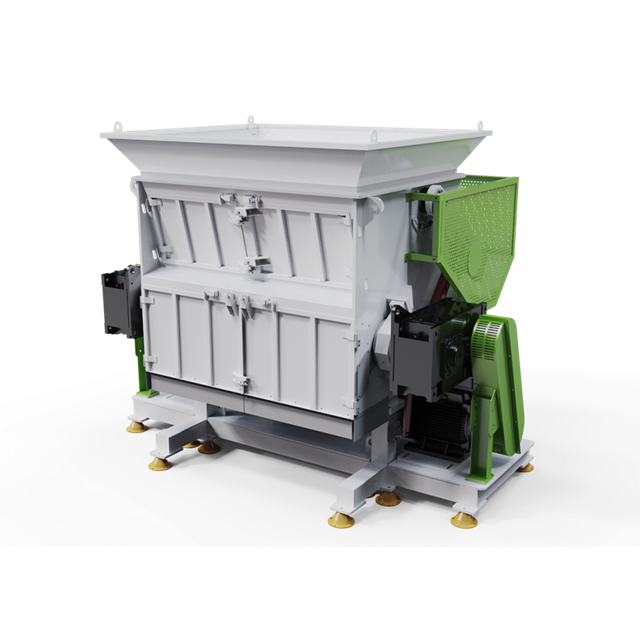
Optimized bale opening and pre-sorting processes reduce mechanical wear downstream. Consistent material feeding prevents erratic loading on shredders and extruders. Automated de-baling and separation systems optimize subsequent sorting processes by material and color. Removing contaminants early prevents energy-intensive reprocessing steps and protects sensitive downstream equipment from damage. If a heavy metal object bypasses the sorting phase, it can destroy an extruder screw, causing weeks of downtime and massive repair costs.
Modern feed optimization relies on gravimetric dosing and smart conveyors. Instead of dumping large batches of material into a hopper, these systems trickle-feed the exact volume the extruder can process at that millisecond. This prevents the main motor from surging to overcome a sudden influx of cold, dense material. Smooth, continuous feeding flattens the power consumption curve and stabilizes the melt pressure.
Thermal energy in washing stages accounts for a massive portion of plant utility usage. Advanced cold friction washing presents a highly efficient alternative to traditional hot chemical washing for many polymer streams. A modern plastic washing line utilizes closed-loop water filtration and mechanical dewatering. Centrifuges or squeezer machines drastically reduce the moisture content mechanically, lowering the thermal energy required in the subsequent drying phase.
Energy-efficient auxiliary dryers and dry-cleaning technologies can even bypass thermal drying entirely for specific rigid polymer types. Mechanical squeezing is inherently more efficient than thermal evaporation. Pushing water out of plastic flakes using a high-torque screw press uses a fraction of the energy required to boil that same water away in a hot air cyclone. Upgrading the dewatering stage is often the fastest way to drop the overall plant SEC.
Extrusion consumes the highest continuous mechanical power in the plant. Transitioning from standard AC motors to direct-drive torque motors or permanent magnet synchronous motors (PMSM) eliminates gearbox energy losses. This direct power transfer maximizes mechanical efficiency. Gearboxes generate heat through friction; that heat represents wasted electricity. Direct-drive systems put the rotational force directly onto the extruder screw shaft.
During the melting phase, infrared, induction, or ceramic insulated barrel heating minimizes radiant heat loss. These advanced heaters reach set points faster and maintain temperature stability with lower continuous power draw. Standard mica band heaters radiate heat outward into the factory, forcing the plant HVAC system to work harder to cool the building. Insulated ceramic bands direct the thermal energy inward, melting the plastic faster and cycling off more frequently.
The cutting phase requires precise speed and temperature control. Die-face cutting and underwater pelletizing technologies perform differently under varying throughput rates. An optimized plastic pelletizing system features advanced die-head and screen changer designs that reduce melt pressure requirements. Lowering the backpressure reduces the torque and load on the main extruder motor, directly decreasing the SEC of the final production stage.
Water flow management in the pelletizing phase also impacts energy use. Modern underwater pelletizers use variable speed water pumps that adjust flow based on the exact volume of plastic being cut. Pumping excess water through the cutting chamber wastes electrical energy and overcools the die plate, forcing the die heaters to draw more power to prevent the polymer from freezing in the holes.
Installing VFDs on all major drives yields immediate efficiency outcomes. VFDs eliminate massive start-up power spikes and reduce energy draw during low-throughput moments. Instead of running a motor at full speed and restricting output mechanically, the VFD modulates electrical frequency to match exact load requirements. When a shredder encounters a light load of thin film, the VFD reduces the power supplied to the motor. When a dense chunk of rigid plastic enters the cutting chamber, the VFD instantly ramps up the torque to power through the obstruction without stalling.
Integrated PLC systems monitor torque, pressure, and temperature across the entire line. These smart controllers automatically adjust feed rates to keep the extruder running at its optimal energy-to-output ratio. If melt pressure spikes due to a clogged screen, the PLC slows the infeed, preventing the main motor from drawing excess current to push through the restriction.
Load balancing extends to the auxiliary equipment. A smart plant network communicates the extruder's real-time throughput to the downstream chiller. If the extruder slows down, the chiller reduces its compressor capacity, saving energy. This interconnected communication prevents standalone machines from operating blindly at maximum capacity.
Modern systems capture exhaust heat from the extrusion process. Heat exchangers redirect this thermal energy to pre-heat cold incoming materials or power upstream drying systems. Effective thermal insulation on barrels and piping prevents ambient heat loss, reducing the duty cycle of primary heating elements.
Capturing the heat from the pellet cooling water is another highly effective strategy. The water leaving the underwater pelletizer is hot. Running this water through a heat exchanger can pre-heat the fresh water entering the hot wash tanks upstream. This closed-loop thermal management drastically reduces the load on the facility's boilers and electrical heating elements.
| System Component | Legacy Inefficiency | Modern Energy-Efficient Feature | Direct SEC Impact |
|---|---|---|---|
| Main Extruder Motor | Standard AC with Gearbox | Direct-Drive PMSM with VFD | Eliminates mechanical transmission loss; matches load demand. |
| Barrel Heating | Uninsulated Mica Bands | Ceramic Insulated or Induction Heating | Reduces radiant heat loss; lowers continuous thermal power draw. |
| Material Drying | Thermal Hot Air Dryers | Mechanical Squeezers / Centrifuges | Replaces high-energy thermal evaporation with low-energy mechanical force. |
| Melt Filtration | Manual Screen Changers | Continuous Dual-Piston Changers | Prevents pressure spikes; keeps main motor amp draw stable. |
| Water Cooling | Fixed Speed Pumps | Variable Flow Pumps with VFDs | Reduces pumping energy; prevents overcooling of the die plate. |
Deciding whether to upgrade individual components or invest in a completely new end-to-end system requires careful analysis. Adding a modern washing module to an old line can yield localized savings. However, bottlenecking remains a severe risk. Pairing a highly efficient extruder with an unoptimized shredder or conveyor negates overall SEC gains. The weakest link dictates the maximum throughput and baseline energy draw of the entire facility.
If your current extruder barrel is worn and the gearbox is leaking oil, retrofitting a new VFD will not solve the underlying mechanical inefficiencies. In these cases, a full system replacement offers a faster return on investment. Conversely, if the core extrusion machinery is sound, upgrading the heating bands and installing a modern PLC control panel can drop the SEC by 10% to 15% for a fraction of the cost of a new machine.
Operators must avoid the high throughput, low quality trap. Running a machine beyond its rated capacity to artificially lower SEC often results in poor melt filtration and degraded pellet quality. This leads to high scrap rates and material rejection. Reprocessing rejected material consumes twice the energy, destroying any perceived efficiency gains.
Pushing an extruder too hard also increases the shear heat generated by the screw. While this might allow you to turn off the barrel heaters, excessive shear degrades the polymer, lowering its intrinsic viscosity (IV). Buyers of recycled pellets test for IV; if the material is degraded, it sells for a lower price. Energy efficiency must never compromise the physical properties of the final product.
Neglected maintenance silently increases energy consumption over time. Worn screw flights reduce conveying efficiency, requiring higher RPMs for the same output. Clogged screen changers increase backpressure, forcing the motor to draw more current. Scaled water cooling jackets reduce heat transfer efficiency, causing chillers to work harder. Unaligned motors increase mechanical friction. Routine maintenance is mandatory to sustain low SEC.
Plant managers should implement predictive maintenance programs using vibration analysis and thermal imaging. Detecting a failing motor bearing before it seizes prevents catastrophic downtime and stops the motor from drawing excess amperage to overcome the internal friction. Clean the heat exchangers on your chillers monthly; a thin layer of dust on the condenser coils forces the compressor to run longer, spiking your utility bill.
Buyers must request empirical SEC data for their specific polymer type. Processing rigid HDPE requires a different energy profile than highly contaminated post-consumer LDPE film. Generic efficiency claims hold no value. A reputable plastic pelletizing machine manufacturer provides data backed by field testing on identical material streams.
Ask the vendor for case studies showing the before-and-after utility bills of previous installations. If a manufacturer claims their machine uses 30% less energy, they must explain exactly which mechanical or electrical innovations achieve that reduction. Vague statements about "advanced engineering" are red flags.
Structure the FAT to specifically measure power consumption under steady-state load conditions. Utilize calibrated power meters to calculate real-time kWh/kg during the test run. Do not accept average power ratings from spec sheets. The FAT must prove the machine hits the contracted SEC metric while producing acceptable pellet quality.
Run the machine for at least four hours during the FAT to ensure thermal stability. A machine might show a low SEC during the first 30 minutes, but as the gearbox heats up and the screens begin to blind, the energy consumption will climb. Document the amp draw on the main motor, the duty cycle of the heaters, and the exact weight of the pellets produced during the test window.
Evaluate the tier of electrical components used in the build. Components from established brands serve as a proxy for long-term reliability and energy performance. Low-tier motors and drives often fail to meet their stated efficiency ratings under heavy continuous industrial loads.
Check the IE (International Efficiency) rating of the motors. Upgrading from an IE2 to an IE4 motor provides measurable energy savings over a 10-year operational lifespan. Ensure the PLCs and VFDs are sourced from manufacturers with local support networks, preventing extended downtime if a component fails.
Assess whether the manufacturer offers integrated control packages. Tying auxiliary units like chillers, material dryers, and conveying lines into a unified, energy-managed system prevents standalone units from running at full power when the main line is idling.
The control panel should feature a centralized energy dashboard. Operators need real-time visibility into the power consumption of every motor and heater on the line. If the SEC starts to climb, the dashboard should pinpoint exactly which component is drawing excess current, allowing for rapid troubleshooting.
Lowering specific energy use requires holistic, well-engineered system design spanning from initial feed preparation to final pelletizing. Every thermal and mechanical stage must operate in sync to minimize wasted power. Shortlisting equipment requires strict criteria. Look for proven SEC reduction, robust automation, high-tier motor components, and transparent vendor testing. Equipment that lacks integrated load balancing will struggle to maintain efficiency during material fluctuations.
A: A good SEC ranges from 0.25 to 0.45 kWh/kg for rigid plastics like PET or HDPE. Highly contaminated post-consumer films requiring extensive washing and thermal drying may push SEC toward 0.60 to 0.85 kWh/kg. The exact baseline depends entirely on the polymer type and contamination level.
A: Extrusion and thermal drying typically consume 60% to 70% of total plant energy. Mechanical wash stages consume roughly 15% to 20%. Optimizing mechanical dewatering in the wash line drastically reduces the heavy thermal load required by downstream dryers.
A: Yes, larger extruders generally benefit from economies of scale, offering a lower SEC. However, this is only true if the machine runs consistently at its optimal load. Running a massive extruder at 50% capacity wastes energy and increases the kWh/kg.
A: ROI typically ranges from 18 to 36 months. This timeline depends heavily on local utility rates, total operational hours per year, and the specific efficiency delta between the legacy equipment being replaced and the new modern system.
A: VFDs modulate the electrical frequency supplied to a motor, adjusting its speed based on real-time load demand. This prevents motors from running constantly at 100% capacity and eliminates massive power spikes during machine start-up.
A: Absolutely. Inefficient heat exchangers, continuous pneumatic conveying blowers, and uninsulated dryers act as constant auxiliary energy drains. These systems can account for up to 30% of total power usage, elevating the entire plant energy baseline.
A: Yes. Viable retrofits include adding VFDs to main motors, upgrading uninsulated heaters to ceramic or induction heater bands, and installing smart PLCs to optimize upstream feeding. These localized upgrades offer measurable SEC reductions without full line replacement.


