
- All
- Product Name
- Product Keyword
- Product Model
- Product Summary
- Product Description
- Multi Field Search
 English

Views: 0 Author: Site Editor Publish Time: 2026-07-20 Origin: Site


The industrial recycling sector is shifting from fragmented, batch-based processing to continuous, high-throughput operations. Relying on manual intervention and isolated machinery fails to meet modern production demands. Advanced automation serves as the foundational pillar enabling a scalable circular economy for plastics. Semi-automated facilities struggle with severe operational bottlenecks. Operators face inconsistent melt quality, high energy consumption, manual sorting errors, and a complete lack of real-time production data. These inefficiencies lead to excessive downtime and degraded output. Overcoming these hurdles requires centralized automation. Integrating Programmable Logic Controllers (PLCs), Human-Machine Interfaces (HMIs), Supervisory Control and Data Acquisition (SCADA), and machine vision creates the critical framework necessary to synchronize discrete recycling stages into a unified, continuous production loop.
A fully automated facility must achieve continuous throughput with minimal human intervention while maintaining strict output tolerances. Success depends on eliminating isolated processing islands and establishing a unified control network that reacts instantly to material variations. Plant managers need systems that handle the heavy lifting of data processing and machine synchronization.
Programmable Logic Controllers execute real-time, deterministic control over motors, drives, and valves. They form the central nervous system of the plant. PLCs ensure that conveyor speeds, extruder torque, and heating zones remain perfectly synchronized. We rely on high-speed processing modules to handle millisecond-level adjustments. Human-Machine Interfaces provide operators with actionable, centralized diagnostics rather than fragmented machine-level alerts. A well-designed HMI consolidates alarms and operational data. This allows technicians to diagnose root causes instantly without walking the plant floor. Operators need clear visual indicators of motor loads, temperature deviations, and pressure spikes.
Supervisory Control and Data Acquisition aggregates data across the plant for historical trending, energy monitoring, and predictive maintenance. SCADA systems bridge the gap between raw machine data and actionable operational intelligence. They track vital sustainability metrics directly supporting corporate ESG reporting requirements. You can monitor energy consumed per kilogram of recyclate and water recycling rates in real time. SCADA platforms allow engineers to set up automated reporting schedules. This eliminates the need for manual data entry and reduces reporting errors.
Integrating optical sorters and AI algorithms allows facilities to identify polymer types like PET and HDPE while rejecting contaminants at high speeds. This drastically reduces the burden on downstream equipment. Modern sorting algorithms categorize materials by size, color, and contaminant profile. They effectively distinguish food-contact plastics from non-food-contact streams with near-perfect accuracy. High-speed camera systems capture thousands of frames per second. The AI processes these images and triggers pneumatic air jets to eject unwanted materials from the main product stream.
Polyethylene terephthalate (PET) processing demands highly specialized control architectures due to the material's unique chemical properties. Precision is mandatory when dealing with moisture sensitivity, intravenous (IV) viscosity levels, and solid-state polymerization (SSP). Even minor deviations in processing parameters can ruin an entire batch of food-grade material.
Control requirements must map precisely from PET flake sorting to crystallization, drying, and final extrusion into high-grade food-contact pellets. Closed-loop temperature and vacuum controls are strictly required to prevent hydrolytic degradation during processing. If moisture levels fluctuate, the automation system must instantly adjust drying parameters. This maintains the structural integrity of the polymer chain. We use dew point sensors integrated directly into the PLC network to monitor desiccant dryer performance continuously.
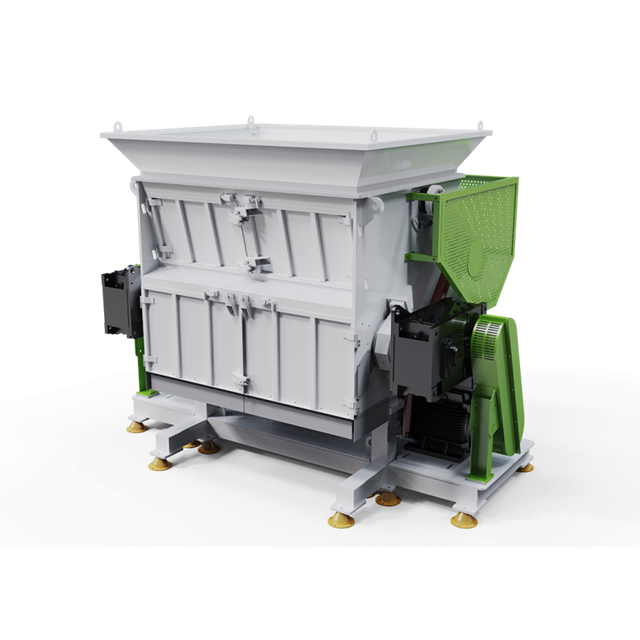
The decontamination phase requires rigorous automation to ensure consistent material purity before extrusion. Relying on manual chemical dosing or temperature checks leads to severe quality fluctuations. A modern plastic washing line utilizes a network of sensors to maintain optimal cleaning conditions.
Automated dosing systems and PID controllers maintain precise caustic concentrations and water temperatures. Continuous monitoring prevents material degradation and optimizes chemical usage. When sensors detect a drop in alkalinity, the PLC automatically triggers dosing pumps. This restores the exact chemical balance required for optimal cleaning. Thermal sensors ensure the friction washers operate at the correct temperature to remove adhesives and organic residues effectively.
Maintaining water quality is essential for both operational efficiency and environmental compliance. The system relies on several automated processes:
This closed-loop control minimizes freshwater intake and ensures the facility meets strict discharge regulations.
Modern extrusion controls directly dictate the business outcome of producing high-grade, uniform recyclate. Every technical feature must map to a specific quality metric. Upgrading to a fully automatic plastic recycling system requires deep integration at the extrusion phase.
Multi-zone temperature controllers and melt pressure transducers play a critical role in maintaining polymer viscosity. Automated screen changer synchronization prevents pressure spikes and line stoppages. When pressure builds due to contamination, the system automatically cycles the screen without interrupting the melt flow. The PLC monitors the pressure differential across the filter mesh and triggers the hydraulic accumulator precisely when needed.
Continuous melt-temperature sensors and inline viscometers measure and adjust polymer properties on the fly within the plastic pelletizing system. These sensors provide immediate feedback to the main extruder drive. The system alters screw speed or heating zones to maintain exact specifications. If the melt temperature exceeds the setpoint, the PLC activates barrel cooling fans or water jackets to stabilize the process.
Variable frequency drives (VFDs) are necessary for synchronizing the extruder screw speed with the pelletizer cutting blades and water-ring cooling systems. A fully integrated system automatically adjusts to feed-rate fluctuations. This prevents pellet agglomeration or fines, ensuring uniform pellet geometry. The water temperature in the cooling trough is regulated via automated heat exchangers to ensure the strands solidify at the correct rate before entering the pelletizer.
Technical buyers must assess different control strategies based on long-term viability, flexibility, and integration capabilities. Choosing the right architecture impacts maintenance, upgrades, and overall plant efficiency.
Comparing control architectures requires looking at both immediate deployment and long-term support.
| Architecture Type | Advantages | Disadvantages | Best Use Case |
|---|---|---|---|
| Monolithic (Proprietary) | Single point of contact, seamless native integration between components. | High risk of vendor lock-in, limited third-party compatibility. | Turnkey standalone lines with no future expansion plans. |
| Modular (Open-Architecture) | Uses standard IEC 61131-3 programming, highly scalable, hardware agnostic. | Requires skilled integrators to manage diverse hardware and networks. | Large facilities planning phased expansions and multi-vendor equipment. |
Leveraging digital twins and software-in-the-loop (SIL) simulation reduces deployment risk. It shortens physical commissioning timelines for new lines. Engineers can test PLC logic against virtual machine models. They identify sequence errors before any physical iron is installed. This virtual commissioning phase allows operators to train on the HMI screens before the plant even powers up.
Retrofitting existing mechanical assets with modern sensors and edge devices requires robust industrial communication protocols. EtherNet/IP, PROFINET, and Modbus TCP serve as the critical bridges connecting old relay logic to modern SCADA networks. We install edge gateways to translate proprietary legacy protocols into standard MQTT payloads for the central server.
Designing a flexible network topology accommodates additional processing lines without requiring a complete SCADA overhaul. Utilizing decentralized I/O modules allows facilities to plug in new extruders or sorters with minimal network disruption. Ring topologies with managed industrial switches provide redundancy, ensuring that a single cable failure does not take down the entire plant network.
Upgrading legacy plants introduces significant operational complexities. Managing the transition requires careful planning to avoid extended downtime. You must map out every I/O point before beginning the physical swap.
Decommissioning outdated, obsolete PLC units during hardware upgrades must be handled systematically. Facilities must identify recoverable precious metals and work with certified industrial control recyclers. Safe disposal of mercury-containing components or heavy metals in older automation hardware is strictly mandated by environmental regulations. Document the firmware versions and logic programs of the old systems before powering them down permanently.
Deploying complex automation involves operational realities and risks that must be managed proactively. A poorly executed integration can cause more downtime than the legacy system it replaces.
Phased rollouts, parallel testing, and rigorous factory acceptance testing (FAT) minimize production halts during commissioning. Running the new control system in parallel with the old one ensures all I/O points map correctly before the final cutover. We schedule cutovers during planned maintenance windows to minimize the impact on production quotas.
Poorly designed interfaces lead to alarm fatigue. Designing intuitive, high-performance HMI graphics guides operators directly to root causes rather than overwhelming them with raw data. Proper training ensures the workforce can leverage the new automation effectively. Use color-coding sparingly on HMI screens, reserving red and yellow strictly for active alarms and faults.
IT/OT convergence introduces significant network vulnerabilities. Facilities must implement network segmentation, hardware firewalls, and secure remote access protocols. This protects critical infrastructure from external threats. Vendor troubleshooting should only occur through encrypted VPN tunnels with multi-factor authentication enabled.
Evaluating vendors requires looking far beyond the mechanical specifications of the equipment. The underlying software architecture dictates the long-term success of the installation. You need a partner who understands both the metallurgy of the screw and the logic of the PLC.
When evaluating a plastic pelletizing machine manufacturer, technical buyers must ask specific questions. Do they use open-source PLC logic? Do they offer secure remote diagnostic capabilities? Are their safety circuits compliant with ISO 13849? Vendors locking buyers into proprietary black-box code should be avoided. You must own the source code for your production lines to ensure you can troubleshoot issues independently.
Service-level agreements (SLAs), availability of local spare parts like drives and I/O modules, and the vendor's policy on software updates are critical. Obsolescence management must be discussed upfront. This ensures the control hardware remains supported for the lifecycle of the mechanical equipment. Ask for a guaranteed support window of at least ten years for all electronic components.
An automated recycling facility relies entirely on its underlying control architecture. Mechanical heavy iron requires intelligent, synchronized software to function efficiently. Buyers must prioritize open-architecture, scalable systems and heavily weigh the integration capabilities of their chosen equipment manufacturers.
A: It is defined by the seamless integration of sorting, washing, and pelletizing via centralized PLC and SCADA control. This architecture eliminates manual material handling and discrete machine operation, creating a continuous, data-driven production loop.
A: PLCs provide real-time monitoring and deterministic control over water temperature, chemical dosing, and automated filtration. This ensures consistent decontamination and optimal chemical usage without relying on manual sampling or operator intervention.
A: Key features include closed-loop melt pressure control, automated screen changing, synchronized VFDs for cutting and cooling, and direct data integration with upstream feed rates to maintain uniform pellet geometry.
A: Integration involves retrofitting older machines with edge gateways and smart sensors. Utilizing standard industrial protocols like PROFINET or EtherNet/IP bridges legacy relay logic to modern SCADA systems for centralized visibility.
A: Work with specialized industrial control recyclers to recover valuable parts and safely dispose of electronic waste. This ensures compliance with environmental standards regarding heavy metals and mercury found in older hardware.
A: ROI timelines typically range from 18 to 36 months. Returns are driven by significantly reduced labor costs, decreased scrap rates, substantial energy savings, and the ability to sell higher-premium, consistently graded recyclate.


