
- All
- Product Name
- Product Keyword
- Product Model
- Product Summary
- Product Description
- Multi Field Search
 English

Views: 0 Author: Site Editor Publish Time: 2026-07-28 Origin: Site


Output fluctuation in plastic recycling facilities creates a compounding financial impact that plant operators cannot ignore. Inconsistent throughput leads directly to missed production targets, variable pellet quality, and inflated energy costs per ton. Legacy or undersized equipment struggles to process variable feedstock. Fluctuating moisture levels and mixed melt flow indices overwhelm older extruders, resulting in thermal instability, die blockages, and reactive downtime. Upgrading to a modern high capacity plastic pelletizing line is not merely an increase in maximum throughput. It is a strategic upgrade to automated load balancing, superior thermal management, and predictable, continuous yield. This transition enhances overall material recovery rates and stabilizes daily operations, allowing facilities to process challenging scrap streams without constantly adjusting machine parameters or fighting unexpected shutdowns.
Stable output in a commercial recycling environment means hitting consistent kg/hr rates shift after shift. It demands maximum material recovery, uniform pellet density, and minimal operator intervention. When these metrics drop, the entire production schedule suffers. Legacy equipment often lacks the advanced controls necessary to maintain this baseline, forcing operators to constantly tweak settings just to keep the line running.
Post-consumer and post-industrial scrap present constant variations in bulk density. Moisture content and contamination levels shift from batch to batch, and undersized extruders simply cannot handle these rapid changes. When feeding soft, high-MFI films, PVC, or EVA, older machines lack adequate buffer zones. They operate without specialized feeding mechanisms, causing material bridging in the hopper and starvation at the screw.
Legacy systems suffer a severe drop in overall recovery rates under these conditions. Operators face excessive off-spec scrap, frequent purges, and constant start-stop cycles. Every time the machine stops, material degrades in the barrel. You lose time, you lose material, and you burn excess energy getting the line back up to temperature. Processing wet agricultural films, for example, introduces massive steam pockets into the barrel. Without proper degassing, this steam causes pressure surges that blow material out of the vent ports or disrupt the pelletizing head.
Consider the physical limitations of older hopper designs. They rely on gravity. When you introduce lightweight regrind or fluffy film flakes, gravity is not enough. The material bridges, forming a dome above the screw. The screw runs empty, output drops to zero, and the operator has to manually break the bridge. This reactive cycle destroys throughput stability.
Improper die temperatures fundamentally disrupt the extrusion process. Excessively hot dies cause pellet fusion at the cutter. This creates long, unusable "noodles" that block downstream cooling equipment and force immediate shutdowns. Conversely, cool dies result in poor melt fluidity. The plastic fails to flow smoothly through the die holes, creating burrs, irregular shapes, and dangerous pressure spikes inside the barrel.
Frequent temperature fluctuations lead to inconsistent pellet sizing. Increased scrap rates follow, dragging down operational efficiency. Maintaining a tight thermal window is non-negotiable for stable output. Older machines use basic relay-driven heater bands that overshoot target temperatures. They heat up too much, turn off, and let the barrel cool down too far. This sine-wave temperature profile means the melt viscosity is constantly changing. When viscosity changes, the pressure at the die changes, and your pellet size varies wildly.
We see this often with mixed polyolefins. A slight drop in temperature increases the melt strength too much, causing the rotary blades to tear the plastic rather than cut it cleanly. This generates fines—tiny plastic dust particles—that clog water filters and degrade the final product quality. Stable thermal management requires continuous, proportional control, not simple on/off switching.
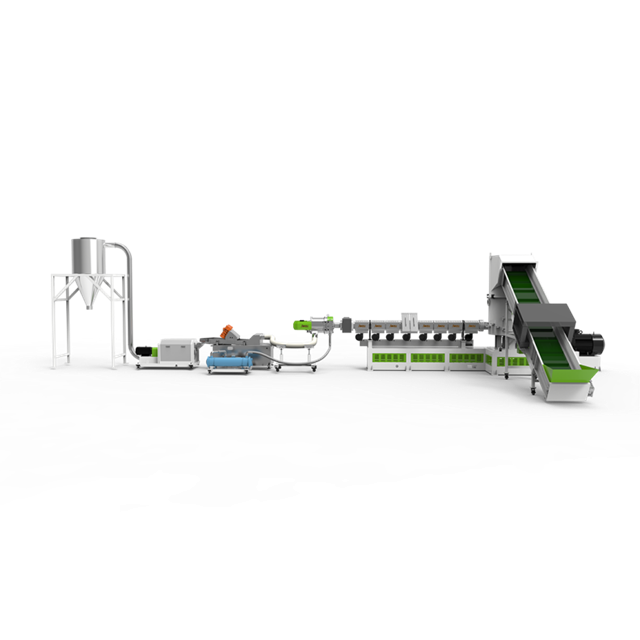
Modern engineering directly mitigates the variables that cause output drops. A well-designed plastic pelletizing system integrates mechanical and electrical solutions to maintain steady production, regardless of minor feedstock variations.
Integrated volumetric or gravimetric feeders maintain a constant material flow into the extruder. They adjust in real-time to prevent starvation or overfeeding. Gravimetric systems actually weigh the material as it enters the machine, adjusting the feed screw speed to maintain a precise mass flow rate. This eliminates the bridging and starvation issues common with gravity-fed hoppers.
Plant-level load balancing prevents sudden electrical demand spikes across multi-line setups. This mitigates voltage drops that can stall extrusion motors. Compaction shredders and force feeders pre-condition low-density materials. They densify light films and foams, ensuring a consistent intake volume at the main screw. By mechanically forcing the material into the flights of the screw, you guarantee a 100% fill rate. A full screw means stable pressure, and stable pressure means stable output.
Contamination causes pressure spikes that halt production. Continuous, dual-piston screen changers allow for filter swaps without stopping the machine. They maintain steady melt pressure during the changeover. When one screen gets clogged, the operator shifts the piston, bringing a clean screen into the melt flow while the dirty one is removed and replaced. The machine never stops, and the output remains constant.
Multi-zone vacuum degassing removes volatiles and moisture from the melt. This prevents voids in the final pellet. It stabilizes extrusion pressure and improves the structural integrity of the recycled plastic. High-capacity lines often feature double-venting systems. The first vent operates at atmospheric pressure to release bulk moisture, while the second vent uses a high-vacuum pump to extract deep-seated volatiles and inks. This dual approach ensures the melt is completely solid before it hits the die.
Closed-loop PLC systems monitor and adjust barrel and die temperatures in real-time. They react to minor shifts before they impact melt fluidity. Modern systems use PID (Proportional-Integral-Derivative) control algorithms. Instead of just turning heaters on and off, PID controllers supply exact amounts of power to maintain a flat temperature line.
Larger, high-capacity dies offer a distinct thermal mass advantage. They resist rapid temperature shifts caused by ambient air or cooling water variations. This stability ensures uniform flow through every die hole. Furthermore, advanced dies incorporate internal oil or water cooling channels. If the shear heat from the screw pushes the melt temperature too high, the system automatically circulates cooling fluid through the barrel jacket, pulling heat away and keeping the process stable.
Assessing technical features against desired operational outcomes requires a structured approach. Buyers must evaluate the extruder, the cutting mechanism, and the drive system based on their specific material streams.
Matching the Length/Diameter (L/D) ratio to the specific polymer type is critical. It ensures adequate residence time for uniform melting without thermal degradation. For standard polyolefins like PE and PP, an L/D ratio of 32:1 or 36:1 provides enough barrel length to melt, mix, and degas the material thoroughly. Shorter barrels risk pushing unmelted particles through the die, while excessively long barrels can degrade heat-sensitive plastics.
Customized screw profiles feature dedicated mixing zones and barrier flights. These designs handle mixed or challenging feedstocks efficiently. They provide the necessary shear to melt the plastic evenly without overworking it. A barrier flight separates the melted plastic from the solid plastic, ensuring that only fully plasticized material moves forward. This prevents solid chunks from reaching the screen changer and causing sudden pressure spikes.
Choosing the right cutting method dictates pellet quality and line uptime. You must match the cutter to the polymer's thermal properties.
| Cutting System | Best Feedstock | Primary Advantage | Main Trade-off |
|---|---|---|---|
| Underwater Pelletizing | Rigid regrinds, PET, HDPE | Maximum throughput, uniform shape | High initial setup complexity |
| Water-Ring | Standard polyolefins (PP, PE) | Reliable cooling, easy maintenance | Blade wear requires monitoring |
| Dry Air-Cooled | PVC, EVA, High-MFI films | Prevents agglomeration | 10-15% lower throughput |
| Strand Pelletizing | Engineering plastics, Nylon | Excellent pellet uniformity | Prone to strand breakage |
Direct-drive torque motors and variable frequency drives (VFDs) maintain constant screw speeds under varying loads. They eliminate the mechanical losses associated with older gearbox designs. Traditional AC motors with belt drives lose power through friction and slippage. Direct-drive systems couple the motor directly to the screw shaft, transferring 100% of the torque.
Modernized, continuous-run systems reduce energy use by up to 30%. They enhance overall output by 15% compared to outdated, stop-and-start legacy models. Stable power application translates directly to stable output. When a dense batch of material enters the barrel, a VFD instantly detects the increased load and adjusts the current to maintain the exact RPM. The screw doesn't slow down, and your output rate remains perfectly flat.
Scaling up capacity introduces new operational realities. Facility managers must prepare for increased infrastructure demands before the equipment arrives on site.
High-capacity lines require significant physical space. You need room not just for the extruder, but for the upstream silos, downstream cooling tanks, centrifugal dryers, and bagging stations. Facilities often need power supply upgrades to handle larger motors. A 1000 kg/hr line might require a 400kW main drive motor, plus auxiliary power for heaters, pumps, and blowers. Check your facility's total amperage capacity.
Chilled water capacity must scale to meet the cooling demands of higher throughput. If your water system cannot pull enough heat out of the pellets, they will fuse together in the storage silos. Higher upfront infrastructure costs trade off against long-term operational stability. Proper site preparation prevents installation delays and ensures the machine runs at nameplate capacity from day one.
Over-optimizing a system for a single feedstock type carries risk. Market shifts may require processing different materials. Building in flexibility allows the facility to adapt. For example, buying a screw designed exclusively for LDPE film might leave you struggling if you secure a contract to process rigid HDPE bottles.
However, high-capacity lines face limitations when running small, frequent batch changes. Purging costs and downtime increase significantly during changeovers. It takes time and material to flush a large barrel clean. These systems perform best during long, uninterrupted runs of a single material type. If your business model relies on processing small, diverse batches every few hours, a single massive line might be less efficient than two smaller, dedicated lines.
Selecting a capable partner mitigates implementation risks. The right supplier delivers a reliable system tailored to your material, rather than forcing a standard machine to fit a custom problem.
Evaluate a plastic pelletizing machine manufacturer based on their engineering capabilities. Look for in-house testing facilities. They must demonstrate a willingness to run material trials before purchase. Send them a ton of your dirtiest, most difficult scrap. If they cannot process it in their test lab, they will not be able to process it on your factory floor.
Custom-engineered solutions outperform off-the-shelf machinery for complex recycling streams. Screw geometry and filtration must match your exact feedstock profile. A good manufacturer will ask for your material's bulk density, moisture content, contamination types, and target melt flow index before they even quote a machine.
Choose a plastic pelletizing machine supplier with a robust local or regional service network. Guaranteed lead times for wear parts are critical. Blades, screens, and screw elements require regular replacement. Delayed parts delivery directly impacts long-term output stability and return on investment.
Ask about the availability of service technicians. Can they dispatch someone within 48 hours if the main drive fails? Do they offer remote PLC troubleshooting? Modern machines can connect to the manufacturer's service department via secure internet connections, allowing engineers to diagnose sensor faults or software glitches without stepping foot in your plant. Reliable support keeps the line running and protects your capital investment.
Eliminating output fluctuation requires advanced thermal control, load balancing, and continuous filtration. These features make modern equipment a necessary upgrade for scaling recycling operations and maximizing material recovery rates. Prioritize systems offering closed-loop automation and screw geometries tailored to specific feedstocks. To move forward effectively:
A: Output fluctuation stems from variable feedstock density, inconsistent feeding, and melt pressure drops during screen changes. Poor die temperature control also disrupts melt fluidity, causing surges or blockages that destabilize the kg/hr production rate.
A: Automated feeding, drive synchronization, and plant-level electrical load balancing prevent material surges and starvation. This prevents power trips and maintains a steady material flow, ensuring the extruder operates at peak continuous capacity.
A: Yes. Continuous operation, Variable Frequency Drives (VFDs), and optimized heating zones reduce energy use per ton by up to 30%. These modern components also boost overall throughput by 15% compared to outdated, stop-and-start models.
A: Dry air-cooled cutting is best for sticky, high-MFI materials like EVA and PVC. It prevents water-induced clumping. Operators accept a slight trade-off in output volume and pellet regularity to maintain continuous, blockage-free production.
A: Fused pellets usually result from excessively high die temperatures or inadequate cooling water flow. Check the die face temperature, ensure the water ring or underwater jets are unobstructed, and verify proper blade tension against the die.
A: Prioritize suppliers offering in-house material testing capabilities and custom screw design expertise. Reliable after-sales support and guaranteed lead times for wear parts like blades and screens are essential for long-term uptime.


