
- All
- Product Name
- Product Keyword
- Product Model
- Product Summary
- Product Description
- Multi Field Search
 English


Views: 0 Author: Site Editor Publish Time: 2026-10-20 Origin: Site


Did you know extrusion drives the heartbeat of modern recycling? Standard machinery frequently stumbles when tasked with processing complex, contaminated, or highly engineered plastics. Relying on outdated technology in today's fast-paced manufacturing sector often leads to bottlenecked production and compromised product quality.
The demand for flawless material homogeneity has never been higher. Facility managers and procurement engineers are increasingly shifting their focus toward advanced processing solutions to stay competitive. We will explore the core advantages of twin screw extrusion technology and examine how its unique mechanics can drastically boost production yields while maximizing long-term profitability.
Industry data reveals a massive pivot toward the circular economy over the past few years. Global mandates now require higher percentages of post-consumer recyclates in consumer packaging and automotive components. This regulatory push forces recycling plants to handle highly variable waste streams that standard machines simply cannot process efficiently.
Equipment must adapt to survive. A machine that merely melts plastic is no longer sufficient. Modern extrusion lines must compound, degas, and homogenize inconsistent feedstocks without degrading the underlying polymer chains. Upgrading to a specialized twin screw architecture is rapidly becoming the baseline standard for facilities aiming to produce premium-grade resin from post-consumer waste.
To fully grasp the transformative benefits of this technology, you need to understand its baseline mechanics. Extrusion is the foundational process in polymer engineering. The specific equipment you choose dictates the thermal and mechanical history of the processed material, directly influencing the final physical properties of the product.
Walk onto any modern compounding floor, and you will see the twin screw extruder acting as the primary workhorse. It consists of two parallel screws rotating inside a precisely machined, heated barrel. Picture an operator loading a heterogeneous mix of raw polymer flakes and color masterbatch into the feed hopper. As this raw material enters through the feed throat, the rotating screws aggressively grab and convey the plastic forward. The internal architecture is strategically divided into highly specific zones for feeding, melting, mixing, venting, and metering.
Unlike simpler mechanisms, twin screws feature modular profiles. Process engineers custom-configure kneading blocks, conveying elements, and reverse pitch elements to meticulously control shear rates and residence time. As the plastic moves through the heated barrel, the intense mechanical shear generated by the intermeshing screws melts the polymer into a uniform, viscous fluid. External thermal energy assists this process before the melt is forced through a die plate.
The fundamental goal of pelletizing is to transform raw, often inconsistent polymer flakes or powders into uniform, high-density pellets. These pellets must be perfectly suited for downstream injection molding or film blowing. The twin screw mechanism ensures a highly stable and continuous flow of molten plastic.
Maintaining strict control over melt temperature and pressure prevents localized burning or material degradation. For facilities utilizing an advanced plastic pelletizing machine, the precision of a twin screw system translates directly to consistent pellet geometry, bulk density, and structural integrity. These exact critical metrics are required for stringent quality assurance.
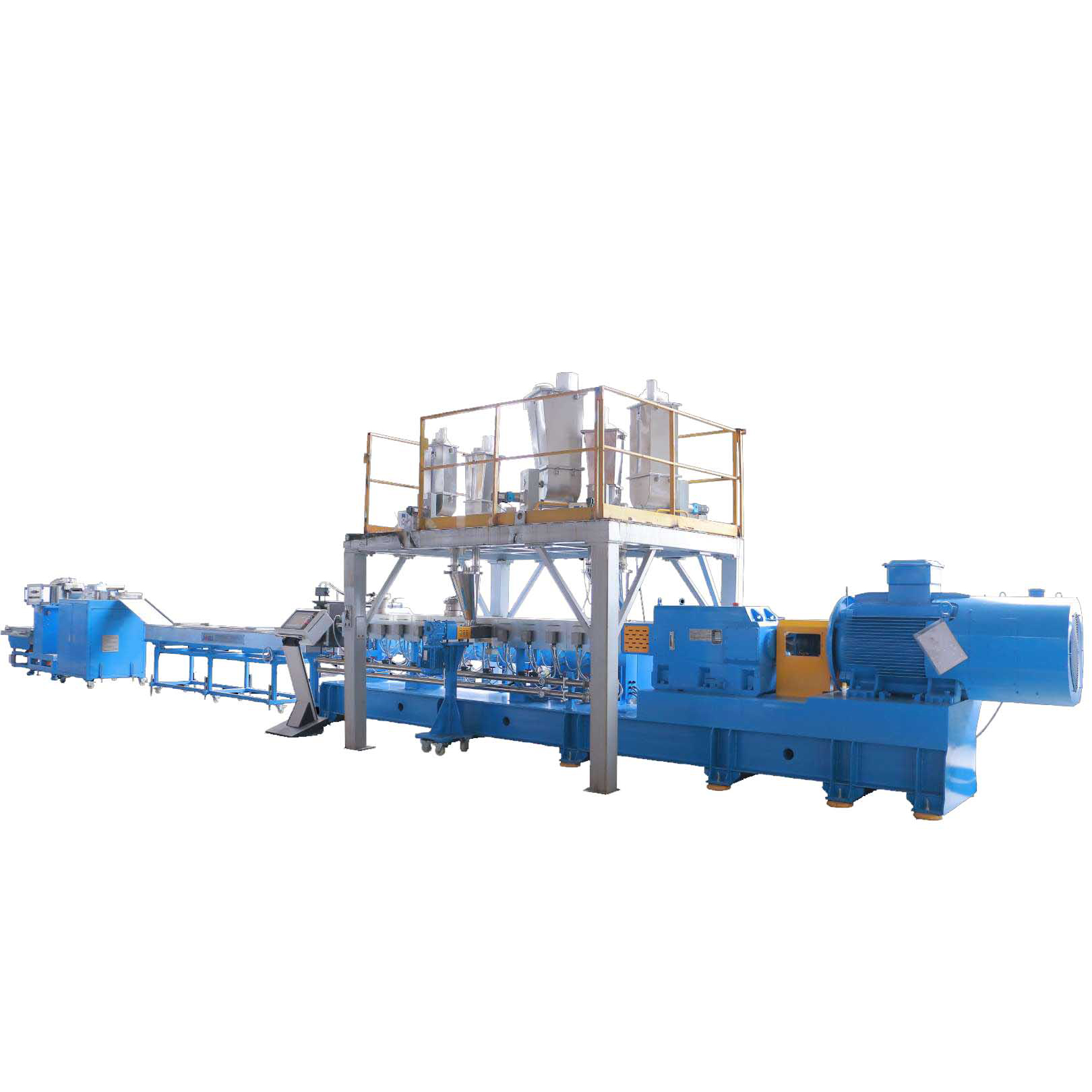
The industry-wide shift toward twin screw technology is driven by empirical performance data and tangible factory-floor results. The primary technical advantages separate this equipment from conventional alternatives in profound ways.
Polymers rarely process in a pure state. They almost always require colorants, UV stabilizers, flame retardants, or reinforcing fillers like glass fibers to meet commercial specifications. Achieving a perfectly homogenous blend requires two distinct types of mixing.
Dispersive mixing involves applying high shear stress to physically break down solid agglomerates into microscopic particles. Carbon black and calcium carbonate are prime examples. Distributive mixing involves the spatial rearrangement of these particles evenly throughout the polymer matrix without necessarily reducing their size. The intermeshing action of twin screws excels at both simultaneously. Kneading blocks force the polymer through incredibly tight clearances. This applies intense shear for dispersion, while complex flow paths continuously divide and recombine the melt for perfect distribution.
One of the most significant operational advantages of this technology is its positive displacement pumping action. Material is conveyed via drag flow in conventional single screw extrusion. This relies heavily on the friction between the polymer, the screw root, and the barrel wall. If a material is too slippery, highly lubricated, or has a low bulk density, conveying efficiency plummets. Frustrating pressure surging and inconsistent output inevitably follow.
Intermeshing twin screws mechanically push the material forward much like a precision gear pump. The flight of one screw penetrates the channel of the other, physically blocking the material from rotating with the screw and forcing it axially toward the die. Rock-solid pressure generation, consistent throughput rates, and uniform pellet sizes are achieved entirely regardless of the frictional coefficient of the material.
Downtime is the absolute enemy of profitability on any factory floor. Standard extruders often require laborious manual dismantling and cleaning when switching a production line between different colors or polymer grades. Degraded material accumulates in stagnant dead zones, ruining subsequent batches.
Fully intermeshing twin screws eliminate this headache through a built-in self-wiping mechanism. The screws rotate with minimal clearance between them, allowing the flight of one screw to continuously wipe the root and flanks of its paired counterpart. Constant surface renewal prevents material stagnation and mitigates the risk of thermal degradation. Operators can execute rapid, on-the-fly material or color changeovers with minimal scrap waste and zero teardown time.
Recycled plastics often carry high levels of surface moisture, residual inks, and volatile organic compounds. If these contaminants are not aggressively removed during the extrusion phase, the resulting pellets suffer from internal voids, surface bubbles, and severely compromised mechanical strength.
Twin screw extruders provide exceptional degassing performance. The intermeshing action continuously draws polymer from the bottom of the channel to the surface, rapidly renewing the exposed area of the melt. When this incredibly thin layer of boiling polymer passes under a deep-vacuum venting port, moisture and trapped gases are violently extracted. This capability is indispensable for processing hygroscopic materials or heavily contaminated recycling streams.
A common consideration for facility managers is whether to invest in a traditional single screw or upgrade to a twin screw architecture. Making the right decision relies on understanding the operational trade-offs between the two technologies. We have compiled a direct comparison of their core capabilities.
| Performance Metric | Single Screw Extruder | Twin Screw Extruder |
|---|---|---|
| Mixing Capability | Poor distributive, very low dispersive. | Excellent distributive and dispersive mixing. |
| Conveying Principle | Friction-dependent drag flow. Prone to surging. | Positive mechanical displacement. Highly stable. |
| Self-Cleaning | None. Requires manual teardown for color changes. | Continuous self-wiping action minimizes downtime. |
| Degassing Efficiency | Limited surface renewal; poor moisture removal. | Rapid surface renewal; excellent deep-vacuum degassing. |
| Material Flexibility | Struggles with powders and low-bulk-density flakes. | Effortlessly handles powders, fibers, and wet flakes. |
Single screw extruders are highly dependent on the frictional properties of the feedstock. They notoriously struggle with fine powders, lightweight film particulates, and highly lubricated formulations. These materials frequently cause severe feeding blockages.
The positive conveying nature of twin screws offers immense operational flexibility. They can effortlessly swallow a wide spectrum of feedstocks. From low-bulk-density agricultural film flakes to heavy, mineral-filled automotive compounds, the machine pushes material forward without experiencing feed bridging or pressure surges.
A twin screw machine boasts a larger motor and a higher absolute power rating on a specification sheet. Industrial efficiency, however, is accurately measured by specific energy consumption. This is the exact amount of kilowatt-hours required to process one kilogram of material.
Twin screws melt and mix materials much faster through internal mechanical shear rather than relying solely on external barrel heater bands. Their specific energy consumption is frequently much lower than that of single screw models. Rapid processing times and massively higher throughput capacities result in a highly favorable energy-to-output ratio.
When evaluating this technology, it is vital to distinguish between the two primary kinetic configurations. Each serves distinct industrial purposes based on unique fluid dynamics.
Both screws turn in the exact same direction in a co-rotating configuration. The molten material is passed from one screw to the other in a continuous figure-eight pattern. This design generates tremendous shear forces and rapid surface renewal. It is the undisputed industry standard for compounding, color mixing, and general plastic upcycling. High-speed rotation ensures the excellent dispersive mixing required for blending additives into engineering plastics.
The screws turn in opposite directions in a counter-rotating setup. They draw material into the nip region and squeeze it like a heavy calendar roll. This action generates very low shear and limits mixing capability, but it provides exceptionally high, stable pumping pressure. Counter-rotating extruders are specifically utilized for processing highly heat-sensitive materials like polyvinyl chloride, where high shear would immediately cause the polymer to degrade, discolor, and burn.
Advanced compounding capabilities are now a critical asset for modern recycling facilities. Operators rarely process pure, homogenous waste streams. Post-industrial and post-consumer plastics require significant upgrading to meet strict commercial standards.
Intense mixing is required when facility operators need to upcycle degraded polyolefins by blending them with virgin base resins, compatibilizers, and impact modifiers. A purpose-built Twin screw pelletizing line is engineered specifically for this rigorous challenge.
Dynamic mixing zones ensure a uniform molecular structure even with high-percentage filler compounds. The ability to continuously process high volumes without surging ensures that downstream underwater or strand pelletizers receive a perfectly stable melt. Uniform, premium-grade pellets are produced, commanding much higher market prices.
Polyethylene terephthalate is notoriously difficult to recycle due to its highly hygroscopic nature. If even trace amounts of moisture are present during the extrusion phase, the polymer undergoes rapid hydrolytic degradation. This leads to a severe drop in intrinsic viscosity, rendering the final material brittle and useless for high-end applications like bottle-to-bottle recycling.
The superior degassing capabilities of twin screw systems make a specialized PET Twin Screw Pelletizing Line the optimal solution. Rapid surface renewal allows high-capacity vacuum systems to extract moisture and volatile contaminants directly from the melt phase. Prolonged, energy-intensive pre-drying processes in crystallization silos are completely eliminated. This saves immense amounts of thermal energy and factory floor space while preserving the mechanical integrity of the recycled resin.
Procuring capital equipment requires meticulously matching machine specifications to your specific material formulations and daily production goals. Engineers must evaluate several critical factors before finalizing a purchase.
The length to diameter ratio determines the residence time of the polymer inside the barrel and dictates exactly how many processing zones can be configured. A shorter ratio, such as 28:1 to 36:1, is suitable for simple compounding and shear-sensitive materials.
Complex industrial pelletizing involving heavy vacuum degassing, reactive extrusion, or multiple downstream side-feeders for glass fibers requires a much longer barrel. A ratio ranging from 44:1 to 52:1 is absolutely necessary to accommodate the required thermal and mixing profiles. This extended length provides the physical space needed for aggressive moisture extraction.
Throughput is a function of free volume and screw speed, but processing high-viscosity materials requires substantial torque. Modern twin screw extruders are evaluated by their specific torque density, measured in Newton meters per cubic centimeter. High-end gearboxes often deliver specific torque values between 8 and 11, allowing the operator to run the line at lower temperatures with higher fill levels.
Maximizing output while minimizing thermal degradation is the ultimate goal. Buyers must ensure the gearbox torque capabilities align perfectly with the rheological properties of their target polymers.
An extruder does not operate in a vacuum. It is merely the heart of a broader, interconnected processing ecosystem. Upstream gravimetric loss-in-weight feeders must be highly accurate to ensure the correct formulation ratios enter the barrel.
Downstream equipment must also match the pace. Continuous melt filtration screens, underwater pelletizers, centrifugal spin dryers, and classifying silos must be perfectly synchronized with the extruder's output capacity. This prevents bottlenecks and ensures a seamless, automated production loop.
Maintaining an objective procurement strategy means acknowledging the inherent challenges of twin screw technology. Practical strategies exist to mitigate these hurdles effectively.
The most prominent barrier to entry is the initial capital expenditure. Twin screw extruders require complex, heavy-duty gearboxes, precision-machined modular screws, and sophisticated control panels. This makes them significantly more expensive upfront than baseline single screw counterparts.
Procurement teams must evaluate the total cost of ownership. The initial sticker shock is rapidly offset by operational savings. Lower specific energy consumption, drastically reduced scrap rates during changeovers, and the unique ability to process cheaper, highly contaminated feedstocks into premium-grade pellets deliver a rapid return on investment.
Twin screw extruders offer modular screw profiles and independent control over feed rates, screw RPM, and vacuum levels. They require a higher level of technical expertise to operate efficiently. Incorrect parameter settings can easily lead to excessive shear, material degradation, or premature equipment wear.
Facilities should partner with established equipment manufacturers who provide comprehensive on-site commissioning, thorough operator training, and robust after-sales engineering support. Utilizing advanced control systems with pre-programmed material recipes automates complex thermodynamic balancing. This drastically reduces reliance on operator intuition and ensures highly repeatable product quality.
Twin screw extruders provide unmatched dispersive and distributive mixing capabilities that are rapidly becoming the standard in modern plastics processing. Reliable, mechanical self-wiping mechanisms ensure continuous operation and drastically reduce downtime. These advanced capabilities guarantee high throughput and flawless homogenization for even the most complex plastic compounds and contaminated recyclates.
The initial capital investment undoubtedly exceeds that of basic single screw models. However, long-term energy efficiency, material versatility, and superior product quality significantly maximize your overall profitability. Upgrading your industrial plastic pelletizing setup is no longer just an option as the industry pushes toward higher standards of circularity; it is a competitive necessity. If your facility is struggling with inconsistent melt quality or frequent downtime, it is time to evaluate your hardware. Explore the high-performance extrusion solutions from Jwell Recycling to find the exact machinery tailored to your specific compounding and pelletizing needs.
The primary advantages include superior distributive and dispersive mixing, which is absolutely essential for compounding additives and fillers. They also utilize positive mechanical material displacement, preventing material surging, and feature self-wiping capabilities that drastically reduce machine downtime during color or resin changeovers.
Yes, they are highly effective and often preferred for processing purely recycled materials. Their advanced multi-zone vacuum degassing capabilities efficiently remove moisture and volatile contaminants from inconsistent recyclates. This yields stable, high-quality pellets without the need for prolonged prior drying.
The closely intermeshing design allows the screws to continuously wipe each other clean during rotation. This prevents polymer stagnation and thermal degradation in the barrel. Final product purity is ensured while eliminating the need to physically dismantle the machine for cleaning between different production runs.
Co-rotating extruders are the undisputed industry standard for most pelletizing, recycling, and compounding tasks due to their high-shear mixing capabilities. Counter-rotating extruders generate much lower shear and are strictly reserved for highly heat-sensitive materials like polyvinyl chloride to prevent burning and degradation.
For heavily contaminated or moisture-laden recyclates, a longer barrel ratio ranging from 44:1 to 52:1 is highly recommended. This extended barrel length provides adequate residence time for multiple vacuum degassing zones and intensive mixing blocks, ensuring all impurities are properly extracted before pelletization.
By relying on internal mechanical shear rather than external barrel heat, the twin screw configuration melts the polymer rapidly and evenly. The positive displacement action also eliminates material stagnation, ensuring a tight residence time distribution that prevents heat-sensitive plastics from burning or discoloring.


