
- All
- Product Name
- Product Keyword
- Product Model
- Product Summary
- Product Description
- Multi Field Search
 English

Views: 0 Author: Site Editor Publish Time: 2025-11-25 Origin: Site


Blown film extrusion is a widely used method in the plastics industry for turning raw plastic pellets into thin, continuous films. It produces materials that are strong, flexible, and customizable. They are essential for industries ranging from packaging to agriculture, and even for some industrial applications.
The process involves melting plastic and pushing it through a circular die, then inflating it into a bubble. This bubble is cooled, flattened, and wound into rolls. By adjusting thickness, width, and film properties, manufacturers can meet the needs of virtually any application.
They prefer this method because it is efficient, minimizes material waste, and supports environmentally-friendly practices, making it an attractive option for modern production lines.
Blown film extrusion transforms plastic pellets into thin, durable films. Pellets are heated until they melt inside an extruder. Air inflates the molten material into a tube or bubble. This tube cools, flattens, and winds into rolls ready for further use.
Key Materials:
Low-density polyethylene (LDPE) – soft and flexible
High-density polyethylene (HDPE) – strong and durable
Polypropylene (PP) – lightweight and resistant
Specialty polymer blends – for enhanced barrier or mechanical properties
Blown film extrusion differs from cast film extrusion, which creates flat films using water-cooled rollers. Blown films stretch in both machine direction (MD) and transverse direction (TD), giving them more balanced mechanical properties, higher flexibility, and improved strength.
Material Preparation: Plastic pellets are loaded into the extruder, where heat melts them into a uniform molten mass.
Extrusion: The molten plastic is pushed through a circular die, shaping it into a tube.
Bubble Formation: Air inflates the tube, stretching the film in multiple directions.
Cooling: Air or rollers cool the tube, solidifying the film and maintaining its dimensions.
Collapsing: The tube passes through rollers that flatten it into a sheet.
Winding: The sheet is rolled into reels, ready for storage, shipping, or downstream processing.
This process ensures films are consistent, clear, and strong, making them suitable for diverse applications.
| Type | Description | Typical Applications |
|---|---|---|
| Single-layer | One polymer layer | Basic packaging, liners, bags |
| Multi-layer | Multiple polymer layers | Food packaging, barrier films |
| Co-extruded | Combination of polymers | UV protection, anti-static films |
| Specialty | Biodegradable or recyclable | Eco-friendly packaging |
The flexibility of blown film extrusion allows manufacturers to adjust thickness, additives, or color based on product requirements. It makes the process ideal for both standard and specialized films.
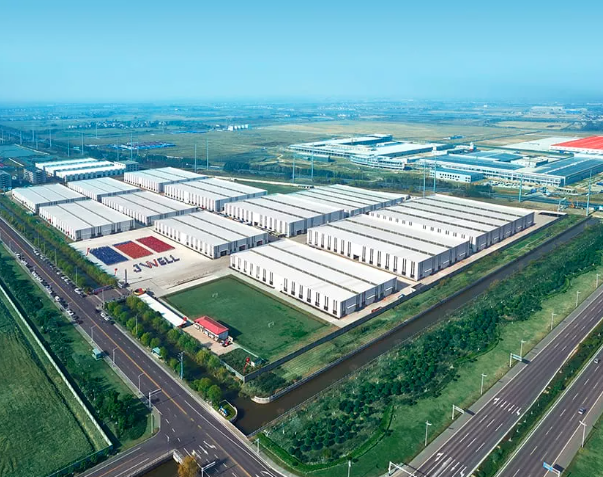
Blown films are stretched in both machine direction (MD) and transverse direction (TD), which produces balanced mechanical properties throughout the material. They exhibit uniform tensile strength, tear resistance, and puncture resistance, ensuring consistent performance in demanding applications. Unlike unevenly extruded films that may fail under stress, blown films provide reliable durability, making them ideal for packaging, industrial, and agricultural uses where strength is critical.
The extrusion process aligns the polymer molecules along multiple directions, significantly enhancing the tensile strength of blown films. This molecular orientation allows the films to withstand heavy handling, stacking, and transportation without tearing. As a result, blown films are perfect for stretch films, protective packaging, and industrial wraps that must endure rigorous operational conditions.
Due to the molecular alignment achieved during extrusion, blown films are highly flexible and adaptable. They can conform tightly to irregularly shaped objects, ensuring secure coverage and protection. This flexibility makes them especially suitable for applications like flexible packaging, shrink wraps, and agricultural coverings, where a snug fit and reliable seal are essential.
The combination of balanced mechanical properties and increased tensile strength gives blown films exceptional robustness. They resist harsh environmental conditions, including temperature fluctuations and rough handling. This durability makes them a preferred choice for greenhouse films, heavy-duty construction coverings, and other industrial protective applications.
Blown film extrusion is a cost-efficient method for producing high-quality films. The process minimizes material waste while achieving high production rates, reducing overall manufacturing costs. Equipment for blown film lines is generally less expensive than for cast film lines, particularly in multi-product environments. In addition, automated trimming and recycling of scrap further improve efficiency, making the process economically advantageous.
Blown film extrusion allows for extensive customization of film properties, including thickness, width, color, and functional additives. Manufacturers can include UV stabilizers, anti-fog agents, or anti-static coatings depending on application requirements. This versatility enables one production line to create multiple types of films, serving industries from food packaging to pharmaceuticals, construction, and agriculture, without the need for separate machines.
The process of bubble formation and controlled cooling ensures that blown films have uniform thickness across their surface. This consistency prevents weak spots or irregularities, which is especially important for precision applications like medical packaging or vacuum-sealed food products. Uniform films provide reliable performance and improve overall product quality.
Blown films can be engineered to provide excellent barrier properties against moisture, oxygen, and UV light. These protective characteristics help extend the shelf life of food products and safeguard sensitive medical or pharmaceutical items during storage and transport. Barrier films are particularly valuable in applications requiring controlled environmental conditions.
Blown film extrusion supports environmentally-friendly production practices by incorporating recyclable materials. The process generates less scrap compared to other film manufacturing methods, and it can also accommodate biodegradable or compostable polymers. These features align blown film production with sustainable packaging initiatives, helping manufacturers reduce environmental impact while meeting consumer demand for eco-conscious products.
| Advantage | Key Benefit |
|---|---|
| Balanced Mechanical Properties | Even tensile, tear, and puncture resistance |
| Increased Strength & Durability | Withstands heavy handling and shipping stress |
| Flexibility | Conforms to irregular shapes, ideal for wrapping |
| Robustness | Tolerates harsh environments and rough handling |
| Cost-Effectiveness | Reduces waste and lowers production cost |
| Versatility & Customization | Adjustable thickness, width, additives |
| Uniform Thickness & Quality | Consistent film thickness, prevents weak spots |
| Improved Barrier Properties | Blocks moisture, oxygen, UV light |
| Sustainability | Supports recyclable and biodegradable materials |
Blown film extrusion is widely used in packaging to produce products such as bags, stretch films, cling wraps, and shrink films. These films must combine strength, flexibility, and reliable barrier properties to protect the contents and maintain product quality. The uniformity and durability of blown films make them ideal for everyday consumer packaging and industrial wrapping applications.
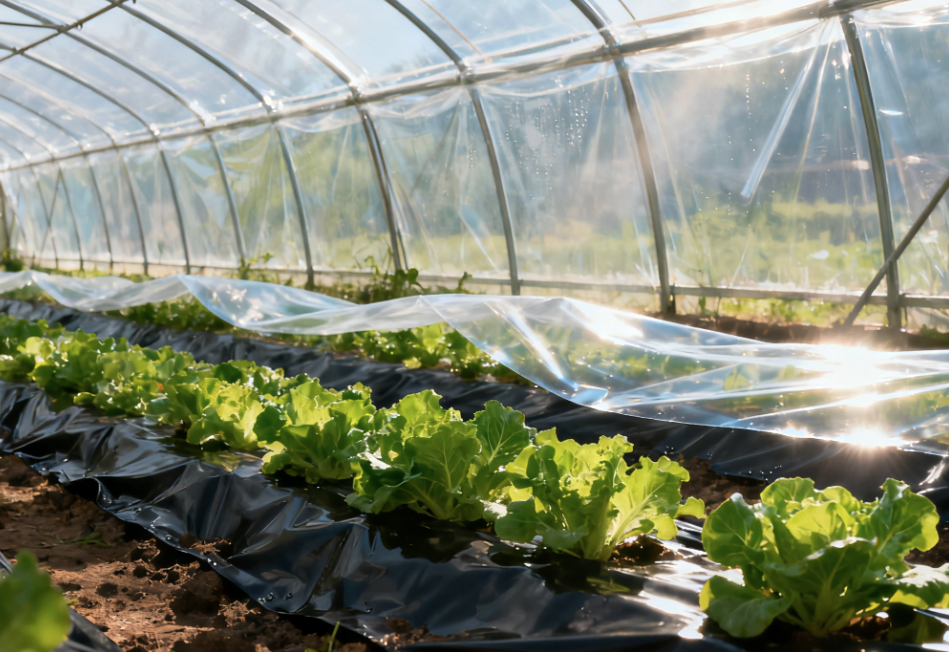
In agriculture, blown films are essential for greenhouse coverings and mulch films. They help protect crops from adverse weather, maintain soil moisture, and support optimal growth conditions. By using blown films, farmers can enhance crop yield and quality while providing a reliable and cost-effective solution for large-scale agricultural operations.
Blown films are also utilized in construction and industrial sectors. They serve as insulation sheets, vapor barriers, and protective coverings for machinery or building materials. These films offer durability, environmental protection, and resistance to harsh conditions, making them suitable for demanding industrial applications.
The medical and healthcare industries rely on blown films for sterilization pouches, disposable films, and intravenous (IV) bags. These applications require high standards of hygiene, reliability, and safety. Blown film extrusion ensures that these products meet strict regulatory requirements while providing consistent quality and performance.
Blown film extrusion can produce specialized films such as biodegradable, UV-resistant, or anti-static varieties. These films support sustainability initiatives and help manufacturers comply with environmental regulations. Additionally, they expand the range of applications for blown films, making it possible to meet niche industry needs while reducing environmental impact.
Machine Calibration: Proper setup reduces defects and scrap.
Parison Control: Adjusts film thickness along its length.
Additives: Enhance properties like UV resistance, anti-fog, or color.
Recycling: Collects trim and flash, increasing cost-efficiency and sustainability.
Blown film extrusion is a manufacturing process that melts plastic pellets and forms them into thin films by inflating a tube of molten material, cooling it, and flattening it for use in various applications.
Blown film extrusion offers balanced mechanical properties, increased strength and durability, flexibility, robustness, cost-effectiveness, uniform thickness, improved barrier properties, and easy customization.
Blown film stretches the plastic in both machine and transverse directions, resulting in more balanced mechanical properties, while cast film extrusion only stretches in one direction and often requires water-cooled rollers.
Blown film extrusion can produce single-layer, multi-layer, co-extruded, and specialty films, including biodegradable or UV-resistant films.
Blown films are used in packaging, agriculture, construction, medical and healthcare sectors, and for specialized applications such as eco-friendly or anti-static films.
Blown film extrusion continues to be a preferred method for producing high-quality, durable, and versatile films across multiple industries. Its ability to deliver balanced mechanical properties, flexibility, robust barrier performance, and cost-effective production makes it an essential choice for modern manufacturing.
For companies seeking reliable blown film extrusion solutions, Changzhou Dyun Environmental Technology Co., Ltd. offers advanced equipment and customized services to optimize production efficiency and product quality. By investing in their expertise, manufacturers can enhance film performance, reduce material waste, and meet diverse application needs in packaging, agriculture, medical, and industrial sectors.
Whether you are upgrading your production line or exploring new applications, blown film extrusion technology from Changzhou Dyun Environmental Technology Co., Ltd. provides the performance, reliability, and sustainability your business requires.


