
- All
- Product Name
- Product Keyword
- Product Model
- Product Summary
- Product Description
- Multi Field Search
 English

Views: 0 Author: Site Editor Publish Time: 2026-10-16 Origin: Site


The global plastics industry processes hundreds of millions of tons of material every year. At the center of this massive operation is the extrusion machinery. Profitability relies heavily on selecting the right equipment. Recent industry analyses reveal a rapid shift toward smart, energy-efficient extrusion systems. Driven by strict global circular economy mandates, manufacturers are upgrading to systems with adaptive heating and advanced sensor integration. Single screw extrusion remains the absolute benchmark for this transition. It delivers unmatched reliability and cost-effectiveness. This guide breaks down the core use cases, compares them to twin-screw setups, and provides a practical selection framework for plant operators.
To understand the scope of these machines, we need to look at the mechanical forces at play. The primary job is to melt, homogenize, and pump thermoplastic materials through a shaping die under strictly controlled parameters.
A standard screw features three distinct functional zones. Each section performs a specific thermal and mechanical task in the journey from solid to melt.
Relying on a single rotating shaft reduces mechanical wear on the gearbox and thrust bearings. Floor operators experience fewer mid-shift breakdowns. Replacement parts are cheaper, leading to significantly higher operational uptime.
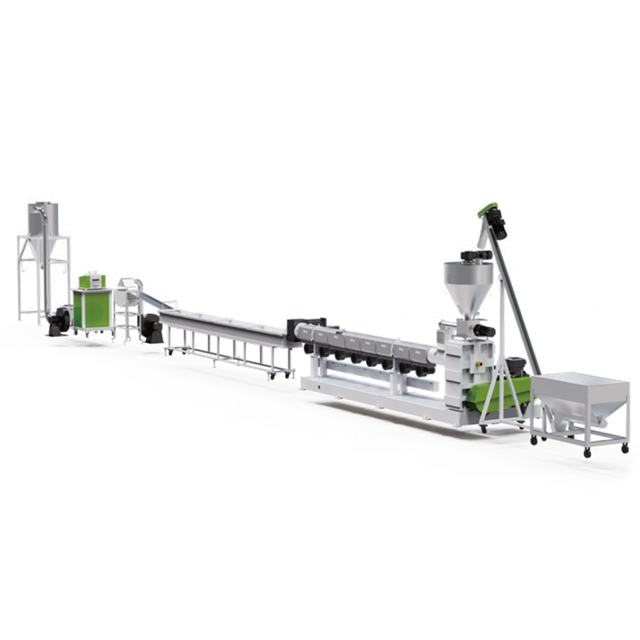
Modern manufacturing demands continuous and stable melt flows. Single screw systems excel at building steady pressure. This makes them the backbone of several critical manufacturing sectors.
Continuous manufacturing of plastic pipes relies heavily on this technology. High-density polyethylene water pipes, PVC sewage conduits, and precision medical tubing require highly stable output pressure. This ensures dimensional tolerances remain strictly within quality control limits.
These extruders produce flat plastic sheets and cast films for the packaging sector. Thermoforming sheets for food containers and agricultural greenhouse films demand a perfectly uniform melt temperature. Specialized barrier designs prevent optical defects and thickness variations.
The electrical industry utilizes these systems for wire jacketing. A bare copper wire is pulled through a crosshead die while the extruder applies a uniform layer of thermoplastic insulation. Precise RPM control guarantees consistent coating thickness for electrical safety.
As the manufacturing landscape pivots toward sustainability, the role of these extruders in recycling has grown exponentially. They are purpose-built to re-melt post-industrial scrap and filter out impurities. The polymer is then cut back into uniform pellets.
In the recycling sector, this equipment serves as the beating heart of any industrial plastic pelletizing machine. The ultimate goal is converting irregular, low-density waste into high-density, uniform granules. These granules are then fed back into injection molding or blown film lines.
Plastic waste lacks the uniform geometry needed for efficient manufacturing. A pelletizer ingests irregular scraps, applies controlled heat, and extrudes them into continuous strands. This thermal transformation restores bulk density and flowability.
Modern systems are engineered to handle contaminated feedstocks. Washed post-consumer waste often contains residual moisture and volatile organic compounds. Vented extruders feature vacuum degassing zones connected to high-capacity pumps. This safely extracts gases to prevent voids in the final pellets. Operators rely on dual-piston hydraulic screen changers to swap filters on the fly, catching dirt without halting production.
The configuration depends heavily on incoming material conditions. Single-stage setups utilize one extruder and are ideal for clean industrial scrap. Double-stage setups use a primary extruder to melt and filter rough material, feeding directly into a secondary screw for further degassing. This is mandatory for heavily printed films.
Polypropylene and Polyethylene represent the largest volume of global plastic waste. Processing these polyolefins requires robust machinery. A dedicated PP PE Pelletizing Line is engineered from the ground up to handle their unique thermal properties. High-efficiency models often feature screw diameters ranging from 90mm to 160mm, delivering outputs from 300 kilograms per hour up to 1000 kilograms per hour depending on the drive motor power.
Rigid flakes from crushed bottles or pipe offcuts possess a relatively high bulk density. They can be gravity-fed directly into the hopper. The screw geometry is optimized for solid conveying, applying immediate compression to initiate rapid melting. This ensures high throughput and excellent pellet density.
Flexible plastics like stretch wrap and agricultural films present a distinct engineering hurdle. These materials are incredibly light and will bridge in a standard hopper. Extruders in a film line are frequently integrated with a cutter-compactor. Massive rotating blades cut, friction-heat, and densify the film scraps. This force-feeds the semi-melted dough directly into the feed zone.
Polyethylene Terephthalate is highly valuable but notoriously temperamental to recycle. Advanced single screw platforms are exceptionally capable and cost-effective for this task when engineered correctly.
PET actively absorbs atmospheric moisture. Melting it while moisture is present causes hydrolytic degradation. This severely reduces its intrinsic viscosity, rendering the recycled material brittle and useless for high-stress applications like bottle blowing.
Machinery for this material must be highly specialized. A premium JWT PET Single Screw Pelletizing Line incorporates pre-crystallization and dehumidification drying towers. The screw features a low-shear profile to prevent the mechanical breaking of delicate polymer chains. These systems employ robust, multi-zone vacuum degassing powered by Roots pumps to strip away lingering moisture. Specialized underwater cutting systems rapidly quench the pellets to lock in vital material properties.
Factory managers frequently debate between single and twin-screw technology during equipment procurement. Both possess distinct merits. Their ideal applications diverge sharply based on material chemistry and end-product goals.
This configuration is the optimal choice for pumping, melting, and shaping a single type of polymer. It is the undisputed champion for standard plastic recycling, continuous profile manufacturing, and building exceptionally high pressure at the die head. It excels when processing materials that do not demand intense distributive mixing.
Twin-screw extruders feature two intermeshing screws rotating within a single barrel. They provide aggressive mixing capabilities. These machines are strictly required for complex polymer compounding, incorporating high volumes of fillers like calcium carbonate, and processing highly heat-sensitive materials like rigid PVC powder.
| Feature | Single Screw Extruder | Twin Screw Extruder |
|---|---|---|
| Capital Expenditure | Significantly lower initial investment | High initial investment |
| Operational Expenditure | Low energy draw and fewer moving parts | High energy demand and complex gearbox |
| Maintenance Complexity | Simple screw extraction for routine cleaning | Complex teardown requiring specialized technicians |
| Pumping Efficiency | Excellent and highly stable melt pressure | Moderate and highly dependent on screw configuration |
| Mixing Capability | Limited unless specialized barrier screws are used | Excellent for both distributive and dispersive tasks |
Transparency is paramount when making heavy machinery investments. Understanding operational boundaries ensures maximum return on investment.
The drag-flow mechanism is incredibly efficient at building the immense pressure needed to force viscous melts through fine filtration screens. Lower upfront capital expenditure and affordable replacement barrels drastically reduce the financial barrier to establishing a new production line. Standard factory floor workers can operate and maintain the machinery with minimal specialized training.
Standard designs rely on laminar flow. This is inherently poor at breaking down pigment agglomerates. A twin-screw is mandatory if high-filler compounding is your goal. Furthermore, the output rate relies heavily on the bulk density of the feedstock. Unmanaged variations in raw material can cause surging.
Investing in a plastic granulation line is a major capital decision. Operators must critically evaluate several operational parameters to ensure the correct configuration.
The physical state of your raw material dictates the machine architecture. Clean industrial scrap requires only a single-stage setup. Heavily contaminated post-consumer waste necessitates a double-stage line with aggressive vacuum degassing and continuous hydraulic melt filtration.
Target output capacity directly correlates to screw diameter and motor power. A 90mm screw diameter typically yields 200 to 300 kilograms per hour for medium operations. Industrial-scale plants utilize massive 160mm screws pushed by 250kW motors to exceed 1000 kilograms per hour. The Length to Diameter ratio must also be chosen carefully. A 32:1 or 36:1 ratio provides ample barrel length for thorough melting and gas extraction in recycling applications.
The downstream pelletizing method must match the polymer melt flow index and cooling behavior.
| Cutting Method | Ideal Materials | Mechanism Overview |
|---|---|---|
| Water-Ring Pelletizing | PE, PP, ABS | The melt is cut at the die face and immediately flung into a circulating water ring for rapid cooling. Ideal for standard polyolefins. |
| Strand Pelletizing | PET, PC, Nylon | The polymer is extruded into long strands, cooled in a water bath, and chopped by a rotary cutter. Best for brittle or high-viscosity plastics. |
| Underwater Pelletizing | TPU, TPE, High Melt Flow PP | The melt is cut completely submerged in a water chamber, producing perfectly spherical pellets. Used for premium or highly fluid materials. |
It can, but the final output quality depends heavily on the melting temperature compatibility of the mixed materials. A double-stage setup with aggressive melt filtration is highly recommended to homogenize the blend for highly mixed or contaminated waste.
Surging is typically caused by inconsistent feedstock bulk density, improper feed zone temperature control, or worn screw flights. Ensuring a steady feed rate and maintaining proper cooling on the feed throat prevents premature melting and bridging, which stabilizes the output.
Ratios typically range from 28:1 to 36:1 for standard recycling applications. This extended length provides the necessary residence time for proper melting, homogenization, and effective vacuum degassing.
Energy efficiency is achieved by using high-torque permanent magnet synchronous motors and insulating the heater bands on the barrel. Upgrading to smart temperature controllers also prevents thermal overshoot, significantly reducing overall power draw.
Lifespan depends entirely on feedstock abrasiveness and the steel treatment used, such as bimetallic coatings. A high-quality screw can run continuously for one to three years before requiring professional refurbishment when processing standard polyolefins.
Yes, provided it is a specially designed system. Advanced lines are highly effective for PET because they impart lower shear than twin screws. They must feature robust vacuum degassing to extract moisture and prevent hydrolytic degradation.
Selecting the optimal extrusion machinery dictates the long-term efficiency and profitability of your entire plant. Whether you are processing rigid polyolefins, flexible films, or moisture-sensitive PET, configuring the right screw geometry and degassing technology is non-negotiable. Ready to upgrade your production capabilities with industry-leading technology? Explore high-performance, customized solutions tailored to your exact feedstock requirements at https://www.jwell-recycling.com to secure your competitive edge in the global plastics market.


