- All
- Product Name
- Product Keyword
- Product Model
- Product Summary
- Product Description
- Multi Field Search
 English

Views: 0 Author: Site Editor Publish Time: 2026-01-24 Origin: Site


Have you ever wondered how different types of extruders impact plastic production? Understanding the differences between single screw and twin screw extruders is crucial for manufacturers. In this post, we’ll explore the unique features, advantages, and applications of each type, focusing on the single screw extruder.
A single screw extruder is a vital machine in the plastics industry. It consists of a single helical screw that rotates within a barrel. This design allows the extruder to melt and shape polymer materials efficiently. The basic components include:
● Screw: The heart of the extruder, it helps in conveying, melting, and mixing the material.
● Barrel: This cylindrical chamber houses the screw and provides heating and cooling capabilities.
● Heating/Cooling Systems: Essential for maintaining the correct temperature, these systems ensure the material is processed at optimal conditions.
The screw moves the material forward while applying heat, transforming it from a solid to a molten state. This process is crucial for achieving uniformity in the final product.
Single screw extruders offer several benefits that make them popular among manufacturers:
Simplicity and Ease of Operation
Their straightforward design makes them easy to operate, even for less experienced staff. This simplicity translates into lower training costs and faster setup times.
Lower Initial Cost
Compared to twin screw extruders, single screw extruders are generally more affordable to purchase. This lower upfront investment makes them an attractive option for small to medium-sized businesses.
Versatility
They can process a wide range of materials, including various types of plastics. This versatility allows manufacturers to use a single machine for multiple applications, reducing the need for specialized equipment.
Effective for Producing Pipes, Sheets, and Profiles
Single screw extruders excel in producing common plastic products like pipes, sheets, and profiles. Their ability to handle different shapes and sizes makes them invaluable in many industries.
Single screw extruders are widely used across various sectors. Here are some common applications:
Pipe Extrusion
They are ideal for manufacturing pipes of various diameters and materials, such as PVC and HDPE. The ability to produce consistent wall thickness is crucial for pipe quality.
Sheet and Profile Extrusion
These extruders are also used to create sheets for packaging and profiles for construction. The flexibility in design allows for custom shapes tailored to specific needs.
Modified Compounding
Single screw extruders can compound and modify plastics by mixing additives and fillers. This capability enhances material properties, making them suitable for specialized applications.
Material | Common Uses |
PVC | Pipes, profiles, sheets |
PET | Bottles, containers |
PP | Packaging, automotive parts |
In summary, single screw extruders play a crucial role in the plastics industry. Their design, efficiency, and versatility make them a preferred choice for many applications. Whether producing pipes or compounding materials, these machines are essential for meeting diverse manufacturing needs.
A twin screw extruder is a sophisticated machine widely used in the plastics industry. Unlike its single screw counterpart, it features two intermeshing screws that rotate within a barrel. This configuration allows for enhanced mixing and processing of materials. The key components include:
● Two Screws: These screws can either be co-rotating or counter-rotating, allowing for different mixing actions.
● Barrel: The barrel houses the screws and provides heating and cooling systems to control the material temperature.
● Feeding System: This system ensures a steady flow of materials into the extruder, preventing blockages and ensuring uniform processing.
Twin screw extruders can be categorized into two types: intermeshing and non-intermeshing. Intermeshing screws engage with each other, providing better mixing and dispersive capabilities. Non-intermeshing screws, on the other hand, allow for more straightforward material flow.
The advantages of twin screw extruders make them an attractive option for many applications:
Enhanced Mixing and Plasticizing Capabilities
The dual screw design allows for superior mixing of materials, ensuring a homogenous blend. This is particularly beneficial when working with additives and fillers.
Higher Throughput and Efficiency
Twin screw extruders typically achieve higher output rates compared to single screw models. This efficiency makes them ideal for large-scale production.
Better Temperature Control and Heat Transfer
The design facilitates improved heat distribution, which is crucial for processing temperature-sensitive materials. This ensures that the material is processed uniformly.
High Torque and Speed
These extruders can operate at higher speeds and torques, making them suitable for processing high-viscosity materials. This capability is essential for industries requiring precise material characteristics.
Twin screw extruders are versatile machines used in a variety of applications. Here are some common uses:
Compounding and Blending
They excel at combining different materials, such as polymers and additives, to create custom formulations. This is vital in producing specialty plastics.
Reactive Extrusion
This process involves chemical reactions occurring within the extruder, allowing for the production of advanced materials with enhanced properties.
Food Processing and Pharmaceuticals
Twin screw extruders are also employed in the food industry for producing snacks and in pharmaceuticals for creating drug delivery systems. Their ability to handle sensitive formulations is crucial in these sectors.
Material | Common Uses |
PET | Recycling, bottle production |
Foam Materials | Production of insulation and packaging |
High-Filled Compounds | Creating composites for various applications |
In summary, twin screw extruders are essential machines in the plastics industry. Their design and capabilities make them suitable for a wide range of applications, from compounding to reactive extrusion. This versatility allows manufacturers to meet diverse production needs efficiently.
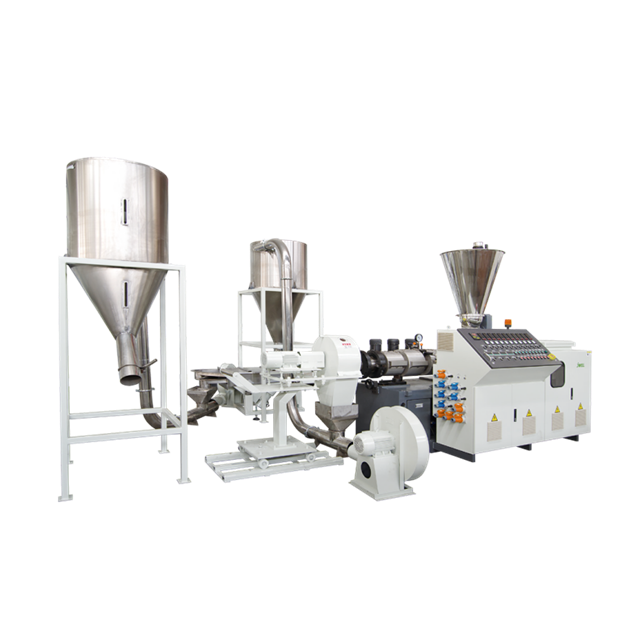
When comparing single screw and twin screw extruders, the design and structure stand out significantly. A single screw extruder features one helical screw that rotates within a cylindrical barrel. This design is straightforward and efficient for many applications. In contrast, a twin screw extruder has two intermeshing screws that can be co-rotating or counter-rotating. This dual configuration enhances mixing and material processing.
Aspect | Single Screw Extruder | Twin Screw Extruder |
Screw Design | Single helical screw | Two intermeshing screws |
Barrel Structure | Simple, cylindrical | More complex, often segmented |
Temperature Control | Basic heating/cooling | Advanced control with multiple zones |
The barrel structure also varies. Twin screw extruders often have more elaborate designs that allow for better temperature control, which is crucial for sensitive materials. Additionally, twin screw extruders usually incorporate internal cooling systems that help maintain optimal processing temperatures, enhancing performance and product quality.
Processing capabilities differ greatly between these two types of extruders. Twin screw extruders provide superior mixing efficiency due to their dual-screw design. This results in a more uniform product, especially when adding additives or fillers. The mixing action in twin screw extruders significantly impacts material properties and the final quality of the end product.
● Mixing Efficiency: Twin screw extruders mix materials more thoroughly, ensuring consistent quality.
● Material Properties: The enhanced mixing leads to better dispersion of additives, improving overall material performance.
● Shear Forces: Twin screw extruders generate higher shear forces, which can reduce plasticizing time, making them ideal for high-viscosity materials.
When it comes to costs, single screw extruders generally have a lower initial investment compared to twin screw models. However, the operational costs can vary based on efficiency and maintenance needs. Twin screw extruders may require more complex maintenance due to their intricate designs, but they often offer long-term cost-effectiveness due to higher output and efficiency.
Cost Aspect | Single Screw Extruder | Twin Screw Extruder |
Initial Investment | Lower | Higher |
Operational Costs | Generally lower | Potentially higher |
Maintenance Complexity | Simpler | More complex |
Maintaining a single screw extruder tends to be less complicated, making it easier for operators. In contrast, the twin screw extruder's complexity can lead to increased downtime if not properly maintained.
Throughput and efficiency are crucial factors in production. Twin screw extruders typically have higher output capacities than single screw models. This increased throughput allows manufacturers to meet larger production demands without sacrificing quality.
● Output Capacities: Twin screw extruders can produce more material in less time, making them suitable for high-volume applications.
● Energy Consumption: While both types have energy consumption considerations, twin screw extruders can be more efficient in terms of energy per unit produced.
● Flexibility: Twin screw extruders offer flexibility in adjusting the throughput rate independently of screw speed, allowing for better control over the processing conditions.
Efficiency Aspect | Single Screw Extruder | Twin Screw Extruder |
Output Capacity | Moderate | High |
Energy Consumption | Generally higher | More efficient |
Flexibility in Throughput | Limited | High |
Overall, the differences between single screw and twin screw extruders highlight their unique strengths and applications. Understanding these differences helps manufacturers choose the right extruder for their specific needs and production goals.
Choosing between a single screw extruder and a twin screw extruder depends on several key factors. First, consider the type of material being processed. Single screw extruders work well with standard thermoplastics like PVC and PP, while twin screw extruders are better suited for high-viscosity materials and those requiring thorough mixing.
Next, think about the desired product characteristics. If you need a highly uniform product with specific properties, a twin screw extruder may be the better choice due to its superior mixing capabilities. On the other hand, if your application requires simpler processing, a single screw extruder can efficiently handle it.
Finally, evaluate your production volume and efficiency needs. For high-volume production, twin screw extruders typically provide higher throughput and better energy efficiency. In contrast, single screw extruders might be more cost-effective for smaller production runs.
Factor | Single Screw Extruder | Twin Screw Extruder |
Material Type | Standard thermoplastics | High-viscosity materials |
Product Characteristics | Simpler products | Complex, uniform blends |
Production Volume | Lower to moderate | High-volume production |
Different industries have distinct needs that influence the choice of extruder type. For instance, industries best suited for single screw extruders include:
● Construction: Single screw extruders are ideal for producing pipes and profiles, which require consistent quality but less complex processing.
● Packaging: They efficiently produce films and sheets, making them suitable for packaging applications where cost-effectiveness is key.
In contrast, industries best suited for twin screw extruders include:
● Food Processing: Twin screw extruders are excellent for producing snacks and other food products, where precise mixing and temperature control are crucial.
● Pharmaceuticals: They are used for creating drug delivery systems and other pharmaceutical products, ensuring uniformity and quality in sensitive formulations.
Industry | Recommended Extruder Type | Reason |
Construction | Single Screw Extruder | Cost-effective, consistent output |
Packaging | Single Screw Extruder | Efficient for films and sheets |
Food Processing | Twin Screw Extruder | Precise mixing and temperature control |
Pharmaceuticals | Twin Screw Extruder | Ensures uniformity in sensitive formulations |
By assessing these factors and industry needs, you can make an informed decision on whether a single screw or twin screw extruder is the best fit for your specific application. Understanding these differences helps optimize production processes and improve product quality.
This article highlights the key differences between single screw and twin screw extruders. It discusses their designs, processing capabilities, and industry applications. Choosing the right extruder depends on material type, desired product characteristics, and production volume. Readers are encouraged to evaluate their specific needs before making a decision. For businesses seeking reliable solutions, Jwell offers advanced extruder technology that enhances efficiency and product quality, providing significant value in various applications.
A: A single screw extruder is a machine that uses one helical screw to melt and shape materials, commonly used in the plastics industry.
A: Single screw extruders are cost-effective, easy to operate, and suitable for producing a variety of standard thermoplastics.
A: Choose a single screw extruder for simpler applications, lower production volumes, or when working with standard materials.
A: The main difference lies in the design; a single screw extruder has one screw, while a twin screw extruder has two intermeshing screws for better mixing and processing.
A: Single screw extruders are ideal for processing materials like PVC, PP, and other standard thermoplastics.