
- All
- Product Name
- Product Keyword
- Product Model
- Product Summary
- Product Description
- Multi Field Search
 English

Views: 0 Author: Site Editor Publish Time: 2025-11-24 Origin: Site


Plastic recycling has become a crucial solution to reduce environmental pollution and promote a circular economy. Among the various recycling technologies, the Extruder Machine stands out as one of the most versatile and efficient tools for processing post-consumer and industrial plastics. It allows operators to melt, shape, and repurpose plastic waste into valuable products such as pellets, sheets, beams, and custom profiles. From small-scale community workshops to industrial recycling facilities, extruder machines play a vital role in transforming discarded plastics into reusable materials, helping businesses reduce costs while supporting sustainability initiatives.
At its simplest, an extruder machine melts plastic and pushes it through a shaped die to produce a continuous form.
Collect and sort plastics – Plastics come in many forms: bottles, containers, sheets, and industrial scrap. Removing labels, dirt, adhesives, and mixed materials is essential. Without proper cleaning, the extruder can jam or produce low-quality products.
Feed the cleaned plastic into the hopper – The hopper acts as a reservoir, supplying the extruder consistently. Keeping it full ensures smooth, continuous operation.
The screw transports the material – Inside the barrel, a rotating screw moves the plastic forward. Friction plus heat melts the plastic into a uniform, viscous flow.
Shaping through a die – The molten plastic is forced through a die, which defines its final shape. Depending on the die design, you can produce sheets, rods, beams, or pellets.
Cooling the product – After exiting the die, the material passes through a cooling system or water bath. This solidifies it quickly while retaining the intended shape.
| Component | Function |
|---|---|
| Hopper | Holds plastic before melting |
| Screw & Barrel | Transports and melts the plastic |
| Heating Elements | Provide precise heat to melt plastics |
| Die | Shapes molten plastic into a desired form |
| Cooling System | Solidifies and stabilizes the finished product |
Adjusting the temperature, screw speed, and feed rate affects quality. Skilled operators can produce more uniform, stronger, and visually appealing recycled products.
Different extruder machines are designed for specific plastics, products, and production scales. Choosing the right type is essential for efficiency and output quality.
Single-screw extruders are the most widely used machines in plastic recycling. They have a straightforward design, which makes them easy to operate and maintain. These machines work best with homogeneous and clean plastics such as HDPE or PP. The screw rotates inside a heated barrel, transporting and melting the plastic to create a continuous flow. Their simplicity makes them ideal for small to medium-scale recycling operations, where consistent material and predictable processing are the priority.
Twin-screw extruders feature two intermeshing screws that rotate together, providing superior mixing and homogenization of plastic materials. This design allows them to handle mixed plastics, composites, and additives more efficiently than single-screw machines. They are also highly versatile, enabling adjustments for different viscosity levels or material properties. Twin-screw extruders are especially suitable for complex recycling operations, where feedstock may vary in type or quality, and precise control over melting and mixing is required.
Specialized extruders are tailored for particular products or industrial applications. Pelletizing extruders, for example, produce small, uniform plastic pellets that can be used as raw material for manufacturing. Sheet extruders convert recycled plastics into flat sheets suitable for packaging, construction, or industrial applications. Profile extruders, on the other hand, create beams, pipes, or other structural shapes used in construction or furniture production. Each specialized extruder type offers specific advantages but may require higher investment, careful maintenance, and attention to process parameters to achieve optimal quality and productivity.
Extruder machines can process many types of thermoplastics, but some materials are easier to work with than others. Understanding which plastics are suitable is key to consistent production.
| Plastic Type | Common Use | Notes on Extrusion |
|---|---|---|
| HDPE / LDPE | Bottles, bags | Easy to melt, produces strong beams, sheets |
| PP | Containers, caps | Good flow properties, suitable for bricks and pallets |
| PVC | Pipes, profiles | Needs careful temperature control to prevent degradation |
| PET | Bottles, fibers | Best for pellets or sheet production; sensitive to contamination |
| ABS | Electronics, automotive | High melting point; requires steady feedstock and monitoring |
Contaminated plastics, mixed polymers, or low-quality scrap can lower output quality. Pre-sorting and cleaning are critical steps before extrusion.
Extruder machines are incredibly versatile. They don’t just produce basic pellets. Depending on your setup, you can create a wide variety of products:
Plastic pellets – standard raw material for manufacturers.
Sheets and rods – used for DIY projects, packaging, or construction.
Beams and bricks – used in furniture, construction, or modular installations.
Creative objects – vases, trays, bowls, baskets, and more artistic items.
A single extruder can run continuously for hours, producing large volumes of recycled plastic. With workflow optimization, small businesses or makers can create thousands of units per day.
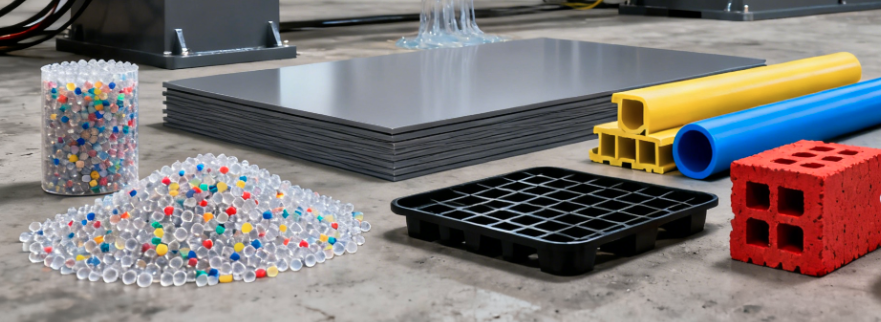
Extruder machines are central to modern plastic recycling. They do more than simply melt and reshape plastic—they support sustainability, cost savings, and community initiatives. Their versatility allows small workshops, industrial facilities, and local recycling projects to contribute to a circular economy while creating value from waste.
By converting post-consumer and industrial plastic waste into usable products, extruder machines reduce the need for virgin plastic. This helps conserve natural resources and decreases the environmental footprint associated with raw plastic production. Materials like HDPE, PP, and PET can be continuously recycled, extending their lifecycle and reducing dependence on petroleum-based plastics.
Recycling plastic through extrusion generally consumes less energy than manufacturing new plastic from raw materials. The process requires heating and shaping existing plastics rather than creating polymers from scratch, which involves energy-intensive chemical processes. This energy advantage also reduces carbon emissions, making extrusion a greener option for large-scale and small-scale recycling operations.
Extruders help tackle the plastic pollution crisis by diverting waste from landfills, rivers, and oceans. By transforming discarded plastics into useful products—beams, sheets, pellets, or custom profiles—they reduce environmental contamination. Facilities using extrusion technology contribute directly to cleaner communities and more sustainable industrial practices.
Producing recycled materials via extrusion is often cheaper than sourcing virgin plastics. Businesses can lower raw material costs while maintaining high-quality outputs. This economic advantage allows manufacturers to invest in innovation, create competitive products, and scale up operations without dramatically increasing expenses.
Extruder machines are also enabling local initiatives and maker projects worldwide. Small-scale extruders allow communities, schools, and grassroots organizations to recycle plastics locally, creating furniture, construction materials, or art projects. These initiatives empower people to reduce waste, gain skills in plastic processing, and even start small businesses.
While extruders are versatile, several challenges exist. Operators need to understand potential obstacles to maintain quality and efficiency.
Contamination – dirt, labels, adhesives, or metals can damage screws and barrels.
Feedstock consistency – uneven shredded plastic reduces quality and may jam the extruder.
Material properties – different plastics require different temperatures, pressures, and screw speeds.
Maintenance – screws, barrels, and heating elements wear over time, requiring replacements.
Tips to overcome issues:
Sort and clean plastics carefully.
Monitor temperature and screw speed.
Select extruder type suitable for material mix.
Regularly inspect and maintain all components.
Extruder machines can be upgraded to enhance output quality, speed, and versatility:
Molds and dies – control product shape and precision.
Cooling systems – allow continuous operation without overheating.
Screw and barrel modifications – optimize for specific plastics.
Automation and monitoring – track temperature, feed rate, and product quality for consistent results.
Plastic extrusion recycling is rapidly evolving, driven by growing environmental awareness and technological innovation. Manufacturers are continuously improving machines and processes to meet industry demands and new material challenges.
Modern extruder machines increasingly incorporate automation and smart monitoring. Sensors track feed rate, barrel temperature, and product consistency in real time. This allows operators to reduce human error, optimize energy use, and maintain high-quality output. Some advanced systems even adjust parameters automatically to compensate for changes in feedstock quality, making recycling operations more efficient and reliable.
As industries embrace sustainability, recycled plastics are becoming a preferred raw material in multiple sectors. Extrusion machines play a key role in closing the loop, converting post-consumer and post-industrial plastics into usable products. This shift encourages companies to invest in better recycling technologies, and it creates new markets for high-quality recycled beams, sheets, and profiles.
Extruders are adapting to handle emerging materials such as bioplastics and novel polymers. These materials often have different melting points, viscosities, and flow characteristics compared to traditional plastics like HDPE or PP. Future machines are being designed to manage these challenges, allowing recyclers to diversify the materials they process and create innovative eco-friendly products.
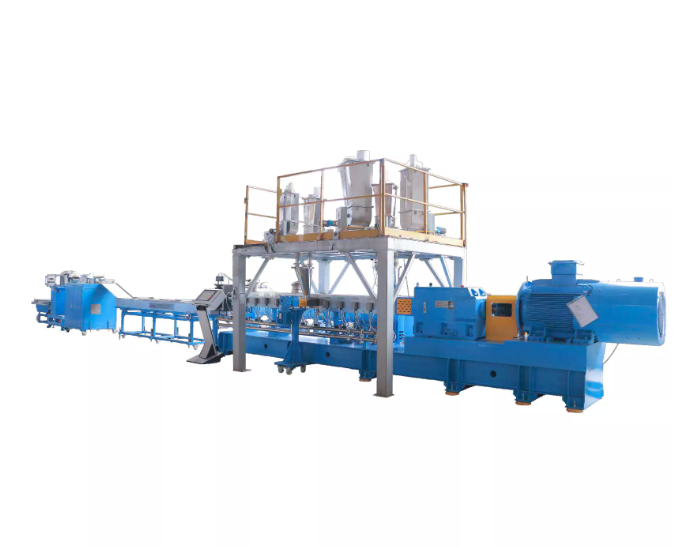
A plastic recycling extruder machine is a device that melts and reshapes post-consumer or industrial plastic waste into continuous forms such as sheets, beams, pellets, or profiles, making it reusable in manufacturing and construction.
A plastic extruder works by first collecting, sorting, and cleaning the plastic waste, feeding it into a hopper, melting it with a rotating screw inside a heated barrel, and then pushing the molten plastic through a die to produce a specific shape, which is finally cooled and solidified.
Using a recycling extruder, manufacturers or local recycling projects can produce plastic pellets, sheets and rods for DIY or industrial use, beams and bricks for furniture or construction, and creative items like vases, trays, bowls, and baskets.
Plastic recycling extruder machines save natural resources by reducing the need for virgin plastic, consume less energy than producing new plastic, reduce landfill waste and environmental pollution, offer cost-effective production, and empower communities and small businesses to recycle locally.
Future trends in plastic extrusion recycling include increased automation and smart monitoring systems, wider adoption of recycled plastics across industries, machines capable of processing bioplastics and new polymers, and modular extruders that can scale production up or down depending on demand.
In summary, Extruder Machines are essential for modern plastic recycling, offering benefits such as resource conservation, energy efficiency, and environmental protection. Their ability to process different types of plastics and produce a wide range of products makes them indispensable for both small and large-scale operations. Companies, communities, and manufacturers can leverage extruder technology to create high-quality recycled materials, contributing to a more sustainable future. For businesses looking to implement reliable and high-performance extrusion solutions, Changzhou Dyun Environmental Technology Co., Ltd. provides advanced extruder machines and support tailored for the recycling industry, helping you turn plastic waste into valuable resources efficiently.


