
- All
- Product Name
- Product Keyword
- Product Model
- Product Summary
- Product Description
- Multi Field Search
 English

Views: 0 Author: Site Editor Publish Time: 2025-11-28 Origin: Site


Plastic film surrounds us in countless ways. From grocery bags and trash liners to stretch wraps and food packaging, most products start with extrusion. For recyclers, understanding the film extrusion process isn’t just academic — it determines how materials can be reused, sorted, or processed. Knowing the steps, the science behind the process, and the differences between film types helps identify recycling challenges and opportunities.
Whether it’s single-use shopping bags or high-barrier food films, the film extrusion method shapes the material’s physical properties and ultimately its environmental footprint.
Plastic film extrusion is a manufacturing process where solid polymer pellets are melted, pushed through a shaped die, and formed into continuous sheets or tubes of plastic film.
It is the foundation of nearly all flexible packaging. The extrusion process determines critical material characteristics:
Thickness: Thinner films save material, thicker films offer strength.
Tensile strength: Essential for bags or liners that must resist tearing.
Transparency and gloss: Important for retail or display packaging.
Flexibility and elasticity: Needed for wrapping and sealing.
For recyclers, uniformity and quality at this stage impact the efficiency of reprocessing. Films with uneven thickness, poor adhesion between layers, or surface defects can complicate recycling.
The film extrusion process starts with raw polymer materials — most commonly HDPE, LDPE, and LLDPE. Each has a specific function: HDPE provides rigidity and structural strength, LLDPE improves stretch and puncture resistance, and LDPE ensures flexibility and soft touch.
Before extrusion, the pellets are blended with performance-enhancing additives to tailor the final product:
Slip agents: Reduce friction between layers, preventing sticking or blockiness during winding and handling.
Anti-block agents: Ensure films remain easy to unwind and process, especially for multi-layer applications.
Color masterbatch: Provides consistent coloration, opacity, or specialized visual effects.
UV stabilizers: Extend outdoor durability by protecting the polymer from UV-induced degradation.
For recyclers, it’s important to note that incorporating PCR (post-consumer recycled) or PIR (post-industrial recycled) resins changes extrusion dynamics. Improper blending can create uneven thickness, weak spots, or adhesion issues between layers, affecting both product performance and recyclability.
At this stage, moisture control is crucial. Even small amounts of water in the pellets can cause bubbles or weak points during extrusion, which complicates reprocessing later.
Once the resin and additives are properly mixed, they enter the extruder, a long heated barrel with a rotating screw. Friction, shear forces, and external heating melt the plastic into a uniform molten polymer.
Temperature management is key: zones gradually increase, usually ranging from 160°C to 230°C, depending on polymer type. Overheating can degrade the resin, while insufficient heat leads to unmelted lumps, creating weak points or poor layer adhesion.
The molten polymer is pushed through a die, which shapes the material:
Circular die: Forms a tube for blown films, ideal for double-layer sheets and versatile packaging.
Flat die: Produces flat sheets for cast films, suited for thermoforming or stretch wrap.
Extrusion conditions such as screw speed, back pressure, and die gap directly influence film thickness, width, surface finish, and clarity. Even small deviations can create quality issues or complicate recycling, especially for multi-layer co-extruded films.
Blown film extrusion inflates molten plastic through a circular die, forming a continuous tube. Air inflates the bubble, which rises vertically while cooling. After solidification, the bubble is flattened between rollers into a double-layer sheet.
This method is highly versatile: films can range from thin grocery bags to thick industrial liners. Advantages include:
Adjustable film thickness and width through die size and blow-up ratio.
Multi-layer co-extrusion allows combining recycled and virgin polymers.
Homogeneous layers simplify sorting for recyclers when single-polymer layers are used.
Cast film extrusion differs by cooling molten plastic on chilled rollers, creating precise flat sheets. Films are highly uniform, with excellent clarity and dimensional control, suitable for:
Cling films
Thermoformed trays
Laminated packaging
| Feature | Blown Film | Cast Film |
|---|---|---|
| Process | Bubble inflation | Flat rollers |
| Layers | Often multi-layer | Single or few layers |
| Thickness Control | Moderate | High precision |
| Applications | Bags, liners | Cling film, thermoformed products |
| Recyclability | Easier for homogeneous layers | Single-layer, easier to process |
For recyclers, cast films are easier to sort if single-material layers are used, while blown films allow more flexibility in performance but require careful identification of co-extruded layers.
After shaping, the film needs controlled cooling to stabilize its properties.
Blown film: Air rings blow cooled air around the rising bubble, solidifying it gradually and maintaining bubble diameter.
Cast film: Chill rollers and airflow rapidly cool the sheet while keeping its surface smooth and uniform.
Even minor variations in cooling rate can cause wrinkles, thickness variation, or stress points, which may reduce sealing performance and complicate recycling. Some defects, like uneven thickness or trapped air, can lead to processing issues downstream, especially for thermoforming or multi-layer films.
Airflow balance, cooling speed, and bubble diameter monitoring are critical parameters, often managed with sensors and automated feedback systems.
Once cooled, the film passes through tension-controlled rollers equipped with thickness sensors. This ensures consistent winding without wrinkles, telescoping, or edge misalignment.
Finished rolls are labeled with key information:
Thickness and width
Resin composition
Lot number and batch traceability
This traceability is vital for recyclers: knowing the exact material composition, layer structure, and production batch allows for more efficient sorting and processing. Automated systems also help detect defects early, reducing waste and simplifying recycling.
Storage conditions matter too: films should be kept away from direct sunlight, moisture, and extreme temperatures, as prolonged exposure can affect mechanical properties and complicate reuse or reprocessing.
The quality of the resin plays a crucial role in determining the final film properties. High-grade polymers deliver better tensile strength, puncture resistance, and optical clarity, which directly affect usability and recyclability. Mixing HDPE and LLDPE allows manufacturers to balance stiffness and stretch, creating films that are strong yet flexible. Recyclers should note that even slight variations in resin grade or batch can influence melting behavior and layer adhesion during extrusion.
Maintaining the correct temperature profile throughout the extrusion process is essential. If the polymer overheats, it can degrade, losing mechanical strength and becoming more prone to tearing. On the other hand, insufficient heat can lead to unmelted pellets, uneven thickness, or weak seals. Precise temperature control ensures consistent film thickness, smooth surfaces, and reliable sealing performance, which is especially important for multilayer co-extruded films.
For blown film extrusion, air flow and bubble stability are critical factors. Properly regulated air cooling prevents wrinkles, puckering, and uneven surfaces, while stable bubble diameter ensures consistent film thickness across the entire roll. Fluctuations in air pressure or cooling speed can lead to defects that reduce the film’s clarity, durability, and overall performance, making it harder to process or recycle later.
The speed of the extrusion line and the tension applied during winding also affect film quality. Maintaining proper line speed prevents stretching or thinning in specific areas, while consistent tension ensures smooth, uniform rolls without telescoping or edge damage. Correctly controlled winding not only improves the film’s appearance and usability but also preserves its recyclability by preventing stress points and defects that can complicate reprocessing.
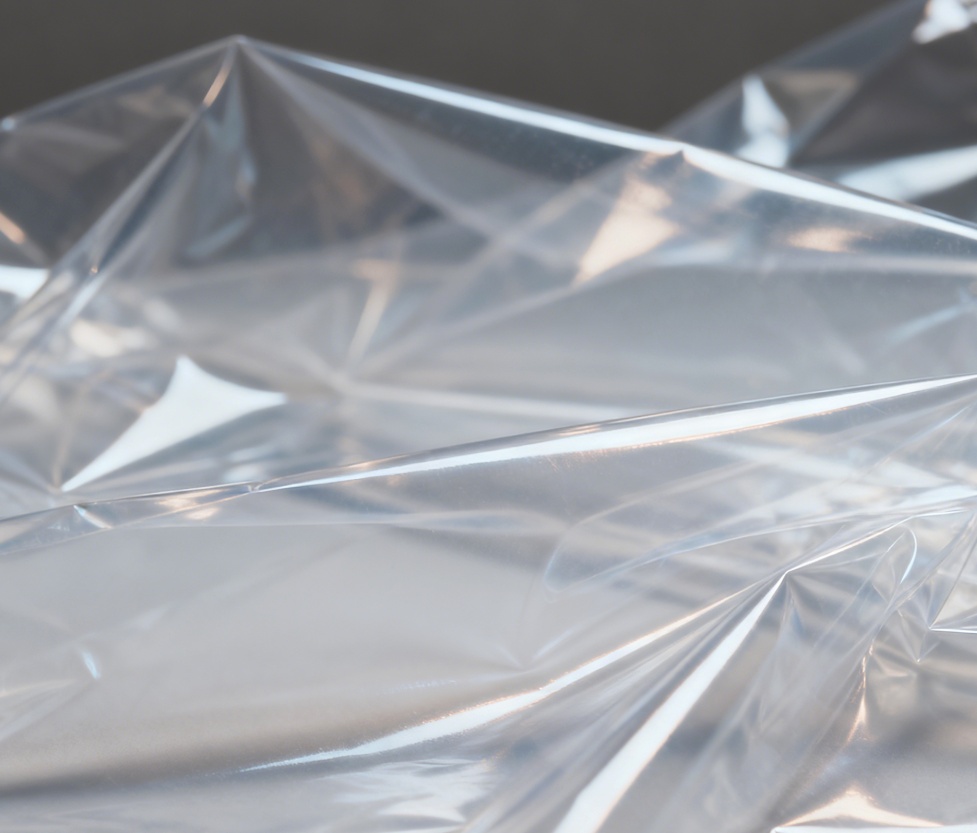
Ensuring consistent quality is critical in film extrusion. Each roll must meet mechanical, optical, and dimensional standards to perform well in end-use applications and for recyclability. Quality control involves both laboratory testing and visual inspection.
| Test | Standard | Purpose |
|---|---|---|
| Tensile | ASTM D882 | Measures stretch and breaking strength, ensuring the film resists tearing during handling and use. |
| Impact | ASTM D1709 | Evaluates puncture resistance, important for liners, bags, and industrial films that face sharp objects. |
| Tear | ASTM D1922 | Assesses directional tear strength, helping predict how the film behaves under stress and during processing. |
| Seal | ASTM F88 | Tests heat-seal integrity, ensuring films form strong, leak-free seals in packaging applications. |
| Thickness | ISO 4593 | Measures uniformity across the roll, critical for consistent performance, print quality, and recyclability. |
These tests give manufacturers and recyclers confidence in the mechanical durability, barrier properties, and process consistency of each film batch. For multi-layer co-extruded films, testing ensures each layer adheres correctly and performs its intended function, whether it is a barrier, structural, or sealing layer.
Beyond lab tests, films undergo detailed visual inspections to catch defects such as:
Pinholes or micro-perforations
Color inconsistencies or streaks
Surface imperfections like wrinkles, folds, or scratches
Even minor defects can affect sealing, printing, and recyclability. Recyclers often rely on this information to determine which batches can be reused directly or need reprocessing.
Plastic film extrusion is a process where solid polymer pellets are melted and pushed through a shaped die to create continuous sheets or tubes of plastic film. It determines film thickness, strength, flexibility, and appearance.
Co-extrusion is the simultaneous extrusion of two or more polymers through a single die to form a multi-layer film. Each layer can serve a specific function, such as barrier protection, sealing, or structural support.
Film uniformity, layer composition, and surface quality directly influence how easy it is to sort, process, and re-melt the material. Multi-layer films with incompatible polymers can be harder to recycle.
Common additives include slip agents, anti-block agents, color masterbatches, UV stabilizers, and sometimes recycled resins. They improve handling, appearance, durability, and sustainability.
Precise temperature control prevents polymer degradation, unmelted pellets, and uneven thickness. It ensures strong films with consistent mechanical and optical properties.
Understanding how Film Extrusion works gives recyclers, converters, and manufacturers a clearer view of what makes high-quality film and what challenges appear when materials return for reuse. Every step—from resin selection to cooling control—shapes the film’s strength, clarity, and recyclability. As the industry shifts toward more sustainable solutions, the ability to work confidently with recycled polymers becomes even more valuable. Plastic recycling is a circular industry and an inevitable trend, and companies that fully understand the extrusion process will stay ahead as demand for recycled content grows.
At Changzhou Dyun Environmental Technology Co., Ltd., we support this transition with advanced recycling systems designed to handle diverse film waste streams and improve material purity. Our solutions help producers close the loop, reduce environmental impact, and achieve stable, high-quality output across a wide range of film types. Whether you’re upgrading recycling efficiency or integrating more PCR materials into your Film Extrusion lines, partnering with experts makes the journey smoother, cleaner, and far more sustainable.


