
- All
- Product Name
- Product Keyword
- Product Model
- Product Summary
- Product Description
- Multi Field Search
 English

Views: 0 Author: Site Editor Publish Time: 2026-07-22 Origin: Site


Transitioning factory scrap from a waste management liability to a direct replacement for virgin resin requires precise engineering, not just basic recycling equipment. Manufacturers face the challenge of reintegrating post-industrial scrap—such as sprues, runners, edge trims, and rejected parts—without degrading the mechanical properties or aesthetic quality of the final closed-loop product. When you feed degraded material back into a primary extruder, you risk compromising the entire production run. Successfully closing the loop requires a highly specified post industrial plastic recycling line tailored to exact polymer types, contamination levels, and facility footprint constraints. You cannot rely on off-the-shelf machinery to handle complex, multi-layer extrusions or heavily printed films. This guide breaks down the technical evaluation, equipment specification, and vendor selection process for capital recycling projects. We will examine how to audit your scrap, configure the right processing stages, and mitigate implementation risks on the factory floor.
Establishing clear success criteria ensures your recycling project meets actual production demands. You must define what constitutes acceptable recycled material for your specific application. This prevents downstream manufacturing defects and preserves the maximum value of your internal scrap. Factory managers often make the mistake of treating scrap recovery as a secondary utility rather than a primary manufacturing process.
Closed-loop systems reintegrate scrap back into the same high-value production line. Open-loop systems downcycle scrap into lower-grade secondary products. Keeping material in-house preserves maximum valuation. You avoid purchasing new virgin resin and eliminate the logistics of shipping waste off-site. Closed-loop recycling demands higher equipment precision. The recycled pellets must match virgin resin specifications closely. Downcycling tolerates more contamination and polymer degradation. True closed-loop success requires specialized machinery designed for gentle processing.
| Parameter | Closed-Loop Recycling | Open-Loop Downcycling |
|---|---|---|
| Material Destination | Original high-value production line | Secondary, lower-grade applications |
| Quality Tolerance | Strict adherence to virgin resin specs | High tolerance for property variance |
| Equipment Precision | High (requires advanced degassing and filtration) | Low to Medium (basic melting and forming) |
| Contamination Limit | Near zero (requires intense washing/sorting) | Moderate (can tolerate some mixed polymers) |
| Value Retention | Maximum (offsets virgin material purchases directly) | Low (material loses structural and market value) |
Product design decisions directly impact downstream recycling efficiency. Limiting multi-polymer laminates makes separation easier. Choosing compatible additives prevents chemical reactions during remelting. You should evaluate your primary manufacturing process first. Simplify material structures where possible. This reduces the complexity of your recycling line. Upstream DfR practices lower capital equipment requirements. They also improve the final quality of the recycled pellets. If your primary line uses incompatible barrier layers, your recycling system will require aggressive melt filtration to separate them.
You must audit the types of post-industrial waste generated in your facility. Identify rigid purgings, flexible films, and multi-layer extrusions. Quantify their respective volumes accurately. Different materials require different size reduction and washing approaches. Rigid parts need heavy-duty shredders. Flexible films require specialized granulators to prevent wrapping. Documenting your scrap profile dictates the entire system architecture.
Establish baseline metrics for recycled pellet quality before buying equipment. Define acceptable thresholds for moisture content. Measure required bulk density and tensile strength. Compare these metrics directly to your virgin resin specifications. The recycled material must flow consistently through your primary extruders or injection molding machines. Setting strict success metrics holds equipment vendors accountable during commissioning. If the pellets exhibit excessive off-gassing or brittleness, the recycling line has failed its primary objective.
Calculate the offset costs of virgin material purchasing. Factor in the elimination of external scrap hauling fees. Track your carbon reduction credits carefully. Scope 3 emissions tracking is becoming increasingly important for manufacturers. Reusing internal scrap lowers your overall carbon footprint significantly. It demonstrates environmental responsibility while improving material independence. Focus on these operational efficiencies to justify the capital project. Do not rely on generic industry averages; use your facility's actual utility rates and scrap volumes.
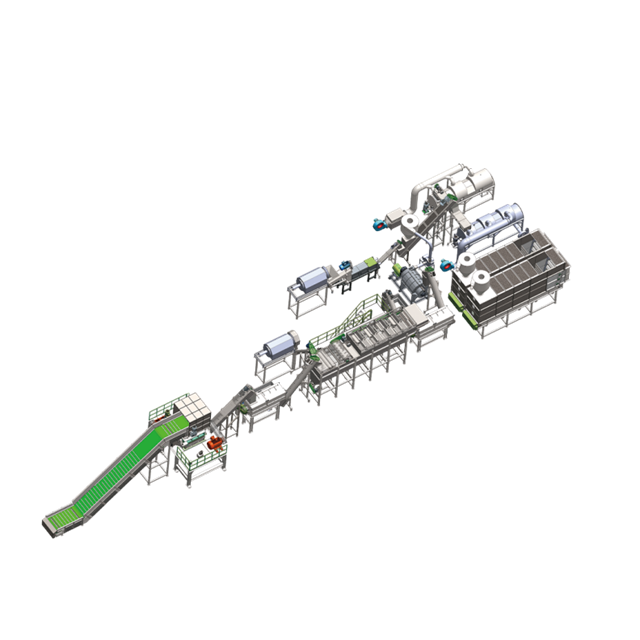
A complete recycling system consists of multiple interconnected processing stages. Each stage must perform its function perfectly to protect the next. You must evaluate size reduction, washing, and pelletizing technologies based on your specific scrap profile. A failure in the shredding stage will inevitably cause blockages in the washing tanks.
Size reduction prepares the scrap for washing and melting. You must choose between single-shaft and double-shaft shredders. Single-shaft shredders handle hard, thick purgings well. Double-shaft shredders excel at processing bulky, flexible materials. You also need to evaluate low-speed high-torque versus high-speed granulators. High-speed granulators produce consistent regrind sizes. Low-speed units generate less dust and noise.
Evaluate rotor design for your specific polymers. Screen sizing determines the final regrind consistency. Consistent regrind ensures stable feeding into the extruder. Consider noise and dust mitigation features for factory floor integration. Enclosed soundproof cabins protect operators. Dust extraction systems prevent airborne contamination in your facility. If you process glass-filled polymers, you must specify wear-resistant coatings on all cutting blades and rotor housings.
Factory scrap often accumulates surface contaminants. Machine oils, labels, and dust gather during manufacturing and storage. You must remove these before melting the plastic. A properly configured plastic washing line addresses these issues effectively. You can choose between cold friction washing and hot washing systems. Hot washing removes stubborn oils and adhesives better. Cold friction works well for simple dust removal.
Sink-float separation tanks sort polymers by density. This is required if your scrap contains mixed materials. Heavy contaminants sink while the target polymer floats. Evaluate water consumption rates carefully. Closed-loop water filtration integration saves resources. Mechanical drying efficiency determines the moisture level of the material entering the extruder. High moisture causes defects in the final pellets. Centrifugal dryers must achieve a moisture content below one percent for most hygroscopic polymers.
The final stage melts the clean regrind and forms it into pellets. You must evaluate single-screw versus twin-screw extruders. Single-screw extruders handle standard polymers well. Twin-screw extruders provide better mixing for heavily compounded materials. Choose between water-ring and strand pelletizing based on polymer melt strength. Strand pelletizing suits high-viscosity plastics. Water-ring systems work better for low-viscosity melts.
Melt filtration technology removes residual micro-contaminants. Continuous screen changers prevent production stops. Manual screen changers require line shutdowns for filter replacement. Degassing zones eliminate volatiles and moisture from the melt. A high-quality plastic pelletizing system gently processes the polymer to prevent thermal degradation. It maintains structural integrity for closed-loop reuse. Aggressive screw profiles will shear the polymer chains, resulting in brittle pellets that fail quality control tests.
Installing heavy machinery on an active factory floor introduces significant operational risks. You must anticipate these challenges during the planning phase. Reactive troubleshooting leads to extended downtime and wasted material.
Polymers degrade every time they pass through an extruder. Heat and mechanical shear break down the molecular chains. This reduces the material's tensile strength and alters its melt flow index. If you feed 100% recycled material back into a demanding application, the final product will likely fail.
Mitigate this by implementing strict virgin-to-recycled blend ratios. Most closed-loop systems operate successfully with a 10% to 30% regrind ratio. Utilize low-shear screw profiles within the extruder to prevent polymer chain scission. Monitor the melt temperature constantly. Keep the processing temperatures as low as possible while maintaining a homogeneous melt.
Facilities processing multiple polymer types face a high risk of cross-contamination. Mixing incompatible resins, like PET and PVC, ruins the entire batch. Even small amounts of a foreign polymer will cause structural weaknesses and visual defects in the final product.
Mitigate this by implementing strict siloed material handling. Dedicate specific bins, grinders, and storage silos to individual polymer types. Use automated optical sorting if manual separation is unreliable. Enforce rigorous clean-out protocols between production runs. Operators must purge the extruder completely and vacuum all hoppers before introducing a new material.
Recycling lines require substantial floor space and heavy utility connections. A complete system includes shredders, wash tanks, dryers, extruders, and silos. Many factory managers underestimate the vertical clearance required for material handling blowers and degassing vents.
Mitigate this by conducting 3D spatial planning prior to procurement. Map out the exact dimensions of the equipment, including maintenance access zones. Audit your current electrical load capacities. Extruders draw massive amounts of power during startup. Ensure your wastewater discharge complies with local environmental regulations. You may need to install a dedicated water treatment plant to handle the effluent from the washing line.
Recycling equipment operates at high temperatures and utilizes aggressive cutting mechanisms. Untrained operators risk severe injury or equipment damage. Jammed shredders and blocked melt filters are common issues that require specific troubleshooting procedures.
Mitigate this by developing standardized operating procedures (SOPs) for every machine. Integrate automated safety interlocks on all access panels and feed hoppers. Require comprehensive vendor-led training during commissioning. Operators must understand how to read the extruder's pressure gauges and identify signs of thermal degradation before a catastrophic failure occurs.
Selecting the right equipment partner determines the long-term viability of your recycling project. You are not just buying steel; you are buying process engineering. A reliable plastic washing line manufacturer will act as a consultant, guiding you through the complexities of polymer recovery.
Assess the manufacturer's ability to design modular systems. Your production volumes will likely increase over time. The recycling line must scale accordingly. Avoid off-the-shelf solutions for complex, multi-polymer streams. The vendor must customize the screw profile, filtration system, and washing parameters to match your specific scrap audit. Ask for engineering drawings of previous installations that handle similar materials.
Never purchase a recycling line based on a brochure. Require prospective vendors to run a sample batch of your specific factory scrap through their test facility. This proves their output pellet quality, MFI preservation, and throughput claims. Send them your most difficult material, such as heavily printed films or glass-filled purgings. Analyze the resulting pellets in your own laboratory. If the vendor refuses to conduct a material trial, eliminate them from consideration.
Industrial recycling lines require continuous maintenance. Screen changers need new mesh, shredder blades require sharpening, and extruder heater bands burn out. Evaluate the availability of domestic spare parts. Check if the vendor offers remote diagnostic capabilities. Modern extruders feature PLC systems that allow technicians to troubleshoot programming errors remotely. Demand guaranteed response times for field service technicians in your service level agreement (SLA).
A closed-loop factory scrap system operates as a highly customized manufacturing extension, not a generic waste disposal tool. Success requires treating the recycling line with the same engineering rigor as the primary production line. Prioritize vendors who offer comprehensive material testing, transparent performance guarantees, and proven experience with your specific polymer types.
A: Closed-loop recycling processes scrap to be reused in the same high-quality product line without property loss. Open-loop recycling typically downcycles the polymer into lower-value applications like park benches or packaging film due to degradation or contamination. Closed-loop systems demand higher precision equipment to maintain the material's original mechanical properties.
A: Post-industrial lines handle relatively clean, uniform scrap generated during manufacturing. Post-consumer lines process highly contaminated, mixed plastics recovered from municipal waste. Post-consumer systems require aggressive hot washing, extensive optical sorting, and heavy-duty melt filtration. Post-industrial systems focus more on gentle processing to preserve polymer integrity for direct reuse.
A: Polymer chains degrade via repeated thermal cycles during extrusion. You cannot recycle the same piece of plastic infinitely. Adding a specific percentage of virgin resin—often 10% to 30%—maintains the polymer’s mechanical integrity indefinitely. This blending strategy dilutes the degraded chains, ensuring the final product meets structural requirements.
A: Footprint varies drastically by throughput. Compact 500kg/hr systems might require 50 square meters. Massive multi-stage lines processing 2000kg/hr can consume over 300 square meters. You must also account for vertical space. Silos, degassing vents, and material handling blowers often require ceiling clearances exceeding six meters.
A: Yes, but it requires significant operational discipline. You face long changeover times and a high risk of cross-contamination. You must adjust sink-float densities, water temperatures, and friction parameters for each polymer. Most facilities prefer dedicated lines for incompatible resins to avoid catastrophic mixing errors during production.
A: Thermal degradation and mechanical shear during extrusion break down polymer chains. This typically increases the Melt Flow Index, making the plastic runnier. Specialized low-shear screw designs, precise temperature controls, and vacuum degassing mitigate these MFI shifts. Preserving the original MFI is critical for stable downstream manufacturing.
A: The ROI period depends on virgin resin offset savings, scrap volume, energy costs, and capital depreciation. Most industrial facilities see a return on investment ranging from 18 to 36 months. High-volume operations processing expensive engineering polymers achieve faster returns compared to low-volume commodity plastic producers.


