
- All
- Product Name
- Product Keyword
- Product Model
- Product Summary
- Product Description
- Multi Field Search
 English

Views: 0 Author: Site Editor Publish Time: 2026-07-21 Origin: Site


Standardized, off-the-shelf recycling equipment frequently underperforms when processing complex, highly contaminated, or variable plastic waste streams. This mismatch leads to degraded output and compromised margins. Processing post-consumer or post-industrial plastics without upfront empirical data results in system bottlenecks. Operations experience excessive wear and fail to meet stringent industry purity standards, such as UL or APR guidelines. Investing in a custom plastic recycling line—engineered specifically around the chemical and physical realities of your feedstock—is the most reliable methodology. It ensures predictable throughput, high-grade pellet yield, and long-term operational profitability.
Assumptions about feedstock purity routinely lead to catastrophic equipment failures. Processing unverified materials introduces unexpected abrasives and incompatible polymers into the system. This oversight damages shredder blades, clogs filtration screens, and yields unsellable end-products. Establishing material testing as your foundational risk-mitigation strategy prevents these costly operational disruptions. Empirical data must drive every engineering decision on the plant floor. When you run a line without knowing the exact ash content or melt flow index of the incoming bales, you are flying blind. Operators end up fighting the machinery instead of optimizing production. Testing removes the guesswork and provides a clear roadmap for equipment specification.
Auditing input streams is a mandatory first step. You must quantify moisture content, bulk density, and abrasive contaminants like sand, glass, or metals. Processing single-stream municipal collections involves handling bottles, jars, jugs, and tubs mixed with severe contamination. Source-separated post-industrial scrap generally presents a cleaner, more uniform profile. The presence of multi-layer films or highly contaminated retail plastics dictates the aggressiveness of your pre-treatment phase. Adhesives, paper receipts, and biological residues require specific mechanical and chemical interventions.
To properly audit a new feedstock stream, plant managers should follow a strict sampling protocol:
Advanced sorting technologies rely heavily on applied material science principles. Every chemical and material absorbs, reflects, and re-emits light at characteristic wavelengths. Near-Infrared (NIR) sensors utilize these specific wavelengths to automatically identify complex polymer profiles. This technology separates PET, HDPE, PP, and LDPE at high velocities. Sorting modules require precise customization to prevent cross-contamination in mixed streams. Proper calibration ensures high-purity color and polymer separation before the material reaches the washing phase.
Optical sorting is not a plug-and-play solution. The sensors must be tuned to the specific optical signatures of the incoming material. Black plastics, for example, absorb NIR light and require specialized hyperspectral imaging or laser-induced breakdown spectroscopy (LIBS) for proper identification. The sorting belt speed, air jet pressure, and sensor resolution must all be synchronized to achieve purity rates above 95 percent.
Equipment specifications must map directly to your desired end-market certifications. Post-consumer recycled (PCR) and post-industrial recycled (PIR) plastics face rigorous quality benchmarks. The Association of Plastic Recyclers (APR) Design Guide mandates specific testing protocols. These protocols evaluate how caps, labels, and inks impact the final recycling process. Testing ensures finished compounds meet strict UL Recycled Plastics Certification standards. Compliance with UL 746D focuses heavily on retaining mechanical, thermal, and ignition-resistant properties.
Meeting these standards requires strict control over the entire recycling process. If your final pellets fail a tensile strength test or show excessive yellowing due to thermal degradation, they cannot be sold for high-value applications like automotive parts or food-grade packaging. You must engineer the line to preserve the polymer chain length while aggressively removing impurities.
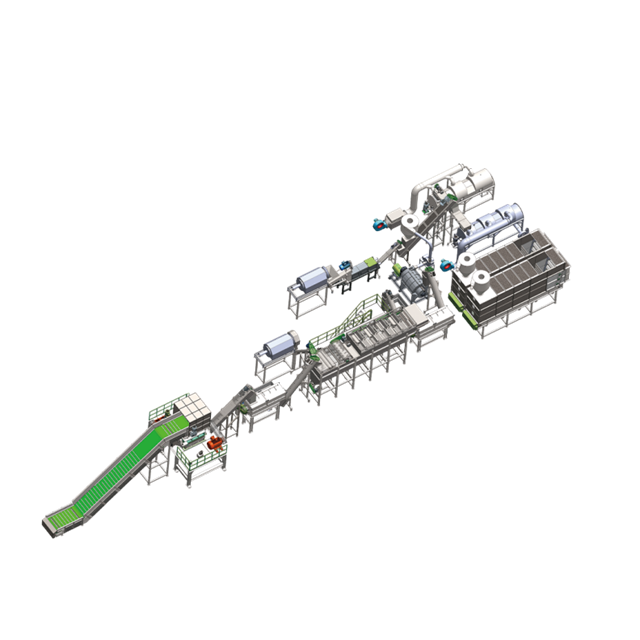
A properly engineered recycling line operates across three primary phases. Testing data shapes the exact configuration of each module. Customization ensures optimal performance from initial size reduction through final pelletization. You cannot simply bolt together random pieces of equipment and expect them to function as a cohesive unit. The material transfer points, motor sizing, and control systems must be integrated seamlessly.
Selecting the right shredders and granulators depends on material thickness and tensile strength. Bulky rigid plastics require different rotor configurations than thin, high-strength films. Dry cleaning systems and mechanical de-dusting remove loose paper, tape fragments, and surface dirt. This step occurs before the material enters the wet phase, protecting downstream equipment from excessive wear. Specialized feeding systems prevent bridging in the hoppers. They ensure a constant, metered flow of low-bulk-density materials into the primary shredders.
When dealing with agricultural films or heavily soiled post-consumer waste, a trommel screen or ballistic separator is often necessary before the primary shredder. These machines tumble the material, allowing rocks, sand, and heavy debris to fall through the screens. This simple mechanical step drastically extends the lifespan of your shredder knives and reduces the load on your wet washing systems.
Feedstock density determines the configuration of hot versus cold washing modules. Sink-float separation tanks rely on specific gravity to isolate target polymers. High-tack adhesives, labels, and heavy oils dictate required dwell times and thermal parameters. These contaminants often require chemical caustic additive dosing, such as sodium hydroxide. A specialized plastic washing line manufacturer designs customized water filtration based on empirical soil load calculations. They integrate specific filtration screens and chemical dosing feedback loops to maintain optimal wash water quality throughout the continuous process.
Friction washers play a massive role in surface decontamination. These machines use high-speed rotors to create intense mechanical friction, scrubbing the plastic flakes against a perforated screen. The angle of the paddles, the rotational speed, and the water injection rate must be tuned to the specific type of contamination. Too much friction can generate excessive heat and melt the flakes, while too little will leave adhesive residues intact.
Extruder selection relies on the material's melt flow index (MFI) and required shear levels. Single-screw and twin-screw configurations offer different homogenization capabilities. Multi-zone vacuum degassing and venting systems are necessary for highly printed or hygroscopic polymers. These zones extract moisture, ink solvents, and volatile organic compounds (VOCs). Melt filtration solutions, such as continuous laser filters or backflush screen changers, remove microscopic non-melting contaminants. A properly specified plastic pelletizing system utilizes the correct cutting methodology. Water-ring, strand, and underwater pelletizers are selected based on target polymer characteristics like those of PET versus PP or LDPE.
The melt filtration stage is where many standard lines fail. If you are processing post-consumer PP from food containers, you will encounter microscopic aluminum flakes from foil seals. A standard manual screen changer will blind over in minutes, requiring constant operator intervention and line stoppages. A continuous self-cleaning filter uses a rotating scraper blade to remove these contaminants from the screen surface without interrupting the melt flow, ensuring consistent pressure and pellet quality.
Buyers must justify the higher initial capital expenditure of a custom system. Standard machinery often hides significant operational costs through inefficiency and frequent downtime. A comparative analysis highlights the long-term value of engineered solutions. You have to look past the initial purchase price and evaluate the daily running costs, maintenance intervals, and the final market value of your output.
Custom lines can be engineered vertically or modularly to maximize throughput per square foot. This flexibility is crucial when upgrading existing facilities with limited floor space. Facility managers face trade-offs between oversizing equipment for future capacity versus optimizing for current feedstock volumes. Proper sizing maintains energy efficiency and prevents material degradation caused by excessive residence time in underfed extruders.
If you install an extruder rated for 2000 kg/hr but your washing line can only supply 1000 kg/hr, the plastic will sit in the barrel too long. This excessive residence time leads to thermal degradation, dropping the intrinsic viscosity (IV) of the polymer and making the pellets brittle. Every component in the line must be balanced to ensure a continuous, steady flow of material.
Custom-designed water filtration and recirculation loops drastically reduce municipal water consumption. These closed-loop systems lower wastewater treatment costs significantly. Processing abrasive feedstocks demands high-wear resistant alloys. Specifying bimetallic barrels and carbide-coated knives for granulators and extruders increases initial costs. However, these upgrades deliver a strong return on investment by extending maintenance intervals and reducing replacement part expenditures.
Energy consumption is another massive operational expense. Custom lines utilize variable frequency drives (VFDs) on all major motors. Instead of running a 200kW shredder motor at full speed constantly, the VFD adjusts the power draw based on the actual load. If the hopper is lightly loaded, the motor slows down, saving thousands of kilowatt-hours over a year of operation.
System design connects directly to revenue generation. Customized melt filtration prevents microscopic impurities from reaching the final product. High-performance degassing removes volatile compounds that cause voids and structural weaknesses. These engineering choices allow the final pellets to be sold at premium, near-prime market rates. Inferior systems force operators to downcycle their output into lower-margin applications.
| Evaluation Metric | Off-the-Shelf Standard System | Custom Engineered Line |
|---|---|---|
| Footprint Optimization | Fixed layout, requires large floor space. | Modular and vertical integration available. |
| Water Consumption | High municipal water draw, basic filtration. | Closed-loop recirculation, advanced sludge removal. |
| Wear Part Lifespan | Standard steel alloys, frequent replacements. | Bimetallic barrels, carbide-coated knives. |
| Output Market Value | Often downcycled due to residual impurities. | Near-prime premium rates via advanced filtration. |
Installing and running a custom line presents distinct operational challenges. Identifying these risks early allows for concrete mitigation strategies. Proper planning ensures a smooth transition from installation to full-scale production. You cannot just flip a switch and expect perfect pellets on day one. Commissioning requires patience, precise calibration, and a deep understanding of the machinery.
Even rigorously tested feedstocks fluctuate over time. Seasonal changes and collection methods alter contamination levels. Engineering buffer silos provides necessary material surge capacity. Variable frequency drives (VFDs) and adaptive PLC controls handle unexpected spikes in moisture or density. These automated systems adjust motor speeds and feed rates dynamically, preventing jams and maintaining consistent throughput.
Buffer silos act as shock absorbers for your production line. If the optical sorter encounters a heavily contaminated batch and slows down, the buffer silo holds enough clean flake to keep the extruder running at full capacity. Without these silos, any minor stoppage upstream immediately halts the entire pelletizing process, leading to massive efficiency losses.
Infrastructure prerequisites require careful assessment before installation. Local grid capacity must support the high electrical draw of large extruders and thermal heaters. Hot wash systems require safe chemical handling and storage protocols. Facilities must plan for the continuous disposal of extracted sludge, paper pulp, and non-target plastics rejected by optical sorters.
Do not underestimate the volume of waste generated by a washing line. If you are processing post-consumer agricultural film, up to 30 percent of the incoming bale weight might be dirt, sand, and moisture. You need a robust sludge handling system, including filter presses or centrifuges, to dewater this waste before sending it to a landfill. Failing to plan for waste management will quickly overwhelm your facility.
A custom line requires specialized operational knowledge. Standard operating procedures must reflect the specific engineering of your system. Demand comprehensive Factory Acceptance Testing (FAT) before the equipment ships. Require on-site commissioning and extensive operator training from the manufacturer. Implement strict preventative maintenance schedules to protect your investment and ensure continuous, high-purity yields.
Operator training is the difference between a profitable line and a constant maintenance nightmare. Your team needs to know how to read the melt pressure gauges, when to change the filtration screens, and how to safely clear a jammed shredder. Document every maintenance procedure and enforce a strict schedule for greasing bearings, checking belt tension, and inspecting knife wear.
A: Material testing prevents equipment mismatch by identifying abrasive contaminants and specific polymer characteristics. It ensures the final system can meet rigorous purity standards like UL or APR. Testing data allows engineers to accurately size motors, specify heater bands, and select appropriate filtration screens for your exact feedstock.
A: Single-stream collections mix various plastics with high contamination, requiring advanced optical sorting and multi-stage pre-washing. Source-separated plastics present a cleaner profile, allowing for simplified processing pathways. The collection method dictates the aggressiveness of the mechanical and chemical decontamination phases.
A: The optimal system depends on the specific polymer type and its melt flow index. Incoming moisture content and the presence of volatile organic compounds dictate vacuum degassing requirements. Required melt filtration fineness and the target pellet shape also drive the selection of the extruder and cutting mechanism.
A: Facilities use Near-Infrared (NIR) sensors to identify plastics at high speeds. Every polymer absorbs, reflects, and re-emits light at characteristic wavelengths. The sensors read these specific optical signatures and trigger targeted air jets to separate materials like PET, HDPE, and PP into distinct streams.
A: Prioritize manufacturers with robust in-house laboratory and pilot-scale testing capabilities. Evaluate their history of custom engineering and facility integration. Ensure they provide guarantees tied directly to output purity and offer reliable, long-term availability of specialized spare parts.
A: Integrate closed-loop water treatment systems to continuously filter and recirculate wash water. Utilize mechanical dry-cleaning pre-treatment to remove loose dirt before the wet phase. Employing high-speed centrifuges efficiently removes moisture from the plastic flakes, reducing the burden on thermal drying systems.


