
- All
- Product Name
- Product Keyword
- Product Model
- Product Summary
- Product Description
- Multi Field Search
 English

Views: 0 Author: Site Editor Publish Time: 2026-07-02 Origin: Site


Procuring recycling equipment based solely on nominal capacity specifications is the primary cause of failure in modern plastic recycling facilities. Operators often look at a machine rated for two tons per hour and assume it will process their specific bales at that rate. This assumption ignores the reality of input impurities. When you purchase from a vendor who fails to accurately assess contamination levels, you invite excessive machine wear, lower-than-expected yields, and degraded output. A poorly processed flake simply cannot be profitably extruded.
The plastic washing line serves as the critical bridge between raw collection and high-value reprocessing. It dictates the quality of everything that happens downstream. Because input materials vary wildly—from heavily soiled agricultural films to post-consumer bottles covered in adhesives—a standard, off-the-shelf approach rarely works.
A competent plastic washing line supplier will not provide a final quote without first conducting a deep-dive assessment of your specific feedstock. They need to understand your contamination levels and end-product requirements. This material audit forms the foundation of a reliable system design.
You can evaluate the expertise of a supplier by how they approach the initial material audit. This assessment acts as the foundational blueprint for your facility's profitability. Success in plastic recycling means achieving high-purity flakes while minimizing water, chemical, and energy expenditure. If a vendor skips this step, they are guessing at your operational needs and putting your entire production schedule at risk.
Underestimating impurities carries severe operational consequences. Sand and glass left in the stream cause accelerated wear on granulator blades, forcing frequent and expensive replacements. When blades dull prematurely, the granulator tears the plastic rather than cutting it, creating excessive fines and dust that are lost in the water system. Unremoved paper labels and adhesives lead to continuous screen blockages in the extruder. Inadequate drying leaves high moisture retention, which causes foaming and degrades the polymer melt. These issues culminate in catastrophic downtime and lost revenue.
A qualified plastic washing line manufacturer designs systems that transform highly contaminated, inconsistent post-consumer bale sources into stable, extrusion-ready feedstock. They understand that the washing process must bridge the gap between unpredictable collection streams and strict reprocessing standards. For example, processing agricultural film requires heavy-duty trommels to remove rocks and soil before the material ever reaches a shredder. Without this step, the mechanical components of the line will destroy themselves within months.
You must distinguish a transactional equipment seller from an authoritative partner. A transactional seller quotes off-the-shelf systems based on theoretical capacities. An authoritative partner engineers solutions based on empirical material testing and laboratory flake analysis, ensuring the equipment actually handles your specific waste stream. They will ask for bale samples, run them through pilot facilities, and provide a detailed report on the exact machinery required to achieve your target flake purity.
| Contaminant Type | Impact on Machinery if Unaddressed | Required Mitigation Technology |
|---|---|---|
| Sand, Silt, and Glass | Rapid dulling of granulator blades, severe wear on pipe elbows and friction washer paddles. | Dry trommels, ballistic separators, heavy-duty pre-washers. |
| Adhesives and Glues | Agglomeration in dryers, severe screen changer blockages during extrusion. | Hot washing tanks with caustic soda (NaOH) at 85-90°C. |
| Oils and Fats | Odor retention, discoloration of final pellets, poor melt strength. | Saponification via alkaline hot wash and high-speed friction washing. |
| Paper Labels | Carbonization in the extruder, resulting in black spots in the final product. | Label removers, zig-zag air classifiers, density separation tanks. |
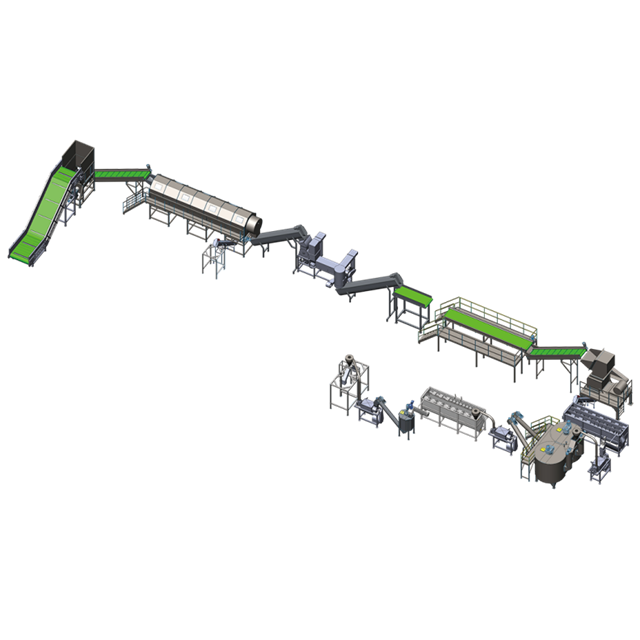
The audit begins by documenting the exact polymer types in your stream. Processing rigid PET or HDPE bottles requires entirely different mechanical actions than processing flexible PP or PE films. Rigid plastics shatter and chip, requiring specific rotor designs in the granulator, while flexible films stretch and wrap around rotating shafts, necessitating specialized shredder configurations and anti-wrapping mechanisms.
The supplier must also identify the collection origins. Post-consumer bales contain mixed household waste, meaning you will encounter everything from metal cans to PVC packaging mixed in with your target polymers. Agricultural films carry heavy soil, sand, and pesticide residue, often making up to 30% of the bale's total weight. Post-industrial scrap might be relatively clean but can contain specific chemical binders or heavy printing inks that require targeted chemical treatment.
Next, the supplier breaks down the impurities into specific mechanical and chemical challenges. This categorization dictates the sequence of the washing modules and the residence time required in each stage.
After analyzing the contaminants, the supplier establishes baseline expectations. A trustworthy partner transparently calculates the mass balance. They will show you exactly why heavily contaminated agricultural film might yield only 70% usable flake, while cleaner post-industrial scrap yields 90%. Understanding these yield realities prevents unrealistic production forecasts and ensures your facility is sized correctly to meet output quotas.
For instance, if you need 1,000 kg/hr of clean PET flake and your input bales contain 20% contamination (caps, labels, moisture, dirt), you must feed at least 1,250 kg/hr of raw material into the system. A competent supplier designs the front end of the line to handle this higher intake capacity, ensuring the downstream components are not starved of material.
Processing heavy contamination requires significant resources. The supplier must project the water, electricity, and chemical requirements needed to process your specific contamination profile. Knowing the exact volume of caustic soda, the water replenishment rate, or the kilowatts required for thermal drying ensures your operation remains viable.
High-friction washers operating at 1,000+ RPM consume substantial electrical power. Hot wash tanks require continuous thermal energy to maintain 85°C. If a supplier quotes a system without providing a detailed utility consumption breakdown based on your specific contamination levels, you cannot accurately calculate your operating expenses.
Removing heavy abrasives before they enter the wet phase protects your downstream equipment. Suppliers evaluate the necessity of trommels, ballistic separators, and dry friction washers to extract silt, glass, and large debris early in the process. Skipping dry cleaning on agricultural films guarantees premature failure of your granulator knives and friction washer paddles.
A heavy-duty trommel uses a rotating screen to tumble the bales, allowing loose dirt, rocks, and small heavy contaminants to fall through the mesh before the plastic reaches the shredder. This single step can remove up to 50% of the abrasive load, drastically extending the lifespan of all subsequent cutting tools and reducing the sludge load on your water filtration system.
Different contaminants require different physical actions. Water agitation utilizes fluid dynamics in sink-float tanks to separate light contaminants, dust, and surface dirt gently, preventing unnecessary machine wear. It relies on the specific gravity of the materials to achieve separation.
Mechanical friction uses high-speed rotating paddles inside a mesh screen to force stubborn dirt and surface-level impurities off the plastic flakes. The intense kinetic energy scrubs the material, while water is injected to flush the dislodged contaminants through the screen. A proper design balances both methods based on the material audit, using friction for heavy scrubbing and agitation for density separation and rinsing.
Cold water cannot remove glue or oil. Suppliers specify hot alkaline baths using caustic soda (NaOH) and detergents to dissolve stubborn adhesive residues and saponify fats and oils. This process extracts organic contamination absorbed directly into the flake surfaces. Hot washing remains absolutely critical for PET bottle recycling to meet food-grade or high-tier fiber standards.
The residence time in the hot wash tank is dictated by the type of adhesive used on the labels. Standard hot melt glues may require 10-15 minutes of continuous agitation at 85°C, while more aggressive industrial adhesives might require higher chemical concentrations and longer dwell times. The supplier must test your specific bales to determine these parameters.
Sink-float tanks separate target polymers from contaminants based on specific gravity. The supplier designs these tanks to ensure materials like PET flakes (specific gravity ~1.38 g/cm³) sink, while polyolefin caps and labels (specific gravity ~0.90-0.95 g/cm³) float to the surface. The dimensions, length, and agitation mechanisms of these tanks depend heavily on the volume of caps and labels identified during the material audit.
If a bale contains an unusually high percentage of PP caps, the sink-float tank must be lengthened, or a secondary tank must be added to ensure complete separation. Inadequate density separation results in PP contamination in the PET stream, which ruins the structural integrity of the final extruded product.
A one-size-fits-all approach always fails in plastic recycling. The physical properties of the polymers dictate the machinery design.
| System Component | PP/PE Film Washing Line | PET Bottle Washing Line |
|---|---|---|
| Initial Size Reduction | Single-shaft shredders designed to prevent film wrapping. | Wet granulators designed to shatter rigid bottles into uniform flakes. |
| Contaminant Focus | Heavy soil, sand, agricultural chemicals, and organic waste. | Paper/plastic labels, hot-melt adhesives, PP/HDPE caps, and PVC. |
| Drying Technology | Mechanical squeeze dryers followed by centrifugal agglomerators. | High-speed centrifugal dryers and thermal hot air pipe systems. |
Contamination levels and material types dictate the necessary drying stages. Flexible films require specialized squeeze dryers or centrifugal dryers to remove water from high-surface-area plastics. A squeeze dryer physically compresses the wet film, forcing the water out and generating mechanical heat that further reduces moisture. Rigid flakes rely on high-speed centrifugal dryers and thermal pipe dryers to achieve the required moisture levels.
If the washing line leaves high residual moisture (above 1-2%), the water turns to steam in the extruder. This steam creates voids and gas bubbles in the polymer melt, leading to foaming, severe polymer degradation, and weak, brittle pellets. The washing line must guarantee a specific maximum moisture content to protect the extrusion process.
The washing line does not operate in a vacuum; it feeds the extruder. You must ensure the washing line's output purity, flake bulk density, and throughput perfectly match the intake requirements of your plastic pelletizing system. Mismatched systems result in constant screen-changer blockages, output volatility, and frequent line stoppages.
For example, if the washing line produces light, fluffy PE film flakes with a very low bulk density, feeding them directly into a standard single-screw extruder will result in poor intake and low throughput. The supplier must integrate a compactor or agglomerator between the washing line and the extruder to densify the material, ensuring a consistent, high-volume feed rate into the pelletizer.
Processing high-abrasion inputs like agricultural film with high sand content destroys standard machinery. Competent suppliers account for this by specifying hardened steel alloys and wear-resistant tungsten carbide coatings for shredder rotors, granulator knives, and friction washer paddles. They design the system to withstand the specific abrasives identified in your material audit.
Furthermore, they utilize modular designs for high-wear components. Instead of replacing an entire rotor when the edges wear down, operators can simply unbolt and replace individual cutting crowns or paddle shoes. This drastically reduces maintenance costs and minimizes downtime.
Removing heavy contamination creates heavily polluted wastewater. You cannot simply discharge this water into municipal sewers. Evaluate whether the supplier integrates or partners with closed-loop water filtration and treatment systems. Managing sludge, chemical runoff, and pH levels is mandatory for environmental compliance and continuous operation.
A proper closed-loop system utilizes dissolved air flotation (DAF) units, flocculants, and filter presses to remove suspended solids and neutralize the pH of the water before recirculating it back into the washing line. This not only ensures compliance with local environmental regulations but also drastically reduces fresh water consumption, lowering operational overhead.
Harsh operating environments require frequent maintenance. Assess the accessibility of wear parts and the expected replacement cycles for screens and blades. A reliable supplier provides a framework for predictive maintenance, ensuring your team can swap out high-wear components quickly without tearing down the entire line.
Look for features like hydraulic opening mechanisms on granulator housings and friction washers. If it takes a maintenance crew four hours to unbolt a housing to change a screen, you lose half a shift of production. Hydraulic access allows the same screen change to be completed in under thirty minutes.
A: Depending on the input material, yields typically range from 70% to 90%. Heavily contaminated post-consumer films sit at the lower end, while clean post-industrial scrap sits at the higher end.
A: Suppliers utilize hot washing systems with alkaline baths (caustic soda). This process saponifies fats and oils, dissolves adhesive residues from labels, and cleans the flake surfaces.
A: Pre-sorting removes heavy abrasives (like glass, sand, and metal) and incompatible materials early, preventing severe damage to granulator blades and reducing the contamination load on the water system.
A: Generally, no. Rigid plastics (like PET/HDPE bottles) and flexible films (like PP/PE) require entirely different shredding, friction, and drying dynamics. A dedicated line is highly recommended for optimal efficiency and throughput.
A: Residual impurities and high moisture content cause screen changer blockages, melt-blown defects, polymer degradation, and gas bubbles during extrusion, resulting in low-grade, brittle pellets.
A: Water agitation uses fluid movement to separate light surface dust and contaminants gently, whereas mechanical friction utilizes high-speed paddle rotation to scrub off stubborn, adhered dirt.
A: Look for a manufacturer that requires a detailed material audit, offers transparent yield and utility projections, uses high-wear resistant components, and provides clear integration plans for downstream processing systems.


