
- All
- Product Name
- Product Keyword
- Product Model
- Product Summary
- Product Description
- Multi Field Search
 English

Views: 0 Author: Site Editor Publish Time: 2026-10-14 Origin: Site


Did you know that extrusion choices essentially define a recycling facility's profit margins? Choosing the wrong machinery can severely hurt your bottom line. It often leads to excessive energy bills and constant maintenance headaches. Plant managers frequently find themselves struggling to navigate the complex equipment market, torn between conflicting specifications and aggressive sales pitches.
We can demystify this process by thoroughly exploring single screw extruder systems. In this comprehensive guide, you will discover their core working principles and empirical benefits. You will see exactly why they remain the undisputed workhorses of modern plastic recovery operations.
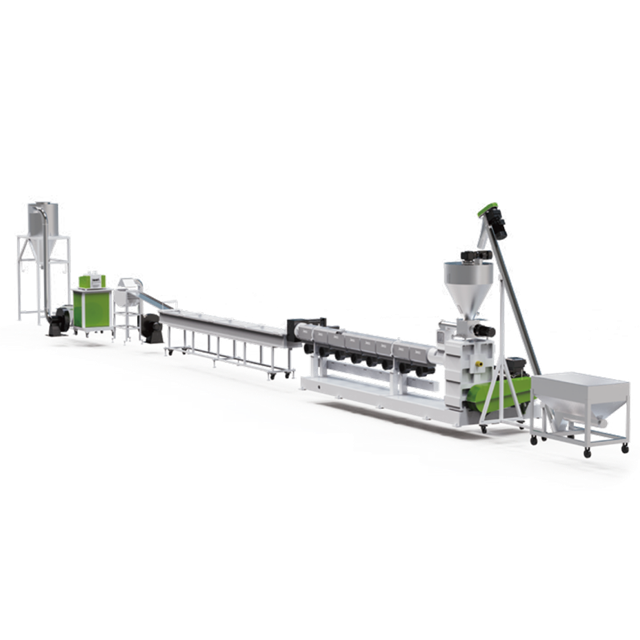
Step onto any bustling recycling plant floor, and you will likely hear the steady, rhythmic hum of a single screw extruder. This machinery acts as the phase-transition engine of any standard plastic pelletizing machine. It takes irregular solid plastic raw materials, such as rigid flakes or fluffy regrind, and transforms them into a continuous, homogeneous molten polymer. This viscous plastic is then forced through a precision die to create specific shapes. The engineering brilliance lies entirely in its simplicity: a singular rotating screw housed within a robust, heated cylindrical barrel.
The operational workflow of this equipment is a continuous thermodynamic and mechanical balancing act. It is generally divided into three primary actions: solid conveying, melting, and pumping. As raw plastic material cascades from the hopper into the feed throat, the rotating screw grips the material and pushes it forward along the barrel.
Rather than relying solely on external heat, the friction generated between the plastic particles, the screw surface, and the barrel wall creates intense mechanical shear. This shear energy, supplemented by external thermal energy from electrical heater bands, gradually melts the polymer. The mechanical friction itself provides the vast majority of the heat required for melting. This internal heat generation drastically optimizes overall energy consumption during continuous runs.
To achieve a perfectly stable melt without degrading the plastic, the screw is engineered with distinct geometric zones. Each zone performs a specific physical function to ensure optimal material flow.
Capital upgrades require careful evaluation. You need to understand the specific advantages of your chosen machinery to make a profitable decision. These machines dominate the recycling industry for several empirical reasons, ranging from superior financial metrics to rugged mechanical reliability.
Looking at recent global manufacturing trends, the plastic recycling sector is experiencing a massive shift toward energy optimization. Surging global power costs are forcing plant directors to scrutinize specific energy consumption closely. Market data indicates a renewed preference for single screw configurations over highly complex multi-screw setups for standard volume reduction. Their streamlined thermodynamics align perfectly with modern sustainability mandates, delivering high throughput with a significantly lower carbon footprint.
The most immediate benefit of selecting a single screw configuration is its highly favorable cost-to-performance ratio. Compared to complex twin-screw alternatives, these machines require a significantly lower upfront capital expenditure. This affordability stems primarily from the less complicated gearbox design and the manufacturing simplicity of machining a single screw and barrel.
Daily operational costs are also notably lower. Because the system relies heavily on internal friction to generate melting heat, the energy consumption remains highly efficient for standard polymers. For technical directors calculating return on investment, the combination of a lower initial purchase price and reduced daily energy expenditure rapidly accelerates the break-even point.
Industrial environments benefit immensely from equipment that does not require overly complex operational procedures. The straightforward design of these extruders translates directly into operational simplicity on the factory floor. Control systems generally focus on just a few critical variables: barrel temperature zones, screw rotation speed, and die melt pressure.
The internal fluid dynamics are less chaotic than those of multi-screw systems. Operators require less specialized training to run the machinery effectively. Troubleshooting process variations, such as output fluctuations or sudden temperature spikes, is far more intuitive. This inherent simplicity reduces the likelihood of catastrophic operator error and minimizes unnecessary production downtime.
Mechanical complexity is often the enemy of uptime. One of the paramount advantages of this technology is its rugged durability. With only one rotating shaft, there are inherently fewer moving parts, bearings, and interlocking seals that can fail under stress. The gearbox only needs to drive a single axis, which significantly reduces internal mechanical stress and long-term wear.
When routine maintenance is required, the procedures are straightforward. Pulling a single screw for deep cleaning or visual inspection is a standard task. Maintenance crews can accomplish this with minimal specialized tooling. Wearing components can be easily monitored and refurbished, ensuring the machine provides a long, productive service life.
In the production of high-quality plastic pellets, maintaining a stable melt pressure at the die is absolutely non-negotiable. Fluctuating pressure results in uneven pellet sizes. This severely degrades the commercial value of the final recycled product.
Single screw extruders excel in their capacity to act as continuous, high-pressure displacement pumps. The metering section is specifically engineered to build and hold pressure against the heavy resistance of the screen changer and the die plate. This design provides a steady, pulsation-free output that ensures downstream cutting systems operate at peak efficiency.
A perennial debate among production engineers is whether to invest in a single or twin-screw system. In reality, neither machine is universally superior. Their effectiveness depends entirely on your specific application, material characteristics, and ultimate production goals.
To provide a clear objective comparison, the following table outlines the fundamental operational differences between the two technologies:
| Feature / Metric | Single Screw Extruder | Twin Screw Extruder |
|---|---|---|
| Primary Function | Melting, conveying, and stable pressure pumping. | Intensive mixing, compounding, and devolatilization. |
| Mixing Capability | Moderate, primarily distributive mixing. | Excellent, offering both dispersive and distributive mixing. |
| Pressure Generation | Highly stable and efficient at high die pressures. | Lower pumping efficiency, frequently requires an external melt pump. |
| Capital Cost | Low to moderate. | High, due to complex gearboxes and interlocking machined screws. |
| Maintenance | Straightforward, with a lower cost for replacement parts. | Complex, featuring higher wear rates on interlocking flights. |
| Material Handling | Best for single-stream, pre-blended, or clean regrind materials. | Best for adding high loads of fillers, chemical additives, or glass fibers. |
For the vast majority of standard recycling operations, the single screw remains the optimal and most profitable choice. Decision-makers should specify this technology when the primary goal is to melt and filter a relatively clean, single-polymer stream. If your facility does not require heavy chemical compounding or the addition of large volumes of calcium carbonate, this setup will provide the most reliable performance.
It is important to acknowledge scenarios where a twin-screw system is empirically the correct choice. If your production demands compounding distinct polymers with vastly different melt indexes, the intensive shear capabilities of a co-rotating twin-screw are necessary. Manufacturing highly engineered plastics that require the uniform dispersion of flame retardants or glass fibers also requires this technology. However, for straightforward volume reduction, this level of complexity introduces entirely unnecessary overhead costs.
The theoretical benefits of this extrusion technology translate directly into robust, real-world applications. This is particularly evident within the rapidly expanding circular economy and plastic waste recovery sectors.
Polyolefins, specifically polypropylene and polyethylene, constitute the largest percentage of global plastic waste. Sourced from packaging films, agricultural plastics, or rigid containers, these materials require highly efficient processing to remain economically viable for recyclers.
For these materials, single screw technology is the industry standard for a PP PE Pelletizing Line. Because these plastics generally do not require intense compounding, they simply need to be efficiently melted, degassed, and pumped. Advanced lines achieve high volumetric throughput without scorching the material by matching the exact thermal degradation limits of the polyolefins.
An extruder never operates in isolation. It is the anchor of a comprehensive PET single screw pelletizing line or a general granulation setup. A well-engineered line integrates upstream equipment, such as gravimetric feeders and force-feeding silos, directly with the extruder.
Downstream, the extruder seamlessly interfaces with continuous screen changers, underwater pelletizing systems, and centrifugal dryers. The highly predictable output of the single screw allows all peripheral components to be synchronized via a central PLC. This creates a highly automated, continuous production loop that requires minimal human intervention.
Procuring capital extrusion machinery requires a careful, highly technical analysis of your specific operational parameters. Buyers must move beyond generic specifications and evaluate how a machine's internal geometry aligns with their targeted material to ensure maximum return on investment.
The physical and thermal properties of your specific plastic waste dictate the geometric design of the screw. The Length to Diameter ratio is arguably the most vital specification to finalize before purchase. It determines the residence time of the polymer inside the heated barrel.
Matching the machine's physical size to your facility’s required hourly throughput is essential. Oversizing an extruder leads to excessive power consumption per kilogram. Undersizing it causes severe mechanical wear as operators inevitably push the machine beyond its safe limits.
Screw diameter is the primary indicator of output capacity. Mid-range commercial facilities typically utilize 120mm screws to achieve 350 to 450 kilograms per hour. Large-scale industrial plants require massive 160mm or 180mm extruders to push well past 1000 kilograms per hour. It is critical to ensure the motor and gearbox are sized appropriately to handle the high torque required at maximum capacity.
In the realm of post-consumer recycling, raw materials are rarely pristine. Flakes often carry residual moisture, volatile organic compounds, and surface printing inks. If these gases are not actively extracted during the melting phase, they will become trapped within the polymer melt. This results in hollow, brittle, or visually defective pellets.
Choosing a vented single screw extruder is a non-negotiable requirement for modern recycling. High-capacity vacuum pumps are attached to these vents to forcefully extract gases before the melt reaches the die head. This ensures solid, high-density granules that command premium market prices.
Capital equipment in the recycling industry operates under incredibly harsh conditions. While one of the primary advantages of this machinery is its mechanical simplicity, neglecting routine maintenance will inevitably lead to premature component failure.
A proactive approach to maintenance shifts the operational strategy from reactive repairs to predictable lifecycle management. Plant engineers should implement a tiered inspection schedule.
On a daily basis, verify that all temperature zones are functioning accurately. A single failed heater band can cause localized cold spots, forcing the motor to work harder and leading to catastrophic screw torque overload. Operators must also listen to the machine. Acoustic monitoring of the gearbox and main drive motor is crucial. Unusual grinding or high-pitched whining often indicates bearing wear or insufficient lubrication. Weekly, maintenance teams must check the oil levels in the reduction gearbox to maintain optimal gear viscosity.
The screw and the inner lining of the barrel are the most expensive consumable parts of an extruder. Wear is primarily caused by abrasive contaminants, such as sand, glass, or tramp metals, mixed within the plastic flakes.
To mitigate this abrasive wear, robust filtration systems must be positioned before the die head. Utilizing continuous dual-piston hydraulic screen changers allows operators to filter out solid contaminants down to microscopic levels. Installing magnetic grates inside the feeding hopper is a highly effective method to capture ferrous metals before they enter the barrel. For highly abrasive materials, investing in bimetallic screws treated with specialized hard-facing alloys can extend the equipment's lifespan significantly compared to standard nitrided steel.
Investing in a single screw extruder offers undeniable long-term value for modern recycling facilities. By combining affordability with operational simplicity, these machines deliver highly reliable daily performance that minimizes costly downtime. They serve as the ideal backbone for standard recycling operations, seamlessly integrating into any comprehensive processing line to ensure steady, high-quality output with significantly reduced energy consumption. If you are looking to optimize your facility's processing capabilities, visit Jwell Recycling to explore high-efficiency equipment solutions tailored precisely to your production goals.
The primary advantages revolve around cost-efficiency, mechanical simplicity, and optimal pressure generation for single-stream materials. From a capital expenditure standpoint, a single screw machine requires a significantly lower initial investment. Mechanically, it features only one rotating shaft, which means the gearbox design is far less complex. This simplicity directly translates to lower maintenance costs, fewer spare parts, and reduced downtime. Operationally, single screw extruders excel at building and maintaining the high, consistent die pressure required for pushing highly viscous polymer melts through fine filtration screens.
Yes, single screw extruders are highly effective for PET recycling, provided they are engineered with specific modifications. PET absorbs moisture from the air. If extruded with moisture present, the material undergoes hydrolytic degradation, severely dropping its intrinsic viscosity and rendering the final pellets brittle. To successfully process PET, a single screw extruder must feature a specialized screw geometry designed for low shear. It must also be equipped with a robust, multi-zone vacuum degassing system to ensure all moisture is thoroughly extracted.
Polypropylene and polyethylene are widely recycled polyolefins that generally present stable thermal characteristics. In standard recycling scenarios, the goal is not to chemically alter or heavily compound these plastics. The objective is simply to melt, filter, and re-pelletize them into a uniform format. A single screw extruder is perfectly suited for this task because it relies on friction and thermal conduction to melt the polymer gently. Twin-screw extruders generate aggressive shear forces which are entirely unnecessary for pure PP and PE recycling.
Yes, when evaluating specific energy consumption, measured in kilowatt-hours per kilogram of processed material, single screw extruders generally outperform twin-screw models in standard recycling applications. Because there is only one screw, the drive motor and gearbox experience significantly less internal mechanical friction. Single screw systems utilize the friction generated between the polymer pellets and the barrel wall as a primary source of melting heat, which reduces the electrical load required by the external heater bands.
With proper maintenance and regular oil changes, the core frame and gearbox of a high-quality single screw extruder can easily last 15 to 20 years. The consumable parts, namely the screw and barrel, typically require refurbishment or replacement every 3 to 5 years, depending on the abrasiveness of the materials being processed and whether bimetallic wear-resistant coatings were applied during manufacturing.
Excess moisture in the plastic feedstock turns into steam when exposed to the intense heat of the extruder barrel. If the extruder lacks proper vacuum venting zones, this steam becomes trapped inside the polymer melt. As the plastic exits the die, the trapped steam expands, resulting in foaming, hollow pellets, and a severe drop in the mechanical strength of the final recycled product.


