- All
- Product Name
- Product Keyword
- Product Model
- Product Summary
- Product Description
- Multi Field Search
 English

Views: 0 Author: Site Editor Publish Time: 2026-10-09 Origin: Site


The global push toward a circular economy has fundamentally transformed how the manufacturing and waste management sectors handle scrap materials. Environmental regulations are tightening worldwide. Simultaneously, the economic value of recycled polymers is increasing rapidly. Efficient waste management has shifted from a mere compliance checkbox to a critical operational priority.
Recent industry trend analyses highlight a structural shift toward localized recycling hubs and stringent Extended Producer Responsibility laws. Manufacturers face mounting pressure to process their own production scrap rather than exporting it. This regulatory landscape demands robust in-house size reduction capabilities to maintain profitability and compliance. The demand for high-purity regrind has never been higher, making primary size reduction a non-negotiable step for modern facilities.
At the center of this industrial transformation is the plastic shredder machine. This foundational equipment serves as the primary gateway in the recycling process. It takes on the brutal task of breaking down bulky, rigid, or flexible scrap into manageable, uniform pieces. For facility managers, process engineers, and business owners looking to optimize their recycling lines, understanding exactly how these machines operate is the first step toward making an informed, high-ROI equipment investment.
This comprehensive guide explores the step-by-step mechanical processes of industrial size reduction equipment. We will examine core internal components and compare different machine architectures. This knowledge will help you pinpoint the exact specifications required for your facility's unique demands.
A heavy-duty size reduction machine is an electromechanical device engineered specifically for the primary breakdown of various polymers. Unlike standard compactors that merely compress trash, this equipment physically destroys the structural integrity of the material. It reduces unwieldy items into smaller scraps typically ranging from 40mm to 100mm in diameter. Common target materials include 200-liter chemical drums, thick PVC pipes, automotive dashboards, and dense manufacturing lumps.
In a standard mechanical recycling facility, processing lines follow a strict sequence to ensure material purity and equipment longevity. Primary size reduction acts as the heavy-lifting workhorse. It prepares unwieldy materials for the next phases of recovery.
Once the material is reduced to rough flakes, it safely travels via automated conveyors to a granulator for secondary fine grinding. Following granulation, the plastic is usually washed, dried, and fed into an extruder to be melted and formed into uniform pellets. Attempting to bypass the initial breakdown phase would cause downstream equipment to quickly jam, overheat, or suffer catastrophic mechanical failure.
Understanding the vast engineering gap between true industrial-grade machinery and lighter commercial setups is vital for procurement decision-makers. Industrial units are built from the ground up to endure continuous operation under extreme mechanical stress.
| Feature | Industrial Grade Equipment | Commercial Light-Duty Setups |
|---|---|---|
| Torque & Power | High-torque, low-speed gearboxes designed to crush dense materials without stalling. | Low torque, higher speed. Easily jams on thick or dense plastics. |
| Throughput Capacity | Processes hundreds to thousands of kilograms per hour continuously. | Limited to small batches. Requires frequent cooling periods. |
| Engineering & Build | Heavy steel construction, wear-resistant alloy blades such as D2, advanced PLC controls. | Lighter materials, standard steel blades, basic on/off switches. |
| Target Application | Heavy manufacturing scrap, municipal waste, large-scale recycling plants. | Office waste, small-scale 3D printing scrap, light packaging. |
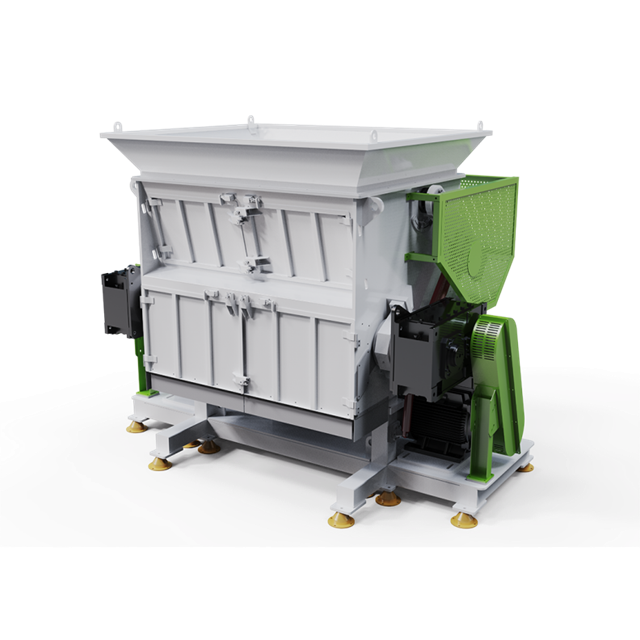
For facility managers and investors, grasping the exact mechanical sequence of the equipment is essential for optimizing production and troubleshooting bottlenecks. The operation relies on a precise combination of gravity, hydraulic pressure, and high-torque shearing forces. Here is the exact step-by-step breakdown of an active processing cycle.
The sequence initiates at the infeed hopper. Depending on the facility's automation level, scrap is introduced manually, via inclined conveyor belts, or dropped in bulk by a front-end loader. Engineered with specific geometric angles and heavy-duty safety curtains, the hopper effectively prevents dangerous flyback. This design ensures plastic shards do not shoot back out while guiding the scrap smoothly down toward the cutting mechanism.
Once the material drops into the machine, it encounters the hydraulic ram. This component is particularly crucial when processing hollow drums or smooth pipes. Without it, these items tend to bounce harmlessly on top of spinning blades. The hydraulic pusher solves this by applying consistent, forceful pressure, pinning the waste directly against the rotating shaft. Operating on a timer and pressure-sensor loop, the ram pushes forward, retracts to allow more material to fall, and pushes again. This guarantees a continuous, aggressive bite.
This is the beating heart of the machine. The cutting chamber houses a massive, horizontal steel rotor studded with moving rotor knives. Fixed firmly to the inner walls of the chamber are stationary stator knives.
As the rotor turns at a calculated low speed—typically 60 to 120 RPM—the hydraulic ram forces the plastic into the path of the blades. The tight tolerance between the moving and fixed knives creates an immense shearing action. By keeping the rotational speed low, the machine generates maximum torque while minimizing friction heat. Excessive heat could otherwise melt low-melting-point polymers and gum up the rotor.
Directly beneath the cutting mechanism sits a curved metal screen perforated with holes of a specific diameter. This screen acts as the ultimate quality control filter. As the blades tear the plastic apart, the fragments fall toward this barrier. If a piece is smaller than the hole diameter, it passes through safely. If it remains too large, the spinning rotor sweeps it back up for another punishing pass through the stator knives. This strictly controlled loop ensures absolute uniformity in the final output.
After successfully passing through the screen, the uniformly processed flakes drop into a discharge chute. To prevent internal backups, automated systems immediately evacuate the material. Industrial setups frequently utilize mechanical screw augers or pneumatic suction blowers to transport the flakes directly into storage silos, washing lines, or the subsequent granulation stage.
Moving beyond the mechanical sequence, the actual durability of the equipment hinges on the engineering of its core components. Evaluating these parts rigorously is necessary when assessing a machine's projected lifespan and maintenance overhead.
The drive system provides the necessary kinetic energy. Cutting solid polymer blocks requires immense force rather than high speed. Industrial units utilize robust electric motors paired with heavy-duty gearboxes. For instance, high-performance models often feature motor powers ranging from 37kW to 132kW. This setup converts high-speed motor rotation into low-speed, extreme-torque power. It allows the machine to effortlessly shear through dense materials while maintaining a stable operating temperature.
Rotors are typically machined from solid steel billets to withstand severe, continuous impact loads. The blades themselves are the most frequently worn consumables. To ensure longevity, industrial knives are forged from high-grade tool steels like D2, Cr12MoV, or SKD-11. These alloys offer a critical balance of hardness to maintain a sharp edge and toughness to prevent shattering. Specifically, modern designs utilize a V-cut or staggered blade arrangement. This ensures only one or two blades impact the plastic at any given microsecond, drastically reducing shock loads on the gearbox.
The Programmable Logic Controller serves as the digital brain of the operation. It constantly monitors motor amperage, hydraulic pressure, and internal temperatures. One of its most vital functions is the auto-reverse feature. If a massive, overly dense piece of plastic causes the motor amperage to spike to dangerous levels, the PLC instantly detects the jam. It automatically halts the rotor, reverses its direction to clear the obstruction, and then resumes forward operation. This self-preservation mechanism prevents catastrophic motor burnout.
Selecting the correct architecture is paramount for operational success. The physical properties of your waste stream dictate which mechanical approach will yield the best throughput.
Single-shaft models feature one high-speed cutting rotor and rely heavily on the hydraulic ram to feed material into the blades. Because they utilize a sizing screen beneath the rotor, they are universally recognized for producing a highly consistent, uniform flake size in a single pass.
These machines are the optimal choice for processing hard, thick, and rigid plastics like heavy injection molding lumps, thick-walled pipes, and solid pallets. For facilities handling diverse streams of rigid materials, investing in a robust Waste Plastic Shredder provides the versatility needed to process various densities efficiently. They deliver uncompromising reliability when dealing with dense purges that would stall lesser equipment.
Double-shaft units operate without a hydraulic ram and typically lack a sizing screen. Instead, they feature two parallel shafts equipped with interlocking, hook-like blades that rotate inward toward each other at very low speeds.
This counter-rotating action aggressively grabs, punctures, and pulls bulky material down through the center, ripping it into long strips. While the output size is rougher, double-shaft machines excel at processing high-volume, hollow, flexible, or highly contaminated waste. They easily chew through large drums, agricultural films, woven bulk bags, and items containing foreign debris like metal screws that might otherwise damage a single-shaft machine.
A frequent point of confusion is the distinction between primary size reduction and granulation. The primary machine is designed for rough breakdown, operating at low speeds with massive torque to fracture massive parts into 40mm to 100mm pieces.
A granulator, conversely, is used for secondary size reduction. It operates at very high speeds with less torque. It takes the rough flakes produced by the primary stage and slices them down into fine, 10mm to 12mm granules suitable for extrusion. The two machines are strictly complementary. Feeding massive plastic lumps directly into a granulator will quickly destroy its high-speed blades.
The versatility of modern size-reduction equipment allows recycling facilities to process a vast spectrum of polymer types. Categorizing your material helps in optimizing blade configurations and screen sizes.
Rigid plastics are dense, hard, and prone to shattering or shearing under extreme pressure. Processing these materials requires high torque and razor-sharp blade profiles. Common applications include High-Density Polyethylene pipes, Polyvinyl Chloride construction materials, and large solid blocks of plastic that harden during the purging of injection molding machines. Rigid IBC totes and thick-walled buckets also fall into this category.
Flexible plastics pose a unique mechanical challenge. They tend to stretch and wrap around spinning rotors rather than breaking cleanly. Processing these materials requires specialized blade angles and incredibly tight clearances between the moving and fixed knives. Common flexible applications include agricultural greenhouse films, stretch wraps, Polypropylene jumbo bags, nylon fishing nets, and industrial strapping.
Investing in heavy-duty size reduction equipment is not merely a waste management decision. It is a strategic financial move. Manufacturers are increasingly mandated to handle their own end-of-life products, making in-house processing a critical compliance tool rather than just a cost-saving measure.
Unprocessed plastic waste is inherently bulky, consisting mostly of empty air. By implementing an Industrial plastic shredder, businesses can achieve a volume reduction of up to 80%. This massive compaction frees up valuable factory floor space and slashes logistics costs. Shipping dense, compacted flakes is exponentially more cost-effective than paying freight for containers filled with bulky, lightweight scrap.
In the current manufacturing economy, raw, unsorted scrap holds little market value. However, once plastic is sorted, broken down into uniform flakes, and cleaned, it transforms into a highly sought-after commodity. Manufacturers can sell this processed material at a premium to extrusion facilities. This effectively turns a waste disposal expense into a profitable revenue stream.
Global regulatory frameworks are aggressively penalizing industrial waste sent to landfills. An in-house size reduction protocol allows manufacturers to recycle their own scrap in a closed-loop system or properly prepare it for third-party recyclers. This ensures strict compliance with environmental regulations and bolsters corporate zero-waste sustainability initiatives.
Even the most robustly engineered machinery requires proper operation and routine maintenance to function at peak efficiency. Addressing common operational challenges proactively prevents costly downtime.
Material jams usually occur due to aggressive overfeeding or attempting to process materials that exceed the machine's design specifications. Utilizing automated conveyor belts with load sensors ensures a steady, measured feed rate, preventing the hopper from being overwhelmed. Furthermore, operators must trust the PLC. Safety cut-offs should never be manually overridden when the machine detects a torque overload.
Dull blades are the primary culprit behind decreased throughput, excessive energy consumption, and the creation of unwanted plastic dust. When blades lose their edge, the machine tears the polymer instead of shearing it cleanly. This generates massive friction heat. Heat melts the plastic, causing it to wrap around the rotor and stall the gearbox. Blades should be visually inspected weekly for chips. Depending on material hardness, professional sharpening is typically required every 3 to 6 months. Resetting the exact micro-clearance between the rotor and stator knives after sharpening is absolutely critical for maintaining cutting efficiency.
Industrial size reduction is inherently loud and generates particulate matter. Installing the equipment within sound-dampening acoustic enclosures protects factory workers from long-term hearing damage. Additionally, strict Lockout/Tagout procedures must be enforced during any blade maintenance or jam clearing to ensure operator safety.
Procuring the correct equipment requires a systematic evaluation of your specific operational requirements. Misjudging capacity or machine architecture can lead to severe processing bottlenecks.
The first step is identifying the exact polymer types you will process and your required hourly volumes. Calculate your target throughput in kilograms per hour. It is highly recommended to select equipment with a capacity 20% to 30% higher than your current peak requirement. This buffer accommodates future business growth and prevents the machine from constantly running at maximum mechanical strain.
Determine the precise size of the processed material required for the next step in your workflow. If the material is moving directly into a granulator, a rough 40mm to 50mm flake from a standard screen is perfectly sufficient. Keep in mind that screen size directly impacts throughput. Specifying a screen with smaller holes will naturally result in longer processing times and lower hourly output.
The extreme mechanical stress these machines endure means that after-sales support, warranty terms, and the rapid availability of replacement blades are just as important as the initial purchase price. Partnering with a proven manufacturer ensures your recycling line remains operational year-round.
Understanding exactly how this equipment works—from the force of the hydraulic ram to the precision of the cutting chamber—is the first critical step in optimizing an industrial recycling line. These powerful machines do more than just destroy waste. They transform bulky, low-value scrap into manageable, reusable commodities.
Choosing the right equipment architecture, committing to routine blade maintenance, and understanding your material's specific properties will save time, reduce operational costs, and generate new revenue streams. If you are ready to upgrade your waste management strategy, evaluate your throughput needs today. Consult with equipment experts to find a customized size-reduction solution tailored to your facility's exact requirements.
Costs vary significantly based on processing capacity, motor size, and shaft configuration. While smaller commercial units may cost a few thousand dollars, high-capacity industrial machines designed for continuous operation range from tens of thousands to over a hundred thousand dollars. However, the investment is typically offset quickly by drastic reductions in waste disposal fees and the creation of sellable plastic flakes.
Generally, no. While high-quality double-shaft configurations can occasionally survive processing stray nails or small screws without catastrophic failure, large metal pieces will severely chip or break the cutting blades. It is an industry best practice to install overhead magnetic separators or magnetic head pulleys on the infeed conveyor to remove ferrous metals before they enter the cutting chamber.
A single-shaft machine uses a hydraulic ram to push material against one high-speed rotor and utilizes a screen to guarantee a uniform final flake size. It is ideal for rigid, thick plastics. A double-shaft machine uses two interlocking, low-speed rotors to grab and tear bulky items without a screen. This makes it perfect for volume reduction of flexible, hollow, or contaminated materials.
Maintenance intervals depend heavily on the abrasiveness and hardness of the material being processed, as well as daily operating hours. On average, industrial blades require professional sharpening every 3 to 6 months. Establishing a routine inspection schedule prevents blades from becoming excessively dull, which protects the motor from unnecessary strain and extends the overall life of the machine.
With proper maintenance and regular sharpening, high-grade alloy blades like D2 or SKD-11 can last anywhere from 12 to 24 months under continuous industrial use. The lifespan is directly correlated to the cleanliness of the input material. Processing highly abrasive materials containing sand, glass, or hidden metals will degrade the blade edge much faster.
Power consumption is directly tied to the motor size and the density of the material being processed. Standard single-shaft machines for mid-sized recycling facilities typically utilize motors ranging from 37kW to 75kW. Heavy-duty applications, such as processing massive solid purges, may require dual-motor setups exceeding 150kW. Advanced PLC systems help optimize power draw by reversing the rotor during torque spikes, preventing sustained electrical overloads.