
- All
- Product Name
- Product Keyword
- Product Model
- Product Summary
- Product Description
- Multi Field Search
 English

Views: 0 Author: Site Editor Publish Time: 2026-10-10 Origin: Site


Global plastic waste is expanding rapidly. What was once a disposal headache is now a highly lucrative business opportunity. Facility managers and investors constantly ask about the financial requirements to enter this sector. Pinning down an exact figure is rarely straightforward. Processing post-consumer or post-industrial waste involves multiple distinct stages. Consequently, equipment costs vary dramatically based on your specific operational blueprint.
Recent market data highlights a massive shift in the industry landscape. Driven by stringent government mandates and corporate sustainability pledges, the demand for premium recycled resins has skyrocketed. Manufacturers worldwide must now meet minimum recycled content laws for packaging. This regulatory pressure means high-quality pellets command premium prices on the commodities market. Therefore, investing in advanced recycling technology is no longer just an environmental choice. It is a strategic commercial necessity.
In this comprehensive guide, we will break down the exact prices for various systems. You will discover the hidden engineering factors driving these capital expenditures. This data-driven approach will help you make a sound, profitable investment.
When stakeholders look for a baseline budget, they must understand a fundamental truth. Procuring recycling machinery is far removed from buying a standard commercial vehicle. Rather, it involves engineering a bespoke production line. This line must be precisely tailored to specific polymer types and contamination levels. Below is a foundational price bracket based on current industrial market data.
| Equipment Scale | Estimated Price Range USD | Typical Application |
|---|---|---|
| Small-Scale / Entry-Level | $3,000 – $15,000 | Basic crushers and mini extruders for clean, in-house factory scrap. |
| Mid-Range / Commercial | $20,000 – $80,000 | Standard pelletizers and standalone washing units for lightly soiled waste. |
| Industrial / Fully Automated | $100,000 – $500,000+ | Complete end-to-end systems for heavily contaminated post-consumer waste. |
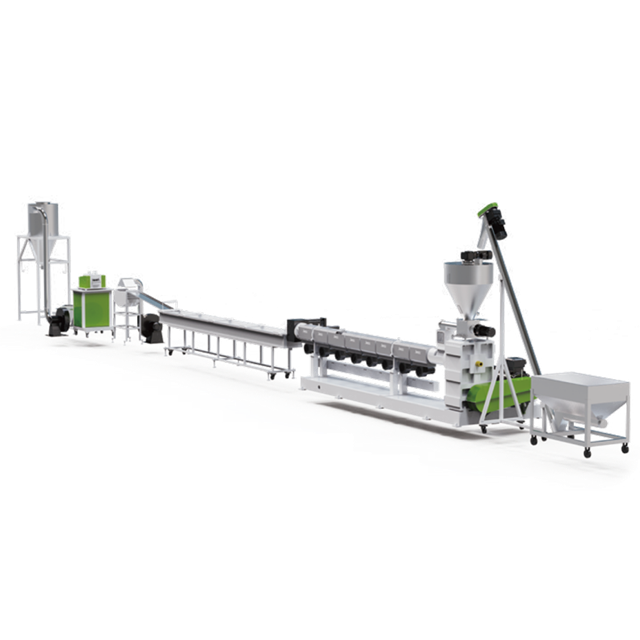
To accurately forecast a facility budget, you must deconstruct the recycling process into its core stages. Each phase requires specialized engineering. This direct correlation dictates the required investment.
Imagine a bustling factory floor. A forklift tips a massive 500-kilogram bale of tangled agricultural film into a heavy-duty hopper. Before any washing or melting can occur, this bulky feedstock must be reduced to manageable flakes. Shredders and crushers handle this aggressive initial phase.
The estimated cost ranges from $3,000 to $40,000 or more. Pricing depends heavily on rotor design and motor power. A standard Multipurpose Waste Plastic Single Shaft Shredder utilizes hydraulic pushers to process thick, solid plastics. High-end models feature wear-resistant blades forged from D2 or SKD11 steel. For instance, robust single-shaft designs often incorporate V-shaped rotor arrays to maximize cutting efficiency. While premium metallurgy increases the upfront cost, it drastically reduces long-term maintenance downtime.
Post-consumer plastics arrive heavily contaminated. They carry dirt, organic residue, and adhesive labels. Introducing this soiled material directly into an extruder will instantly compromise the structural integrity of the final product. Therefore, rigorous cleaning is non-negotiable.
Expect to invest between $20,000 and $150,000. A commercial Waste Rigid Plastic Recycling Washing Line operates as a sequence of interconnected modules. Friction washers aggressively scrub the material at high speeds. Meanwhile, sink-float tanks separate polymers by density. Systems designed for heavily soiled materials require specialized hot washing modules and chemical dosing systems. These necessary upgrades naturally push the equipment cost toward the higher end of the spectrum.
The final, most technologically complex stage involves melting the clean, dry flakes. The system then extrudes them into uniform granules. This phase dictates the ultimate market value of your recycled product.
Costs typically range from $15,000 to $100,000. The price is dictated by the extrusion architecture. Single-stage extruders are perfectly suited for clean, post-industrial scrap. In contrast, advanced plastic pelletizing machine setups feature double-stage configurations. They utilize a primary screw followed by a secondary smaller screw. This specific architecture provides superior filtration and vacuum degassing. Removing trapped volatile gases is essential for processing post-consumer plastics effectively.
Many investors seek a turnkey solution rather than piecing individual machines together. Integrated end-to-end lines are the industry standard for high-volume plants.
These comprehensive systems range from $50,000 to $300,000. A dedicated JWL Single Stage PP PE Pelletizing Line synchronizes feeding, melting, filtering, and cutting into one continuous workflow. Investing in a fully integrated system ensures all components communicate seamlessly via a central PLC control panel. The initial capital outlay is significant. However, these automated systems yield premium-grade rigid plastic pellets that command top-tier commodity rates.
Understanding broad price ranges requires a deeper look at underlying engineering variables. Several primary factors will influence the final quotation you receive from a manufacturer.
The most direct driver of cost is processing volume. Equipment is rated by its hourly output. A machine engineered for 200 kilograms per hour utilizes smaller motors and lighter gearboxes. Scaling up to 1,000 kilograms per hour requires exponentially more powerful drive systems. You need massive torque to push high volumes of viscous melt through a fine filtration screen. This scale-up significantly elevates the manufacturing cost.
Labor overhead and operational efficiency are directly tied to automation. Manual machines are cheaper upfront. However, they require operators to constantly monitor temperatures and manually swap filtration screens. Conversely, fully automated systems feature smart touchscreens, continuous hydraulic screen changers, and intelligent melt pressure sensors. This automation minimizes human error. It also slashes ongoing labor costs, quickly offsetting the higher initial purchase price.
Not all polymers behave similarly under intense heat and pressure. Machines built to handle highly abrasive materials require bimetallic screws. The barrels must be treated with specialized alloys to prevent rapid wear. Furthermore, processing materials with high moisture content demands advanced vacuum degassing zones. These necessary metallurgical and structural upgrades add considerable cost to the equipment.
Internal electrical and mechanical components play a massive role in pricing. A machine utilizing standard local parts will be vastly cheaper than one equipped with internationally recognized brands. High-end machinery frequently features Siemens motors, Schneider electrical contactors, and SKF bearings. These premium components provide superior energy efficiency. More importantly, they offer reliable global warranty support and a significantly longer operational lifespan.
Standard machines benefit from economies of scale. However, real-world recycling plants often require bespoke engineering. You might need to tailor the machine footprint to navigate tight factory pillars. Adjusting hopper dimensions for unique waste streams or integrating specialized underwater pelletizing systems requires custom fabrication. This tailored approach inherently increases the final invoice.
When calculating a facility budget, the sticker price of the machinery is only one part of the equation. Bottom-of-funnel buyers must account for secondary expenses to prevent unexpected capital shortfalls.
Heavy industrial machinery requires specialized logistics. Buyers must allocate funds for international sea freight, port handling fees, and import tariffs. In addition, complex processing lines require professional installation. Suppliers typically dispatch technicians to assemble the line, calibrate the software, and train local staff. The buyer is usually responsible for travel logistics and daily commissioning fees.
Recycling equipment is incredibly energy-intensive. Extruders rely on massive electrical heaters and high-horsepower motors. Washing lines consume vast volumes of water. Facility managers must verify that their local electrical grid can support the required kilowatt draw. Upgrading factory transformers or installing closed-loop water treatment systems are substantial setup costs.
Operating heavy machinery on abrasive materials results in inevitable wear and tear. A responsible financial model must include a buffer for consumable parts. Shredder blades require regular sharpening. Extruders running continuously will eventually wear down the screw flighting. Budgeting for a steady supply of filtration screens and specialized high-temperature lubrication is essential. This prevents sudden operational halts.
Investors frequently debate whether to purchase brand-new equipment or source used machinery. Both approaches carry distinct financial implications.
The primary advantage of used equipment is the lower upfront capital requirement. You also get immediate availability, bypassing standard manufacturing lead times. However, used machinery carries substantial risk. Buyers inherit the hidden wear and tear of the previous owner. This increases the likelihood of catastrophic breakdowns. Moreover, older machines often lack modern energy efficiency, leading to bloated monthly utility bills.
Purchasing new equipment ensures the integration of the latest technological advancements. A brand-new system utilizes highly efficient AC motors and optimized heating bands. These innovations drastically reduce electricity consumption per kilogram processed. New equipment also complies with current industrial safety standards. It includes comprehensive manufacturer warranties and guarantees the consistent production of high-grade pellets. Overall Equipment Effectiveness is vastly superior with new machinery.
Securing funding requires demonstrating a clear path to profitability. The current market dynamics are highly favorable for well-planned operations.
Profitability is calculated by analyzing the spread between input costs and output revenue. A simplified model includes the cost of purchasing baled waste plastic, operational expenditures, and the market selling price of finished granules. Because global manufacturing increasingly demands recycled content, high-quality pellets sell at premium margins. These margins easily absorb operational costs, leaving a robust net profit per ton.
The payback period is the time required for net profits to eclipse the initial machinery cost. For example, suppose a facility invests $100,000 in a line producing 500 kilograms per hour. Operating two eight-hour shifts daily processes roughly 8 tons of material. If the net profit margin is $150 per ton, the operation generates $1,200 daily. Assuming 250 working days a year, the equipment can potentially pay for itself within 8 to 14 months. This depends heavily on local utility rates and market fluctuations.
Making a high-intent capital purchase requires a systematic procurement strategy. To ensure a strong return on investment and avoid costly operational bottlenecks, you must match equipment specifications precisely to your operational reality. Here are concrete standards for your selection process.
The physical properties of your input material dictate the entire line architecture. Are you processing rigid plastics like crushed HDPE pipes? Or are you handling flexible LDPE agricultural films? As a general engineering rule, clean post-industrial scrap can bypass extensive washing. It moves straight to size reduction and extrusion. In contrast, if your post-consumer waste has a moisture content above five percent after washing, you must specify an extruder with double vacuum degassing zones. Failing to do so will result in porous, low-quality pellets.
Determine how many tons of waste you need to process monthly. Translate this into a required hourly output. Be realistic during this phase. Buying a machine that is too small will bottleneck your operation. Over-specifying capacity ties up unnecessary capital. Always factor in Overall Equipment Effectiveness. Screen changes and maintenance pauses will naturally lower theoretical maximum outputs by fifteen to twenty percent. Size your motors and heating zones accordingly.
When contacting suppliers, do not simply ask for a bottom-line price. Two machines that look identical on paper can have a massive price difference. This is usually due to underlying metallurgy and control systems. Demand a detailed Bill of Materials. Check the brands used for inverters and contactors. Confirm whether the extruder barrel features bimetallic treatments for extended longevity.
The true cost of a machine includes spare parts availability and technical support over its lifespan. Partner directly with established manufacturers who offer Factory Acceptance Testing. They should provide detailed layout planning and reliable after-sales support. A reputable supplier acts as an engineering partner, ensuring your line operates at peak efficiency.
The financial commitment required for a recycling setup varies immensely based on your specific processing needs. Whether your operation demands a standalone shredder or a fully automated pelletizing plant, understanding the engineering variables behind the pricing is crucial. By carefully evaluating your material type, capacity requirements, and component quality, you transition from simply buying machinery to investing in a highly profitable asset. Making an informed, data-driven decision today secures a competitive edge in the rapidly expanding circular economy. Ready to configure your ideal recycling line? Explore professional-grade solutions tailored to your exact specifications at Jwell Machinery.
Small-scale machines typically range from $3,000 to $15,000. This price bracket covers basic standalone equipment, such as small crushers or mini extruders. These compact units are highly suitable for startups, laboratories, or manufacturing facilities looking to recycle their own in-house factory scrap rather than paying for external disposal.
No, a single machine cannot effectively process all types of plastic. Different polymers such as PET, HDPE, LDPE, and PP have vastly different melting points, viscosities, and thermal degradation properties. You need specific screw designs, heating profiles, and cooling methods tailored to the exact material. Mixing incompatible plastics in one line will result in degraded, unusable material.
If you are strictly recycling clean, post-industrial factory scrap, you can often skip the washing phase entirely. You can feed this clean material directly into a size reduction unit and then straight into an extruder. However, if you are processing post-consumer waste, a washing phase is absolutely critical. It removes dirt, sand, and oils that would otherwise destroy the extrusion machinery.
Yes, commercial plastic recycling can be highly profitable when engineered and managed correctly. With the increasing global regulatory push for sustainability, the demand from major brands for high-quality recycled plastic pellets is at an all-time high. A well-configured, energy-efficient recycling line offers a strong ROI and a relatively short payback period.
Power consumption depends entirely on the scale and type of machinery. A small standalone crusher might draw 15 to 30 kilowatts. In contrast, a complete industrial pelletizing line processing 500 kilograms per hour can easily demand a total installed power exceeding 250 kilowatts. Facility managers must conduct a thorough electrical audit to ensure their grid transformers can handle this intensive continuous load.
Space requirements vary by process complexity. A simple in-house shredding and extrusion setup might only need 50 to 100 square meters. However, a full-scale post-consumer washing and pelletizing line requires a significant footprint. You must account for raw material bale storage, the linear length of washing tanks, extrusion lines, and finished goods warehousing. Industrial setups typically require a minimum of 500 to 1,500 square meters of dedicated factory space.


