
- All
- Product Name
- Product Keyword
- Product Model
- Product Summary
- Product Description
- Multi Field Search
 English


Almost every plastic product we interact with daily started its life inside a highly specialized piece of industrial machinery. Think about the sturdy water bottles on your desk or the durable plastic components in your vehicles. They all share a common manufacturing origin. Most plastic items start inside one single machine. Many struggle to understand the exact mechanics of an extruder, yet this heavy-duty equipment literally shapes our modern manufacturing world.
At its core, an extruder is a manufacturing powerhouse. It utilizes immense mechanical pressure and thermal energy to melt raw materials. The machine then pushes this molten plastic through a specifically shaped die to create continuous profiles or uniform pellets. While extrusion technology is utilized across various sectors like food processing, its most critical industrial application today lies in large-scale plastic manufacturing and recycling.
In the material recovery sector, the extruder serves as the beating heart of any reclamation facility. This comprehensive guide will break down exactly how these machines function on the factory floor. We will explore their key mechanical components, discuss real-world engineering challenges, and provide actionable insights on how to choose the right equipment for your production line.
Before you sign off on a massive capital expenditure for a new recovery line, you need to understand what is happening inside the barrel. Operators must grasp the fundamental mechanics of extrusion technology before moving deeper into complex machinery specifications.
When industry professionals discuss extrusion, they are referring to a highly controlled manufacturing process designed to push or thrust material through a specifically shaped opening. In industrial applications, an extruder is a complex electromechanical device. It converts solid raw materials like plastic flakes, powders, or regrind into a homogenous molten state. The machine then continuously pumps this melt under high pressure through a restrictive die.
To visualize the concept without technical jargon, consider the mechanics of a common meat grinder. The rotational force pushes the material forward, compressing it and forcing it out of a restricted opening. However, industrial extruders elevate this basic mechanical principle. They add precise thermal dynamics and extreme pressures, often operating at hundreds of degrees Celsius to achieve perfect polymer homogenization.
The industrial extrusion process operates through a strict, sequential workflow. Understanding these steps is crucial for diagnosing production issues on the factory floor and optimizing your daily output.
The entire cycle lives or dies at the feed throat. Solid raw materials enter the machine via a hopper during the material feeding phase. Gravimetric or volumetric feeders ensure a consistent, measured flow of material into the system. If the feed rate fluctuates, the entire downstream process destabilizes, leading to uneven pellet sizes.
Following this is the conveying and melting phase. As the material enters the barrel, the rotating screw pushes it forward. Interestingly, the primary source of heat in a well-optimized extruder is not the external heater bands. Instead, it is the intense mechanical shear and friction generated by the screw turning against the plastic and the thick barrel wall.
Subsequently, the material enters the pressurization and mixing stage. As the plastic melts, the geometry of the screw changes to reduce the available volume. This compresses the molten plastic. The pressure actively squeezes out air pockets and ensures a uniform temperature and color distribution across the melt.
Before exiting, the pressurized melt undergoes rigorous filtration. It passes through a screen changer. This component acts as a robust mechanical sieve to filter out unmelted particles, dirt, or foreign contaminants that survived the initial washing process.
Finally, the process concludes with shaping and cooling. The molten plastic is forced through the die head. In recycling applications, this die typically shapes the plastic into continuous strands. These hot strands are immediately quenched in a turbulent water bath and cut into uniform pellets by rapid rotary blades.
An extruder is not a single tool. It is an assembly of precisely engineered components working in unison. Imagine standing on the factory floor and feeling the vibration of a massive 160 kilowatt motor. The longevity and efficiency of that machine rely entirely on the quality of these individual parts.
The hopper acts as the primary material reservoir. Depending on the material bulk density, hoppers can be simple gravity-fed funnels or complex force-feeding systems with internal agitators. For light or fluffy materials like film scraps, force feeders are absolutely essential. When operators encounter material bridging, a frustrating scenario where plastic clumps together and blocks the feed throat, a crammer ensures a constant, aggressive fill rate for the screw.
The barrel is the thick-walled steel cylinder that houses the entire extrusion process. Inside the barrel lies the screw, which is arguably the most critical component of the machine. A meticulously designed screw is typically divided into three distinct zones. The feed zone features deep flights to capture the solid material. The transition zone gradually increases the root diameter to compress the plastic and generate shear heat. Finally, the metering zone features shallow flights that pump the fully molten plastic at a consistent pressure toward the die. A standard recycling screw might feature a 32:1 or 36:1 Length to Diameter ratio to ensure proper melt homogenization.
While mechanical friction provides most of the melting energy, external cast aluminum or ceramic heater bands surround the barrel. These heaters bring the machine up to operating temperature during startup. Precise temperature control is vital. If the heat drops even slightly below the polymer melting point, the resulting mechanical strain can literally shatter the screw. Conversely, if friction generates excessive heat, high-velocity air blowers or water jackets activate to prevent the plastic from degrading into a brittle state.
The screen changer is a mechanical filtration device located at the end of the barrel. It utilizes woven steel mesh screens to capture impurities. Advanced systems use continuous hydraulic mechanisms to swap screens in fractions of a second without stopping the machine. The die head is the final tooling component. It restricts the flow to build back-pressure in the barrel and shapes the exiting melt into strands for cutting.
| Component | Primary Function | Key Engineering Consideration |
|---|---|---|
| Hopper | Stores and feeds raw material into the machine. | Must match material bulk density to prevent bridging and feed starvation. |
| Screw | Conveys, melts, and pressurizes the plastic. | Length to Diameter ratio dictates melting efficiency and homogenization time. |
| Barrel | Contains pressure and transfers thermal energy. | Requires bimetallic coating for processing highly abrasive rigid flakes. |
| Heaters and Coolers | Regulates exact melt temperatures across zones. | PID temperature controllers prevent material thermal degradation and polymer chain breakdown. |
| Screen Changer | Filters physical contaminants from the melt. | Hydraulic continuous changers drastically reduce machine downtime during filter swaps. |
Extrusion technology is highly adaptable. It is heavily customized to fit specific manufacturing requirements and material properties. Selecting the correct underlying type of extruder is the foundational step in building a profitable production line.
Single screw extruders represent the most common and cost-effective design in the recycling industry. Utilizing one rotating shaft, they are highly efficient at generating the pressure needed to pump molten plastic through a die. They are the reliable standard for basic recycling, pipe manufacturing, and sheet extrusion where the primary goal is straightforward melting and forming.
In contrast, twin screw extruders utilize two parallel screws rotating within a figure-eight-shaped barrel. These machines offer superior mixing, compounding, and degassing capabilities. Engineers generally deploy them when blending different plastics, adding high volumes of fillers like calcium carbonate, or processing highly heat-sensitive materials that require exact shear control.
While both utilize the same basic principles of melting and pushing plastic, the scale is vastly different. A desktop 3D printer extruder is a micro-system designed to melt a pre-manufactured filament wire, depositing mere grams of plastic per hour. Industrial extruders process raw, irregular flakes or powders. They operate with massive motors often exceeding 160 kilowatts to output hundreds or thousands of kilograms of material per hour continuously.
The global push toward environmental sustainability relies heavily on advanced extrusion technology. Extruders bridge the critical gap between waste collection and new product manufacturing. They act as the transformative engine of material recovery.
Recent developments in the manufacturing sector highlight a massive transformation in extrusion technology. Strict global mandates now require higher percentages of post-consumer recycled content in commercial packaging. This legislative push has forced recycling facilities to upgrade their aging lines. Standard extruders simply cannot handle the wildly fluctuating melt flow indexes of mixed waste streams. Today, we are witnessing a rapid shift toward smart extrusion systems. These modern lines integrate continuous Internet of Things sensors to monitor melt pressure, motor load, and thermal degradation in real-time. Advanced automation allows the machine to adjust screw speeds and temperature zones on the fly. This level of control compensates for the inherent inconsistencies found in recycled plastic waste, proving that the future of material recovery relies on intelligent, data-driven processing rather than just raw mechanical power.
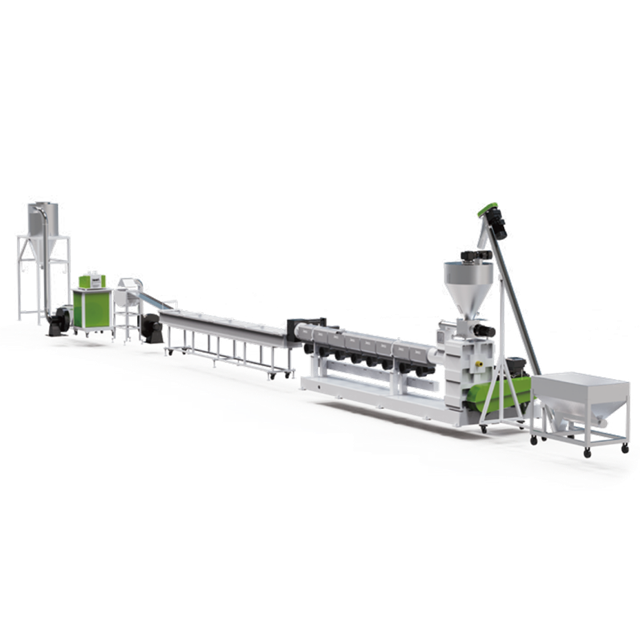
In the context of material recovery, an extruder is rarely used in isolation. Instead, it forms the core of a comprehensive plastic pelletizing machine. This sophisticated system takes washed, shredded plastic waste and subjects it to the extrusion process. The machine melts the irregular flakes, filters out remaining dirt or paper labels, and extrudes the clean plastic into continuous strands. These strands are subsequently quenched in a water bath and chopped into uniform, cylindrical pellets by rapid rotary blades. These resulting pellets become the standardized raw material format required by injection molding and blow molding facilities worldwide.
Without robust extrusion systems, the circular economy for plastics would effectively collapse. Shredded plastic flakes possess wildly inconsistent sizes and bulk densities. This makes them impossible to feed directly into most consumer-goods manufacturing machines. The extrusion and pelletizing process homogenizes the plastic, standardizing its Melt Flow Index and physical properties. Consequently, this allows manufacturers to confidently replace virgin, fossil-fuel-based plastics with recycled pellets without compromising the structural integrity of their final products.
Not all plastic waste is created equal. Flexible packaging like grocery bags behaves very differently inside an extruder compared to hard, rigid items like detergent bottles, thick pipes, or heavy-duty storage crates.
Rigid plastics, predominantly High-Density Polyethylene, Polypropylene, and Acrylonitrile Butadiene Styrene, present aggressive processing challenges. First, rigid flakes are remarkably abrasive. When items like automotive parts are ground down, the resulting sharp flakes cause severe, rapid wear on standard extruder screws and barrels. Second, these dense plastics demand higher processing temperatures and massive mechanical torque to achieve a proper melt.
Furthermore, post-consumer rigid plastics frequently contain trapped moisture from the washing process. When wet flakes hit a barrel heated to 250 degrees Celsius, operators can literally hear the water hissing as it flashes into steam. If not properly vented, this steam and off-gassing ink turn into volatile gases that create hollow, brittle, or foaming pellets.
To overcome these harsh industrial realities, facilities must utilize dedicated machinery built for endurance. Internal components require bimetallic barrels and screws. Engineers typically treat these parts with tungsten carbide alloys to resist the highly abrasive nature of rigid flakes.
Specific configurations matter. These machines feature aggressive degassing zones where specialized barrel vents connect to powerful vacuum pumps. As the plastic melts, the vacuum forcefully extracts moisture and gases before the melt reaches the die head. Specialized high-torque gearboxes are also standard. They ensure the main motor can maintain consistent screw rotation speeds against the immense physical resistance of dense materials, easily sustaining continuous outputs ranging from 300 to 1200 kilograms per hour without stalling or overheating.
When configuring a system for rigid plastic recycling, the most critical architectural decision a facility manager will make is choosing between a single-stage and a double-stage extrusion setup. This structural decision directly dictates the quality of your final pellet and your daily operational costs.
A single-stage extrusion line utilizes one long, continuous extruder barrel to perform feeding, melting, venting, and pumping in a single pass.
Facilities should invest in a Rigid Plastic Pelletizing Line featuring a single-stage design when their source material is relatively clean, dry, and consistent. For example, if a factory recycles its own post-industrial scrap like defective polypropylene crates or clean high-density polyethylene pipe cut-offs, the material inherently lacks heavy dirt or excessive moisture. Under these favorable conditions, a single-stage machine is highly efficient. It consumes noticeably less electricity, occupies a smaller factory footprint, and requires fewer maintenance interventions while easily pushing high throughputs.
In contrast, a double-stage system connects a massive primary extruder directly to a secondary, smaller pumping extruder. This is frequently referred to in the industry as a mother-baby setup. The plastic melts in the first stage, passes through an initial screen changer, drops into the second stage for further processing, passes through a second finer screen, and is finally pelletized.
This heavy-duty configuration is absolutely mandatory for processing heavily contaminated post-consumer waste. If your rigid plastic flakes have high moisture content above 3 percent, heavy surface printing, or residual dirt from inadequate washing, a single stage will fail to process it effectively. Utilizing a Pelletizing system for rigid plastic with a double-stage layout allows for open-air venting as the melt transfers between stages. This provides superior, uncompromised degassing. Moreover, the double filtration process guarantees that even microscopic contaminants are captured, yielding a premium, bubble-free recycled pellet that commands a higher market price.
Selecting industrial extrusion equipment is a major capital expenditure. It requires a hard, objective look at your production goals and your raw material supply chain. Purchasing an under-specced machine results in poor pellet quality and constant breakdowns. Conversely, over-speccing unnecessarily inflates your initial capital costs.
The chemical and physical properties of your input material must dictate the machine design. Determine unequivocally whether you are processing flexible films, rigid flakes, or specialized engineering plastics. If your primary supply consists of crushed bottles, battery casings, or heavy pallets, you must specify a system engineered specifically for high-density, high-torque applications. Ensure the screw geometry is mapped to the specific polymer. A screw profile optimized for polypropylene will not process polyethylene terephthalate efficiently, leading to poor melt homogenization.
Extruder capacity is primarily determined by the screw diameter measured in millimeters like 90mm or 150mm combined with the motor power measured in kilowatts. Calculate your required daily throughput accurately. If your business model requires producing 500 kilograms of pellets per hour to remain profitable, select a machine rated for 600 kilograms per hour to allow for a comfortable operational buffer. Running an extruder at absolute maximum capacity continuously will dramatically accelerate wear on the gearbox and thrust bearings, leading to premature failure.
Analyze the contamination level of your raw flakes meticulously. If your material is washed but still retains moisture or paper labels, prioritize machines with aggressive vacuum degassing systems and large-area screen changers. The critical choice between single and double-stage extrusion should be finalized here. Investing in advanced, continuous hydraulic screen changers prevents the need to halt production just to change filters. This drastically increases daily output and overall operational profitability.
Understanding the mechanics of an extruder is just the beginning of your journey into industrial manufacturing. This remarkable machine powers the modern plastic recycling industry, turning global waste into sustainable, profitable resources.
Selecting the right equipment requires careful thought, deep material analysis, and a clear understanding of your end goals. A dedicated pelletizing system tailored for your specific plastic type maximizes efficiency and guarantees a high-quality end product. Do not guess with your specifications. Evaluate your material needs thoroughly, and explore professional-grade machinery at Jwell to configure a custom solution that fits your exact operational demands and drives your recycling business forward.
In the recycling industry, an extruder serves as the core processing unit of a plastic pelletizing machine. It takes cleaned, ground-up plastic waste such as flakes or regrind, melts it down using intense mechanical friction and external heat, and pushes it through a die. The molten material is then cut into uniform plastic pellets, which are packaged and sold to manufacturers as a sustainable raw material to create brand new plastic products.
It is a highly specialized industrial extrusion system explicitly designed to process hard, dense plastics like polypropylene, polyethylene, and acrylonitrile butadiene styrene. These specific materials, typically sourced from rigid items like bottles, transport crates, and thick agricultural pipes, require higher motor torque, specialized abrasive-resistant screw designs, and robust vacuum degassing capabilities to be effectively turned back into high-quality raw plastic pellets.
An extruder operates continuously, steadily pushing melted plastic through an open die to create continuous, unending shapes like pipes, films, or long strands for pelletizing. In stark contrast, an injection molding machine operates cyclically. It melts a specific amount of plastic and injects it under immense pressure into a closed, discrete metal mold to create a single, solid three-dimensional object, such as a bottle cap, a child toy, or an automotive dashboard component.
A double-stage system is highly recommended, and often required, if your rigid plastic flakes contain high levels of moisture, heavy ink printing, or residual impurities from the collection process. The two-step extrusion process utilizing a primary melting extruder and a secondary pumping extruder provides superior vacuum degassing to remove trapped gases and allows for double filtration. This rigorous process ensures that even highly contaminated waste produces a clean, dense, and bubble-free final pellet suitable for high-end manufacturing.
Air bubbles, often referred to as foaming, occur when trapped moisture or volatile gases from melting inks fail to escape before the plastic reaches the die head. If your input flakes have high moisture content, a standard machine will trap that steam inside the melt. To prevent this, operators must utilize extruders equipped with aggressive vacuum degassing zones along the barrel to extract these gases, ensuring a dense, solid final pellet.
The Length to Diameter ratio dictates how much time the plastic spends inside the heated barrel. For clean, easy-to-melt industrial scrap, a shorter 24:1 ratio might suffice. However, for post-consumer rigid plastics that require extensive mixing and degassing, engineers typically specify a longer 32:1 or 36:1 ratio to guarantee proper melt homogenization without causing thermal degradation to the polymer chains.


