
- All
- Product Name
- Product Keyword
- Product Model
- Product Summary
- Product Description
- Multi Field Search
 English

Views: 0 Author: Site Editor Publish Time: 2025-11-26 Origin: Site


In modern plastic manufacturing, the PVC extruder machine plays a critical role in producing high-quality pipes, sheets, profiles, and films. This versatile equipment melts and shapes raw PVC material into continuous products with precise dimensions, making it essential for industries ranging from construction and automotive to medical and packaging. Understanding how a PVC extruder machine works, its components, and its advantages can help businesses optimize production efficiency and maintain consistent product quality.
A PVC extruder machine is a specialized mechanical device designed to process raw PVC material into finished products. It heats the material to a molten state, then uses pressure to push it through a die that shapes the final product.
Key characteristics include:
Continuous production capability, allowing large-scale output
High precision and uniformity in product dimensions
Flexibility to produce rigid or flexible PVC products
The machine can manufacture a variety of items, from industrial pipes and window frames to medical tubing and protective films. It is ideal for companies that need efficient production without compromising quality.
Extrusion technology has evolved over centuries. Early machines in the 19th century processed rubber, while the first thermoplastic extruders appeared in Germany in 1935. Soon after, twin-screw extruders were developed in Italy, expanding the ability to handle sensitive materials.
Timeline of key developments:
| Year | Event |
|---|---|
| 1820 | Rubber masticator invented to reclaim scraps (Hancock) |
| 1836 | Two-roller mixing machine to blend additives (Chaffee) |
| 1935 | First thermoplastic extruder (Troester, Germany) |
| 1940s | Twin-screw extruders introduced in Italy for composites |
Modern PVC extruders now incorporate automated controls, multi-zone heating, and precision dies to improve efficiency, consistency, and energy use. These advances have enabled the production of complex shapes and multilayer products that were impossible decades ago.
The hopper is the entry point for PVC pellets, granules, or powders. Additives like stabilizers, colorants, and lubricants can be added to modify properties such as flexibility, strength, or surface finish.
The screw rotates inside the heated barrel. It conveys the material while gradually melting it through friction and heat.
Screw zones explained:
Feeding zone – Deep grooves transport raw PVC without fully melting it.
Compression zone – Grooves narrow to plasticize the material under heat and pressure.
Metering zone – Screens remove impurities and control flow into the die.
The barrel temperature is carefully monitored in multiple zones to avoid degradation while ensuring complete melting.
The die gives the PVC its final shape, such as a pipe, sheet, or profile. High-quality dies reduce residual stresses and prevent warping during cooling.
After extrusion, the product must be cooled to maintain its shape. Water baths, vacuum calibration systems, or cooling rolls are used depending on the product type. Correct cooling improves dimensional accuracy and surface quality.
Pullers move the product steadily through the line, preventing stretching, bending, or distortion. Proper speed synchronization is essential for smooth operation.
Once cooled, cutters slice the extrudate into the required length. Stacking units then organize the product for storage or shipment.
Raw PVC enters the hopper, usually in the form of pellets or granules. Operators can add stabilizers, lubricants, colorants, or UV inhibitors at this stage to improve product performance. Proper feeding ensures consistent quality, prevents air pockets, and avoids uneven melting later in the process. It is also important to monitor the feed rate, as too fast or too slow feeding can affect the extrusion speed and surface finish of the final product.
The screw rotates inside the heated barrel, gradually pushing the PVC forward. Friction between the material and the screw generates additional heat, melting the PVC evenly. Multi-zone heaters maintain precise temperatures along the barrel to avoid overheating, which could discolor or weaken the PVC. This controlled melting ensures that the material reaches a uniform viscosity, which is critical for shaping and preventing defects like bubbles or voids.
The molten PVC is forced through a die that determines the shape of the final product, whether a pipe, sheet, or profile. A well-designed die ensures even material flow and prevents warping or uneven thickness. Any irregularities in the die can lead to stress points, surface defects, or dimensional inaccuracies. Tip: Multi-layer dies allow complex products such as pipes with inner and outer layers of different material properties, giving additional functionality like chemical resistance or color layering.
After leaving the die, the extrudate is still hot and flexible. Water baths, vacuum calibrators, or cooling rolls are used to solidify the product and maintain dimensional accuracy. Tubes often require vacuum-assisted baths to preserve their circular shape, while thin films may begin cooling with air before moving to rolls. Cooling speed directly impacts product strength, surface smoothness, and clarity, so operators must carefully adjust water temperature or airflow.
Pullers move the extruded material steadily along the production line, avoiding stretching or bending. The product is then cut into uniform lengths using cutters, which may be planetary, blade, or rotary types depending on the product. Consistent speed synchronization between the haul-off and cutter ensures that the final items meet the required dimensions and reduces waste. Some systems even stack or bundle products automatically for easier handling.
| Step | Process | Key Points |
|---|---|---|
| 1 | Feeding Material | Raw PVC pellets enter hopper; stabilizers, colorants added; ensures uniform feed and prevents air pockets |
| 2 | Melting and Conveying | Screw rotates in heated barrel; friction melts PVC; multi-zone heaters maintain precise temperature |
| 3 | Extruding Through Die | Molten PVC shaped by die; ensures even flow, prevents warping; multi-layer dies allow complex profiles |
| 4 | Calibration and Cooling | Product solidified using water baths, vacuum calibrators, or cooling rolls; cooling affects strength and finish |
| 5 | Haul-Off and Cutting | Pullers maintain steady speed; cutters slice material into uniform lengths; ensures dimensional accuracy |
Used in plumbing, drainage, and irrigation systems. PVC pipes are durable, corrosion-resistant, and lightweight, making them easier to transport and install. They also handle high-pressure water flow and varying temperatures effectively.
Used in construction for windows, doors, panels, and signage. PVC profiles provide excellent insulation against heat and sound, while sheets are strong and weather-resistant, ensuring long-term durability in outdoor applications. They are also easy to cut, shape, and assemble.
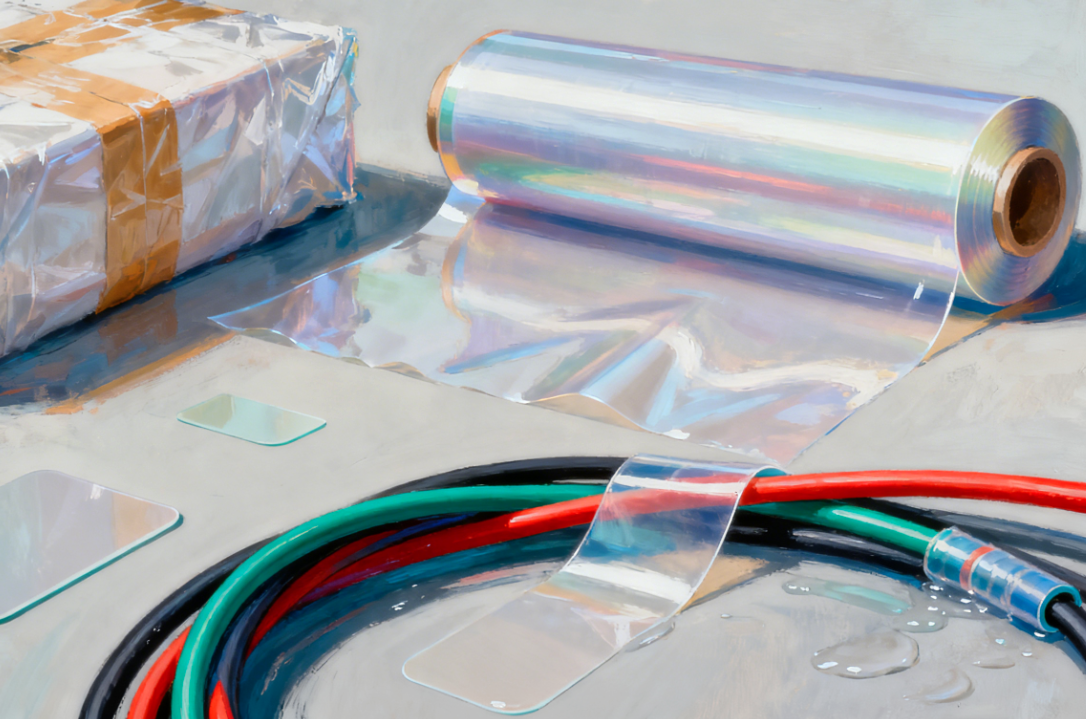
Covers electrical wires, packaging films, and protective sheets. PVC films are moisture- and chemical-resistant, providing protection against environmental damage. UV-stabilized coatings prevent discoloration and degradation, extending the product’s lifespan.
PVC extruders produce IV tubes, blood bags, and disposable gloves. Its flexibility allows sterilization without deformation, and it can maintain clarity for medical visibility. PVC is safe for medical contact and meets strict hygiene standards.
Used for interior trim, underbody coatings, and floor panels. PVC materials resist wear, environmental stress, and temperature changes, ensuring long-lasting performance. They also contribute to lightweight construction, improving fuel efficiency in vehicles.
High Efficiency – Continuous operation reduces labor and energy costs.
Versatility – One machine can make multiple products by changing dies.
Cost-Effectiveness – Low scrap rate and recycling of waste materials.
Precision – Smooth surfaces, uniform dimensions, and consistent quality.
Comparison Table: PVC Extruder vs Injection Machine
| Feature | PVC Extruder | Injection Machine |
|---|---|---|
| Production | Continuous | Batch |
| Cooling | External water or air | Internal mold cooling |
| Product Type | Pipes, sheets, profiles | Single items |
| Material Handling | Pellets or powder | Pellets or powder |
Die Swell – Product expands after leaving die. Adjust die design or extrusion temperature.
Melt Fracture – Wavy or rough surface; slow down screw speed or increase barrel temperature.
Air Bubbles – Ensure proper melting and uniform feeding.
Overheating – Monitor barrel temperatures to prevent discoloration and strength loss.
Maintaining a PVC extruder machine is essential to keep production smooth and ensure high-quality output. Regular attention to cleaning, lubrication, inspections, and monitoring can prevent costly downtime and extend machine life.
Operators should clean the hopper, barrel, and screw every day to remove residual PVC and prevent material buildup. Keeping these parts clean ensures smooth feeding and melting. Moving parts should be lubricated regularly to reduce friction and wear, allowing the machine to operate efficiently.
Weekly checks of screws, barrels, and alignment are crucial. Look for signs of wear, deformation, or damage that could affect product quality. Early detection of issues prevents costly repairs and avoids production interruptions.
Installing temperature sensors helps track barrel and die temperatures continuously, ensuring consistent extrusion and preventing overheating. Additionally, scheduling regular downtime for deep cleaning and preventive maintenance allows operators to service the machine thoroughly without impacting production schedules.
The PVC extrusion industry continues to evolve, driven by technology, sustainability, and efficiency demands. New trends are shaping how manufacturers produce high-quality PVC products while reducing costs and environmental impact.
Modern PVC extruders increasingly use automated systems to monitor temperature, pressure, and extrusion speed in real-time. This reduces human error, ensures consistent product quality, and allows operators to make immediate adjustments when needed.
Sustainability is becoming a key focus. Using recycled PVC lowers raw material costs and reduces environmental impact. Advances in filtration and homogenization allow recycled material to be blended seamlessly with virgin PVC, maintaining product strength and appearance.
New die designs, including multi-layer dies, enable production of complex profiles such as pipes with inner and outer layers of different material properties. Improved cooling systems, such as vacuum-assisted baths and optimized roll designs, enhance product strength, surface finish, and dimensional accuracy.
A PVC extruder machine is used to convert raw PVC material into continuous products such as pipes, sheets, profiles, films, and medical tubing.
The machine heats raw PVC, melts it, and forces it through a die that shapes the final product. Cooling and cutting units then solidify and size the product.
PVC pipes, tubes, profiles, sheets, films, electrical coatings, medical devices, automotive parts, and flooring panels can all be produced.
Maintaining precise temperature ensures uniform melting, prevents degradation, and avoids surface defects or color changes in the final product.
Daily cleaning, weekly inspections, and scheduled downtime for deep maintenance are recommended to keep the machine in optimal condition.
A PVC extruder machine is more than just a piece of equipment—it is the backbone of efficient PVC production, offering high precision, versatility, and cost-effectiveness. From durable pipes and profiles to medical tubing and protective films, it supports a wide array of applications. For businesses looking to invest in reliable and advanced extrusion solutions, Changzhou Dyun Environmental Technology Co., Ltd. provides state-of-the-art recycling machine designed to enhance productivity, reduce waste, and meet the demands of modern manufacturing.


