
- All
- Product Name
- Product Keyword
- Product Model
- Product Summary
- Product Description
- Multi Field Search
 English

Views: 0 Author: Site Editor Publish Time: 2026-10-11 Origin: Site


Can plastic waste drive real profit in today's demanding industrial landscape? Many businesses recognize the environmental and financial incentives of processing their own scrap. Yet, they frequently hit a wall during the planning phase. Finding clear, transparent machinery prices online is notoriously difficult. Custom industrial equipment makes budgeting a complex hurdle. Procurement teams frequently find themselves estimating blindly.
In this comprehensive guide, we dismantle the ambiguity surrounding capital expenditure in the recovery sector. You will discover exactly what dictates the financial investment required for these setups. We will explore equipment variations, unavoidable hidden fees, and the realistic timeline for your return on investment.
When procurement teams demand hard numbers, the most honest answer is that pricing depends entirely on the scale, material condition, and scope of your operation. To provide immediate clarity, historical pricing data and current market averages indicate that industrial recovery equipment generally falls into three primary investment tiers.
| Equipment Scale | Estimated Price Range USD | Typical Application |
|---|---|---|
| Small-Scale / Entry-Level | $5,000 – $20,000 | Standalone crushers or small shredders for basic size reduction. |
| Mid-Range Industrial | $30,000 – $100,000 | Individual washing components or standard standalone extruders. |
| Large-Scale / Fully Automated | $150,000 – $500,000+ | Complete, end-to-end washing and pelletizing lines with smart controls. |
It is vital to recognize that a recycling machine is rarely a solitary device on the factory floor. Transforming heavily contaminated post-consumer waste into pristine, reusable raw materials requires a synchronized symphony of machinery. Each component performs a dedicated function—tearing, scrubbing, melting, and cutting—to achieve the final product.
To construct an accurate facility budget, buyers must evaluate the distinct machinery mandated by their target polymer. Below is a granular breakdown of the primary equipment categories, their operational mechanics, and current market valuations based on real-world engineering standards.
Function: The foundational step in mechanical recovery is size reduction. Imagine the deafening crunch as a high-torque, low-speed rotor bites into bulky, unyielding waste. This includes thick PVC pipes, massive purging lumps, IBC tanks, or wooden pallets. These heavy-duty machines tear the material into manageable 40mm to 100mm fractions before secondary processing.
Estimated Price: Capital requirements span from $5,000 to $40,000 or more. This fluctuation is driven by motor power, rotor architecture, and the choice between single-shaft or double-shaft configurations. For facilities handling dense, rigid materials, investing in a robust Plastic recycling shredder is non-negotiable. Top-tier models utilize premium SKD11 or D2 wear-resistant steel blades and feature hydraulic pushers to maintain continuous feeding, preventing catastrophic mid-shift breakdowns.
Function: Post-consumer plastics are notoriously filthy. They arrive caked in agricultural dirt, motor oil, paper labels, and sticky organic residue. A decontamination system is a complex, multi-stage aquatic circuit. It typically involves a wet granulator, a high-speed friction washer that violently scrubs away stubborn grime, a sink-float separation tank to isolate polymers by density, and a roaring centrifugal dryer to strip away moisture.
Estimated Price: A fully realized system generally commands between $30,000 and $150,000. Output capacity ranging from 500 kilograms to 2,000 kilograms per hour heavily dictates this price. Furthermore, because these mechanisms operate in a perpetual state of friction and moisture, a high-quality Recycling Washing Line must be fabricated from heavy-gauge SUS304 stainless steel. This material choice is critical to fight off aggressive corrosion and extend the plant's operational lifespan.
Function: Once the flakes are meticulously cleaned and dried, they enter the extrusion phase. Here, the material is fed into a heavily insulated, heated barrel. A rotating geometric screw churns and melts the plastic into a viscous liquid. This molten polymer is forcefully pushed through a microscopic screen changer to filter out residual impurities, before being sliced into uniform pellets by a die-face water ring cutter.
Estimated Price: Standalone extrusion units range from $20,000 to over $100,000. The engineering of the screw, specifically the length-to-diameter ratio often reaching 36:1 for optimal mixing, directly impacts the cost. The sophistication of the vacuum degassing zones and the precision of the heating elements are also major factors. Procuring a reliable plastic pelletizing machine is critical. Any instability in the melt temperature will produce brittle, discolored pellets that plummet in market value.
Function: For industrial operations processing high volumes of Polypropylene and Polyethylene, an integrated, end-to-end system offers unparalleled efficiency. This applies to materials like shampoo bottles, rigid containers, or stretch films. These automated arteries seamlessly connect material feeding, melting, dual-filtration, aggressive degassing, cutting, and vibration drying into one continuous workflow.
Estimated Price: A fully integrated, commercial-grade system demands an investment of $80,000 to $300,000. A heavy-duty PP PE Pelletizing Line designed for continuous 24-hour operation frequently incorporates advanced Siemens PLC touch-screen controls and automated hydraulic screen changers. While the upfront invoice is steep, the dramatic reduction in manual labor and human error rapidly offsets the initial premium.
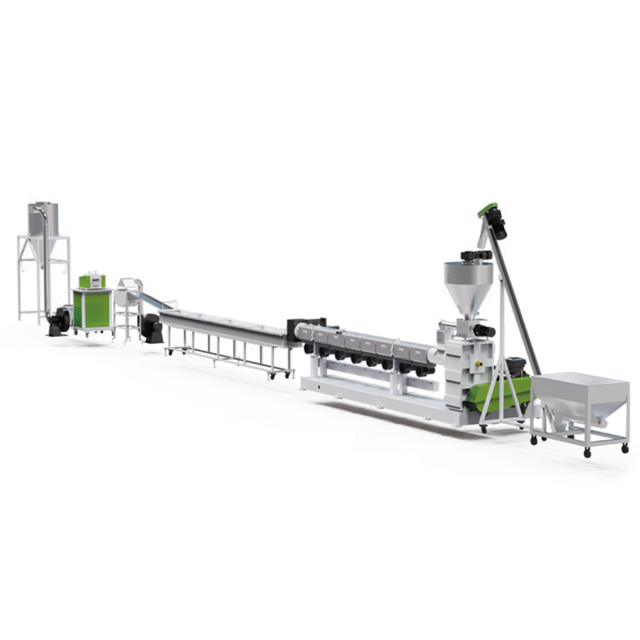
When evaluating supplier quotations, procurement teams often stare at vast, confusing price discrepancies for seemingly identical machines. Understanding the engineering variables behind these numbers is essential for making a defensible purchasing decision on the factory floor.
The most absolute driver of machinery cost is throughput. A compact extruder engineered to handle 200 kilograms per hour relies on smaller motors, shorter screws, and lighter structural frames. Conversely, scaling up to a 1,000 kilogram per hour plant requires massive, reinforced gearboxes. It demands heavy-duty frequency inverters and thick steel superstructures. This exponential increase in raw material and component durability naturally inflates the price tag.
Entry-level models often utilize basic manual relay controls. These demand constant, vigilant human supervision to prevent overheating or jamming. In contrast, modern industrial lines deploy Programmable Logic Controllers from elite brands like Siemens or Mitsubishi. These intelligent brains autonomously monitor thermal zones. They adjust screw revolutions per minute on the fly and trigger alarms before pressure spikes cause damage. While smart controls increase capital expenditure, they are invaluable for preventing catastrophic machine failures.
The chemical and physical realities of your input material dictate the required engineering. Processing clean, post-industrial factory scrap is straightforward. It requires only a basic single-screw setup. However, processing heavily inked post-consumer packaging requires specialized vacuum degassing chambers. These aggressively extract volatile organic compounds and trapped moisture. The dirtier the input, the more advanced the filtration required, which drives up manufacturing costs.
The lifespan of your facility rests on the shoulders of its internal components. A supplier cutting corners with generic local motors and unbranded bearings will present a temptingly low quote. Premium manufacturers, however, utilize globally vetted components. Think ABB main motors, SKF bearings, and Schneider electrical contactors. This guarantees that when a part eventually wears out in year five, you can source a replacement locally rather than waiting weeks for overseas shipping.
Extrusion lines are fundamentally categorized by their staging. Single-stage systems utilize one long extruder and excel with clean, rigid polymers. Double-stage configurations, also known as mother-baby setups, employ a massive primary extruder for melting and initial degassing. This feeds directly into a smaller secondary extruder for ultra-fine filtration and stabilization. If you are processing high-moisture agricultural films, a double-stage system is mandatory. This inherently increases the total system cost.
The financial landscape of plastic recovery is undergoing a massive transformation. Driven by aggressive global legislation and corporate sustainability mandates, the demand for high-quality Post-Consumer Resin is currently outpacing supply. Major consumer brands are now legally obligated in many regions to include 25 to 30 percent recycled content in their packaging.
Consequently, the market value for premium, odor-free, uniformly colored recycled pellets has surged. It often rivals or exceeds the cost of virgin plastics. This macro-economic shift directly impacts machinery pricing. Manufacturers are increasingly integrating advanced laser-filtration systems, deep-vacuum deodorization units, and AI-driven optical sorters into their standard lines. While these technological leaps have raised the baseline cost of entry-level machinery, the profitability of the end product has never been higher. Today, investing in top-tier decontamination and extrusion technology yields a significantly faster and more lucrative return on investment than it did just half a decade ago.
Focusing obsessively on the supplier's Free on Board quotation is a dangerous trap. It frequently leads to severe budget overruns. Astute buyers must project the Total Cost of Ownership over a comprehensive five to ten-year lifecycle.
When calculating capital requirements, procurement managers inevitably debate whether to invest in brand-new equipment or scour the secondary market for used machinery. This crossroad significantly impacts both initial capital expenditure and ongoing operational expenditure.
Purchasing second-hand machinery is frequently viewed as a shortcut to bypass manufacturing lead times and tight budgets. The immediate allure is the depressed upfront cost, often 30 to 50 percent below showroom prices. Furthermore, used assets are usually available for rapid deployment, circumventing the standard fabrication windows associated with custom builds.
However, the hidden liabilities can quickly erode any initial savings. Used machines are sold as-is, devoid of warranties or transparent maintenance histories. Buyers inherit the metallurgical fatigue of the previous owner. This is particularly dangerous in highly stressed components like the gearbox and the extruder barrel. Moreover, legacy machines utilize outdated electrical architectures, resulting in abysmal energy efficiency per kilogram processed.
Committing to new infrastructure is the definitive recommendation for enterprises targeting high-capacity, commercial-grade pellet production. A new line is custom-engineered to conquer your specific material stream. Whether you are tackling damp agricultural films or dense automotive plastics, the screw geometry and degassing zones are tailored for maximum yield. Modern systems feature cutting-edge inverter technology, slashing electricity usage. They are backed by comprehensive factory warranties and dedicated remote troubleshooting support.
Selecting a machinery manufacturer is akin to entering a long-term business marriage. A poor partnership will result in continuous mechanical failures and stranded capital. The global market is flooded with providers. Utilize this framework to vet potential partners.
The first step in protecting your budget is ensuring you are negotiating directly with the factory. Trading companies routinely slap a hefty markup on the baseline price. Verify the supplier's legitimacy by requesting a live video walkthrough of their manufacturing floor. Look for active CNC machining centers and robust in-house engineering departments. This guarantees transparent pricing and direct technical accountability.
A suspiciously low quote is almost always achieved by sacrificing safety standards and component integrity. Demand proof of recognized international certifications, such as CE conformity or ISO 9001. Furthermore, audit the Bill of Materials. Ensure they are utilizing internationally serviceable brands for motors, contactors, and relays to prevent future supply chain nightmares.
Never sign a purchase order based solely on a glossy brochure. Polymers behave erratically under thermal stress depending on their melt flow index and moisture content. A confident supplier will insist that you ship a sample of your specific waste to their testing facility. They will process your material on camera and return the finished pellets, proving empirically that their engineering can handle your exact use case.
Determining the exact financial outlay for industrial recycling infrastructure requires a meticulous audit of your operational ambitions. While the cost can range from a few thousand dollars for a rudimentary crusher to a multi-million dollar investment for a fully automated, closed-loop plant, the final figure is dictated by your required throughput, the hostility of your input material, and your appetite for automation.
Fixating strictly on the lowest initial sticker price is a proven recipe for inflated long-term costs. It leads to excessive energy consumption and crippling mechanical downtime. Investing strategically in robust, high-caliber machinery guarantees superior pellet quality, relentless operational stability, and a significantly accelerated return on investment.
If you are ready to transition from planning to profitable production, selecting the right engineering partner is your most critical step. Explore the advanced, custom-engineered solutions at Jwell Machinery to find the exact shredding, washing, and pelletizing technology required to dominate your specific material stream and maximize your operational margins.
The absolute lowest entry point into the sector involves small, standalone crushers or granulators, which typically start around $3,000 to $5,000. However, it is critical to understand that these units only shatter the plastic into coarse flakes. They do not wash away contaminants, nor do they melt and extrude the material into the uniform, ready-to-sell pellets that manufacturers demand. They are merely the preliminary step in a much larger process.
The daily operational expenditure is heavily dictated by your local industrial electricity tariffs, operator wages, and routine preventative maintenance. Because melting dense polymers requires sustained, intense thermal energy and heavy motor torque, electricity constitutes the vast majority of the cost per kilogram processed. Investing in modern machines equipped with insulated barrels and smart frequency inverters is the most effective way to suppress these ongoing running costs.
No, a universal omni-machine does not exist. Different polymers possess radically different melting points, molecular structures, and typical contamination profiles. For instance, processing PET requires specialized crystallization and high-vacuum degassing to prevent viscosity degradation. Meanwhile, dirty PE films demand aggressive friction washing and double-stage extrusion. Equipment must be explicitly engineered for your target polymer.
Space requirements vary drastically based on the system's scale. A standalone small extruder might only require 20 to 30 square meters. However, a complete, commercial-grade washing and pelletizing line capable of processing 1,000 kilograms per hour typically requires a facility footprint of 500 to 1,000 square meters. This accounts for the machinery layout, raw material storage bales, finished pellet silos, and safe forklift maneuvering zones.
Currently, high-density polyethylene and polyethylene terephthalate are extremely profitable due to massive demand from the packaging industry driven by recycled content mandates. Clean, clear PET flakes and odor-free HDPE pellets command premium market prices. However, profitability ultimately depends on your ability to source the raw scrap waste locally at a low cost and process it efficiently.
When engineered by a reputable manufacturer utilizing high-grade hardened steel and premium global components, an industrial line can easily operate for 10 to 15 years, or significantly longer. However, this longevity is entirely contingent upon strict adherence to preventative maintenance protocols. Routine tasks like regular gearbox oil changes, timely replacement of worn extruder screws before they scar the barrel, and keeping cutting blades razor-sharp are absolute prerequisites for maximizing the equipment's lifecycle.


