
- All
- Product Name
- Product Keyword
- Product Model
- Product Summary
- Product Description
- Multi Field Search
 English


Views: 0 Author: Site Editor Publish Time: 2026-10-28 Origin: Site


Every year, the industrial and consumer sectors generate over 400 million tons of plastic waste globally. Facility managers and business owners face a mounting challenge. They must solve this environmental crisis effectively while maintaining strict operational profitability. The answer lies in mastering modern polymer recovery technology and understanding how an integrated production line transforms liability into revenue.
In this comprehensive guide, you will discover the critical equipment, processing methodologies, and pricing structures defining today's secondary raw material market. We will explore the engineering realities behind these systems, moving beyond basic concepts into actionable procurement strategies.
Recent legislative shifts are fundamentally reshaping the global waste management landscape. With the implementation of strict Extended Producer Responsibility mandates and tightening international bans on waste exports, manufacturers can no longer rely on offshore disposal. This regulatory pressure forces domestic facilities to process their own industrial scrap and post-consumer packaging.
Market analysts note a massive surge in demand for localized, high-yield recovery infrastructure. Companies are moving away from basic downcycling. Instead, they are investing in advanced melt filtration and automated decontamination technologies to produce food-grade or near-virgin quality pellets. This shift turns compliance costs into a lucrative revenue stream, as major consumer brands aggressively procure high-quality regrind to meet their corporate sustainability targets.
When plant engineers search for recovery solutions, they are rarely looking for a standalone machine. In the heavy manufacturing sector, this terminology describes an entire highly engineered production line. These specialized machines work in synchronized unison to reclaim degraded polymer materials.
Plant managers deploy these industrial systems to transform post-consumer waste like discarded PET bottles and PE packaging films into clean, uniform pellets. These secondary raw materials hold significant market value. Manufacturers purchase this regrind to injection-mold or extrude brand-new products, effectively closing the supply chain loop.
Achieving this level of purity requires heavy-duty machinery capable of withstanding severe physical abrasion, chemical contamination, and extreme thermal variance. Industrial waste recovery systems feature precision engineering. Builders utilize wear-resistant bimetallic steel alloys, continuous dual-piston melt filtration, and intelligent PLC control panels. This robust construction ensures the final output meets strict industry standards for Melt Flow Index and structural integrity.
Transforming heavily contaminated waste into premium raw material is a complex, multi-stage engineering feat. Operational success depends entirely on how these systems operate sequentially. Below is a detailed breakdown of the mechanical workflow.
Mixed plastics must be separated by resin type including PET, HDPE, LDPE, and PVC before any physical processing begins. Melting incompatible polymers together causes catastrophic pressure spikes and die-head failures. Modern facilities utilize trommel screens for size separation and advanced Near-Infrared optical sorters to identify and eject different resins at lightning speeds.
Bulky items require immediate size reduction once sorted. Heavy-duty size reduction equipment handles this brutal initial phase. An industrial Plastic recycling shredder utilizes a high-torque, low-speed rotor equipped with hardened D2 steel cutting knives. A hydraulic ram pushes large plastic lumps, thick-walled pipes, or compacted bales against the spinning rotor, tearing them into coarse fragments. High-speed granulators then cut these fragments into uniform 10mm to 15mm flakes.
Post-consumer plastics arrive heavily soiled with dirt, organic residue, paper labels, and chemical adhesives. The washing phase dictates the final pellet quality. Flakes pass through high-speed friction washers running at over 1000 RPM, using intense mechanical agitation to scrub the material. Sink-float separation tanks then classify the plastics based on density. Plant engineers strictly employ hot washing systems with caustic chemical detergents at elevated temperatures to dissolve stubborn glues.
The final step is the physical transformation of clean, dry flakes into uniform pellets. Flakes drop into an extruder barrel containing a specialized rotating screw. Heat bands and mechanical sheer force melt the polymer. Vacuum degassing zones extract trapped moisture and volatile gases, preventing structural voids in the final product. The molten melt passes through a microscopic screen changer to filter out unmelted impurities. A die face cutter then slices the melt into small pellets, which are immediately cooled and packaged.
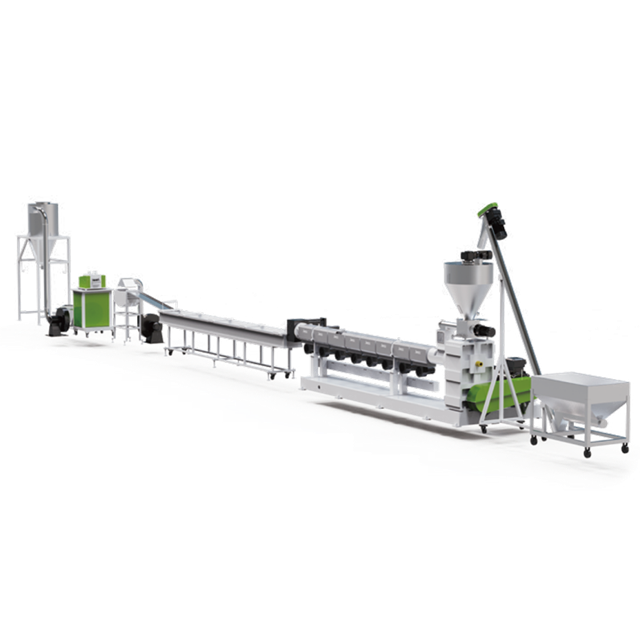
Building a functional plant requires integrating specific machinery tailored to your exact waste stream. Each component plays a non-negotiable role in overall uptime and yield. Understanding equipment specifications is vital for procurement managers.
A shredder acts as the first line of defense against oversized, highly resistant materials. Single-shaft models excel at processing rigid purgings and thick blocks. They rely on intelligent PLC load-sensing technology to auto-reverse the rotor if jamming occurs, protecting the gearbox. Double-shaft shredders use interlocking blades to shear material, making them the perfect choice for processing large, hollow containers and automotive bumpers.
Contaminants entering the extruder will instantly degrade the polymer's mechanical properties and cause severe screen blockages. A complete Recycling Washing Line typically integrates pre-washers, sink-float tanks, thermal units, and centrifugal dryers. Processing agricultural films requires intense friction washing to remove embedded silica and sand. Conversely, PET bottle recovery demands rigorous label scraping and hot glue removal modules.
The extrusion phase is the beating heart of the recovery process. Advanced systems feature a highly engineered screw with specific Length to Diameter ratios often 32:1 or 36:1 for optimal melt homogenization. Premium machines integrate double-venting degassing zones and continuous hydraulic screen changers. This allows operators to filter out impurities without halting production, drastically improving Overall Equipment Effectiveness.
Polypropylene and Polyethylene account for a massive portion of global waste, primarily as flexible packaging films and shopping bags. These lightweight materials have low bulk densities and specific thermal sensitivities. They require a dedicated PP PE Pelletizing Line. To handle soft films efficiently, these lines feature a cutter-compactor integrated directly into the extruder feed throat. This densifies the fluffy material through mechanical friction before pushing it into the screw, ensuring a stable, surge-free melt flow.
The global shift towards sustainable manufacturing has transformed waste management into a highly lucrative industrial sector. Driven by volatile petrochemical market prices, manufacturers are looking for ways to stabilize their raw material costs.
Companies integrating proper machinery can process their own industrial scrap, significantly reducing their carbon footprint and minimizing landfill taxes. This directly supports stringent corporate Environmental, Social, and Governance targets.
The financial logic is undeniable. Converting cheap, readily available waste into premium pellets slashes raw material procurement costs. Independent recycling businesses also benefit by selling high-quality regrind back to the packaging sector, creating a robust, high-margin revenue stream.
Pricing for heavy industrial equipment varies drastically based on technical specifications. While static figures are impossible to provide, understanding the primary cost drivers helps investors budget accurately.
Buyers must align machinery scale with their actual facility capabilities. The market divides into two distinct operational categories.
Commercial systems form the backbone of dedicated processing plants. They require facilities spanning thousands of square meters, utilize massive motors drawing hundreds of kilowatts, and run continuously 24 hours a day. These lines tackle mixed, highly contaminated waste streams and feature complex wastewater treatment integration.
A growing trend favors compact units engineered for in-house factory recovery. A pipe manufacturer can place a small shredder and pelletizer directly next to their main production line. Operators immediately shred defective pipes, melt the scrap, and feed it back into the primary extruder. This lean approach eliminates off-site logistics and storage costs.
Procuring industrial machinery is a major capital decision requiring a data-driven approach. Selecting the appropriate equipment goes far beyond comparing initial purchase prices. Plant managers must analyze material science, facility infrastructure, and long-term operating expenses.
Assuming a standardized system can process all polymers is a costly engineering error. Different plastics possess distinct thermal properties and bulk densities. Your equipment must match the target resin. Processing rigid HDPE bottles requires drastically different screw geometries compared to flexible LDPE films. Flexible films demand an integrated agglomerator to feed the lightweight material effectively without bridging in the hopper.
Buyers must differentiate between theoretical input capacity and actual output yield. Manufacturers rate machines based on optimal conditions. A heavy shredder might process 1000 kilograms per hour of clean material. If that same material is highly contaminated with dirt and moisture, the final yield of clean pellets might drop to 750 kilograms per hour. Always size your downstream silos and cooling systems based on expected actual yield.
Final pellet quality is directly proportional to input flake cleanliness. Processing heavily soiled agricultural films laden with abrasive silica will rapidly destroy the plastic pelletizing machine screw if not washed properly. Factory rejects are clean and require minimal washing. Municipal waste streams mandate a comprehensive friction washing and centrifugal drying system to reduce moisture content below one percent before extrusion.
Heavy machinery draws immense amperage. A complete processing line can easily exceed 500 kilowatts of continuous power draw. Conduct a thorough site audit before purchasing. Evaluate your transformer capacity. Washing lines also consume vast amounts of water. You must verify local water supply limits and install adequate effluent treatment systems to remain compliant with environmental discharge regulations.
Focusing solely on initial capital expenditure is a flawed strategy. Calculate projected electricity costs, water consumption, and required operator hours. Polymer recovery is an abrasive process. Cutting blades, friction washer screens, and extruder screws inevitably wear down. Factor these consumable replacement costs and routine maintenance downtime into your long-term financial models.
Use the following matrix to evaluate core technical requirements before finalizing any equipment purchase.
| Evaluation Category | Key Metrics to Assess | Engineering & Operational Impact |
|---|---|---|
| Material Specifications | Resin type, Bulk density, Melt Flow Index, Moisture content. | Determines extruder screw design, L/D ratio, and required vacuum degassing technology. |
| Throughput Capacity | Target output in kilograms per hour, Expected yield loss, Daily operating hours. | Dictates the sizing of drive motors, shredding chambers, and downstream cooling silos. |
| Contamination Profile | Presence of dirt, oils, chemical adhesives, non-ferrous metals, or mixed resins. | Defines the complexity of the washing line and the necessity of magnetic or optical sorting. |
| Utility Infrastructure | Total kilowatt requirement, Water consumption per hour, Effluent discharge limits. | Impacts facility selection, electrical transformer upgrades, and wastewater compliance costs. |
| Maintenance & Support | Availability of spare parts, Manufacturer warranty, On-site technician support. | Directly influences machine uptime, Overall Equipment Effectiveness, and Total Cost of Ownership. |
Selecting the correct industrial recovery equipment requires careful planning, precise material analysis, and clear production goals. A well-engineered system transforms waste liabilities into steady profit margins, ensuring that shredders, high-speed washers, and degassing extruders work together seamlessly.
This mechanical synergy creates premium reusable raw materials. It allows your facility to achieve both environmental sustainability and aggressive financial growth. For facility managers ready to upgrade their recovery infrastructure, exploring tailored solutions is the next logical step. Evaluate your specific material types and capacity needs, and choose proven equipment from industry leaders like Jwell Recycling to design your ideal processing layout.
No. Different polymers possess unique thermal properties, melting points, and flow characteristics. Processing polyethylene films requires distinct screw geometries and feeding mechanisms compared to rigid PET bottles. Attempting to process incompatible plastics in a single, unmodified barrel results in severe polymer degradation, poor pellet quality, and potential damage to the extrusion gearboxes.
A shredder is a low-speed, high-torque machine designed for primary size reduction. It breaks down large, bulky, or highly resistant materials like thick pipes into coarse fragments. A granulator operates at high speeds with lower torque. Engineers use granulators for secondary size reduction, taking coarse fragments from the shredder and shearing them into small, uniform flakes suitable for friction washing and melting.
Spatial footprint depends entirely on target capacity and process complexity. A compact, standalone pelletizer for clean in-house factory scrap requires roughly 30 square meters. A comprehensive industrial-scale system incorporating automated sorting, heavy-duty shredding, multi-stage hot washing, centrifugal drying, and dual-stage extrusion easily demands a facility spanning 800 to over 1500 square meters.
Operating a recovery facility is highly profitable when managed with strict operational discipline. Profitability hinges on securing a consistent, low-cost supply of waste and maintaining high machinery uptime. Utilizing reliable, high-efficiency equipment to produce premium-grade recycled pellets allows businesses to capitalize on the massive global demand for sustainable packaging materials.
Power consumption is substantial and scales with throughput. A standard 500 kilogram per hour washing and pelletizing line typically draws between 300 to 450 kilowatts continuously. Upgrading to a 1000 kilogram per hour line can push power requirements well over 800 kilowatts. Plant engineers must ensure the local grid and facility transformers can handle these massive industrial loads without voltage drops.
Moisture control is critical for pellet quality. Engineers mandate that plastic flakes enter the extruder hopper with a moisture content strictly below 1 to 2 percent. Excessive moisture causes the water to vaporize rapidly inside the heated barrel, leading to foaming, structural voids in the pellets, and severe pressure instability at the die head. High-speed centrifugal dryers and thermal pipe drying systems are essential to hit these moisture targets.


