
- All
- Product Name
- Product Keyword
- Product Model
- Product Summary
- Product Description
- Multi Field Search
 English

Views: 0 Author: Site Editor Publish Time: 2026-10-04 Origin: Site


As global plastic demand continues its rapid surge, recycling has evolved from an environmental afterthought into a multi-billion-dollar industrial necessity. Yet, despite this booming market, countless facilities still struggle to process waste efficiently and profitably. The current industry landscape shows a massive shift driven by stringent global mandates for post-consumer recycled content. Facilities must process waste with higher precision than ever before. The core solution to this operational bottleneck lies in advanced extrusion technology. By mastering the machinery at the heart of the process, plant managers can transform inconsistent feedstock into high-value commodities. In this comprehensive guide, we will explore the fundamental mechanics of extrusion and evaluate the systems designed to optimize your factory production capabilities.
To truly understand modern plastic manufacturing, one must first answer a fundamental question regarding the equipment itself. A plastic extruder serves as a high-volume manufacturing machine. Its primary function is to melt raw solid plastic and form it into a continuous, unbroken profile. It achieves this transformation by feeding raw material into a heavily heated cylindrical barrel. Inside this barrel, a rotating screw generates intense mechanical friction and shear heat to achieve a uniform, homogenous molten state.
From an engineering standpoint, the primary purpose of this heavy-duty machinery is to plasticize and homogenize polymers. In everyday industrial applications, extruders act as the silent workhorses responsible for manufacturing a staggering array of products. They produce the PVC pipes used in modern plumbing, the durable window frames utilized in construction, and the thin flexible films essential for food packaging. Most crucially for the circular economy, they produce the recycled plastic pellets that serve as the fundamental building blocks for future manufacturing cycles.
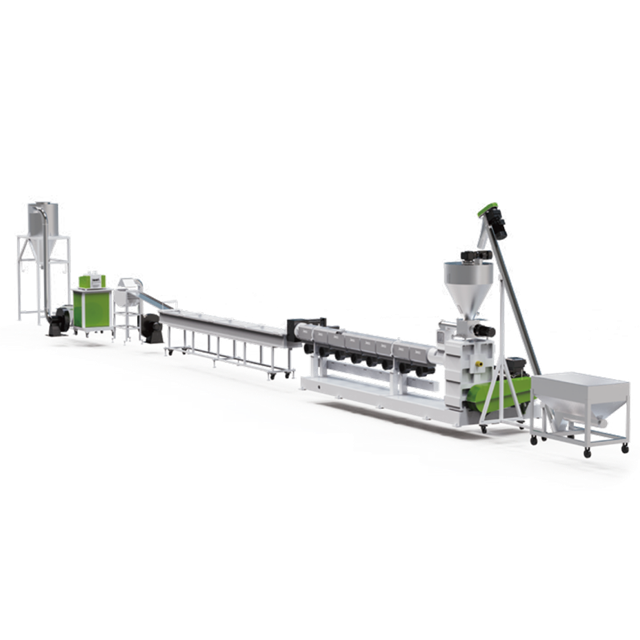
The extrusion process is a delicate balancing act of thermodynamics and fluid mechanics. Understanding this step-by-step operation helps operators and plant managers optimize their production lines. It also minimizes downtime and prevents material degradation.
Picture the bustling floor of a recycling plant. The transformation kicks off at the hopper. Raw materials are gravity-fed into the feed throat of the extruder. These materials might be virgin resin powders, uniform granules, or a chaotic mix of crushed recycled flakes. In highly automated systems, gravimetric or volumetric feeders are deployed to ensure a precise, consistent flow of material. This precision prevents sudden surging or starving of the screw, which could otherwise destabilize the entire melt pressure.
Once the rigid flakes enter the barrel, they immediately encounter the rotating extruder screw. While the barrel is equipped with external electric heater bands that provide the initial melting energy, the vast majority of the heat is actually generated internally. As the screw turns, mechanical shear and friction forcefully compress the plastic. The specific geometry of the screw is divided into distinct feed, transition, and metering zones. This design kneads the degrading flakes into a consistent, homogenous melt devoid of solid particles.
Filtration serves as a critical checkpoint, especially within recycling operations where contamination is inevitable. Before the pressurized molten plastic is allowed to reach the die, it is forced through a screen changer. This robust component utilizes fine, multi-layered metal meshes to trap and filter out stubborn impurities. Common contaminants include scorched paper labels, microscopic metal fragments, or unmelted foreign polymers. Proper filtration ensures the final product maintains maximum structural integrity.
Finally, the purified molten plastic is pushed through a specifically machined die head. Depending entirely on the factory production goal, the die shapes the flowing plastic into continuous spaghetti-like strands for pelletizing, wide flat sheets for thermoforming, or hollow pipes for construction.
The global push toward a sustainable, circular economy relies heavily on the continuous advancement of extrusion technology. Recent market data indicates a rapid transition toward smart extrusion systems. Processors face increasingly complex waste streams with higher contamination levels. Consequently, modern facilities require equipment integrated with real-time melt pressure monitoring and dynamic degassing capabilities to handle these challenging inputs.
When post-consumer waste is collected, sorted, and vigorously washed, it remains in the form of irregular, bulky flakes. Because these flakes lack uniformity, they cannot be directly fed into delicate injection molding machines. They must first be processed through an extruder to be melted, aggressively filtered, and homogenized. At the center of this transformative process is the plastic pelletizing machine, a complete ecosystem designed to purify the polymer melt, standardize its melt flow index, and prepare it for lucrative resale.
In the expansive realm of plastic recycling, materials are generally divided into flexible plastics and rigid plastics. Rigid plastics encompass high-density polyethylene, low-density polyethylene, and polypropylene. These materials are typically sourced from post-consumer detergent bottles, industrial chemical drums, heavy-duty pipes, battery casings, and discarded household furniture.
Processing rigid plastics introduces unique thermodynamic and mechanical hurdles. Unlike thin flexible films, rigid plastic flakes are thick and dense. Following the washing phase, they frequently retain stubborn surface moisture and contain severe contaminants like heavy printing inks, adhesives, and organic residue. Processing these demanding materials requires an extrusion setup capable of applying aggressive shear force. It must simultaneously vent trapped steam and volatile gases to prevent microscopic porosity in the final pellets.
To directly address these specific challenges, recycling facilities deploy a specialized Rigid Plastic Pelletizing Line. These robust lines are engineered with optimized screw geometries. They typically feature length to diameter ratios ranging from thirty to one up to thirty-six to one. This extended ratio ensures the thorough plasticization and homogenization of hard, unyielding flakes. Furthermore, these units often incorporate specialized wear-resistant bimetallic screws to combat abrasive contaminants. Depending on the factory footprint, output capacities can scale seamlessly from two hundred kilograms per hour up to massive one thousand kilograms per hour systems.
When configuring a line for rigid plastics, buyers face a critical architectural choice based on the condition of their feedstock. Understanding the operational differences between single and double-stage systems is vital for maximizing production efficiency.
| Technical Feature | Single-Stage Extrusion System | Double-Stage Extrusion System |
|---|---|---|
| Feedstock Condition | Clean, thoroughly washed, low contamination. | Heavily printed, high moisture, severe contamination. |
| Moisture Handling | Standard single vacuum degassing zone. | Superior dual vacuum degassing zones. |
| Filtration Capacity | Single screen changer checkpoint. | Double filtration via mother and baby extruders. |
| Power Consumption | Highly energy efficient, lower operating costs. | Higher energy draw due to dual motor setup. |
| Best Application | Post-industrial defect scrap, clean regrind. | Post-consumer municipal solid waste. |
Specifically, a single-stage system utilizes one long, highly efficient extruder. This setup consumes significantly less power and is recommended for clean, thoroughly washed rigid flakes. In contrast, heavily printed or moisture-laden materials demand a double-stage approach. The molten material passes through a primary mother extruder for initial melting and vacuum degassing. It is then seamlessly fed into a secondary baby extruder for further homogenization and a second round of fine filtration.
Investing in industrial extrusion machinery requires a careful, highly technical evaluation of both factory parameters and material inputs. The capital expenditure is significant. Selecting the wrong configuration can lead to operational bottlenecks, excessive energy overheads, and unsellable output. Decision-makers should rigorously assess the following criteria.
The absolute most critical factor in machine selection is the exact nature of your input material. If your facility processes clean, dry scrap directly from an injection molding plant, a single-stage system will maximize your return on investment. Conversely, if you are processing post-consumer municipal solid waste heavily contaminated with dirt and moisture, a pelletizing system for rigid plastic utilizing a double-stage architecture is non-negotiable. The dual filtration process guarantees that the final pellets will not be rejected by downstream buyers due to structural weaknesses or trapped gas bubbles.
Buyers must carefully match the machine capacity with their facility sorting and washing throughput limits. Running an oversized machine with too little material wastes immense amounts of electrical energy. Undersizing the extruder creates frustrating production bottlenecks on the factory floor.
Moisture is the undisputed enemy of high-quality plastic extrusion. When rigid flakes enter the barrel with residual water, the intense heat instantly converts it to steam. Without robust vacuum degassing zones, this steam creates microscopic bubbles inside the pellets, severely compromising their mechanical strength. Continuous dual-piston hydraulic screen changers are highly recommended for contaminated waste. They allow operators to swap out clogged filter meshes without halting the entire production line.
To maximize the operational lifespan of an extrusion line and ensure uncompromising pellet quality, plant managers must enforce strict, proactive maintenance protocols. Neglecting routine care inevitably leads to degraded material properties, sudden spikes in energy consumption, and catastrophic mechanical failures.
Routine maintenance should be treated as a daily ritual. Operators must regularly clean the hopper to prevent material bridging and cross-contamination between different colored polymer batches. Furthermore, because abrasive materials accelerate metal wear, maintenance teams must periodically measure the clearance between the screw flight and the barrel wall. Excessive clearance drastically reduces shear friction. This leads to un-melted particles and a sharp drop in overall output capacity.
Monitoring melt pressure gauges is equally critical. A sudden, sharp spike in pressure is a clear indicator that the screen changer mesh is clogged and requires immediate replacement. Additionally, engineers must routinely inspect thrust bearings and gearbox lubrication levels. If the main motor overloads, it often means material is being fed too quickly or the heating zones have not reached their target temperatures, making the polymer too viscous to push.
Understanding the intricate mechanics of a plastic extruder is the foundational step to mastering modern plastic manufacturing and recycling. By recognizing how heat, friction, and filtration work in harmony, plant managers can optimize their operations to handle even the most challenging waste streams.
Choosing the right extrusion equipment is a critical, long-term investment. When deployed correctly, this powerful machinery does more than just melt plastic. It actively transforms environmental waste into a highly profitable, standardized commodity.
If you need to upgrade your facility processing capabilities, explore JWELL recycling machines. Contact our expert sales team today for a customized quote tailored to your specific material and capacity requirements.
An extruder is specifically designed to create continuous, uninterrupted shapes, such as long plastic pipes, thin films, or continuous strands that are subsequently chopped into pellets. It operates constantly in a steady state. In contrast, an injection molding machine operates in distinct cycles. It melts plastic and injects it under immense pressure into a closed, discrete mold to create individual, specific parts like threaded bottle caps or automotive dashboard components.
These specialized, heavy-duty lines are primarily designed to process crushed rigid flakes. The most commonly processed polymers include polypropylene, high-density polyethylene, and low-density polyethylene. These rigid plastics are typically sourced from post-consumer or post-industrial waste streams, such as heavy detergent bottles, chemical drums, rigid plumbing pipes, and automotive battery casings.
The operational lifespan of an extruder screw depends heavily on the abrasiveness of the materials being processed and the total operating hours. Typically, a high-quality, treated steel screw lasts between one to three years under continuous use. Processing highly contaminated plastics or materials containing abrasive additives like glass fibers will rapidly accelerate wear on the screw flights. Regular maintenance inspections are necessary to determine exactly when a replacement is required.
Vacuum degassing is essential because it actively removes volatile gases, trapped air, and steam generated from residual moisture during the melting phase. If these gases are not extracted from the barrel, they become trapped inside the molten plastic. This results in hollow, porous, and structurally weak pellets that hold very little commercial value.
Melt temperature is controlled through a precise combination of external electric heater bands and internal mechanical shear friction. The heater bands provide the initial energy to soften the plastic, while the rotating screw generates the majority of the heat through friction. Operators maintain the optimal processing window by adjusting the screw rotation speed and utilizing barrel cooling fans to prevent the polymer from degrading under excessive heat.


