
- All
- Product Name
- Product Keyword
- Product Model
- Product Summary
- Product Description
- Multi Field Search
 English

Views: 0 Author: Site Editor Publish Time: 2026-01-27 Origin: Site


Have you ever wondered how plastic products are made? The process involves machines called extruders. Understanding the different types of extruders is crucial for efficient production. In this post, we'll explore various extruder types, focusing on the single screw extruder and its unique features.
Extruders are vital in various manufacturing processes, especially in the plastic industry. They transform raw materials into usable products through a continuous process. By heating and forcing materials through a die, extruders create shapes like pipes, sheets, and profiles.
In industries ranging from construction to food packaging, extruders play a crucial role. For instance, they help produce plastic films for packaging and pipes for water supply. The efficiency of these machines significantly impacts production speed and material quality.
Key Functions of Extruders:
● Heating: They melt plastic materials, preparing them for shaping.
● Mixing: Extruders blend additives, colors, and fillers into the base material.
● Shaping: They create specific profiles and forms by pushing material through a die.
When discussing extruders, they can be categorized mainly into three types: single screw, twin screw, and multi-screw extruders. Each type has unique characteristics and applications.
Extruder Type | Description | Common Applications |
Single Screw | Most basic design, ideal for simple extrusion tasks. | Pipes, sheets, and profiles. |
Twin Screw | Offers superior mixing and compounding capabilities. | Compounding, masterbatch production, PVC. |
Multi-Screw | Complex design for high-output and specialized tasks. | High-performance materials, specialized applications. |
Focusing on the single screw extruder, it remains the most widely used type in the industry. This machine features a single rotating screw that conveys material through a heated barrel. As the screw turns, it compresses and melts the plastic, allowing for consistent output.
The single screw extruder is particularly effective for processing thermoplastics like polyethylene (PE) and polypropylene (PP). Its simplicity and cost-effectiveness make it a popular choice among manufacturers.
In this section, we’ve highlighted the essential functions of extruders and provided an overview of the different types. Understanding these machines is crucial for anyone involved in plastic manufacturing.
A single screw extruder is a widely used machine in the plastics industry. It consists of a single rotating screw housed within a heated barrel. As the screw turns, it moves plastic pellets or granules along the barrel, where they are heated and melted. The molten plastic is then forced through a die to create various shapes.
Key Components of a Single Screw Extruder:
● Screw: The heart of the extruder, it conveys and compresses the material.
● Barrel: Heats the material and provides a channel for the screw.
● Die: Shapes the molten plastic into the desired profile.
● Material Feeding System: Introduces raw materials into the extruder.
Single screw extruders are known for their cost-effectiveness and simplicity. They are relatively easy to operate, making them a popular choice for many manufacturers. Additionally, they require low maintenance compared to more complex machines.
Benefits include:
● Cost-Effectiveness: Lower initial investment and operational costs.
● Simplicity: Easy to set up and operate, ideal for beginners.
● Versatility: Suitable for processing various thermoplastics, including PE, PP, and PVC.
Despite their advantages, single screw extruders do have some limitations. They may not be the best choice for all applications, especially those requiring high mixing capabilities.
Drawbacks include:
● Limited Mixing Capabilities: They struggle to achieve uniform blending of additives and colors.
● Not Ideal for Heat-Sensitive Materials: The prolonged heating can degrade sensitive materials.
● Slower Output: Compared to multi-screw extruders, they typically produce at a lower rate.
Single screw extruders are commonly used for manufacturing various products. They excel in creating pipes, sheets, and profiles, making them essential in many industries.
Common Applications:
Application | Description | Typical Materials Processed |
Pipes | Used for water supply, drainage, and gas pipes. | PE, PVC |
Sheets | Production of plastic sheets for various uses. | PP, PS |
Profiles | Creating custom shapes for construction. | PVC, ABS |
In addition to these applications, single screw extruders are particularly well-suited for pellet processing. They efficiently handle materials in pellet form, ensuring consistent output and quality. This versatility makes them a staple in the plastic manufacturing industry.
A twin screw extruder features two intermeshing screws that work together to process materials efficiently. These screws can operate in two configurations: co-rotating and counter-rotating. In co-rotating designs, both screws turn in the same direction, which enhances mixing and material handling. Conversely, counter-rotating screws turn in opposite directions, providing excellent shear and material distribution.
The interaction between the screws is crucial for effective processing. As they rotate, they create a strong mixing action, which helps to blend additives and colors uniformly. This mechanism allows for a more consistent product quality, making twin screw extruders ideal for complex formulations.
Key Features of Twin Screw Extruders:
● Co-Rotating Design: Enhances mixing efficiency.
● Counter-Rotating Design: Improves shear and material distribution.
● Intermeshing Screws: Ensures effective material handling.
Twin screw extruders are known for their high efficiency and versatility. They excel in mixing and processing various materials, making them a preferred choice in many applications.
Benefits include:
● High Mixing Efficiency: The design allows for superior blending of materials, resulting in homogeneous products.
● Better Temperature Control: Enhanced thermal management helps maintain optimal processing conditions, especially for heat-sensitive materials.
● Self-Cleaning Capabilities: The design minimizes material residuals, reducing downtime between production runs.
● Complex Formulation Handling: They can easily process materials with varying viscosities and properties, streamlining the production of specialty products.
While twin screw extruders offer many advantages, they also come with some drawbacks. Understanding these limitations is essential for manufacturers considering their use.
Challenges include:
● Higher Costs: The initial investment and operational costs are generally greater than those for single screw extruders.
● Complex Maintenance: The intricate design requires more regular maintenance and skilled operators.
● Increased Energy Consumption: Operating twin screw extruders can consume more energy compared to single screw models, impacting overall production costs.
These versatile machines are widely used in various industries, particularly for compounding and masterbatch production. Their ability to handle complex materials makes them essential for specific applications.
Common Applications Include:
Application | Description | Typical Materials Processed |
Compounding | Mixing polymers with additives for enhanced properties. | PVC, ABS, and other thermoplastics. |
Masterbatch Production | Creating concentrated mixtures of colorants and additives. | Various polymers. |
Processing Heat-Sensitive Materials | Ensuring consistent quality while minimizing degradation. | PVC, PET, and other sensitive resins. |
In addition to these applications, twin screw extruders are effective in the physical and chemical modification of matrix resins. Their ability to achieve precise processing conditions allows for innovative product development in the plastics industry.
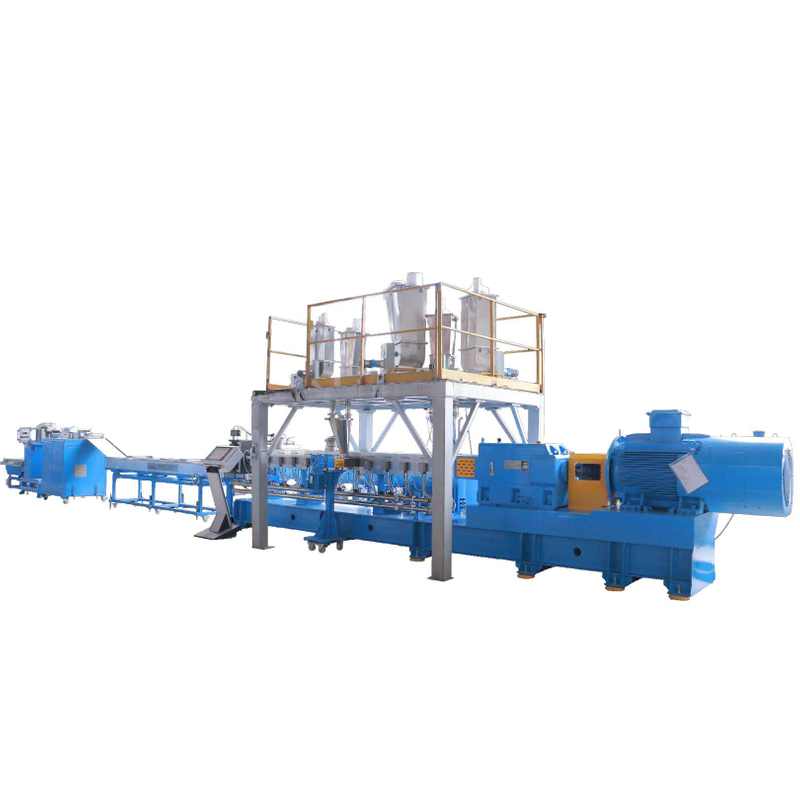
A multi-screw extruder typically features three or more screws working in tandem to process materials. This design allows for enhanced mixing and material handling compared to single and twin screw extruders. The screws can be arranged in various configurations, such as co-rotating or counter-rotating, which affects the way materials are processed.
One significant advantage of having multiple screws is the improved mastication, which is the process of breaking down materials into smaller particles. This capability leads to higher output and more efficient processing. The interaction among the screws promotes better dispersion of additives, resulting in a more uniform product.
Key Features of Multi-Screw Extruders:
● Three-Screw Design: Offers enhanced mixing and processing capabilities.
● Co-Rotating vs. Counter-Rotating: Different configurations provide unique advantages.
● Improved Mastication: Facilitates efficient breakdown of materials.
Multi-screw extruders are known for their exceptional performance in specialized applications. They provide several benefits that make them a preferred choice for high-performance material processing.
Benefits include:
● High Output Capacity: These extruders can handle larger volumes, making them suitable for mass production.
● Specialized Mixing Applications: Their design allows for effective mixing of complex formulations, ensuring product consistency.
● Reduced Energy Consumption: Improved rolling area reduces friction, leading to lower energy use during operation.
Despite their many advantages, multi-screw extruders come with challenges. Understanding these drawbacks is essential for manufacturers considering this technology.
Challenges include:
● Complexity in Design: The intricate design requires skilled operators and careful maintenance.
● Higher Manufacturing Costs: The initial investment is typically greater than that for single or twin screw extruders, which can be a barrier for some manufacturers.
These versatile machines are particularly effective in high-performance material processing and specialized applications. They are often used in two-stage extrusion systems, where they help achieve specific material properties.
Common Applications Include:
Application | Description | Typical Materials Processed |
High-Performance Materials | Processing advanced polymers and composites. | Engineering plastics, specialty resins. |
Specialized Applications | Used in industries requiring precise formulations. | Additives, color concentrates, and fillers. |
Two-Stage Extrusion Systems | Enhancing material properties through sequential processing. | Various thermoplastics and elastomers. |
In addition to these applications, multi-screw extruders excel in producing highly uniform materials, making them essential for industries that demand precision and quality in their products.
Vented extruders are specialized machines designed to remove volatiles during the extrusion process. These extruders feature a venting system that allows gases and moisture to escape, preventing them from being trapped in the final product. This design is particularly important for processing materials that can release volatile compounds, ensuring a higher quality output.
The venting mechanism typically involves an additional section in the barrel where the material can be exposed to a vacuum or atmospheric pressure. This exposure helps to eliminate unwanted substances, leading to a cleaner and more consistent product.
One of the primary benefits of vented extruders is their ability to improve product quality by effectively removing volatiles. This capability is crucial for several reasons:
● Enhanced Material Properties: By eliminating moisture and gases, vented extruders help maintain the mechanical properties of the material, resulting in stronger and more durable products.
● Improved Surface Finish: The removal of volatiles prevents defects such as bubbles or surface imperfections, leading to a smoother finish.
● Consistency in Production: With reduced variability in moisture content, manufacturers can achieve more uniform results across batches.
Vented extruders are particularly effective for processing hygroscopic materials—those that readily absorb moisture from the environment. Common applications include:
Material | Description | Applications |
Rigid PVC | Used in construction and plumbing. | Pipes, fittings, and profiles. |
ABS | Known for its toughness and impact resistance. | Automotive parts, toys, and appliances. |
Nylon | Offers excellent wear resistance. | Textiles, automotive components, and gears. |
In these applications, the vented extruder's ability to remove moisture is essential. It ensures that the final products have the desired mechanical properties and performance characteristics, making vented extruders a vital tool in the processing of these materials.
Ram extruders are unique machines that operate without a traditional screw mechanism. Instead, they use a piston or ram to push the material through a die. This design allows for the processing of materials that have high viscosity or require significant pressure to extrude. As the ram moves forward, it compresses the material in the chamber, generating the necessary force to force the material through the die opening.
The absence of a screw means that ram extruders can provide a different kind of flow and pressure management. The material is subjected to uniform heating as it is compressed, ensuring consistent properties in the final product.
Ram extruders offer several notable advantages, particularly when it comes to processing challenging materials.
● High Pressure and Uniform Heating: The design allows for the application of high pressure, which is essential for extruding thick materials. The uniform heating ensures that the material reaches the optimal temperature for extrusion, enhancing the quality of the output.
● Minimal Material Loss: Due to the small gaps between the piston and the die, ram extruders minimize material loss during the extrusion process. This efficiency helps reduce waste and increases overall productivity.
These extruders are particularly suited for specific applications, especially in industries requiring the processing of high-viscosity materials.
Application | Description | Typical Materials Processed |
High-Viscosity Materials | Effective for materials that are difficult to extrude. | Ceramics, food products, and polymers. |
Medical Devices | Used in manufacturing components that require precision. | Biocompatible materials and polymers. |
Additionally, ram extruders have evolved from intermittent to continuous designs. The continuous ram extruder provides steady output and is ideal for high-volume production. This evolution has expanded their applicability in various industries, making them a versatile choice for manufacturers.
Co-extrusion technology involves the simultaneous extrusion of two or more materials through a single die. This process allows for the creation of multi-layered products, where each layer can have different properties. Co-extruders typically use multiple extruders feeding into a single die, enabling the combination of various materials into one cohesive product.
The function of co-extruders is to enhance the performance and functionality of the final product. By layering different materials, manufacturers can achieve specific characteristics, such as improved barrier properties, enhanced strength, or unique aesthetic qualities.
Co-extrusion offers several advantages, particularly when it comes to developing multi-layered products.
● Enhanced Properties: Each layer can be tailored for specific functions, such as providing moisture barriers or adding strength. This customization leads to products that perform better in their intended applications.
● Cost Efficiency: By combining materials in a single process, manufacturers can reduce production costs and material waste, making co-extrusion a more economical choice.
● Improved Product Integrity: Multi-layered products often exhibit better adhesion and structural integrity, which is essential for many applications.
Co-extrusion technology is widely used in various industries, particularly in food packaging and protective barriers.
Application | Description | Typical Materials Used |
Food Packaging | Multi-layer films provide excellent barrier properties, extending shelf life. | PE, PET, and nylon layers for moisture and oxygen control. |
Protective Barriers | Co-extruded materials are used in applications requiring durability and resistance to environmental factors. | PVC and other polymers for construction and industrial uses. |
In food packaging, co-extrusion allows for the creation of films that effectively protect against moisture and oxygen, ensuring the freshness of products. Similarly, in protective barriers, the technology enables the design of materials that withstand harsh conditions while maintaining their integrity.
Understanding different types of extruders is crucial for manufacturers. Each extruder type offers unique advantages tailored to specific applications. When choosing an extruder, it's essential to evaluate your specific needs and production requirements. Advancements in extrusion technology significantly enhance production efficiency and product quality. Companies like Jwell provide innovative solutions that deliver exceptional value, ensuring optimal performance in various applications. Their products stand out for their reliability and efficiency in the market.
A: A single screw extruder is a machine that uses one screw to process and shape materials, commonly used in plastic manufacturing.
A: It operates by feeding raw materials into a heated barrel where the screw pushes and melts the material, forming it into desired shapes.
A: The advantages include simplicity in design, ease of operation, and cost-effectiveness, making it ideal for many applications.
A: A single screw extruder is often preferred for its efficiency in processing homogenous materials and lower manufacturing costs compared to multi-screw options.
A: It can handle various thermoplastics, rubber, and some food products, depending on the design and configuration.
A: Factors include the size, features, and materials used in the construction of the extruder, as well as the manufacturer.


