
- All
- Product Name
- Product Keyword
- Product Model
- Product Summary
- Product Description
- Multi Field Search
 English


Think of an extruder as a massive, heated industrial pump designed specifically for tough thermoplastic polymers. It is a high-volume manufacturing unit. Its primary job is to take solid plastic materials—post-consumer flakes, industrial granules, or fine powders—and continuously process them into a homogeneous fluid state.
When you collect plastic waste like discarded detergent bottles or agricultural pipes, the material is first crushed and washed. However, injection molding facilities cannot use irregular, fluffy washed flakes directly. The material must be melted, aggressively filtered for surviving impurities, and reshaped into dense, uniform plastic pellets. By understanding the underlying mechanics of this equipment, facility operators can troubleshoot production bottlenecks faster. They can significantly reduce factory energy consumption. Furthermore, they can optimize the specific shear rates required for different polymer types without degrading delicate chemical structures. In the recycling sector, this machine acts as the primary engine within a complete plastic pelletizing machine, converting raw waste into profitable commodities.
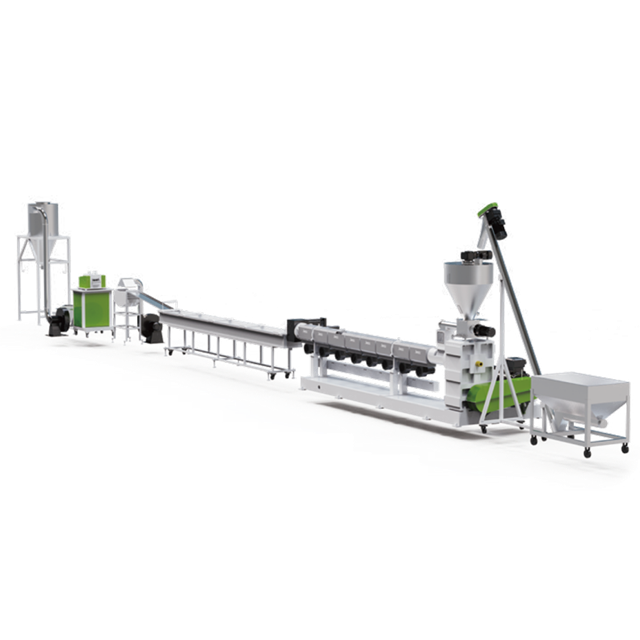
To truly understand the process, we must dismantle the machine conceptually. An extruder is not a single mechanism. It is a synchronized assembly of heavy-duty, precision-engineered parts. Knowing these nuts and bolts is the first step toward mastering the factory floor.
This is the main entry point for all raw materials. Located at the rear of the machine, the funnel-shaped hopper holds plastic flakes before they drop into the barrel. Modern, high-efficiency setups frequently replace standard gravity-fed hoppers with volumetric or gravimetric dosing units. These automated feeders introduce raw materials and additives at mathematically precise rates. This technology prevents material bridging and guarantees a consistent feed to the screw.
Directly below the hopper sits the barrel. This thick-walled, heavy-duty steel cylinder houses the extruder screw. It is engineered to withstand extreme internal pressures and corrosive wear. Externally, electrical heater bands wrap the barrel, divided into multiple distinct temperature zones. Industrial cooling fans or water jackets work alongside these heaters. This dynamic thermal management allows PID controllers to maintain a strict temperature profile as the plastic travels forward.
The rotating screw is the beating heart of the production line. Machined from high-strength alloy steel, its geometric design dictates the machine's performance. The screw features varying flight depths, pitches, and specific Length-to-Diameter ratios. High-performance lines often utilize L/D ratios of 36:1 to ensure thorough mixing and melting. Driven by a massive electric motor and heavy-duty gearbox, the screw conveys solid plastic forward. It generates the intense mechanical friction needed to melt the polymer and mixes the chains into a homogenous fluid.
At the discharge end, the pressurized melt hits the screen changer. In recycling applications, this component is your last line of defense. It houses woven steel mesh filters that capture unmelted particles, dirt, or metal fragments that survived the washing line. Once purified, the melt pushes through the die head. This machined steel plate acts as a mold. It shapes the flowing plastic into continuous spaghetti-like strands before they enter a water bath for cooling and cutting.
Transforming a solid flake into a uniform liquid melt relies heavily on fluid dynamics and thermodynamics. The polymer's journey is categorized into three distinct zones based on the screw's geometry.
Gravity pulls raw plastic from the hopper into the feed throat. Here, the deep spiral threads of the rotating screw grab the solid material. The main objective in this initial zone is volume capture. The screw physically conveys the solid plastic away from the feed opening. Barrel temperatures remain intentionally low in this zone. This crucial step prevents premature melting that could clog the throat and halt production.
As material moves into the middle section, the core physics take over. The root diameter of the screw gradually increases. This geometric shift reduces the available space between the screw and the barrel wall, compressing the plastic tightly. External heaters provide baseline thermal energy, but they are not the primary heat source. The intense friction and shear force generated by the rotating screw dragging plastic against the barrel create massive internal conductive heat. This mechanical energy breaks down the solid polymer into a viscous liquid.
In the final section, the flight depth becomes shallow and constant. The plastic is entirely melted by this point. The goal here is complete homogenization. The system ensures an even temperature and uniform viscosity throughout the fluid. The shallow flights generate intense pressure. The screw now acts as a powerful pump, forcing the melt through the restrictive screen changer and out the die head at a perfectly consistent rate.
Choosing the right structural design depends entirely on your material input. Decision-makers constantly weigh single versus twin-screw configurations when upgrading their facilities.
| Feature | Single Screw Extruder | Twin Screw Extruder |
|---|---|---|
| Mechanism | One rotating screw inside a cylindrical barrel. | Two interlocking screws in a figure-eight barrel. |
| Best Application | Standard recycling, pre-washed rigid plastics, high-pressure pumping. | Complex compounding, heavy fillers, aggressive devolatilization. |
| Mixing Capability | Excellent for standard homogenization and melting. | Superior distributive and dispersive mixing. |
| Maintenance & ROI | Lower initial investment, simpler maintenance, fast ROI. | Higher capital cost, rigorous and complex maintenance schedule. |
Single screw models remain the undisputed industry standard for most conventional pelletizing operations. They excel at building the high pressure necessary to pump viscous materials through fine filtration screens. They are highly efficient and profitable for relatively clean, pre-washed rigid plastics like Polyethylene and Polypropylene.
Conversely, twin-screw designs provide excellent surface renewal for vacuum degassing. They are generally reserved for highly contaminated, moisture-heavy plastics or specialized compounding tasks where heavy mineral fillers are introduced.
The plastic extrusion landscape is shifting rapidly. Global sustainability mandates and the push toward Industry 4.0 are driving massive technological upgrades across the sector.
Recent market data highlights a sharp increase in demand for systems capable of handling higher percentages of Post-Consumer Resin. Because PCR materials often possess unpredictable melt flow indexes and higher contamination levels, machine designs are adapting. Leading manufacturers are now deploying longer L/D ratio screws alongside highly advanced dual-vacuum degassing systems to process these volatile materials.
Furthermore, smart automation is becoming a factory standard. Modern lines integrate IoT sensors directly into the barrel and gearbox. These sensors capture real-time data on melt pressure, thermal fluctuations, and motor vibration. AI-driven predictive maintenance can now alert operators before a catastrophic mechanical failure occurs. Energy efficiency is also a major focus. Facilities are rapidly replacing older hydraulic drives with direct-drive permanent magnet synchronous motors. This single upgrade dramatically reduces the carbon footprint and electrical overhead of recycling operations.
Recycling rigid plastics—such as HDPE bottles, thick PP pipes, or robust injection-molded containers—presents unique engineering hurdles. Rigid plastics possess higher melting points. They retain stubborn surface moisture and often carry heavy surface printing. To process these profitably, the extruder must integrate into a highly specialized system.
A single-stage setup utilizes one long, high-performance extruder to handle melting, degassing, and pumping. The barrel features a dedicated vacuum degassing zone midway through the process to extract trapped moisture and volatile gases. For facilities processing clean, standard rigid plastic scrap with minimal contamination, investing in a Pelletizing system for rigid plastic offers an excellent balance. Equipment in this category typically delivers capacities ranging from 300kg/h to 1000kg/h, providing high hourly output with manageable energy consumption.
What happens when post-consumer rigid plastics are heavily printed, slightly dirty, or retain high moisture levels? A single extruder will inevitably struggle. In these scenarios, a double-stage configuration—often called a mother-baby setup—is the standard engineering solution.
This setup connects a large primary extruder directly to a secondary, smaller extruder. The technical advantages are immense. It allows for an extra round of heavy-duty filtration between the two extruders. This captures finer impurities that might slip through a single screen. Additionally, it provides double vacuum degassing. For maximum quality control and to produce premium-grade, bubble-free pellets, deploying a Rigid Plastic Pelletizing Line is highly recommended. These robust systems easily process challenging scrap while maintaining continuous outputs up to 1000kg/h.
Equipment longevity relies on strict adherence to Standard Operating Procedures. Picture the factory floor at dawn. If an operator rushes the startup sequence, catastrophic mechanical failures are almost guaranteed.
Before engaging the main motor, the machine requires a thorough pre-heating phase. The barrel heaters must reach the target processing temperature. More importantly, the machine needs a mandatory heat soak period. This typically lasts one to two hours after the surface temperature is reached. It ensures the residual plastic deep inside the screw flights is completely melted. Firing up a massive drive motor while a solid chunk of crystallized polymer remains lodged in the metering zone will snap the screw shaft or destroy the gearbox gears entirely.
Once fully soaked, start the extruder at the lowest possible RPM. Manually feed a small amount of raw material into the hopper to prime the screw. Increase the speed gradually while diligently monitoring the motor load amperage and melt pressure gauges. This cautious approach prevents sudden pressure spikes that blow out screen changers.
Routine maintenance is non-negotiable. Maintenance teams must inspect heater bands and thermocouples daily. Check drive belt tension and vacuum degassing pumps weekly. Regularly replacing filter screens before they reach maximum pressure drop is the ultimate secret to keeping the line running profitably without unexpected downtime.
Investing in heavy machinery requires a calculated assessment of your factory's exact parameters. There is no universally perfect machine. There is only the right machinery tailored specifically to your material input.
Evaluate extrusion systems using these practical criteria:
Mastering the mechanics of extrusion is essential for modern plastics manufacturing and recycling. From the moment raw flake drops into the hopper to the precise second uniform pellets exit the die, every stage is a masterclass in thermal and mechanical engineering.
This process dictates your operation's profitability, physical scale, and product purity. Rigorous maintenance and smart operational practices keep your equipment generating consistent revenue for years. Ready to scale your operations? Evaluate your specific material needs and match them with the right single or double-stage extrusion technology. Explore the high-performance solutions at Jwell Recycling to find the exact industrial configuration that guarantees your manufacturing success.
The equipment operates by utilizing a rotating screw housed inside a heated steel barrel. As the screw turns, it generates intense mechanical friction and heat. This melts raw solid plastic and forces the resulting fluid through a shaped die to create a continuous product.
The extruder is the core mechanical component responsible for melting, mixing, and pumping the plastic. A complete pelletizing line refers to the entire integrated production system. This includes the extruder, automated feeders, cooling water baths, and the final rotary pellet cutter.
This configuration, known as a double-stage or mother-baby system, uses two extruders to allow for an extra round of fine filtration and secondary vacuum degassing. This extended process is absolutely essential for transforming dirty, printed, or wet rigid plastic scrap into high-quality, bubble-free pellets.
Operating temperatures fluctuate significantly based on the specific type of plastic being processed. However, typical rigid thermoplastics like Polypropylene and Polyethylene generally require internal barrel temperatures ranging from 200°C to 280°C to achieve a proper melt flow.
A jammed screw usually results from cold starts or foreign metal objects entering the barrel. Operators must first stop the machine and initiate a prolonged heat soak to melt any crystallized plastic. If the jam persists, the die head and screen changer must be removed, and the screw is physically pushed or pulled out using specialized hydraulic extraction tools for manual cleaning.
Pressure surges are typically caused by inconsistent feeding, severe temperature fluctuations, or a clogged screen changer. If the filter mesh becomes blinded by dirt or unmelted particles, the melt cannot exit the die fast enough. This causes internal barrel pressure to spike rapidly, triggering safety alarms or bursting the filter mesh.


