- All
- Product Name
- Product Keyword
- Product Model
- Product Summary
- Product Description
- Multi Field Search
 English

Views: 0 Author: Site Editor Publish Time: 2026-09-15 Origin: Site


How does plastic waste become reusable pellets? It requires more than simple crushing.
A recycled plastic pellet production line sorts, cleans, dries, extrudes, filters, and pelletizes suitable waste.
This guide explains the complete process, equipment, pellet quality factors, and line selection.
A recycled plastic pellet production line converts suitable thermoplastic waste into reusable plastic pellets.
It combines several processing stages into one production system.
Depending on the feedstock, these stages can include sorting, crushing, washing, drying, extrusion, filtration, and pelletizing.
A typical process follows:
Plastic Waste → Sorting → Size Reduction → Washing → Drying → Extrusion → Filtration → Pelletizing → Recycled Pellets
However, not every recycling project needs every stage.
Clean factory scrap may require limited preparation. Contaminated post-consumer waste usually needs more extensive cleaning.

A recycled plastic pellet production line is an integrated mechanical recycling system.
Its main purpose is to convert prepared plastic waste into a more manageable pellet form.
Depending on the application, its main functions may include:
Sorting plastic waste
Reducing material size
Removing surface contamination
Controlling moisture
Feeding material continuously
Melting and plasticizing polymers
Removing remaining contaminants
Cutting the polymer into pellets
Cooling and collecting finished pellets
The final equipment configuration should match the incoming waste.
Many thermoplastics can enter suitable recycling and pelletizing processes.
Common examples include:
PP
PE
HDPE
LDPE
LLDPE
Suitable industrial plastic scrap
Polymer identification is important before processing.
Different plastics have different melting temperatures and processing behavior.
Mixed or incompatible polymers can reduce recycled material consistency.
Sorting should therefore begin before extrusion.
A plastic recycling pellet production line can be configured for many feedstock forms.
Common examples include:
Agricultural film
Packaging film
Shopping bags
Woven bags
Bottles
Containers
Rigid plastic flakes
Injection molding scraps
Production regrind
Their physical properties vary significantly.
Loose film has low bulk density and unstable feeding behavior.
Rigid flakes are denser and usually easier to feed consistently.
The feeding and preparation systems should reflect these differences.
The final output is recycled plastic pellets.
Pellets offer a more standardized physical form than loose waste.
They are generally easier to:
Store
Transport
Package
Meter
Blend
Feed into downstream machinery
The pellets may become secondary raw materials for suitable manufacturing applications.
However, pelletizing does not automatically restore virgin polymer properties.
Final performance still depends on feedstock quality and processing history.
These terms should not always be treated as identical.
A pelletizing machine mainly focuses on melt processing and pellet formation.
A pellet production line may cover a broader recycling process.
For example:
Pelletizing Machine: Feeding → Extrusion → Cutting
Complete Production Line: Sorting → Washing → Drying → Extrusion → Pelletizing → Collection
Buyers should confirm exactly what equipment is included in a quotation.
A plastic washing line mainly prepares contaminated waste.
Its output is usually cleaned and dried material.
A pelletizing line processes prepared material into pellets.
An integrated recycling plant can combine both systems.
Note: A complete line does not need unnecessary equipment. Its configuration should follow actual waste conditions.
The recycled plastic pellet manufacturing process contains several connected stages.
Each stage prepares material for the next process.
The process begins with waste identification and sorting.
Materials may be separated according to:
Polymer type
Color
Material form
Contamination
Final application
Unwanted materials should be removed early.
Better sorting reduces unnecessary processing later.
It also helps create more consistent recycled pellets.
Large plastic waste may be difficult to wash and feed.
Size reduction converts it into manageable pieces.
Common equipment includes:
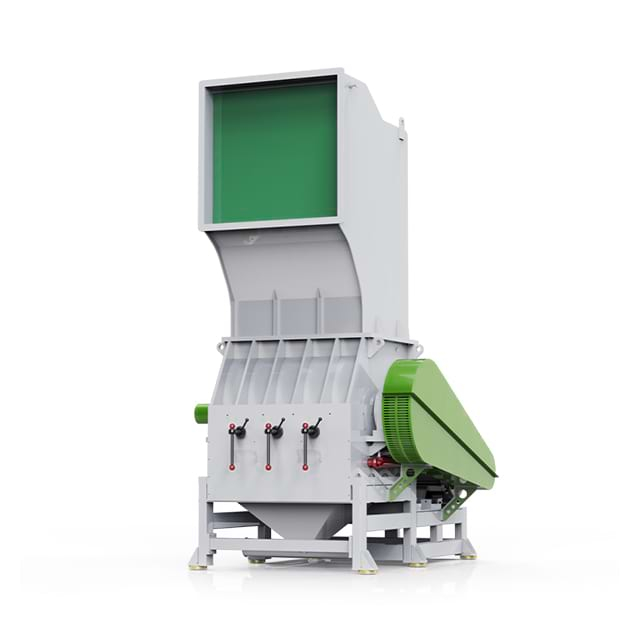
Shredders
Crushers
Granulators
Particle size should suit the downstream process.
Oversized pieces may create unstable feeding.
Extremely inconsistent material can also reduce processing efficiency.
Post-consumer plastics can carry significant contamination.
Washing may remove:
Dirt
Labels
Adhesive residues
Organic residues
Surface contamination
The required washing intensity depends on waste condition.
Clean production scrap may need little or no washing.
Contaminated post-consumer waste may require multiple cleaning stages.
Washed plastic contains moisture.
Excess water should be controlled before extrusion.
Possible equipment includes:
Mechanical dewatering units
Centrifugal dryers
Film squeezing systems
Thermal dryers
Film and rigid flakes behave differently during drying.
A suitable system should match material form and required moisture level.
Prepared plastic enters the extrusion system.
Feeding stability directly affects production stability.
Film can require:
Film → Cutting/Compacting → Controlled Feeding
Rigid material may follow:
Flakes/Regrind → Hopper → Screw or Force Feeding
A stable feeder maintains more consistent extruder loading.
The extruder converts prepared material into a polymer melt.
The basic process is:
Feeding → Conveying → Melting → Plasticizing → Homogenizing
The screw moves material through the heated barrel.
Thermal energy and mechanical shear help melt the polymer.
Vacuum degassing may remove moisture and volatile components.
Stable extrusion prepares the melt for filtration.
The polymer melt can still contain solid impurities.
A melt filter captures many remaining contaminants.
The filtered material then moves toward pellet formation.
The process follows:
Filtered Melt → Die → Cutting → Cooling → Drying → Pellet Collection
Common pelletizing methods include:
Strand pelletizing
Water-ring pelletizing
Suitable die-face systems
The correct method depends on polymer behavior and production requirements.
Tip: Send representative waste samples to the supplier before finalizing the recycling process.
A waste plastic to pellet production line contains several equipment modules.
The exact combination depends on waste condition.
Sorting removes unsuitable materials.
Shredders reduce large plastic pieces.
Crushers create smaller and more manageable particles.
Granulators may provide additional size reduction.
These machines prepare waste for efficient downstream processing.
Not every project requires every machine.
Contaminated plastic may require dedicated cleaning equipment.
Possible systems include:
Friction washers
Washing tanks
Rinsing equipment
Dewatering machines
Film squeezers
Drying systems
The objective is not simply making plastic look clean.
Preparation should meet the requirements of the extrusion process.
The feeding system delivers material into the extruder.
Possible configurations include:
Hopper feeding
Screw feeding
Force feeding
Cutter-compactor feeding
The extruder then melts and homogenizes the plastic.
Its screw, barrel, motor, and temperature system work together.
The downstream section can include:
Screen changer
Melt filter
Vacuum degassing
Extrusion die
Pelletizer
Cooling system
Dewatering equipment
Pellet conveyor
Storage silo
Each component should support the required production capacity.
Note: Equipment should be selected from actual feedstock requirements, not from a fixed machine checklist.
Flexible film and rigid plastics behave differently.
Their recycling lines should reflect those differences.
Common flexible feedstocks include:
LDPE film
LLDPE film
Agricultural film
Shopping bags
Packaging film
These materials often have low bulk density.
They can also contain moisture, printing residues, and contamination.
Loose film may bridge inside conventional feeding systems.
Compacting can increase density and improve feeding stability.
Rigid feedstocks may include:
HDPE containers
PP rigid scraps
Crushed plastic parts
Injection molding waste
They generally have higher bulk density.
Prepared flakes can therefore feed differently from film.
A suitable crusher and feeder become important.
Feedstock | Main Challenge | Common Feeding Approach |
|---|---|---|
Plastic film | Low bulk density | Compactor or specialized feeding |
Woven bags | Lightweight structure | Compactor or force feeding |
Rigid flakes | Higher bulk density | Screw or force feeding |
Production regrind | More consistent form | Application-based feeding |
These are general configurations.
Actual equipment depends on material characteristics.
Dirty post-consumer film may need intensive washing.
It can retain significant water after cleaning.
Film squeezing or specialized drying may therefore be useful.
Clean rigid production scraps can require much less preparation.
The line should match the real contamination level.
Tip: Avoid purchasing a film recycling configuration for rigid material without checking feeding and drying requirements.
Finished pellet quality begins before extrusion.
Poor input preparation cannot always be corrected downstream.
Consistent feedstock supports consistent pellets.
Important factors include:
Polymer purity
Color separation
Foreign materials
Contamination
Additives
Incompatible polymers can affect final processing behavior.
Better sorting therefore supports more predictable pellet properties.
Residual dirt can remain after poor washing.
It may later enter the extrusion system.
Excess moisture can also affect melt processing.
Washing and drying should therefore work as connected stages.
The required cleanliness depends on final pellet use.
Extrusion parameters affect melt consistency.
Important variables include:
Screw speed
Barrel temperature
Feeding rate
Residence time
Melt pressure
Excessive thermal exposure can contribute to polymer degradation.
Insufficient heating can cause poor plasticization.
Stable processing requires balanced operating conditions.
Filtration removes many remaining solid impurities.
Filter condition also affects melt pressure.
After filtration, stable cutting helps control pellet form.
Operators should monitor:
Melt pressure
Filter condition
Pellet size
Cutting stability
Moisture after cooling
Pellet appearance alone cannot prove material quality.
Note: Recycled pellet performance depends on feedstock purity, degradation history, additives, and processing conditions.
The main purpose is to convert waste into reusable manufacturing feedstock.
It also makes recovered plastic easier to manage.
The core recycling route is simple:
Plastic Waste → Preparation → Melt Processing → Recycled Pellets
These pellets can become secondary raw materials.
Their final use depends on material properties and application requirements.
This supports mechanical recycling of suitable thermoplastics.
Loose film and irregular scraps are difficult to handle.
Pellets provide a more uniform physical form.
They can simplify:
Packaging
Transportation
Storage
Dosing
Material blending
Downstream feeding
This improves material handling across the production chain.
A controlled line integrates multiple processing stages.
Sorting improves input consistency.
Washing reduces contamination.
Drying controls moisture.
Extrusion homogenizes the melt.
Filtration removes remaining solid impurities.
Pelletizing creates a manageable final form.
Together, these processes support more consistent production.
A plastic waste recycling pelletizing line can serve different operations.
Examples include:
Plastic recycling plants
Plastic processors
Manufacturing facilities
Industrial scrap recovery
Suitable post-consumer recycling
The equipment should always match the waste stream.
Equipment selection should begin with raw material and final pellet requirements.
Machine size should come later.
Provide detailed feedstock information.
Important factors include:
Polymer type
Film or rigid form
Post-industrial or post-consumer source
Moisture
Contamination
Bulk density
Particle size
Printing
Additives
These factors determine required preparation and extrusion equipment.
Not all waste needs a full washing system.
Clean production scraps may enter pelletizing after suitable size reduction.
Dirty post-consumer waste usually needs more preparation.
A simplified comparison is:
Clean Factory Scrap → Size Reduction → Pelletizing
Contaminated Waste → Sorting → Washing → Drying → Pelletizing
Actual processes vary by material.
Capacity is usually expressed in kg/h.
However, nominal capacity does not tell the whole story.
Real throughput can change according to:
Polymer
Bulk density
Moisture
Contamination
Feeding stability
Filtration requirements
Ask suppliers to specify testing conditions.
Start by asking where the pellets will be used.
Then define requirements for:
Cleanliness
Color
Pellet consistency
Moisture
Melt behavior
Downstream processability
The final application should influence equipment selection.
Tip: Work backward from the required pellet specification instead of starting from machine capacity.
A recycling line is a production investment.
Buyers should evaluate real operating performance.
Provide representative material whenever possible.
Evaluate:
Material preparation
Washing performance
Moisture control
Feeding stability
Extrusion stability
Filtration
Pellet appearance
Continuous output
A short demonstration using ideal material may not represent daily production.
Ask suppliers how capacity was measured.
Important questions include:
Which polymer was processed?
Was it film or rigid material?
What was the moisture level?
How contaminated was the feedstock?
Was output measured continuously?
This makes different quotations easier to compare.
Machine price is only one cost.
Also consider:
Electricity
Water
Labor
Filter screens
Cutting blades
Maintenance
Wastewater treatment
Downtime
A useful metric is:
Total Processing Cost ÷ Usable Pellet Output = Cost per Ton
This provides better insight into long-term economics.
Review both equipment and service capability.
Consider:
PLC control
Automatic feeding
Filtration system
Installation
Commissioning
Operator training
Spare parts
Maintenance support
Equipment customization
Tip: Compare suppliers based on usable pellet output and operating cost, not purchase price alone.
Efficiency improvements should target actual bottlenecks.
A larger extruder does not solve every production problem.
Better sorting prevents unwanted material from entering the line.
This can reduce:
Contamination
Filter loading
Unstable extrusion
Unnecessary processing
Removing problems upstream is often easier than correcting them later.
Excess moisture can increase processing difficulty.
The drying system should match material form.
Film and rigid flakes may require different solutions.
Operators should monitor moisture before extrusion.
Contaminated material blocks filters faster.
Frequent screen changes can reduce effective production time.
Better upstream cleaning may reduce filter loading.
Suitable filtration technology can also support continuous processing.
The entire line should have compatible capacity.
For example:
Sorting → Washing → Drying → Feeding → Extrusion → Pelletizing
If one stage operates too slowly, the following equipment becomes underused.
Production optimization should therefore begin with the slowest stage.
Tip: Improve the real bottleneck before investing in higher nominal extruder capacity.
A recycled plastic pellet production line turns prepared plastic waste into reusable pellets through controlled recycling and extrusion.
Feedstock quality, washing, drying, filtration, and stable pelletizing all affect final results.
JWELL provides configurable plastic recycling and pelletizing solutions for different waste streams. Its systems support efficient processing, stable pellet production, and industrial recycling requirements.
A: A recycled plastic pellet production line converts suitable plastic waste into reusable pellets through preparation, extrusion, filtration, and pelletizing.
A: A recycled plastic pellet production line may include sorting, crushing, washing, drying, extrusion, filtration, cooling, and pellet collection.
A: A recycled plastic pellet production line can process suitable PP, PE, HDPE, LDPE, LLDPE, film, flakes, and production scrap.
A: Feedstock purity, moisture, extrusion temperature, filtration, and pelletizing stability affect recycled plastic pellets.
A: No. Clean industrial scrap may need limited preparation, while contaminated post-consumer plastics usually require washing and drying.
A: Choose a recycled plastic pellet production line based on feedstock, required capacity, pellet quality, energy use, automation, and supplier support.