
- All
- Product Name
- Product Keyword
- Product Model
- Product Summary
- Product Description
- Multi Field Search
 English

Views: 0 Author: Site Editor Publish Time: 2026-03-09 Origin: Site


Have you ever wondered how temperature affects plastic processing? Understanding PVC Max Temp is crucial for manufacturers.
PVC, or polyvinyl chloride, is a widely used plastic in various industries. It comes in two main types: rigid PVC (RPVC) and flexible PVC (FPVC).
In this article, we’ll explore the significance of PVC Max Temp, its impact on product quality, and the risks of exceeding this critical threshold. You'll learn essential insights for optimizing your PVC processing techniques.
PVC Max Temp refers to the maximum processing temperature that polyvinyl chloride can safely withstand during manufacturing. This temperature is crucial because it directly impacts the material's performance and durability.
● Processing Temperature: Exceeding this temperature can lead to thermal degradation, causing the material to lose its structural integrity. For PVC, the max temp is not just a number; it's a threshold that ensures quality.
● Material Properties: The relationship between PVC Max Temp and the material properties is significant. At high temperatures, PVC may begin to decompose, releasing harmful gases like hydrogen chloride. This can affect not only the product's quality but also the safety of the manufacturing process.
Understanding PVC Max Temp is essential for anyone involved in plastic processing. It helps in selecting the right equipment and setting the appropriate conditions for optimal results.
When it comes to PVC Max Temp, knowing the typical ranges is crucial for effective processing. Here’s a quick overview:
Type of PVC | Typical Max Temp (°C) | Common Applications |
Rigid PVC (RPVC) | 180-200 | Pipes, window frames |
Flexible PVC (FPVC) | 160-190 | Medical tubing, wire sheathing |
● Rigid PVC (RPVC): This type generally has a higher max temp, typically between 180°C and 200°C. It's suitable for applications requiring strength and durability, such as pipes and window frames.
● Flexible PVC (FPVC): With a lower max temp range of 160°C to 190°C, FPVC is often used in applications like medical tubing and wire sheathing, where flexibility is essential.
The max temp can vary significantly depending on the specific formulation and additives used in the PVC. Here are some factors to consider:
● Plasticizers: Adding plasticizers can lower the max temp of PVC, making it more flexible but also more heat-sensitive. This is crucial for applications where flexibility is prioritized over rigidity.
● Stabilizers: Heat stabilizers are often added to improve the thermal stability of PVC. They help prevent degradation at high temperatures, extending the material's usability.
Understanding these variations allows manufacturers to tailor their processes effectively. For instance, Jwell’s equipment is designed to handle different PVC formulations, ensuring optimal processing conditions for both rigid and flexible PVC types.
In summary, knowing the PVC Max Temp and its implications can greatly enhance product quality and processing efficiency. Whether you are working with rigid or flexible PVC, understanding these temperature ranges and the factors that influence them is vital for successful manufacturing.
The molecular structure of PVC plays a significant role in determining its max temp. Specifically, molecular weight affects how the material behaves under heat.
● Melting Behavior: High molecular weight PVC tends to have a higher melting point. This means it can withstand higher temperatures without degrading. Conversely, low molecular weight PVC melts at lower temperatures, making it less suitable for high-heat applications.
● Comparison: To illustrate, high molecular weight PVC is often used in construction materials, while low molecular weight variants are found in flexible applications like tubing and sheeting.
Understanding these differences helps manufacturers choose the right type of PVC for their specific needs.
Additives significantly influence PVC Max Temp, especially plasticizers and stabilizers. These compounds modify the thermal properties of the material.
● Plasticizers: These are added to enhance flexibility but can lower the melting point of PVC. For instance, adding a plasticizer can reduce the max temp by 10-20°C, making the material more pliable but also more sensitive to heat.
● Stabilizers: Heat stabilizers are crucial for maintaining the integrity of PVC during processing. They prevent degradation at high temperatures, ensuring that the material retains its properties even under stress.
Here’s a quick look at how different additives affect PVC:
Additive Type | Effect on Max Temp | Example Use Cases |
Plasticizers | Lowers melting point | Flexible tubing, coatings |
Heat Stabilizers | Increases heat resistance | Rigid pipes, window frames |
Using the right combination of additives can optimize PVC for specific applications, enhancing both performance and durability.
Environmental conditions also play a crucial role in influencing PVC Max Temp. Factors like humidity and oxygen exposure can affect the material's thermal stability.
● Humidity: High humidity levels can lead to moisture absorption, which may lower the effective max temp of PVC. This is particularly important in applications exposed to outdoor conditions.
● Oxygen Exposure: PVC is susceptible to oxidation, especially at elevated temperatures. This can weaken the material and reduce its lifespan.
Additionally, controlled heating rates during processing are vital. Rapid heating can cause uneven temperature distribution, leading to hotspots that may degrade the material.
By managing these environmental factors, manufacturers can ensure that PVC retains its properties throughout its lifecycle.
In conclusion, understanding the factors influencing PVC Max Temp—molecular structure, additives, and environmental conditions—can significantly enhance processing efficiency and product quality. With this knowledge, you can make informed decisions that lead to better outcomes in your PVC applications.
Exceeding the PVC Max Temp can lead to significant thermal degradation, which is a serious concern for manufacturers. When PVC overheats, it undergoes chemical changes that can compromise its integrity.
● Symptoms of Overheating: One of the first signs of thermal degradation is a change in color. PVC may turn yellow or brown, indicating that it is breaking down. Additionally, the material may become brittle, losing its flexibility and strength.
● Consequences: The results of overheating can be severe. Degraded PVC may not perform as expected, leading to failures in applications where strength and durability are critical.
Moreover, overheating PVC can release harmful gases, including hydrogen chloride. This not only poses health risks to workers but also creates environmental concerns.
The quality of the final product is directly impacted when PVC Max Temp is exceeded. Several factors contribute to this decline in quality.
● Discoloration: As mentioned, discoloration is a common issue. This not only affects aesthetics but can also indicate a loss of mechanical properties. Products that appear discolored may be perceived as inferior, impacting customer satisfaction.
● Loss of Mechanical Properties: When PVC degrades, it loses its tensile strength and elasticity. This makes the material less effective for its intended use. For example, pipes may become prone to cracking, while flexible sheets may tear easily.
Additionally, overheating can lead to blockages in processing equipment.
Issue | Description | Potential Solution |
Discoloration | Change in color indicating degradation | Monitor processing temps |
Loss of Strength | Reduced tensile strength and flexibility | Use additives to enhance stability |
Blockages in Equipment | Material buildup causing operational delays | Regular maintenance checks |
When equipment becomes blocked, it can halt production, leading to costly downtime. This highlights the importance of maintaining appropriate temperatures during processing.
Understanding these risks emphasizes the need for strict adherence to PVC Max Temp guidelines. By monitoring temperatures closely, manufacturers can avoid these pitfalls, ensuring high-quality products and a safe working environment.
Managing PVC Max Temp effectively begins with precise temperature control. Keeping temperatures within the recommended range is crucial for maintaining product quality and preventing degradation.
● Precision Regulation: Accurate temperature regulation helps avoid overheating, which can lead to thermal degradation. It’s essential to use reliable temperature control systems that can respond quickly to fluctuations.
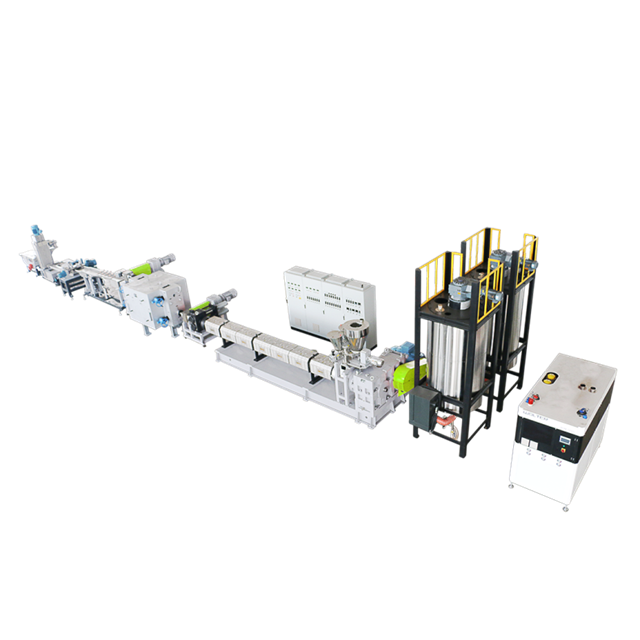
● Recommended Equipment: Investing in high-quality equipment is key. For instance, Jwell’s SJZ PVC Conical Twin Screw Pelletizing Line is specifically designed for optimal temperature control during PVC processing. This equipment ensures uniform heating, reducing the risk of hotspots that can damage the material.
Equipment Type | Purpose | Benefits |
Conical Twin Screw Extruders | Uniform heating of PVC | Reduces thermal degradation |
Precision Temperature Controllers | Accurate monitoring and adjustments | Maintains stability in processing |
Cooling Systems | Rapid cooling of processed materials | Prevents overheating and improves quality |
Implementing real-time monitoring systems is another best practice for managing PVC Max Temp. This technology provides immediate feedback on temperature conditions.
● Temperature Sensors: Using advanced temperature sensors allows for continuous monitoring of PVC during processing. These sensors can alert operators to any deviations from the set temperature range, enabling quick adjustments.
● Parameter Adjustments: With real-time data, operators can adjust processing parameters instantly. This proactive approach helps maintain stability and ensures that the material does not exceed its max temp.
Cooling is a critical aspect of managing PVC Max Temp, especially after processing. Effective cooling techniques can prevent thermal damage and maintain product integrity.
● Rapid Cooling Strategies: Implementing cooling systems such as water baths or air cooling can quickly lower the temperature of PVC products. This is especially important for items that are sensitive to heat.
● Importance of Cooling: Proper cooling helps preserve the mechanical properties of PVC. If the material cools too slowly, it can lead to warping or other deformities.
Cooling Method | Description | Advantages |
Water Cooling | Immersion in water to quickly reduce temp | Fast and effective, ideal for large batches |
Air Cooling | Using fans or air jets to lower temperature | Cost-effective and easy to implement |
Chilled Surface Cooling | Contact with chilled surfaces for rapid cooling | Uniform temperature distribution |
By adopting these best practices, manufacturers can effectively manage PVC Max Temp, ensuring high-quality products and minimizing the risk of degradation. Each technique plays a vital role in the overall processing strategy, contributing to better efficiency and product performance.

Understanding PVC Max Temp is essential when selecting the appropriate processing method. Different methods require specific temperature settings to ensure optimal results.
● Common Processing Methods:
○ Extrusion: This method is widely used for producing pipes and sheets. Recommended temperatures typically range from 160°C to 200°C, depending on the formulation.
○ Injection Molding: Ideal for creating complex shapes, injection molding usually operates at temperatures between 180°C and 220°C.
○ Blow Molding: Often used for making hollow objects, this method requires temperatures around 170°C to 210°C.
○ Calendering: This technique is common for producing films and sheets, with temperatures ranging from 150°C to 190°C.
Processing Method | Recommended Temperature Range (°C) | Common Applications |
Extrusion | 160 - 200 | Pipes, sheets |
Injection Molding | 180 - 220 | Complex shapes |
Blow Molding | 170 - 210 | Hollow objects |
Calendering | 150 - 190 | Films, sheets |
For example, Jwell’s equipment solutions are tailored to meet the specific needs of various PVC formulations and processing methods. Their systems ensure precise temperature control, which is crucial for maintaining product quality.
Different PVC formulations require unique temperature settings to achieve optimal processing results.
● Rigid vs. Flexible PVC: Rigid PVC generally requires higher processing temperatures compared to flexible PVC. For instance, rigid PVC might need temperatures closer to 200°C, while flexible variants are best processed at around 170°C.
● Recycled PVC Materials: When working with recycled PVC, it’s essential to consider the potential contaminants and variations in material properties. Adjusting the temperature settings accordingly can help mitigate issues related to degradation and ensure a smoother processing experience.
PVC Type | Recommended Temperature (°C) | Special Considerations |
Rigid PVC | 180 - 200 | Higher strength, less flexibility |
Flexible PVC | 160 - 180 | Requires plasticizers for flexibility |
Recycled PVC | 160 - 190 | Monitor for contaminants |
By customizing temperature settings based on the type of PVC being used, manufacturers can enhance product quality and reduce the risk of defects. This adaptability is vital in today’s competitive market, where precision and efficiency are paramount.
Incorporating knowledge of PVC Max Temp into processing decisions allows for better-quality products and more efficient manufacturing processes. Whether you're selecting a processing method or adjusting for different formulations, understanding these principles is key to success in the PVC industry.
Understanding PVC Max Temp is crucial for effective plastic processing. It helps prevent degradation and ensures product quality.
Implementing best practices, like precise temperature control and real-time monitoring, enhances efficiency.
We encourage you to apply these practices in your operations.
For tailored solutions, consult experts like Jwell’s technical team to meet your PVC processing needs.
A: PVC typically starts to degrade at temperatures above 200°C, leading to discoloration and loss of properties.
A: PVC can withstand moderate high temperatures, but exceeding the max temp can cause thermal degradation.
A: The softening point of PVC is usually around 80°C to 85°C, depending on the formulation.
A: Additives like plasticizers lower the melting point, while stabilizers enhance heat resistance during processing.


