
- All
- Product Name
- Product Keyword
- Product Model
- Product Summary
- Product Description
- Multi Field Search
 English

Views: 0 Author: Site Editor Publish Time: 2026-08-28 Origin: Site


In high-volume plastic processing, machine reliability is entirely dependent on the structural integrity of the shredder’s core components under extreme, continuous shear stress. Procurement teams often evaluate shredders based on superficial spec sheets, looking at motor size and throughput claims rather than the strict manufacturing tolerances and metallurgical controls applied to the rotor, blades, and frame. This oversight leads to premature component failure, catastrophic rotor damage, and unplanned downtime.
To mitigate capital risk, buyers must audit how an industrial plastic shredder manufacturer controls the fabrication, machining, and assembly of its critical triad: the rotor, the cutting blades, and the structural frame. You need to verify the exact engineering standards behind these components. Without this verification, you risk investing in equipment that cannot withstand the rigorous demands of continuous industrial operation.
Defining what constitutes a heavy-duty shredder requires verifiable engineering terms rather than marketing jargon. Success requires a machine that maintains consistent throughput over a multi-year lifecycle. You need minimal blade degradation and zero structural warping. A premium plastic shredder machine manufacturer focuses heavily on the unseen elements of production. They invest in rigorous quality control measures that directly impact operational longevity.
The fundamental working principle of these machines relies on physics. The machine applies concentrated shear force through rotating blades. These blades cut material cleanly against fixed counter-knives. If this cutting gap fluctuates even by a fraction of a millimeter, the shear force turns into a crushing force. This generates excessive heat, melts the plastic, and dramatically increases the load on the motor. Processing thick-walled HDPE pipes requires a completely different shear profile than shredding LDPE agricultural films. When the cutting gap widens due to poor machining, films fold over the blades instead of cutting, causing immediate rotor jams.
Poor quality control causes cascading failure effects. A misaligned rotor or fluctuating cutting gap leads to blade collisions. These collisions damage the frame and destroy the drivetrain. To prevent this, you must evaluate three critical dimensions. You must assess rotor dynamics, blade metallurgy, and frame construction. These three areas dictate the true capability of the equipment. When a rotor shaft deflects under load, the bearings take the brunt of the force, leading to spalling and eventual catastrophic failure of the bearing housing.
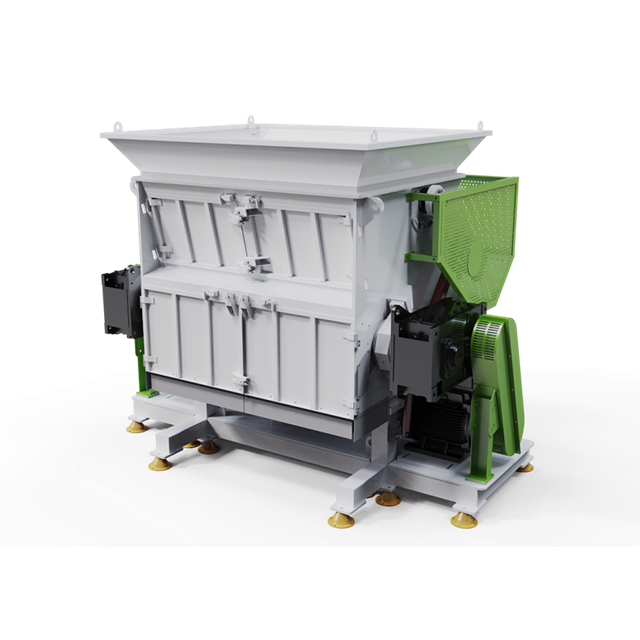
The rotor serves as the main axis of rotation within the shredding chamber. Its design and execution determine how efficiently the machine processes material. When evaluating a single shaft shredder, you must analyze specific rotor configurations. Smooth, solid-steel rotors differ significantly from profiled V-rotors. Your choice depends on the target plastic polymers. Bulky purgings require different rotor engagement than thin films or high-density rigid plastics.
Manufacturers integrate various cutting mechanisms based on material density. Saw-teeth cutters work well for certain applications, while pocket-mounted knives or hammer configurations suit others. The feed characteristics of your waste stream dictate the necessary rotor geometry. A poorly matched rotor will struggle to grip the material, leading to bouncing and reduced throughput. For instance, a staggered V-rotor configuration ensures that only one blade strikes the counter-knife at any given millisecond, which smooths out the power draw and prevents massive amperage spikes on the main drive motor.
| Rotor Design Type | Primary Application | Operational Advantage | Machining Complexity |
|---|---|---|---|
| Flat Profile Rotor | Heavy purgings, thick rigid plastics | Maximum impact resistance, high inertia | Moderate |
| V-Rotor (Chevron) | Films, hollow containers, mixed plastics | Continuous cutting action, lower power draw | High |
| Open Staggered Rotor | Heat-sensitive materials, rubber | Excellent airflow, prevents material melting | High |
| Smooth Solid Rotor | Abrasive materials, glass-filled polymers | Prevents material wrapping around the shaft | Very High |
CNC machining precision for rotor blade seats is critical. These pockets must hold the blades at an exact angle. This precision maintains consistent cutting gaps between rotating and fixed counter-knives. If the machining is inaccurate, the blades will sit unevenly. This unevenness causes localized stress points and premature wear on specific knives. We look for machining tolerances within 0.02mm for blade pockets. Anything looser allows the blade to shift under heavy load, which shears the mounting bolts.
Dynamic balancing at operational speeds is mandatory. Rotors must conform to ISO 1940 G2.5 or G6.3 standards. Proper balancing prevents harmonic vibrations. Unchecked vibrations destroy bearings and gearboxes over time. A balanced rotor ensures smooth operation, reduces noise, and extends the lifespan of the entire drive system. Balancing must be done after all hardfacing and blade installations are complete, as even the weight of the bolts can throw a high-speed rotor out of balance.
Rotor longevity depends on advanced wear protection. High-abrasion zones require specific treatments to withstand continuous impact. Manufacturers apply tungsten carbide hardfacing to critical areas. This process significantly increases the surface hardness of the rotor, preventing the base metal from washing out behind the blade pockets.
Thermal spraying and replaceable wear-resistant plates offer additional protection. These techniques shield the core rotor structure from abrasive materials like glass-filled polymers or contaminated agricultural films. By protecting the base metal, manufacturers ensure the rotor maintains its structural integrity through thousands of hours of operation. Replaceable wear plates are particularly useful in the transition zones near the chamber walls, where material tends to pack and grind against the steel.
Blade materials must withstand immense shear forces. Industry standards include D2, D3, and H13 tool steels. Some applications require custom shock-resistant alloys. You must evaluate the specific shear force required for your target plastics. Rigid engineering plastics demand different metallurgical properties than soft elastomeric films. D2 steel offers excellent wear resistance due to its high chromium content, making it ideal for clean, abrasive plastics. H13, on the other hand, provides superior impact toughness, which is necessary when shredding thick purgings that might contain hidden metal contaminants.
Controlled vacuum heat treatment is essential. This process achieves the optimal hardness range, typically between 55 and 60 HRC. It preserves impact toughness while maximizing wear resistance. If the blades are too hard, they become brittle and chip upon impact with foreign objects. If they are too soft, they lose their edge rapidly, reducing cutting efficiency. The tempering cycle must be carefully documented. A triple-temper process is often required to relieve internal stresses in the steel after the initial quenching phase.
| Steel Grade | Hardness (HRC) | Primary Characteristic | Best Suited For |
|---|---|---|---|
| D2 Tool Steel | 58-60 | High wear resistance, low toughness | Clean films, PET bottles, abrasive plastics |
| H13 Tool Steel | 52-54 | High impact toughness, moderate wear | Heavy purgings, contaminated materials |
| DC53 | 60-62 | Excellent balance of wear and toughness | High-speed shredding, mixed rigid plastics |
| Tungsten Carbide Insert | 70+ | Extreme wear resistance, very brittle | Highly abrasive glass-filled nylon, fiberglass |
Industrial blade types vary widely. Flat, concave, four-corner reversible indexing knives, and crown cutters all serve distinct purposes. Concave blades often provide a more aggressive cut, while flat blades offer durability for heavy purging. The typology directly impacts cutting efficiency and power consumption. A four-corner indexing knife allows maintenance teams to simply rotate the blade 90 degrees when an edge gets dull, providing four fresh cutting edges before a replacement is necessary.
Blade geometry must match the material perfectly. Aggressive rake angles work best for elastomeric films. They slice cleanly through the flexible material. Blunt, heavy-duty profiles suit rigid engineering plastics. They withstand the high impact forces required to fracture thick, dense polymers. The clearance angle behind the cutting edge is equally important; too little clearance causes the blade to rub against the material, generating massive amounts of friction and heat.
Industrial shredder blades must be torqued to specific factory settings. This is a critical safety and operational requirement. Proper torque prevents the blades from shifting during high-pressure cutting cycles. A loose blade can cause catastrophic damage to the rotor and the cutting chamber. We require torque specifications to be permanently stamped on the rotor near the blade pockets for easy reference during maintenance.
Manufacturers utilize advanced fastening mechanisms. High-tensile specialized bolts (Class 10.9 or 12.9) are standard. Wedge locks and back-pocket mounting systems provide additional security. These systems ensure the blades remain rigidly fixed, maintaining the exact cutting gap required for efficient shredding. Thread-locking compounds are often applied, but the mechanical design of the pocket should take the primary shear load, not the bolt itself. The bolt should only provide clamping force.
A robust plastic shredder machine requires a heavy-duty frame. Manufacturers use heavy-plate carbon steel or specific alloy steels for construction. The frame must absorb continuous vibration and massive shear forces without micro-fracturing. Weak welds or thin plates will fail under industrial loads. Side plates supporting the rotor bearings often need to be 50mm to 100mm thick, depending on the machine's capacity.
Thermal or vibratory stress-relieving after welding is critical. The welding process introduces residual stresses into the metal. If left untreated, the frame will warp under the immense torque generated during operation. Stress-relieving ensures the frame maintains its dimensional accuracy, keeping the rotor and bearings perfectly aligned. We look for documentation showing the frame was placed in an annealing oven and slowly brought up to temperature, held, and then cooled at a controlled rate.
The frame design must isolate vibration from the drive system and electronic controls. Excessive vibration damages sensitive PLC components and accelerates gearbox wear. Effective designs incorporate structural dampening elements that absorb shock loads before they reach critical systems. Heavy-duty rubber isolation mounts between the shredder frame and the structural skid are standard requirements for high-torque applications.
Outboard bearing housings are a vital feature. These housings are isolated from the main cutting chamber. This isolation prevents dust, moisture, and shredded particles from contaminating the bearings. Combined with shock-absorbing gearbox mounts, this design significantly reduces maintenance requirements and prevents sudden mechanical failures. Labyrinth seals should be installed on the rotor shaft between the cutting chamber and the bearing housing to provide a physical barrier against fine plastic dust.
Modern control systems are necessary for safe operation. Systems from Siemens or Allen-Bradley allow for automated operation and precise monitoring. They manage the complex interactions between the motor, the hydraulic pusher, and the rotor. The hydraulic ram must advance material based on the main motor's amp draw. If the motor works too hard, the ram must automatically retract to prevent stalling.
Auto-reverse functions protect the machine when the rotor encounters unshreddable materials. The control panel interfaces with the motor to monitor amperage spikes. If the load exceeds a safe threshold, the PLC instantly reverses the rotor to clear the jam, preventing mechanical overload and broken blades. This logic must be highly responsive, reacting in milliseconds to prevent the kinetic energy of the rotor from destroying the cutting chamber.
Advanced machines include comprehensive sensor networks. Temperature sensors on main bearings alert operators to lubrication issues or impending failure. Vibration monitors detect imbalances in the rotor before they cause structural damage. PT100 sensors wired directly into the PLC can trigger automatic shutdowns if bearing temperatures exceed 80 degrees Celsius.
Real-time cutting-gap wear sensors represent the highest tier of monitoring. These sensors track the degradation of the blades. They alert operators when maintenance is required, ensuring the machine always operates at peak efficiency. This predictive approach minimizes unplanned downtime. Hydraulic oil temperature and pressure sensors also ensure the pusher system operates within safe parameters, preventing seal blowouts.
Always demand a live or video-documented FAT. You must test the machine using your specific plastic waste streams. Generic testing does not prove the machine can handle your unique materials. The FAT provides empirical evidence of the machine's capabilities. Running clean, dry material is easy; the real test is running contaminated, wet, or highly abrasive scrap.
During the trial, measure specific metrics. Track the throughput rate accurately over a sustained period, not just a five-minute burst. Analyze the final particle size consistency through screen analysis. Monitor cutting-gap stability throughout the test. Finally, record the power consumption to ensure the machine operates efficiently under load. A machine that draws excessive amps to achieve its rated throughput is poorly designed and will cost a fortune in electricity.
| FAT Metric | Target Standard | Measurement Method |
|---|---|---|
| Throughput Stability | +/- 5% of rated capacity over 4 hours | Continuous weigh belt monitoring |
| Temperature Rise | Bearings stay under 70°C | Infrared thermography / PT100 sensors |
| Particle Size Distribution | 95% pass through specified screen | Post-shredding sieve analysis |
| Vibration Levels | Below 4.5 mm/s RMS | Accelerometers on bearing housings |
Request comprehensive quality documentation before purchase. You need steel mill test certificates to verify the blade materials. Heat treatment logs must show hardness verification. These documents prove the manufacturer follows strict metallurgical protocols. Without a mill cert, you have no idea if you are getting genuine D2 steel or a cheap knockoff that will shatter on the first day.
Dynamic balancing reports confirm the rotor meets ISO standards. Non-destructive testing (NDT) reports for critical welds ensure the frame is structurally sound. Traceability protects your investment and guarantees you receive the exact specifications you ordered. Ultrasonic testing on the main rotor shaft is also recommended to check for internal voids or inclusions in the steel forging.
Evaluate the manufacturer's inventory of consumable parts. You need immediate access to replacement blades, counter-knives, screens, and belts. Delays in spare parts shipping cause unacceptable production bottlenecks. A reliable vendor will keep a dedicated stock of your specific blade profiles ready for overnight shipment.
Assess the clarity and coverage of the warranties. Structural and drivetrain warranties must be comprehensive. Understand exactly what is covered and what voids the warranty. Strong warranties indicate the manufacturer's confidence in their quality control. Look for guarantees that cover the frame against cracking for at least five years under normal operational loads.
Identify warning signs during procurement. A refusal to provide material certifications is a major red flag. Vague machining tolerances suggest poor internal quality control. If a vendor cannot specify their exact CNC tolerances, they cannot guarantee performance. "Precision machined" is marketing fluff; "machined to 0.01mm tolerance" is an engineering standard.
Outsourced rotor fabrication without internal QC documentation introduces significant risk. You must know exactly who built the core components. Finally, a lack of reference installations for your specific application indicates the vendor lacks the necessary experience to solve your processing challenges. Always ask to speak with a current customer who processes the exact same plastic waste stream.
The true value of an industrial shredder lies in the unseen manufacturing controls. The metallurgical integrity of the blades, the dynamic balance of the rotor, and the stress-relieved rigidity of the frame dictate the machine's lifespan. Procurement teams must filter out vendors who cannot provide transparent documentation on their CNC machining tolerances, heat treatment processes, and PLC safety integrations.
Take the following steps to secure reliable equipment:
A: Prioritize manufacturers that provide transparent documentation on rotor dynamic balancing. They must use certified tool-steel for blades and perform stress-relieving on welded frames. Always demand comprehensive Factory Acceptance Testing (FAT) before finalizing the purchase.
A: The rotor design determines cutting efficiency and throughput. A precisely machined and dynamically balanced rotor minimizes vibration. This ensures a consistent cutting gap and drastically extends the lifespan of the bearings and the entire drivetrain.
A: Blades must be torqued to exact factory specifications. This prevents them from shifting or loosening during high-pressure cutting cycles. Loose blades cause catastrophic collisions with fixed counter-knives, leading to severe machine damage and extended downtime.
A: High-grade tool steels, such as D2 or H13, are industry standards. The specific grade and heat treatment must match the plastic being processed. This balances wear resistance with the impact toughness needed to prevent chipping.
A: Modern PLC controls continuously monitor motor amperage and rotor resistance. If an overload or jam is detected, the system automatically stops and reverses the rotor to clear the obstruction. This prevents mechanical overload and protects the drive system.


