- All
- Product Name
- Product Keyword
- Product Model
- Product Summary
- Product Description
- Multi Field Search
 English

Views: 0 Author: Site Editor Publish Time: 2026-05-29 Origin: Site


The global community faces an unprecedented and escalating plastic waste crisis. According to a landmark 2022 OECD report, a staggering 72% of global plastic waste ends up in landfills or escapes into the environment, while a mere 9% actually gets successfully recycled. This alarming statistical reality highlights a massive structural failure in modern waste management pipelines.
A significant part of this persistent problem stems from an infrastructure access gap. Massive, centralized industrial recycling plants rely on colossal shredding equipment to process mountains of scrap. However, small-to-medium enterprises (SMEs), local recycling facilities, and independent manufacturers often lack both the capital and the floor space for such massive installations. They remain burdened by unprocessed scrap taking up valuable real estate.
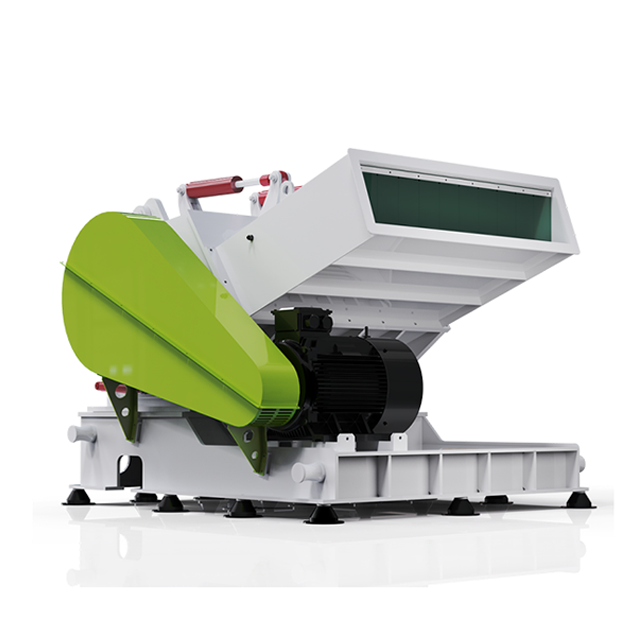
Fortunately, a highly practical alternative exists to bridge this localized infrastructure gap. A plastic crusher machine small serves as a robust, commercial-grade solution specifically engineered for localized volume reduction. It brings industrial-level recycling capabilities directly to the waste source. In this guide, you will discover the underlying mechanics of these machines, learn how to match specific blade configurations to different polymers, and understand how localized volume reduction accelerates the transition toward a true circular economy.
Volume Reduction: Compresses plastic waste volume by up to 80%, directly cutting logistical and storage costs.
Material Specificity: Operational efficiency heavily depends on matching the rotor and blade type (Claw, Flat, or V-type) to the target polymer.
Throughput Realities: Independent studies show varying processing efficiencies based on polymer density (e.g., HDPE processes significantly better than PET in standard setups).
Total Cost of Ownership: True ROI requires factoring in blade maintenance, noise mitigation, and power consumption, not just the initial purchase price.
Unprocessed plastic scrap rapidly consumes highly valuable warehouse space. It forces facility managers to schedule frequent, expensive waste hauling services. Piles of bulky, hollow containers or sprawling production sprues act as a massive logistical liability. In essence, companies pay premium freight rates simply to transport empty air inside uncrushed bottles and pipes.
By integrating a highly efficient plastic crusher machine into daily facility operations, businesses immediately achieve up to an 80% reduction in raw waste volume. This extreme physical compression translates directly into fewer collection trucks arriving at the loading dock. Reducing truck trips naturally lowers a company’s Scope 3 carbon emissions associated with downstream transportation. It also shrinks monthly hauling fees considerably, freeing up operational budgets.
Volume reduction merely represents the first critical step in the recycling pipeline. Downstream processing heavily relies on exceptionally clean materials. Shredding raw scrap into a uniform regrind size prepares the polymer for optimal downstream washing. When plastic features a uniform granule size, industrial cleaning agents can effectively reach all surface areas. This eliminates embedded dirt, residual oils, or adhesive labels that would otherwise contaminate a recycled batch.
Generating clean, uniform regrind opens up highly lucrative monetization pathways. You effectively transform a burdensome waste liability into a profitable, tradeable asset. Secondary commodity markets eagerly purchase uniform plastic feedstock. Downstream manufacturers utilize this high-quality regrind to produce diverse goods, including durable construction materials, injection-molded shipping pallets, and even spun polyester apparel fibers.
Understanding the fundamental physics of comminution helps operators maximize equipment lifespans and prevent costly production downtime. The recycling industry broadly utilizes two mechanical approaches: tearing and shearing. A heavy-duty, dual-shaft shredder operates primarily through tearing. It utilizes low-speed, high-torque torsion to rip thick, contaminated materials apart. In stark contrast, smaller granulators work very differently. They shear materials using high-speed rotary blades cutting precisely against stationary bed knives, functioning much like heavy-duty industrial scissors.
Reliable engineering drives this consistent shearing action. High-quality commercial units employ highly specific drive and torque systems. Engineers typically design these units utilizing combinations of large and small drive pulleys. This mechanical configuration achieves necessary speed reduction while simultaneously providing a massive torque gain. This torque gain ensures smooth, stable running. It prevents the internal motor from stalling when hitting particularly dense polymer chunks.
However, hard throughput limitations exist. Academic engineering baselines demonstrate that processing efficiencies vary drastically depending on the specific polymer structure. We must acknowledge these mechanical realities to set realistic production expectations.
Consider these established engineering benchmarks for a standard rotary machine equipped with a generic 8mm bottom screen:
HDPE (High-Density Polyethylene): Yields roughly 90% processing efficiency. Its rigid, crystalline structure shatters predictably and falls through the screen rapidly.
LDPE (Low-Density Polyethylene): Averages around 68% efficiency due to increased flexibility.
PVC (Polyvinyl Chloride): Achieves roughly 45% efficiency, often requiring specialized blade angles to handle its toughness.
PET (Polyethylene Terephthalate): Often drops to a mere 10% efficiency without specialized modifications. PET bottles fracture into lightweight, curved flakes that bounce above the screen, creating a severe bottleneck.
This empirical data proves that a generic, one-size-fits-all approach fails. Success requires precise equipment calibration tailored to the facility's dominant waste stream.
A commercial crushing unit operates only as effectively as its internal blade geometry allows. Selecting the incorrect rotor design inevitably leads to jammed screens, overheated motors, and melted plastics. Procurement managers must carefully map specific machine features to their desired operational outcomes.
Industry standards typically categorize rotary blade configurations into three primary types. Each design targets a distinct polymer profile and physical density.
Blade Configuration | Mechanical Action | Ideal Polymer Profile | Common Target Materials |
|---|---|---|---|
Claw Type (Staggered) | Disperses cutting load across multiple impact points to prevent jamming. | Hard, thick, and highly dense solid objects. | Injection molding sprues, heavy PVC pipes, thick rubber blocks. |
Flat Type (Straight) | Delivers a broad, uniform shearing cut across the entire rotor length. | Standard hollow containers and medium-wall items. | PET beverage bottles, PE detergent containers, blow-molded parts. |
Flake / V-Type (Chevron) | Directs flexible material toward the rotor center, preventing edge wrapping. | Soft, highly flexible plastics prone to thermal friction. | Agricultural films, woven PP bags, leather scrap, packaging wraps. |
Engineers design the staggered claw rotor for extreme impact resistance. It breaks down exceptionally hard, thick plastics by dispersing the initial shockwave across multiple smaller cutting points. This sequential cutting action prevents the main motor from suddenly stalling when the rotor encounters dense purgings, solid sprues, or heavy-walled pipes.
The flat blade design represents the versatile workhorse standard for most general recycling facilities. It handles hollow, blow-molded containers exceptionally well. If your primary waste stream consists of standard PET or PE bottles, the flat blade delivers the most consistent, uniform regrind sizes, preparing the material perfectly for downstream friction washers.
Processing highly flexible plastics requires highly specialized handling. Thin films and plastic bags easily wrap around standard straight rotors. This wrapping causes severe thermal friction, eventually melting the plastic into a useless, gummy block. The V-type chevron design continuously pushes flexible material toward the center of the cutting chamber. It acts like a pair of angled scissors, slicing cleanly through films without generating excessive frictional heat.
The rising popularity of the localized circular economy inspired numerous maker-space equipment designs. Open-source blueprints, such as those published by the global Precious Plastics community, offer excellent, accessible entry points for hobbyists and educational labs. However, reliably scaling up a facility's waste management operation demands robust commercial equipment.
Scalability and sustained performance clearly differentiate commercial units from DIY maker builds. A commercial-grade machine easily handles continuous, intensive daily workloads. Open-source or modified agricultural models frequently overheat or jam during extended industrial runs. They fundamentally lack the rotational torque required to process heavy commercial scrap volumes consistently.
Industrial build quality remains a critical deciding factor for facility managers. Commercial manufacturers invest heavily in specific hardware upgrades:
Motor Ratings: They utilize continuous-duty 3-phase induction motors rather than the 1-phase appliance motors common in DIY builds.
Housing Integrity: They cast heavy-duty steel or iron motor housings to dampen severe vibrations.
Hopper Geometry: They engineer complex, baffled hopper enclosures specifically designed to prevent sharp material flyback during operation.
Crucially, workplace regulatory compliance requires strict safety integration. Commercial environments must answer directly to rigorous regulatory bodies like OSHA or CE. Commercial units inherently feature essential safety interlocks that physically sever power when maintenance doors open. They incorporate infrared or proximity sensors that instantly detect hopper jams. They also utilize heavy-duty sound and debris shielding. DIY solutions almost universally omit these essential safeguards. Bypassing safety compliance introduces catastrophic liability risks for any operational business.
Deploying heavy industrial machinery inside a localized facility introduces specific operational realities. Managers must proactively address acoustic management. High-speed polymer shearing generates significant, unavoidable noise pollution. The cutting chamber frequently exceeds 90 decibels, pushing past safe auditory limits for unprotected workers.
Modern facilities mitigate this acoustic hazard using dual-layered, soundproofed hoppers and enclosed acoustic chambers. Scheduling intensive crushing operations during off-peak facility hours also drastically reduces broader workplace disruption. Furthermore, floor operators must wear mandatory Personal Protective Equipment (PPE). Industrial-grade ear muffs, shatter-proof face shields, and cut-resistant gloves remain absolute requirements on the factory floor.
Rigorous mechanical maintenance directly dictates your output quality. Routine blade sharpening is entirely non-negotiable. As blades dull, they begin to tear the polymer rather than cleanly shearing it. This tearing action generates immense friction, causing the material edges to melt. Melted plastics clog the bottom screen and produce highly irregular regrind chunks.
Technicians must carefully maintain precise blade gap tolerances. The exact distance between the high-speed rotary blades and the stationary bed knives completely dictates cutting efficiency. In professional setups, this gap often ranges strictly between 0.1mm and 0.2mm. If this gap widens due to vibration or wear, soft plastics simply fold and slip through uncut. Maintenance teams should verify and recalibrate these tolerances weekly.
Finally, operator safety requires strictly enforced Standard Operating Procedures (SOPs) to prevent catastrophic equipment failure. Managers must set absolute load limits for every batch. Operators must never overfeed the intake hopper to speed up processing. Overfeeding immediately overwhelms the screen, leading to violent rotor jamming. A jammed rotor draws massive electrical current, risking severe motor burnout. Proper SOP enforcement and rigorous Lockout/Tagout (LOTO) training eliminate these completely preventable failures.
Choosing the correct localized volume reduction equipment streamlines your entire waste management workflow. The procurement evaluation framework remains highly straightforward if you follow logical, sequential steps. First, comprehensively audit your primary waste polymer to understand its specific density, thickness, and flexibility. Next, determine the necessary blade configuration—claw, flat, or V-type—based directly on those identified material traits. Finally, calculate your facility's spatial footprint and electrical constraints before selecting a suitably sized model.
Taking confident action requires verifying manufacturer marketing claims empirically. Always request dedicated material testing before finalizing any equipment purchase. Send a representative, mixed sample of your facility's actual scrap directly to the machine manufacturer. Ask their engineering team to record an uncut video demonstrating the exact machine processing your specific materials. This confirms throughput speeds and regrind quality.
Embracing on-site volume reduction solves immediate logistical headaches. It drastically lowers transportation emissions and reclaims wasted warehouse space. Most importantly, it prepares your facility to participate profitably and sustainably in the rapidly expanding global circular economy.
A: Shredders utilize dual counter-rotating shafts to tear thick, heavy materials at low speeds using massive rotational torque. In contrast, crushers feature a single high-speed rotor. They shear materials cleanly against stationary bed knives, acting much like heavy-duty scissors. Crushers excel at processing smaller, hollow items into fine, uniform granules.
A: Yes, it can process PET bottles highly efficiently if engineered correctly. You must equip the machine with a flat-blade rotor. Additionally, selecting a slightly larger bottom screen size prevents curved, flexible PET flakes from bouncing around and bottlenecking the output chamber. Incorrect configurations yield very poor PET processing rates.
A: Look for highly transparent communication regarding realistic lead times, which typically range from 30 to 60 days. Demand a comprehensive 1-year baseline warranty covering both craftsmanship and internal components. Finally, insist on seeing verifiable video proof of material testing using your specific polymer type before transferring any funds.